There is something satisfying about stepping into a freshly cleaned shower. The glass looks clear, the tiles look brighter, and everything feels a little more organized.
Unfortunately, that clean look can disappear surprisingly quickly.
Every shower leaves behind water droplets. Those droplets may contain minerals that form spots as the water evaporates. Soap and shampoo can also leave residue on glass, tile, and other surfaces. After several showers, that once-clean bathroom can start looking cloudy or dull.
The good news is that keeping your shower looking cleaner doesn't always require another complicated cleaning routine.
Sometimes, a simple habit can make the difference: removing excess water from shower surfaces immediately after use.
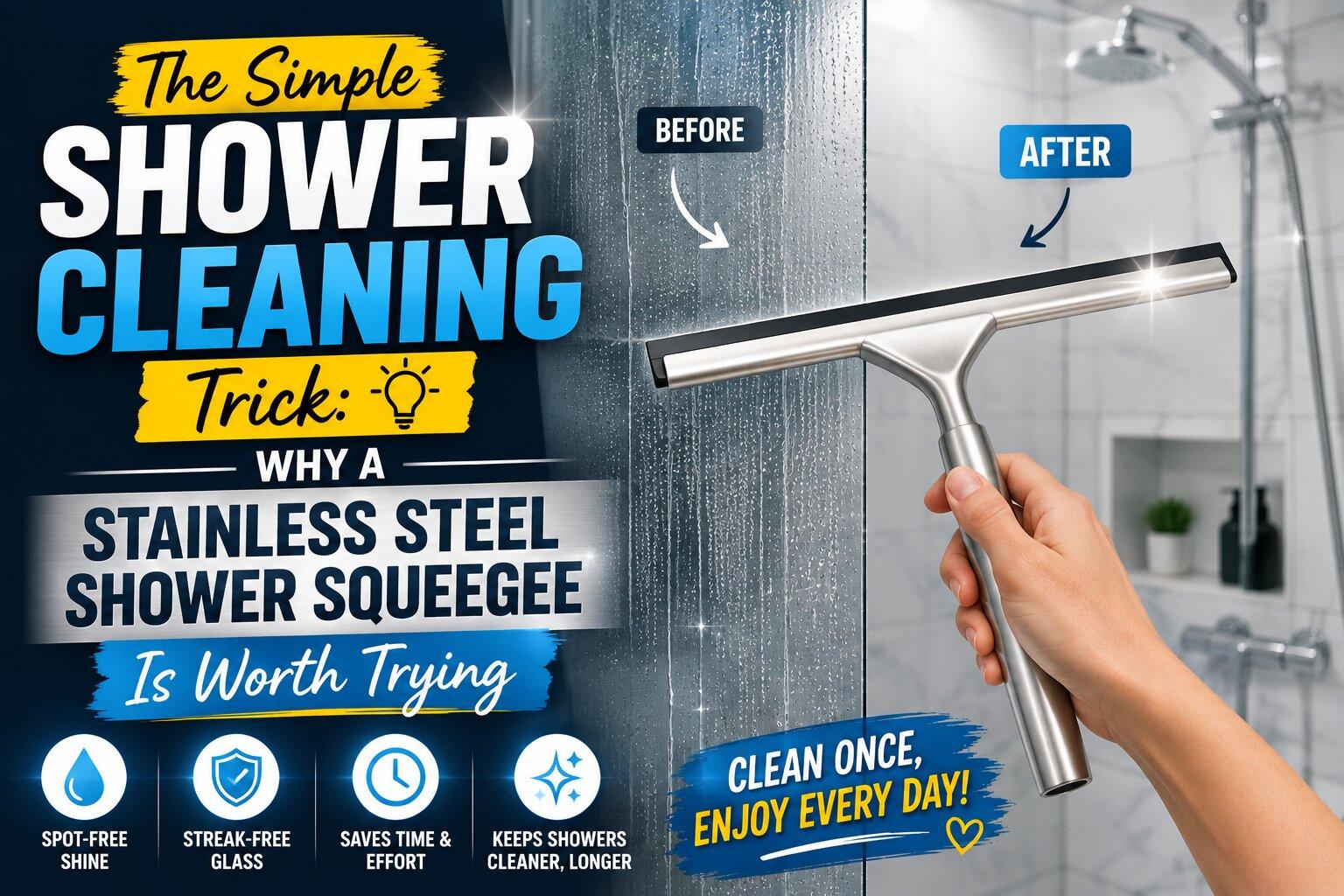
That's where a Stainless Steel Shower Squeegee can be useful. Rather than waiting for water to evaporate on its own, you can use a squeegee to move excess water toward the drain or away from glass surfaces.
It takes only a minute or two, but that small effort can make regular bathroom maintenance feel much easier.
Why Does a Shower Get Dirty So Quickly?
A shower deals with water, soap, body oils, shampoo, conditioner, and other products every day.
Even if you clean the bathroom regularly, moisture creates an environment where residue can build up.
The problem becomes especially noticeable on glass shower doors.
A few drops of water may seem harmless. But when they dry repeatedly, dissolved minerals can remain behind. Over time, those deposits may appear as white spots or cloudy patches.
Soap residue can make the problem worse.
Instead of allowing all that moisture to sit on the surface, removing it shortly after showering can reduce the amount of water left behind.
This doesn't eliminate the need for cleaning, but it can make maintenance more manageable.
What Is a Stainless Steel Shower Squeegee?
A shower squeegee is a handheld cleaning tool with a flexible blade designed to move water across a surface.
A Stainless Steel Shower Squeegee combines that basic function with a stainless steel handle or frame.
The design is straightforward.
You place the rubber or silicone blade against a wet surface and pull it across the area. The blade gathers water and pushes it toward an edge or drain.
You can use the technique on suitable shower surfaces such as glass doors, tiles, and certain smooth bathroom surfaces, depending on the specific product instructions.
The goal isn't to scrub.
The goal is to remove excess water before it dries.
Why Use a Squeegee After Every Shower?
The biggest benefit comes from consistency.
You don't have to spend 20 minutes cleaning the shower after every use.
Instead, spend a short amount of time removing excess water.
Think of it as preventative maintenance.
When you remove water before it evaporates, you reduce the amount of moisture sitting on the surface.
That can help limit visible water spotting and reduce the amount of residue that accumulates between deeper cleaning sessions.
It's similar to wiping a kitchen counter after cooking.
You're not deep-cleaning the kitchen.
You're simply preventing a small mess from becoming a bigger one.
How Water Spots Form on Shower Glass
Understanding water spots makes the squeegee habit easier to appreciate.
Tap water contains dissolved minerals. The exact mineral content varies depending on the local water supply.
When water remains on glass and evaporates, those minerals can remain behind.
One shower won't necessarily create an obvious mark.
But repeated exposure can gradually produce visible deposits.
The more frequently water dries on the glass, the more opportunities there are for residue to accumulate.
A squeegee helps by removing much of the water before it has a chance to evaporate.
It doesn't chemically dissolve existing mineral deposits.
Instead, it helps reduce the conditions that contribute to recurring spots.
A Squeegee Doesn't Replace Deep Cleaning
This distinction matters.
A Stainless Steel Shower Squeegee is a maintenance tool, not a complete bathroom cleaner.
It can remove water.
It cannot replace cleaning products designed to deal with soap scum, mineral deposits, mildew, grime, or stains.
A sensible routine combines both approaches.
Use the squeegee frequently to remove excess water.
Then perform a more thorough shower cleaning when needed.
This approach can make deep cleaning feel less overwhelming because you're dealing with buildup before it becomes excessive.
Where Can You Use a Shower Squeegee?
A shower squeegee can be useful in several areas.
Glass Shower Doors
Glass is one of the most obvious places to use a squeegee.
After showering, pull the blade across the glass in overlapping strokes.
Pay attention to the lower section where water tends to collect.
Shower Walls
Some tiled walls can also be wiped with a squeegee.
However, textured or heavily uneven surfaces may not respond as well as smooth ones.
Shower Floor
If the surface is appropriate for the tool, a squeegee can help move standing water toward the drain.
Always avoid using excessive force or a technique that could make the floor slippery while you're working.
Bathroom Mirrors
Some squeegees may be suitable for smooth glass surfaces, but check the manufacturer's instructions before using one outside the shower.
How to Use a Shower Squeegee Properly
You don't need a complicated technique.
Step 1: Start at the Top
Begin near the upper portion of the glass or wall.
Step 2: Pull Downward
Apply gentle, consistent pressure while moving the blade downward.
Step 3: Overlap Each Pass
Slightly overlap each stroke so you don't leave strips of water behind.
Step 4: Work Toward the Drain
On suitable surfaces, direct water toward the drain.
Step 5: Wipe the Blade
If necessary, rinse or wipe the blade according to the manufacturer's instructions.
The whole process can take less than a couple of minutes once you get used to it.
Why Stainless Steel Can Be a Practical Choice
The handle material can affect how a shower tool feels and performs over time.
Stainless steel is commonly used in bathroom accessories because it offers a combination of strength and resistance to corrosion.
A stainless steel handle can also provide a solid feel in the hand.
However, not every stainless steel product is identical.
Construction quality, grade, finish, blade material, and hardware all vary.
That's why you shouldn't choose a squeegee based on the handle material alone.
The blade is equally important.
The Blade Matters More Than You Might Think
The blade is the part that actually contacts the surface.
A good blade should make consistent contact without requiring excessive pressure.
If the blade is damaged, warped, cracked, or worn, it may leave streaks.
The material also matters.
Different squeegees use different types of rubber, silicone, or similar flexible materials.
When choosing a shower squeegee, look for a blade that feels flexible enough to maintain contact with the surface while remaining durable enough for regular use.
A sturdy handle paired with a poor blade won't produce great results.
How Long Does It Take?
This is one of the biggest reasons people like the squeegee habit.
You're not committing to another lengthy cleaning task.
For a typical shower enclosure, you may only need a minute or two.
At first, you might move slowly while figuring out the best direction.
After a few uses, the process becomes almost automatic.
Finish your shower.
Reach for the squeegee.
Clear the glass.
Put it back.
Done.
The key is making the tool easy to access.
Keep the Squeegee Near the Shower
Convenience affects habits.
If your squeegee sits in a cabinet across the bathroom, you may not bother using it.
If it's stored within easy reach of the shower, you're more likely to use it consistently.
A suitable hook or storage solution can keep it accessible while allowing it to dry between uses.
However, make sure the storage method can safely support the tool and doesn't create a hazard.
A wet bathroom floor is not the place for unnecessary clutter.
What About Soap Scum?
Soap scum is a little different from plain water.
It contains residues that can adhere to surfaces.
A squeegee can help reduce the amount of water and loose residue left behind, but it won't replace a cleaner designed specifically for soap scum.
This is another reason to think of the squeegee as a maintenance step.
You aren't trying to clean every substance with one tool.
You're simply removing water before it contributes to a larger buildup problem.
Can a Shower Squeegee Prevent Mold?
It's important not to overstate what a squeegee can do.
A squeegee cannot guarantee that mold or mildew won't develop.
Bathroom mold and mildew depend on factors such as moisture, ventilation, temperature, and the presence of organic material.
However, removing excess water can support a generally drier bathroom environment.
Good ventilation matters too.
Run the bathroom exhaust fan when appropriate, allow surfaces to dry, and address persistent moisture problems.
The squeegee can be one small part of that overall routine.
Don't Ignore Bathroom Ventilation
A dry shower isn't only about wiping surfaces.
Air movement matters.
After showering, use an exhaust fan if your bathroom has one and follow the ventilation recommendations for your home.
Opening a door or window may also help in some situations, depending on the weather and ventilation setup.
The objective is simple:
Reduce unnecessary moisture and give wet surfaces a chance to dry.
A squeegee removes water from surfaces.
Ventilation helps remove moisture from the air.
The two approaches complement each other.
Common Squeegee Mistakes
A few simple mistakes can make the tool less effective.
Pressing Too Hard
You don't need to force the blade against the glass.
Gentle, consistent pressure usually works better.
Moving Too Quickly
Fast strokes can leave water behind.
Take steady passes.
Ignoring the Edges
Water can collect along seals and corners.
Give those areas attention where the squeegee can safely reach.
Using a Damaged Blade
A worn blade can create streaks and make the job frustrating.
Leaving the Tool Dirty
Rinse or maintain it according to its care instructions.
Using It on Unsuitable Surfaces
Not every material is designed for squeegee use.
Always check the surface and product instructions first.
How Often Should You Use a Shower Squeegee?
For the best maintenance effect, use it after each shower when practical.
You don't need to make every pass perfect.
Even removing most of the visible water can be useful.
If you share the bathroom with several people, creating a simple household habit can help.
Everyone can spend a minute clearing the glass after use.
That distributes the effort instead of leaving one person to deal with all the buildup later.
What If You Have Hard Water?
Hard water can make shower maintenance particularly frustrating.
When water contains higher concentrations of minerals such as calcium and magnesium, deposits may become more noticeable as water evaporates.
A squeegee can help reduce how much water dries on the surface.
But if mineral deposits have already formed, you'll need an appropriate cleaning method to remove them.
The best strategy is often a combination:
- Remove water regularly.
- Clean mineral deposits when they appear.
- Keep the bathroom ventilated.
- Repeat the routine consistently.
Prevention and maintenance work better together than either one alone.
Choosing the Right Size
Shower squeegees come in different widths.
A wider blade can cover more surface area with each pass.
A narrower blade may be easier to maneuver around fixtures, corners, handles, and small spaces.
For a large glass enclosure, a wider blade may save time.
For a compact shower, a smaller tool may feel easier to handle.
There's no universally perfect size.
Think about the surfaces you'll actually clean.
Look for a Comfortable Handle
A cleaning tool can be effective and still annoying to use.
A comfortable handle makes repetitive strokes easier.
Consider:
- Grip shape
- Handle length
- Overall weight
- Balance
- Surface texture
A Stainless Steel Shower Squeegee can feel substantial, but heavier isn't automatically better.
The right tool should feel controlled in your hand.
Consider Storage Before You Buy
Storage is an easy detail to overlook.
If you want to use a squeegee after every shower, you'll need a convenient place to keep it.
Some designs include hanging options, while others require a separate storage solution.
Think about where the tool will live.
Ideally, it should be:
- Easy to reach
- Out of the way
- Securely stored
- Able to dry between uses
A tool that disappears into a cabinet isn't as useful for a daily habit.
Is a Stainless Steel Shower Squeegee Worth Trying?
For many households, the answer can be yes.
The reason isn't complicated technology.
It's convenience.
A squeegee makes one small maintenance task quick enough to become part of your normal shower routine.
Instead of allowing water to remain on the glass until it dries, you remove much of it immediately.
That simple change can help keep surfaces looking cleaner between deeper cleaning sessions.
It can also reduce the amount of time you spend dealing with water spots and accumulated residue.
The key word is help.
A squeegee isn't a miracle solution.
It won't eliminate every bathroom cleaning problem.
But it can make one common problem easier to manage.
A Simple Shower Maintenance Routine
If you want to make the most of your squeegee, combine it with a few other habits.
After Every Shower
- Remove excess water from glass.
- Direct standing water toward the drain where appropriate.
- Leave the bathroom ventilated.
Once a Week
- Wipe bathroom fixtures.
- Clean visible soap residue.
- Inspect corners and seals.
- Clean the shower floor.
As Needed
- Address hard-water deposits.
- Clean grout.
- Deal with mildew or persistent moisture.
- Wash or replace worn cleaning tools.
This routine keeps everyday maintenance manageable without turning every shower into a cleaning session.
Frequently Asked Questions
What is a Stainless Steel Shower Squeegee used for?
It is primarily used to remove excess water from shower glass, tile, and other suitable smooth surfaces. Removing water after showering can help reduce visible water spots and residue buildup.
Should I use a shower squeegee after every shower?
Using one after each shower can be a useful maintenance habit, especially if your bathroom experiences frequent water spotting.
Can a squeegee remove hard-water stains?
A squeegee can help prevent some water from drying on the surface, but it generally won't remove mineral deposits that have already formed. Those require an appropriate cleaning method.
Does a shower squeegee prevent soap scum?
It may help reduce moisture and residue left on surfaces, but it doesn't replace regular cleaning for soap scum.
Can I use a shower squeegee on tiles?
Many smooth tiles can be suitable, but textured or uneven surfaces may not respond as well. Check the product's instructions and test an appropriate area if necessary.
How do I clean a shower squeegee?
Follow the manufacturer's care instructions. Generally, keeping the blade free of accumulated residue and allowing the tool to dry can help maintain its performance.
Why does my squeegee leave streaks?
Streaks can result from a dirty or worn blade, improper pressure, an unsuitable surface, or residue already present on the glass.
Is stainless steel good for bathroom accessories?
Stainless steel is commonly used for bathroom accessories because of its strength and resistance to corrosion. However, construction quality and maintenance still matter.
Final Thoughts
A cleaner shower doesn't always require more scrubbing.
Sometimes, it comes down to changing what you do immediately after you finish showering.
Using a Stainless Steel Shower Squeegee gives you a simple way to remove excess water from suitable surfaces before it dries. That can help reduce the appearance of water spots and make everyday shower maintenance easier.
The trick is consistency.
Use the squeegee regularly, keep the bathroom ventilated, and continue with deeper cleaning when necessary. Pay attention to the blade, use gentle pressure, and choose surfaces that are appropriate for the tool.
Most importantly, don't expect one small cleaning tool to solve every bathroom problem.
Think of it as a quick maintenance step that works alongside your normal cleaning routine.
A minute spent clearing water today can mean less buildup to deal with later—and sometimes, the easiest cleaning trick is simply the one you'll actually remember to use.


 English
 Arabic
 French
 Spanish
 Portuguese
 Deutsch
 Turkish
 Dutch
Dutch
 Italiano
 Russian
 Portuguese (Brazil)
 Greek
Greek