
Tired of Dirty Floors? Here’s Why a Microfiber Mop and Bucket Could Help
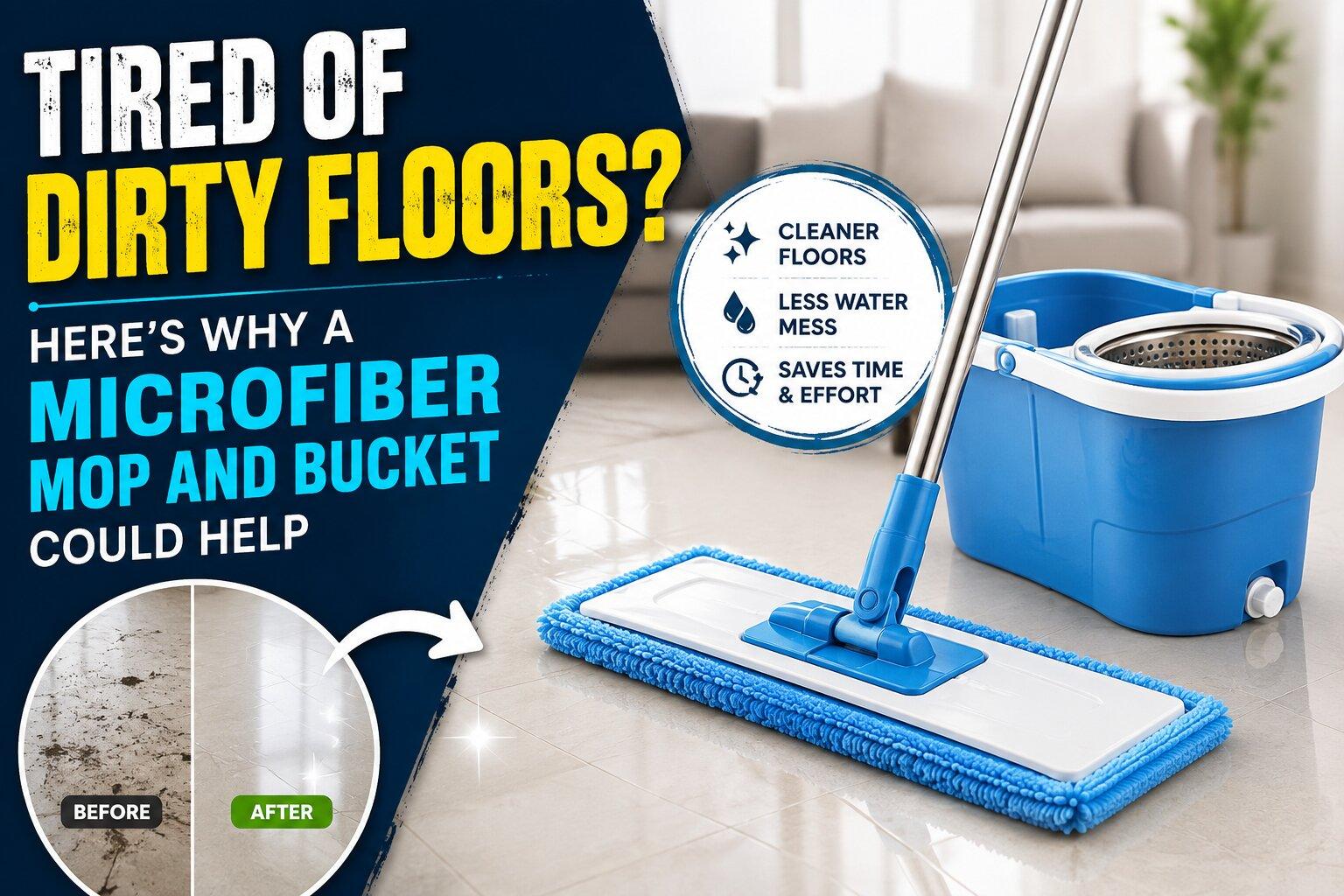
Dirty floors have a funny way of making an entire home feel untidy. You can straighten the cushions, clear the countertops, and organize the shelves, but if the floor looks dull or covered in footprints, the room may still feel like it needs attention.
The frustrating part is that floor cleaning can become a bigger job than expected. You fill a bucket, soak a mop, wring it out, clean one section, rinse the mop, and repeat the process. Before long, you're spending more time managing the cleaning tools than actually cleaning the floor.
That's one reason many people have started looking at simpler floor-cleaning systems.
A microfiber mop and bucket can make routine floor care more convenient by combining a reusable microfiber cleaning pad with a bucket designed to make rinsing and wringing easier. Microfiber can pick up dust, hair, crumbs, and everyday grime, while the bucket helps control how much water goes onto the floor.
It isn't a magic solution, and it won't eliminate the need for regular cleaning. However, when used correctly, it can make an ordinary household chore feel considerably more manageable.
Let's look at how this cleaning method works, where it performs well, and what you should know before making it part of your routine.
Why Do Floors Get Dirty So Quickly?
Floors deal with a lot every day.
People walk across them with shoes or bare feet. Pets move from one room to another. Food gets dropped. Dust settles. Small particles enter through doors and windows. Even clean-looking socks can transfer oils and dirt onto a floor.
Kitchens usually face the biggest challenge because cooking creates splashes, crumbs, grease, and food residue.
Entryways collect outdoor dirt.
Living rooms collect dust, hair, and general household debris.
Bathrooms deal with moisture, soap residue, and occasional spills.
Because floors receive so much daily traffic, occasional sweeping isn't always enough.
Sweeping can remove loose debris, but it doesn't necessarily remove the thin layer of grime that sticks to the surface. That's where wet mopping becomes useful.
What Is a Microfiber Mop and Bucket?
A microfiber mop and bucket is a floor-cleaning setup that uses microfiber material to clean floors while the bucket provides a place to rinse and manage the mop.
Microfiber consists of extremely fine synthetic fibers. These fibers create a large surface area that can collect small particles and absorb moisture.
The mop head usually attaches to a handle, allowing you to clean floors without constantly bending down.
The bucket serves several purposes. Depending on the design, it may include a wringing mechanism or separate sections for clean and used water.
The basic idea is simple:
- Prepare the mop.
- Add the appropriate amount of water and cleaner if needed.
- Clean the floor in manageable sections.
- Rinse the microfiber pad.
- Remove excess moisture.
- Continue until the floor is clean.
- Wash and dry the microfiber pad afterward.
The exact process varies between mop systems, so following the manufacturer's instructions remains important.
Why Microfiber Works Well for Everyday Cleaning
Microfiber is popular because of its ability to collect fine particles while also absorbing moisture.
Traditional cotton mop fibers can work well, but microfiber offers a different cleaning experience.
The fine fibers can reach into tiny surface irregularities and collect dust and debris. When the mop is damp rather than soaking wet, it can also clean everyday residue without leaving excessive water behind.
That matters because too much water isn't ideal for many flooring materials.
A floor shouldn't necessarily be drenched to become clean.
In fact, using more water can sometimes create additional problems, particularly on flooring that doesn't tolerate moisture well.
Less Water Can Mean Easier Floor Care
One of the biggest advantages of a good microfiber mop and bucket routine is moisture control.
Some people assume that a wetter mop must clean better.
That's not necessarily true.
A heavily saturated mop can spread water across a large area. It may also take longer for the floor to dry.
A properly damp microfiber pad can often handle everyday dirt without flooding the surface.
This can make the cleaning process quicker and more comfortable.
Of course, flooring materials differ.
Wood, laminate, vinyl, tile, stone, and other surfaces have different care requirements. Always check the flooring manufacturer's cleaning recommendations before introducing water or cleaning chemicals.
A Cleaner Floor Doesn't Have to Mean More Scrubbing
When a floor looks dirty, the natural reaction is often to scrub harder.
But excessive scrubbing isn't always necessary.
A better approach is to remove loose debris first and then use an appropriate damp cleaning method.
For example, sweeping or vacuuming before mopping prevents large particles from being pushed around by the mop.
Once loose dirt is gone, the microfiber pad can focus more on the residue actually attached to the floor.
This two-step approach can save effort.
Step 1: Remove Loose Dirt
Vacuum or sweep the floor.
Pay attention to corners, underneath furniture, and high-traffic areas.
Step 2: Damp Mop
Use a properly prepared microfiber mop to clean the remaining surface dirt.
Step 3: Allow the Floor to Dry
Give the floor adequate time to dry before heavy foot traffic resumes.
This straightforward routine works well for many everyday cleaning situations.
How a Microfiber Mop and Bucket Can Save Time
Cleaning efficiency isn't just about how quickly you move the mop.
It's also about how often you have to stop.
A poorly designed cleaning routine may involve repeatedly walking to a sink, rinsing the mop, finding somewhere to place it, and returning to the floor.
A dedicated bucket keeps the essential equipment together.
You can move from room to room without constantly interrupting your workflow.
Some bucket designs also make wringing easier, which can reduce the amount of manual effort involved.
That doesn't necessarily make cleaning effortless, but it can make the process feel more organized.
Why the Mop Pad Matters
The mop itself gets most of the attention, but the cleaning pad deserves just as much consideration.
A microfiber pad should be clean and in good condition.
If the pad becomes overloaded with dirt, it won't perform as effectively.
Instead of removing grime, you may simply move it around.
That's why rinsing the pad during cleaning matters.
For larger homes or particularly dirty floors, having more than one washable pad can also be useful.
You can switch to a fresh pad instead of continuing with one that has already collected a large amount of dirt.
Don't Forget to Wash the Microfiber Pad
Reusable microfiber pads are designed to be washed and used again.
After cleaning, rinse the pad if necessary and wash it according to its care instructions.
Proper laundering helps remove the dirt and oils collected during cleaning.
Avoid using products that the manufacturer says could damage the microfiber or reduce its effectiveness.
Fabric softener, for example, may interfere with microfiber's ability to absorb and collect particles, so check the care instructions before using it.
After washing, allow the pad to dry thoroughly.
Storing a damp pad can create unpleasant odors and isn't a good cleaning habit.
Which Floors Can You Clean With Microfiber?
Microfiber mops can be useful on many common household surfaces, but the cleaning method should always match the floor.
Tile
Tile floors are generally well suited to damp mopping.
Microfiber can pick up dust and everyday grime from smooth tile surfaces.
Vinyl
Many vinyl floors can be cleaned with a damp microfiber mop.
Avoid excessive water and harsh chemicals unless the flooring manufacturer specifically permits them.
Laminate
Laminate flooring usually requires careful moisture control.
Use a lightly damp mop rather than saturating the floor.
Sealed Wood
Some sealed wood floors can be damp cleaned, but excessive water can damage wood.
Always follow the manufacturer's recommendations.
Stone
Natural stone requires additional care because certain cleaners can damage specific types of stone.
Check the care instructions before choosing a cleaning solution.
The important lesson is simple: the mop may be versatile, but cleaning methods are not one-size-fits-all.
Should You Use Cleaning Solution?
Not necessarily.
For routine dust and light dirt, water and a clean microfiber pad may be enough for some floors.
For greasy kitchen residue or heavier grime, an appropriate floor cleaner may be more effective.
However, using more cleaning solution doesn't automatically produce better results.
Too much product can leave residue behind.
Always dilute cleaning products according to their instructions and make sure the product is suitable for your specific flooring.
Never mix household cleaning chemicals unless the manufacturer specifically states that doing so is safe.
How to Mop Without Leaving Streaks
Streaks can make a freshly cleaned floor look disappointing.
Fortunately, several simple habits can help.
First, don't use an excessively wet mop.
Second, keep the microfiber pad clean.
Third, avoid using more cleaning product than necessary.
Fourth, clean the floor systematically rather than repeatedly going over the same area.
If streaks continue appearing, check whether the floor already has product buildup. In some cases, the problem isn't the mop itself but residue left behind by previous cleaning products.
Start With the Dirtiest Areas
You don't always need to mop every square foot of your home with the same level of attention.
High-traffic areas usually need more frequent cleaning.
These may include:
- Kitchen entrances
- Hallways
- Entryways
- Areas around dining tables
- Spaces near pet food bowls
- Bathroom entrances
Less-used rooms may require less frequent attention.
Creating a simple cleaning schedule based on traffic can save time.
Instead of treating the entire house as equally dirty, focus your effort where it actually matters.
Use a Consistent Mopping Pattern
Randomly moving the mop around the floor can cause you to miss sections.
A simple pattern works better.
Start at the farthest point of the room and work toward the exit.
Clean in small sections.
Overlap your strokes slightly so you don't leave narrow strips between passes.
This method also prevents you from walking across areas you've just cleaned.
It sounds like a small detail, but it can make the process much smoother.
What Makes a Good Bucket?
A bucket may seem like the least important part of the system, but its design affects convenience.
Look for features that make sense for your routine.
Comfortable Handle
A sturdy handle makes carrying water easier.
Stable Base
A stable bucket is less likely to tip during use.
Useful Capacity
The bucket should hold enough water for your cleaning session without becoming unnecessarily heavy.
Effective Wringing
If the bucket includes a wringer, it should allow you to remove excess water without excessive effort.
Easy Cleaning
The bucket itself should be easy to rinse and maintain.
A complicated bucket isn't necessarily better.
Simple and practical often wins.
Don't Use Dirty Water Throughout the House
If you're cleaning several rooms, pay attention to the water.
Water that starts clean can become visibly dirty after several passes.
Continuing to mop with heavily contaminated water can reduce the benefit of cleaning.
If the water becomes too dirty, replace it.
You may also want to clean particularly dirty areas separately from cleaner rooms.
For example, a kitchen floor after cooking may need different attention from a lightly used bedroom.
A Microfiber Mop and Bucket Can Be Useful for Pet Owners
Pets can make floor maintenance challenging.
Dogs and cats naturally shed hair and bring small particles into the house.
A microfiber mop can help collect fine debris that remains after vacuuming.
However, don't rely on wet mopping to remove large amounts of pet hair.
Vacuum or sweep first.
Then use the damp mop for the residue left behind.
If a pet has had an accident, follow appropriate cleaning and disinfecting guidance for the flooring material. A regular damp mop isn't necessarily sufficient for every biological mess.
How Often Should You Mop?
There's no universal schedule.
The right frequency depends on household traffic, pets, children, cooking habits, flooring type, and personal preference.
A home with several pets may need frequent floor cleaning.
A quiet household may need much less.
Instead of following an arbitrary schedule, look at the floor.
If it feels sticky, looks dull, shows visible footprints, or has noticeable dirt, it may be time for cleaning.
High-traffic areas can be cleaned more frequently than rooms that rarely get used.
Common Mistakes to Avoid
Even a simple cleaning system can be used incorrectly.
Using Too Much Water
Excess moisture can damage certain flooring materials.
Skipping Vacuuming
Large particles can make mopping less effective.
Using the Wrong Cleaner
Some floor finishes react badly to harsh chemicals.
Reusing a Very Dirty Pad
A saturated pad can spread grime.
Leaving the Pad Wet
Damp storage can create odors.
Using Excessive Pressure
Hard scrubbing isn't always necessary and may damage certain surfaces.
Ignoring Manufacturer Instructions
Flooring manufacturers know what their finishes can tolerate.
Follow their recommendations first.
How to Make Floor Cleaning Feel Less Like a Chore
The best cleaning routine is often the one that's easy enough to maintain.
Instead of waiting until the floor becomes heavily soiled, clean smaller amounts of dirt regularly.
Keep your cleaning equipment together.
Store the mop and bucket where they're easy to access.
Wash microfiber pads after use.
Keep cleaning products organized.
And avoid making every cleaning session unnecessarily complicated.
A ten-minute routine that you actually follow is more useful than an elaborate system you avoid.
Is a Microfiber Mop and Bucket Worth Trying?
For households looking for a practical way to handle everyday floor cleaning, a microfiber mop and bucket can be a useful option.
Its biggest advantage isn't that it eliminates work.
Instead, it can make the work more organized.
The microfiber pad can collect everyday dirt and absorb moisture, while the bucket provides a dedicated place to rinse and wring the mop.
The system also encourages better moisture control, which can be important for flooring that shouldn't become saturated.
Of course, results depend on how you use the equipment.
A dirty pad, excessive cleaning solution, or too much water can undermine the process.
The key is using the right technique for the floor you're cleaning.
Frequently Asked Questions
Is microfiber better than a traditional mop?
Microfiber has advantages for collecting fine dust and everyday dirt, while traditional mop materials can also work effectively. The best choice depends on the floor, cleaning routine, and personal preference.
Can I use a microfiber mop without a bucket?
Yes. Some microfiber mops are designed for spray cleaning or direct use with a prepared pad. However, a bucket system can be convenient when you need to rinse and wring the mop during a larger cleaning session.
How often should I wash a microfiber mop pad?
Wash the pad after cleaning sessions according to its care instructions. If it becomes heavily soiled during cleaning, replace or rinse it before continuing.
Can I use bleach on microfiber mop pads?
Only use bleach if the pad's manufacturer specifically permits it. Some cleaning chemicals can damage microfiber or reduce its performance.
Why does my floor look streaky after mopping?
Streaks may come from excess cleaning product, a dirty mop pad, too much water, or residue already present on the floor.
Can microfiber mops clean hardwood floors?
Some sealed hardwood floors can be cleaned with a lightly damp microfiber mop, but hardwood care varies. Always follow the flooring manufacturer's instructions and avoid excessive moisture.
Should I sweep before using a microfiber mop?
Yes. Removing loose dirt, crumbs, hair, and larger particles first usually makes wet mopping more effective.
How much water should I use?
Use enough moisture to clean effectively without leaving the floor excessively wet. The exact amount depends on the flooring and mop system.
Final Thoughts
Clean floors don't require an unnecessarily complicated routine.
The most important thing is choosing a method that fits your home and using it consistently.
A microfiber mop and bucket can simplify everyday floor cleaning by combining a reusable cleaning pad with a convenient way to rinse and control moisture. Microfiber can collect fine particles and everyday grime, while proper wringing helps prevent excessive water from being left behind.
But the tool is only part of the solution.
Vacuum or sweep before mopping. Use the correct amount of water. Choose cleaning products that are safe for your flooring. Replace dirty mop pads when necessary, and wash reusable pads after use.
Most importantly, don't wait until every floor in the house looks neglected before doing something about it.
Small, regular cleaning sessions are usually easier than tackling a huge buildup all at once.
Once you find a simple routine that works for your household, floor cleaning becomes less of a dreaded chore and more of an ordinary part of keeping your home comfortable.

 English
 Arabic
 French
 Spanish
 Portuguese
 Deutsch
 Turkish
 Dutch
Dutch
 Russian
 Romaian
 Portuguese (Brazil)
 Greek
Greek