English
 Arabic
 French
 Spanish
 Portuguese
 Deutsch
 Turkish
 Dutch
Dutch
 Italiano
 Russian
 Romaian
 Portuguese (Brazil)
 Greek
Greek
Certified WETT Inspections Near Me for Safe Heating Systems
Other |
2026-08-06 17:59:59
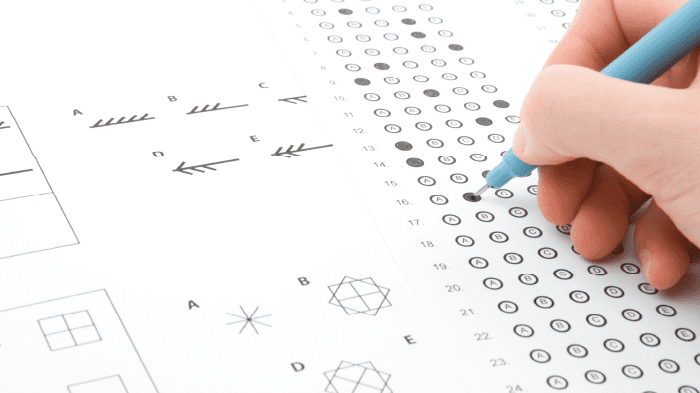
Albert Einstein is widely regarded as one of the greatest scientific minds in history. His theories transformed our understanding of space, time, gravity, and the universe, while his name became almost synonymous with extraordinary intelligence. Because of his remarkable achievements, one question continues to attract attention: What was Einstein's IQ?
The internet contains numerous claims about einstein's iq, with estimates often ranging from 160 to 190. These numbers are frequently presented as facts, but there is an important problem with them. There is no reliable record showing that Einstein ever took a modern standardized IQ test, and there is no official IQ score documented in his surviving biographies or historical records.
So, where did these numbers come from, and can Einstein's intelligence be measured at all? The answer requires understanding both the history of IQ testing and the difference between intelligence and achievement.
There is no credible evidence that Albert Einstein took a standardized IQ test that produced a documented score. This is the most important fact to understand when discussing einstein's iq.
Modern IQ testing developed during the early 20th century. One of the best-known early intelligence tests was the Stanford-Binet Intelligence Scale, which was introduced in 1916. Other influential tests followed, including the Wechsler intelligence scales.
Einstein lived during the development of these early testing methods, but there is no authenticated record of him receiving an official IQ score from one of them. His education and career were evaluated through academic work, mathematical ability, scientific research, and professional achievements rather than through a numerical intelligence score.
As a result, claims that Einstein had an IQ of exactly 160, 170, 180, or 190 should not be treated as verified historical facts.
The commonly repeated numbers appear to be retrospective estimates rather than measurements.
Writers and popular websites have attempted to estimate Einstein's IQ by examining his intellectual achievements. His revolutionary contributions to physics make it tempting to assign him an exceptionally high score. However, estimating an IQ decades after someone's death is not equivalent to administering an intelligence test.
An IQ score is meaningful because it comes from a standardized assessment administered under specific conditions. A person's performance is compared with a relevant population, and the resulting score is calculated according to the test's scoring system.
Einstein did not receive such a documented score. Therefore, an estimate based on his scientific accomplishments cannot be considered an official IQ result.
Some sources have claimed that Einstein's IQ was around 160. Others suggest even higher figures. These estimates are often repeated without a primary source, creating the impression that a confirmed number exists when it does not.
To understand why these claims are so striking, consider what an IQ score represents.
Most modern IQ tests are designed so that the average score is approximately 100, with a standard deviation commonly set at 15 points. A score of 130 is already considerably above average. A score of 160 would be extraordinarily rare.
However, very high scores also become increasingly difficult to interpret. Tests have limits, and different tests use different scoring systems. A score that is extremely high on one assessment may not translate directly to another.
This is another reason why assigning Einstein a precise number is problematic. Even if someone had attempted to test him during his lifetime, the result would have depended on the particular test, its norms, the testing conditions, and the scoring method.
Consequently, saying that Einstein definitely had an IQ of 160 or 190 gives a level of precision that the historical evidence cannot support.
Perhaps the biggest problem with the fascination surrounding einstein's iq is that IQ does not measure every form of intellectual ability.
Standardized intelligence tests can assess areas such as verbal reasoning, working memory, processing speed, and certain forms of logical or visual reasoning. They are useful psychological tools, but they do not directly measure scientific creativity, curiosity, imagination, persistence, or the ability to develop an entirely new scientific framework.
These qualities were central to Einstein's work.
Einstein's scientific achievements demonstrate extraordinary reasoning and conceptual ability. His special theory of relativity changed how scientists understood space and time. His general theory of relativity provided a new description of gravity. His work on the photoelectric effect helped establish important foundations for quantum theory.
These achievements cannot be reduced to a single number.
Einstein himself placed considerable emphasis on imagination and independent thought. His approach to science involved asking unusual questions and imagining physical situations that challenged conventional assumptions. His famous thought experiments, for example, played an important role in how he explored difficult concepts.
This kind of creativity is difficult to capture with a conventional IQ test.
Although we cannot know Einstein's exact IQ, we can examine the evidence provided by his life and work.
Einstein demonstrated exceptional mathematical and physical reasoning from an early stage of his career. He developed ideas that fundamentally changed established theories and continued producing influential scientific work over many decades.
His 1905 papers are a particularly powerful example. During what is often called his "miracle year," Einstein published several groundbreaking papers addressing subjects including Brownian motion, the photoelectric effect, special relativity, and the relationship between mass and energy.
These accomplishments offer direct evidence of his extraordinary intellectual capabilities.
Unlike an IQ estimate, they are based on historical documents, published research, and demonstrable contributions to science.
That distinction matters. We do not need an exact IQ number to recognize that Einstein was an exceptional thinker.
It is possible that Einstein would have performed exceptionally well on a suitable intelligence test. Given his accomplishments, there is little reason to doubt that he possessed very high levels of certain cognitive abilities.
However, saying that he definitely had an IQ of 160 is different from saying that he was extraordinarily intelligent.
The first statement claims a specific measurement that does not exist. The second is a conclusion strongly supported by historical evidence.
This is why responsible discussions of einstein's iq should describe the commonly cited figures as estimates rather than established facts.
There is also no scientifically reliable method for reconstructing an exact IQ score from someone's achievements. A brilliant scientist may possess unusual strengths that do not map neatly onto standardized testing.
Another misconception is that a person's IQ automatically determines how successful or influential they will become.
Intelligence is only one factor in achievement. Motivation, education, creativity, perseverance, opportunity, personality, collaboration, and circumstances can all influence what a person accomplishes.
Einstein's career illustrates this complexity. His achievements were not simply the result of having a powerful brain. They also reflected years of study, intense curiosity, independent thinking, persistence, and a willingness to challenge accepted ideas.
This broader perspective is useful when considering intelligence in general. An IQ score can provide information about certain cognitive abilities, but it cannot completely describe a person's potential or accomplishments.
So, what was Einstein's IQ?
The most accurate answer is that we do not know.
There is no verified official IQ score for Albert Einstein. The frequently quoted figures, including 160 and higher, are retrospective estimates rather than documented test results.
That does not make Einstein's intelligence uncertain. Quite the opposite. His scientific contributions provide overwhelming evidence that he possessed extraordinary intellectual abilities.
The fascination with einstein's iq is understandable because people naturally want to quantify exceptional talent. A number seems simple and easy to compare. But in Einstein's case, the historical record does not provide one.
Instead of focusing on an unverified score, it is more meaningful to look at what Einstein actually accomplished. He challenged fundamental assumptions about reality, developed theories that reshaped modern physics, and introduced ideas that continue to influence science today.
Einstein's IQ remains unknown because there is no reliable evidence that he ever received an official standardized IQ score. The numbers commonly associated with him are estimates created long after his most important achievements and should not be presented as confirmed measurements.
The real story is more interesting than a single number. Einstein's genius can be seen in his theories, scientific discoveries, thought experiments, mathematical reasoning, and extraordinary ability to approach familiar problems from completely different perspectives.
Ultimately, asking for einstein's iq may produce an intriguing number, but it cannot fully explain why Albert Einstein became one of history's most influential thinkers. His legacy is not defined by an IQ score. It is defined by ideas that changed how humanity understands the universe.