English
 Arabic
 French
 Spanish
 Portuguese
 Deutsch
 Turkish
 Dutch
Dutch
 Italiano
 Russian
 Romaian
 Portuguese (Brazil)
 Greek
Greek
A Holistic Approach to Better Health: Connecting Primary Care, Lifestyle, and Mental Wellness
Health |
2026-07-30 19:20:50
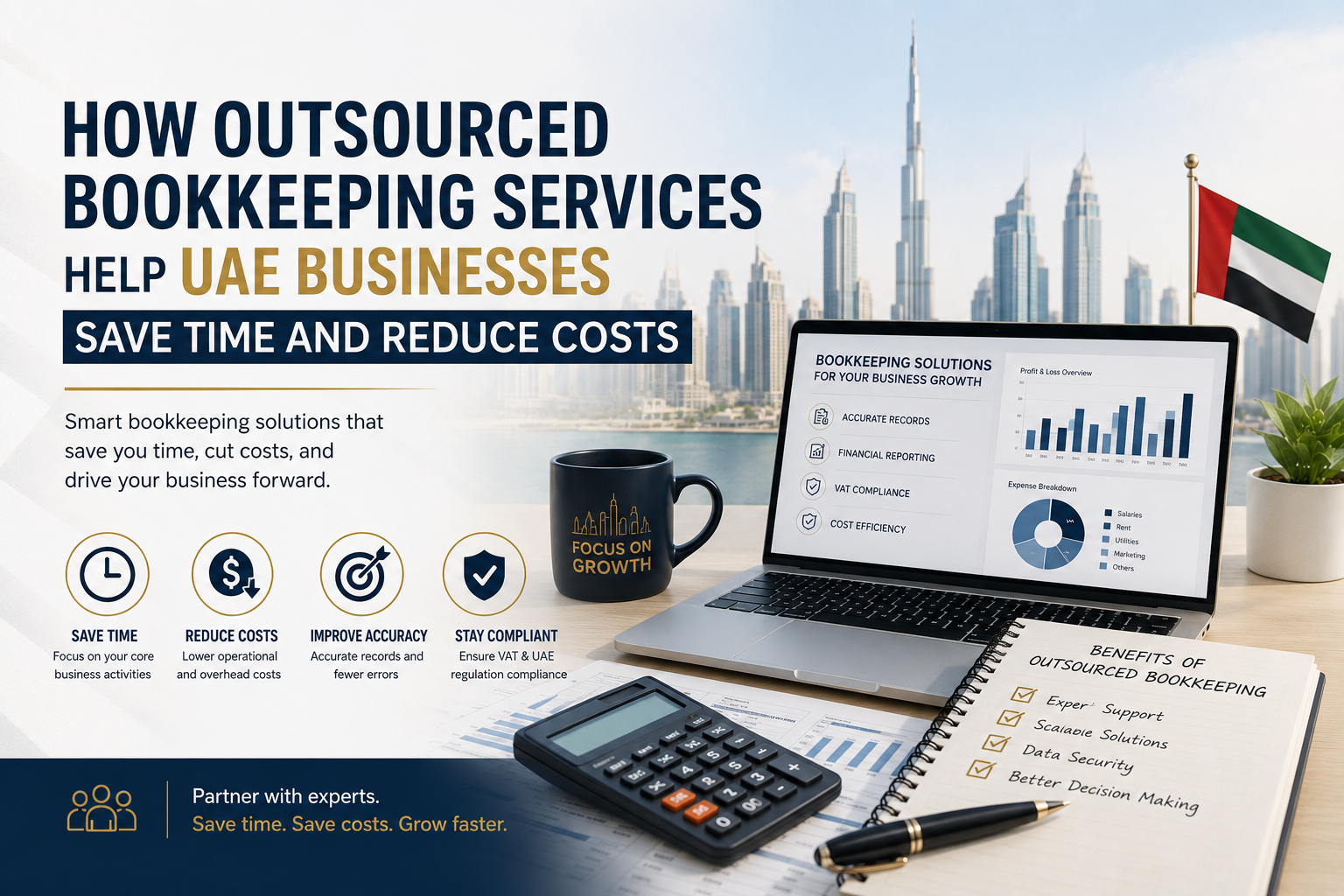
Bookkeeping is an essential part of every business, but maintaining accurate financial records can become increasingly time-consuming as a company grows. Recording transactions, reconciling accounts, tracking expenses, and preparing financial reports all require consistent attention.
For small and growing businesses in the UAE, managing these responsibilities internally can place significant pressure on business owners and employees. At the same time, hiring a full-time accounting team may not always be practical or cost-effective.
This is where outsourced bookkeeping services can provide an alternative. By delegating routine bookkeeping responsibilities to an external professional provider, businesses can reduce administrative workloads while maintaining organised and accurate financial records.
Outsourcing can also give businesses access to bookkeeping expertise and technology without requiring them to build a large internal finance function.
Outsourced bookkeeping involves hiring an external accounting or bookkeeping provider to manage some or all of a company's bookkeeping activities.
Depending on the business's requirements, outsourced services may include:
The scope can be adjusted according to the company's size, transaction volume, and internal resources.
Accurate bookkeeping provides businesses with reliable information about their financial position.
Well-maintained records can help management understand:
Without accurate records, business owners may struggle to understand how their company is performing or make informed financial decisions.
Bookkeeping can involve numerous repetitive tasks.
Employees may need to spend time:
Outsourcing these responsibilities allows business owners and internal teams to spend more time on activities such as sales, customer service, operations, and business development.
For growing businesses, saving administrative time can provide significant operational value.
Hiring full-time accounting employees involves more than salary costs.
Businesses may also need to consider:
Outsourcing allows businesses to access professional bookkeeping support without necessarily maintaining a large internal bookkeeping department.
This can be particularly useful for startups and small businesses with limited budgets.
Professional bookkeeping requires knowledge of accounting processes and financial recordkeeping.
An outsourced provider can bring experience in areas such as:
This can help businesses maintain more consistent financial processes without requiring business owners to manage every bookkeeping task themselves.
Manual bookkeeping can result in errors, particularly when financial records are maintained under time pressure.
Common issues can include:
Professional bookkeeping processes generally involve regular review and reconciliation.
Improved accuracy can provide businesses with more reliable financial information for decision-making and reporting.
When bookkeeping is postponed, financial records can quickly fall behind.
A backlog may make it difficult to understand the company's current financial position.
Regular outsourced bookkeeping can help businesses keep transactions and financial records updated.
This provides management with more timely information about:
Up-to-date records can also make financial reporting easier.
Bookkeeping provides the information businesses need to understand their cash position.
Accurate records can help management monitor:
This information can then be used to improve cash flow planning.
For example, if a business knows that AED 100,000 in customer invoices is outstanding, management can incorporate expected collections into its cash flow forecast.
Accurate bookkeeping provides the foundation for reliable financial reports.
Depending on the business, reports may include:
Regular reporting can help management identify changes in financial performance and make better-informed decisions.
Small business owners often manage multiple responsibilities at the same time.
They may be responsible for:
Managing bookkeeping on top of these responsibilities can become overwhelming.
Outsourcing routine bookkeeping activities can allow business owners to focus more heavily on strategic and operational priorities.
Modern bookkeeping increasingly relies on digital accounting systems.
Cloud-based platforms can help businesses manage:
Professional bookkeeping providers can work with accounting platforms and establish processes that make financial information easier to manage.
Technology can also reduce repetitive manual work and improve access to financial data.
A business's bookkeeping requirements can change as it grows.
A startup may initially have a relatively small number of transactions. As the company expands, it may deal with:
An outsourced bookkeeping arrangement can be adjusted as the company's requirements change.
This makes it easier to scale financial administration without immediately expanding the internal finance department.
Cost savings from outsourcing do not necessarily come from paying less for bookkeeping alone.
Businesses may reduce costs associated with:
However, the actual financial benefit depends on the size and needs of each business.
Companies should evaluate outsourcing based on both direct costs and the value of time saved.
| Factor | Outsourced Bookkeeping | In-House Bookkeeping |
|---|---|---|
| Staffing | External team | Internal employee/team |
| Recruitment | Usually not required | Required |
| Scalability | Can be adjusted | May require additional hiring |
| Expertise | Access to external specialists | Depends on internal staff |
| Administrative workload | Lower | Higher |
| Direct control | Managed through agreed processes | Direct internal control |
| Cost structure | Service-based | Employment-based |
Neither option is automatically better for every business. The right choice depends on transaction volume, budget, internal expertise, and operational requirements.
Startups often have limited budgets and small teams. Outsourcing can provide bookkeeping support without requiring a full internal accounting department.
Small businesses can use outsourced support to manage routine financial records while focusing internal resources on growth.
Companies experiencing increasing transaction volumes may benefit from scalable bookkeeping support.
Businesses with outdated or incomplete records may use professional catch-up bookkeeping to bring their financial information up to date.
A business may benefit from outsourcing when:
These signs can indicate that the current bookkeeping arrangement is no longer efficient.
Businesses should consider several factors before selecting a provider.
Look for experience working with businesses of a similar size or industry.
Confirm whether the provider handles the specific bookkeeping tasks required.
Check which accounting platforms and digital tools the provider uses.
Understand how frequently financial reports and updates will be provided.
A reliable communication process is important when financial responsibilities are shared with an external provider.
The provider should be able to accommodate changes in transaction volumes as the business grows.
A low-cost provider may not necessarily offer the level of expertise or service quality required.
Businesses should clearly establish which bookkeeping activities are handled externally and which remain internal.
Financial information must be exchanged consistently and accurately.
Even when bookkeeping is outsourced, business owners should review financial reports regularly.
Businesses should ensure that financial information is handled using appropriate access and security controls.
Accurate bookkeeping can make it easier to organise financial information required for applicable tax and compliance processes.
Well-maintained records can help businesses organise information relating to:
Businesses should ensure their bookkeeping and recordkeeping processes are aligned with applicable UAE requirements and seek professional tax advice where necessary.
Financial administration should support business growth rather than become an obstacle to it.
As businesses expand, management needs timely information to evaluate:
Outsourced bookkeeping can help maintain this financial information while reducing the administrative burden on internal teams.
Outsourced bookkeeping services can help UAE businesses save time, reduce administrative costs, improve financial accuracy, and maintain more organised records.
By delegating routine bookkeeping responsibilities to an external provider, businesses can access professional support without necessarily building a large internal finance team. Outsourcing can also provide greater flexibility as transaction volumes and financial requirements change.
However, businesses should select an outsourcing provider based on expertise, service scope, technology, communication, reporting, and scalability rather than price alone.
For UAE businesses looking for professional bookkeeping support, Dubai Business and Tax Advisors (DBTA) can assist with transaction recording, bank reconciliation, financial reporting, catch-up bookkeeping, and related bookkeeping requirements.
With accurate and up-to-date financial records, business owners can spend less time on routine financial administration and focus more attention on running and growing their businesses