
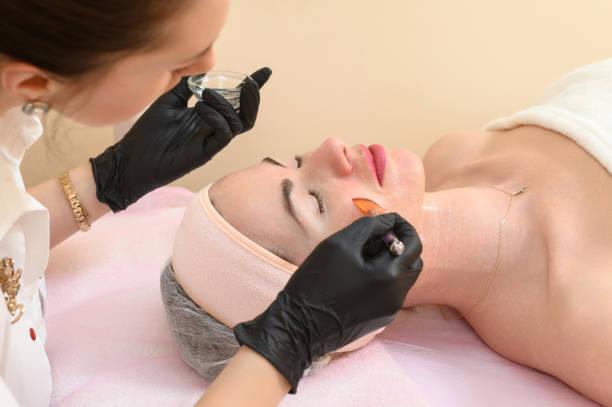
The success of a chemical peel is not determined on the day of treatment—it is decided in the weeks that follow. For those who have undergone a Chemical Peels in Riyadh, Chemical Peels in Riyadh understanding each step of the session and the aftercare that follows is essential for achieving the best possible outcome. The session itself follows a structured sequence designed to maximise results while ensuring your safety and comfort.
The Consultation and Skin Assessment
Your chemical peel journey begins with a thorough consultation. Your practitioner will review your medical history, skin concerns, and goals to determine whether a chemical peel is appropriate for you . This assessment is crucial because your skin type, the areas you want treated, and the results you hope to achieve will guide the choice of peel depth and formulation .
During this conversation, your practitioner will also discuss pre-treatment instructions. These often include a skincare routine to prepare your skin 2-3 weeks before the peel, which helps ensure a more uniform result and faster healing . Some patients may be advised to pause certain active ingredients like retinoids in the days leading up to their appointment. When researching the chemical peeling treatment price, remember that this initial consultation and personalised planning are part of the investment.
The Treatment Steps
On the day of your session, the procedure follows a clear sequence designed to ensure safety and effectiveness.
Skin Cleansing and Preparation
Your skin will be thoroughly cleansed to remove oil, dirt, and any makeup . This step is essential because any surface impurities can prevent the peel from penetrating evenly, leading to an uneven result. For some peels, a mild degreaser may be used to prepare the skin further .
Application of the Chemical Solution
Once your skin is prepared, the chemical solution is carefully applied using a brush, cotton pad, or special applicator . The solution may be applied in layers, and your practitioner will monitor your skin's response closely. You may feel a mild tingling, warming, or stinging sensation during application, which is normal and temporary .
The Waiting Period and Neutralisation
The peel is left on your skin for a specific amount of time, which can range from seconds to several minutes depending on the type and strength of the peel . Some peels require neutralisation—a step where the chemical reaction is stopped. For example, glycolic acid peels are often neutralised with water or an alkaline solution after 3 to 5 minutes to prevent burning . Other peels, like salicylic acid or TCA, are self-neutralising and do not require this step . The occurrence of "frosting"—a whitish discolouration of the skin—is a sign that a medium-depth peel has reached the desired depth .
Post-Peel Care
After the peel is neutralised or removed, soothing products are applied to calm the skin. This may include a cool compress, a calming mask, or a layer of petroleum jelly . Your practitioner will then apply a broad-spectrum sunscreen to protect your freshly treated skin . You will receive detailed aftercare instructions before leaving the clinic.
What to Expect After the Session
Recovery depends on the depth of your peel. Light peels may cause mild redness and flaking for a few days, while medium peels involve a week of visible peeling . Deep peels, which are rare, require several weeks of downtime. The session itself typically takes 30 to 60 minutes for most peels , and you can go home the same day.
After your peel, the most important rule is to let the skin shed naturally. Do not pick or pull at flaking skin—this is the single most reliable way to end up with a scar or pigmentation mark that outlasts the peel result. Also, avoid retinoids, exfoliating acids, and vitamin C serums until your skin has fully healed. The new skin is fragile, and active ingredients can cause irritation before the barrier has recovered. Your practitioner will advise when it is safe to reintroduce these products.
The Role of Sun Protection
Sun protection is non-negotiable after a chemical peel. Freshly exfoliated skin is highly susceptible to UV damage, which can cause permanent hyperpigmentation and undo your results . Avoid direct sun exposure until peeling has stopped, and then apply a broad-spectrum sunscreen with SPF 30 or higher every day . For medium and deep peels, sun protection should continue for several weeks or months.
For those considering Chemical Peels in Riyadh, following these aftercare steps is the most important investment you can make in your results. The quality of your outcome is determined not by the strength of the acid, but by how well you protect and support your skin in the weeks that follow.
For those seeking expert guidance and customised aesthetic care, you can book an appointment consultation at the Enfield Royal Clinic.
Frequently Asked Questions
How long does a chemical peel session take?
The session typically takes 30 to 60 minutes for most peels. The consultation and preparation may add additional time to your visit.
Is a chemical peel painful?
Most patients experience a mild tingling, warming, or stinging sensation during the peel. For deeper peels, a local anesthetic may be used to improve comfort .
What happens after the peel is applied?
After the peel is left on for a specific time, it is neutralised or removed. Soothing products are applied, and you receive detailed aftercare instructions.
How long does the peeling last?
Superficial peels cause mild flaking for a few days. Medium peels involve noticeable peeling for about a week, while deep peels have more extensive shedding .
When will I see the final results?
You may notice improvements within the first one to two weeks. The final results develop gradually over several weeks to months as new, healthier skin cells fully replace damaged layers .

 Arabic
 French
 Spanish
 Portuguese
 Deutsch
 Turkish
 Dutch
 Italiano
 Russian
 Romaian
 Portuguese (Brazil)
 Greek