English
 Arabic
 French
 Spanish
 Portuguese
 Deutsch
 Turkish
 Dutch
Dutch
 Italiano
 Russian
 Romaian
 Portuguese (Brazil)
 Greek
Greek
Is CapCut the Best Free Video Editor in 2026?
Film |
2026-07-09 17:25:56
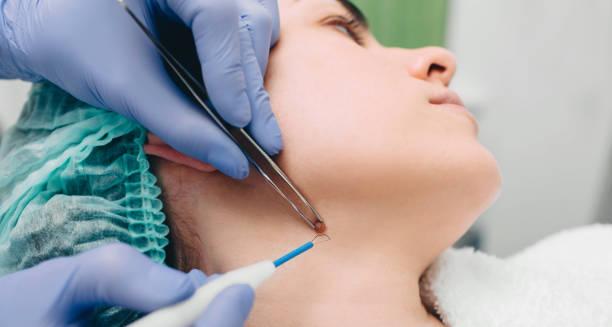
If a mole appears to return after Mole Removal in Dubai, it should be examined by a qualified dermatologist rather than automatically assumed to be harmless. Pigment can sometimes reappear within a treatment scar, but a returning or changing lesion may also require further medical assessment.
The American Academy of Dermatology specifically advises contacting a dermatologist if a mole grows back after removal because recurrence can occasionally be associated with melanoma.
Yes, a mole can sometimes appear again after removal.
The visible change may represent residual mole cells, a recurrent nevus developing within the scar, or a different lesion developing in the same area. DermNet describes a recurrent nevus as the reappearance of pigmentation within a scar following surgical removal of a mole.
However, the appearance of pigment in a scar cannot reliably be interpreted without clinical assessment.
The reason depends on the original mole, the removal method, and what is happening in the treated area.
Possible explanations include:
These possibilities can look similar to an untrained observer, which is why self-diagnosis is unreliable.
A recurrent nevus is a mole that develops again within the scar of a previously removed mole.
DermNet notes that recurrent nevi can have an unusual or irregular appearance, which can sometimes make them difficult to distinguish from melanoma.
This does not mean that every recurrent mole is cancerous. It means that new pigmentation in a previous treatment area deserves appropriate assessment.
No.
A recurrent mole does not automatically mean melanoma. There are benign reasons why pigmentation can reappear after treatment.
However, melanoma can sometimes develop in or around a mole, and a changing lesion should not be ignored. The AAD recommends prompt dermatological assessment if a mole grows, itches, bleeds, or changes.
The safest approach is to have the area examined rather than trying to determine the cause from appearance alone.
Do not attempt to remove the area yourself.
Instead, arrange a follow-up assessment and tell the clinician:
Previous photographs can sometimes help a clinician understand how the area has changed over time.
A returning lesion deserves particular attention if it shows signs such as:
The ABCDE framework is commonly used to identify potentially concerning pigmented lesions. “E” stands for evolution, meaning a lesion that changes over time.
A lesion that looks different from your other moles can also warrant professional examination.
The clinician may begin by examining the treated area and comparing it with the original mole if photographs or medical records are available.
A dermatoscope may provide a closer view of pigmentation and structures within the lesion.
Depending on the findings, the clinician may recommend monitoring, additional removal, or a biopsy. If skin cancer is suspected, tissue examination is required to establish the diagnosis.
The appropriate next step therefore depends on what the examination shows.
Potentially.
Different removal procedures remove different amounts and depths of tissue. The AAD describes surgical excision and surgical shave as common dermatological approaches to mole removal.
With an excision, the entire mole is cut out and the wound may be closed with stitches. A surgical shave removes the mole using a blade at the skin level or appropriate depth.
Because procedures differ, the possibility of residual tissue and recurrence should be discussed according to the specific technique used.
If the original mole was sent for microscopic examination, the pathology result can provide valuable information during a later assessment.
The clinician may want to know whether the original lesion was:
The original pathology report can help provide context when a new pigmented area develops in the same location.
If the original lesion was suspicious or malignant, follow-up requirements can be significantly different from those for an ordinary benign mole.
A previous benign diagnosis can be reassuring, but a new or changing lesion should still be assessed.
The skin can develop new lesions independently of the original mole. A new change should therefore not automatically be attributed to recurrence.
If the area looks different from the original scar or continues to evolve, professional evaluation is appropriate.
Cosmetic removal does not eliminate the need for monitoring the treated area.
If pigment later appears in the scar, the patient may naturally assume that the mole has simply grown back. However, the clinician may need to distinguish between recurrent pigmentation, a recurrent nevus, scar-related changes, and a new lesion.
This is particularly important when the returning area has changed in appearance or developed new symptoms.
It may be possible, but the reason for recurrence should be established first.
If the area appears benign, the clinician can discuss whether additional removal is appropriate. If the lesion is suspicious, diagnostic evaluation takes priority.
Depending on the findings, another procedure may involve removal of additional tissue and possible microscopic examination.
The decision should therefore be based on clinical assessment rather than simply repeating the original procedure.
It is better not to ignore a returning mole.
The AAD recommends contacting a dermatologist if a mole grows back after removal.
This does not mean that every recurrence is an emergency. It means that assessment is preferable to assuming the change is harmless.
Early evaluation can help distinguish an ordinary recurrent nevus from a lesion requiring additional treatment.
Dubai's high levels of sun exposure make ongoing UV protection important for anyone concerned about pigmented lesions.
Sun exposure contributes to skin damage and increases skin cancer risk. The AAD recommends protecting the skin from harmful ultraviolet radiation and monitoring moles for changes.
After mole removal, patients should follow the clinician's instructions for protecting the healing area from sun exposure.
This can be particularly relevant for people who spend time outdoors, drive frequently, participate in outdoor sports, or travel to sunny destinations.
Not every dark mark in a scar represents a returning mole.
Healing skin can undergo pigmentation changes, and the appearance of a scar can evolve over time. However, pigmentation that appears to be increasing, developing an irregular pattern, or forming a new lesion should be evaluated rather than automatically classified as a normal scar.
The distinction between scar pigmentation and recurrent melanocytic tissue may require professional examination.
There is no guaranteed way to prevent recurrence because the likelihood depends partly on the original lesion and removal technique.
Patients can reduce avoidable problems by:
The AAD warns that attempting to remove moles at home can cause infection, scarring, and delayed skin cancer diagnosis.
Arrange professional assessment if the treated area develops:
You should also seek assessment if you are unsure whether the change represents normal healing or recurrence.
It is better to have an uncertain change evaluated than to assume that it is simply part of the scar.
Yes. Pigmentation can sometimes reappear in a treatment scar. This may represent a recurrent nevus or another change, so a dermatologist should assess the area.
No. A recurrent nevus can be benign, but recurrent pigmentation can sometimes resemble melanoma. Professional assessment is important when a mole returns.
Contact the dermatologist who treated you or another qualified dermatologist for assessment. Do not attempt to remove the returning lesion yourself.
It can happen because different removal techniques remove tissue differently. If pigmentation reappears, the area should be assessed rather than assuming the original mole has simply returned.
Yes. If the original tissue was examined, the previous pathology findings can provide useful context for evaluating the new pigmentation.
Potentially, but the reason for recurrence should first be evaluated. Additional removal may be appropriate depending on the clinical findings.
Do not deliberately wait for a changing mole to resolve on its own. The AAD recommends seeing a dermatologist if a mole grows back after removal.
A mole that appears after previous removal should not automatically be treated as either harmless recurrence or cancer. A recurrent nevus, residual pigmentation, scar-related change, a new lesion, and a concerning growth can have overlapping appearances, making professional assessment the safest way to determine what is happening.
For patients exploring mole removal and dermatology treatment options in Dubai, an appropriate follow-up assessment can help determine whether the returning pigmentation should be monitored, investigated, or treated again.
For individualized assessment and treatment planning, Tajmeels Clinic provides aesthetic and healthcare services in Dubai with treatment recommendations based on each patient's needs and clinical findings.