English
 Arabic
 French
 Spanish
 Portuguese
 Deutsch
 Turkish
 Dutch
Dutch
 Italiano
 Russian
 Romaian
 Portuguese (Brazil)
 Greek
Greek
How social media has changed missing person searches
Networking |
2026-09-11 06:43:13
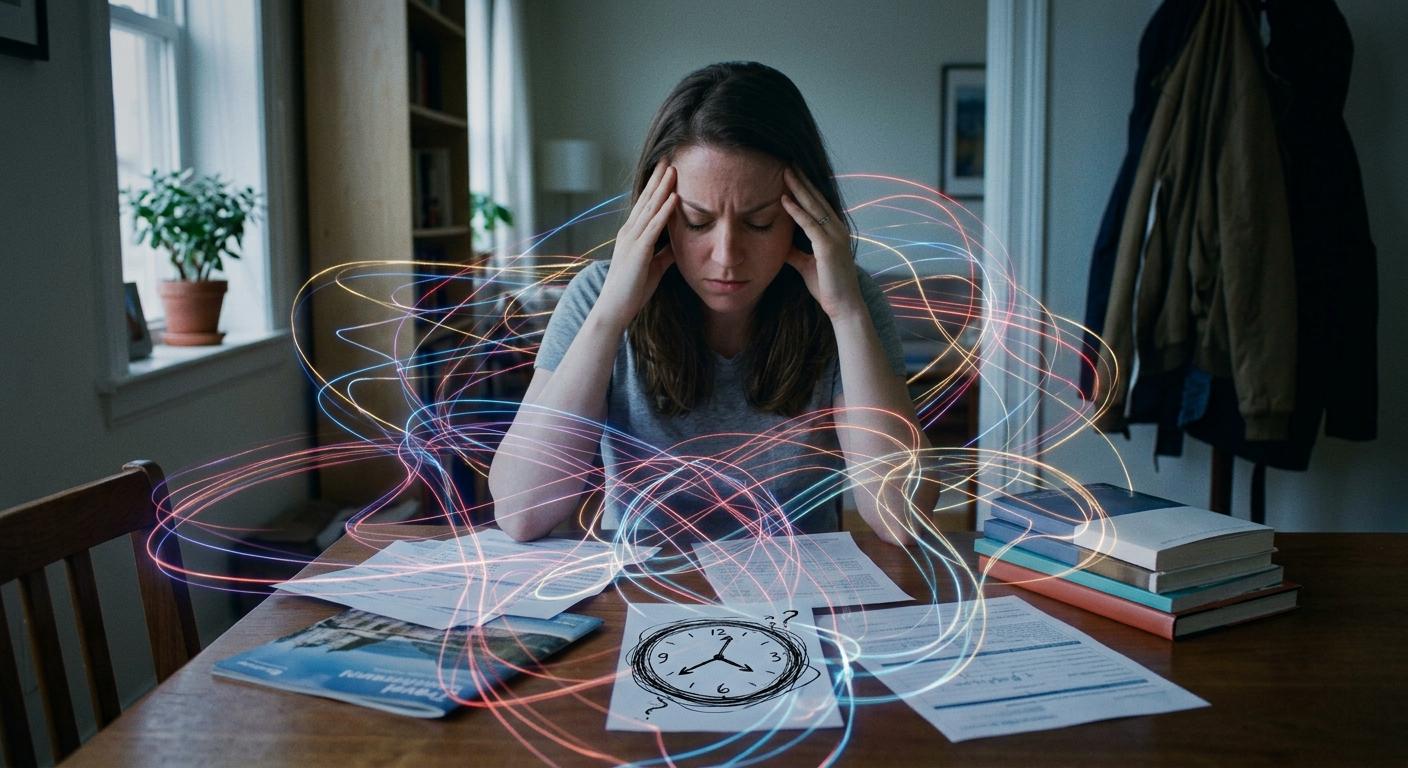
Stress becomes a reason to consider mental health counseling when it remains difficult to manage, begins interfering with daily functioning, or continues affecting sleep, concentration, emotions, relationships, or ordinary responsibilities despite reasonable efforts to cope.
Stress itself is not automatically a sign that something is seriously wrong. Deadlines, financial pressure, relationship difficulties, major changes, caregiving responsibilities, and other demanding situations can produce temporary stress. The more useful question is whether the stress is still connected to a manageable situation or whether it has developed into a persistent pattern that is becoming harder to handle.
Short-term stress often has a recognizable trigger. A person may feel tense before an important presentation, overwhelmed during a particularly busy week, or worried while dealing with an unexpected problem. When the situation changes, the intensity of the stress may gradually decrease.
Persistent stress can look different. The original problem may remain, but the person's reaction may continue affecting areas of life that were previously manageable.
For example, someone might begin with pressure from work. At first, they simply feel tired after long days. Over time, they start thinking about work late at night, sleeping poorly, becoming irritable at home, avoiding social activities, and struggling to concentrate the following morning. The concern is no longer only the workload. Stress has started influencing several parts of daily functioning.
This does not automatically indicate a particular mental-health condition. It does suggest that the pattern deserves closer attention.
The presence of stress is less informative than its duration, intensity, frequency, and impact.
A useful self-check is to consider four questions:
How long has this been happening? Temporary pressure may improve when circumstances change, while ongoing stress can remain even after the original trigger becomes less intense.
How often does it interfere with daily life? Occasional difficult days are different from regularly struggling to complete ordinary responsibilities.
How strongly does it affect functioning? Sleep, concentration, motivation, relationships, work, school, and self-care can all provide useful clues.
Are usual coping strategies still working? If activities that normally help no longer provide enough relief, the situation may require a different approach.
None of these questions can diagnose a mental-health condition by itself. They help identify whether stress has become significant enough to discuss with a professional.
Stress can show up emotionally, physically, cognitively, and behaviorally. Looking at the overall pattern is often more useful than focusing on one symptom.
Someone experiencing prolonged stress might notice:
persistent irritability or feeling emotionally overwhelmed
difficulty concentrating on ordinary tasks
changes in sleep
feeling constantly tense or unable to switch off
withdrawing from friends or family
reduced motivation
frequent worrying about everyday responsibilities
difficulty relaxing even when there is time to do so
relying increasingly on avoidance
declining performance at work or school
feeling that ordinary problems require much more effort to handle
The key issue is not whether a person has experienced one or more of these experiences. Many can occur during ordinary periods of pressure. What matters is the pattern and its effect on functioning.
Not all stress has the same underlying context. Two people may describe themselves as "stressed" while dealing with very different situations.
One person may be responding to a temporary workload that will decrease after a project ends. Another may be dealing with ongoing conflict at home with no clear resolution. Someone else may have experienced several major changes in a short period and feel emotionally exhausted.
There can also be situations where stress overlaps with anxiety, depression, grief, trauma-related distress, or another mental-health concern. Similar experiences can have different explanations, which is one reason it can be unhelpful to label the problem based on a single symptom.
Consider persistent difficulty sleeping. It could occur because someone is working late, because they are repeatedly worrying about an unresolved situation, because of changes in mood, or for other reasons. The symptom matters, but its context matters too.
One of the more useful things to notice is how you are responding to stress, not simply how much stress you feel.
Imagine someone receives several demanding assignments at work. They feel overwhelmed and begin postponing the most difficult task. Avoiding it provides temporary relief. But the unfinished work creates more pressure, which makes the task feel even harder to approach.
The cycle can look like this:
Stress → avoidance → temporary relief → unfinished problem → increased pressure → more avoidance
This does not mean avoidance is a personal failure. Avoidance can be an understandable response when something feels overwhelming. The important point is recognizing when the coping strategy is unintentionally maintaining the problem.
A similar pattern can occur socially. Someone feeling emotionally exhausted may stop responding to messages because interaction feels like another responsibility. The immediate reduction in pressure can feel helpful, but prolonged withdrawal may leave the person with less support and more isolation.
Recognizing these cycles can help a person decide whether ordinary coping adjustments are enough or whether professional guidance would be useful.
Situation:
A person has been under heavy pressure at work for several months. They still complete their responsibilities, but they regularly come home exhausted, become short-tempered with family members, sleep poorly, and spend much of the evening thinking about the next day's problems.
What is happening:
The work situation may be the original source of stress, but the effects have expanded into sleep, emotional regulation, and relationships.
What to notice:
The important signal is not simply "work is stressful." It is the growing effect on several areas of functioning.
Better way to understand it:
The person may benefit from looking beyond the immediate workload and considering whether their current coping pattern is sustainable.
Practical next step:
They could track when the stress becomes strongest, what tends to trigger it, how they respond, and which areas of life are being affected. If the pattern remains difficult to manage, discussing it with a qualified mental-health professional can help clarify possible sources of distress and appropriate support.
Healthy routines can support stress management, but they are not a universal solution.
Getting adequate rest, maintaining social connections, taking breaks, staying physically active when possible, and creating boundaries around demanding responsibilities may all be useful. However, someone can make reasonable lifestyle changes and still feel overwhelmed.
That distinction matters because struggling despite genuine effort does not mean the person has failed at managing stress.
For instance, someone may improve their sleep routine but continue experiencing intense worry every evening. Another person may take regular breaks at work but remain emotionally exhausted because of ongoing relationship conflict. In such situations, the issue may require more than simply adding another self-care habit.
Professional counseling can provide a structured setting to examine patterns, identify contributing factors, develop coping skills, and work through concerns that may be difficult to address alone.
Counseling is not simply a place to talk about everything that went wrong during the week. Depending on the person's needs and the professional's approach, sessions can help examine the relationship between thoughts, emotions, behaviors, circumstances, and daily functioning.
A person may explore questions such as:
What situations consistently increase my stress?
What thoughts tend to appear when I feel overwhelmed?
Am I avoiding certain responsibilities or conversations?
Which coping strategies actually help, and which only provide short-term relief?
Has stress changed how I sleep, work, socialize, or respond emotionally?
Are there boundaries or relationship patterns contributing to the problem?
What would managing this situation more effectively look like?
This process can be particularly useful when a person knows they are struggling but cannot clearly identify why.
Stress and anxiety are related but are not interchangeable terms. Stress commonly involves a response to pressure or demands, while anxiety can involve persistent fear, apprehension, or worry that may continue even when there is no immediate stressor.
Low mood can also appear alongside prolonged stress. A person who has spent months feeling overwhelmed may become less motivated, socially withdrawn, or emotionally drained.
Because these experiences can overlap, it is better to look at the broader pattern than to conclude that a single symptom means a particular disorder is present.
A qualified professional can consider the duration, context, severity, and impact of symptoms when helping someone understand what may be happening.
You do not need to wait until stress becomes unbearable before considering professional support. A practical self-check can help you decide whether the issue deserves further attention.
Ask yourself:
Has the stress persisted longer than I expected?
Is it affecting my sleep, concentration, mood, relationships, or responsibilities?
Am I avoiding things that I normally handle?
Do I feel unable to switch off from the source of stress?
Are the strategies I normally use becoming less effective?
Is the problem gradually becoming more difficult to manage?
A "yes" to one question does not mean counseling is automatically necessary. Several "yes" answers, especially when the pattern is persistent or disruptive, can be a reasonable reason to discuss the situation with a mental-health professional.
People often assume counseling is only appropriate when someone has a severe mental-health condition. In reality, seeking professional guidance can also be about understanding a difficult pattern before it becomes more disruptive.
Sometimes symptoms continue after the original stressor changes. A person may have developed disrupted sleep, avoidance, persistent worry, or relationship difficulties that require time and attention to resolve.
Counseling does not have to be about assigning a label. It can involve understanding patterns, identifying practical changes, developing coping strategies, and deciding what type of support may be appropriate.
You do not need to diagnose yourself before speaking with a professional. Describing what you have noticed—when it started, what makes it worse, and how it affects daily life—can provide a useful starting point.
Most stress-related concerns can be discussed through ordinary mental-health support, but some situations require more urgent attention. If someone feels unable to stay safe, is thinking about harming themselves or another person, or is experiencing a mental-health emergency, they should seek immediate help through local emergency services or an appropriate crisis resource rather than waiting for a routine counseling appointment.
For less urgent concerns, the focus can remain on recognizing patterns early and seeking support before daily functioning becomes increasingly difficult.
There is no single number of days that determines when counseling is appropriate. Persistent stress deserves more attention when it is difficult to manage, continues despite reasonable coping efforts, or begins interfering with sleep, relationships, work, school, or other daily responsibilities.
Yes. Counseling cannot necessarily remove an external stressor, but it can help a person examine how they are responding to it, develop healthier coping patterns, address emotional difficulties, and identify practical changes that may improve functioning.
It can be, particularly when sleep problems persist or occur alongside significant worry, low mood, emotional distress, or daytime impairment. Sleep difficulties can have many possible causes, so their broader context is important.
Not necessarily. Seeking support earlier can make sense when you notice that stress is becoming harder to manage, even if you are still meeting your responsibilities. You do not have to wait for a major disruption before discussing a concern.
Start with what you have noticed: when the problem began, what tends to trigger it, how often it occurs, how it affects your emotions and behavior, and whether it has changed your sleep, concentration, relationships, or daily responsibilities. You do not need to have everything figured out beforehand.
The most useful way to judge whether stress has become a reason to seek support is to look beyond the stressful event itself. Consider its persistence, its effects on daily functioning, the coping patterns developing around it, and whether your usual ways of managing pressure are still working. If stress is becoming difficult to understand or manage, talking with a qualified professional can provide a clearer way to examine what is happening and what kind of support may fit your situation. Resources such as NuTrans Health can be relevant when people are looking for reliable mental-health education and support as they consider their next step.