English
 Arabic
 French
 Spanish
 Portuguese
 Deutsch
 Turkish
 Dutch
Dutch
 Italiano
 Russian
 Romaian
 Portuguese (Brazil)
 Greek
Greek
iPad / Tablet Repair West Bellaire with Reliable Technicians
Other |
2026-06-23 07:01:58
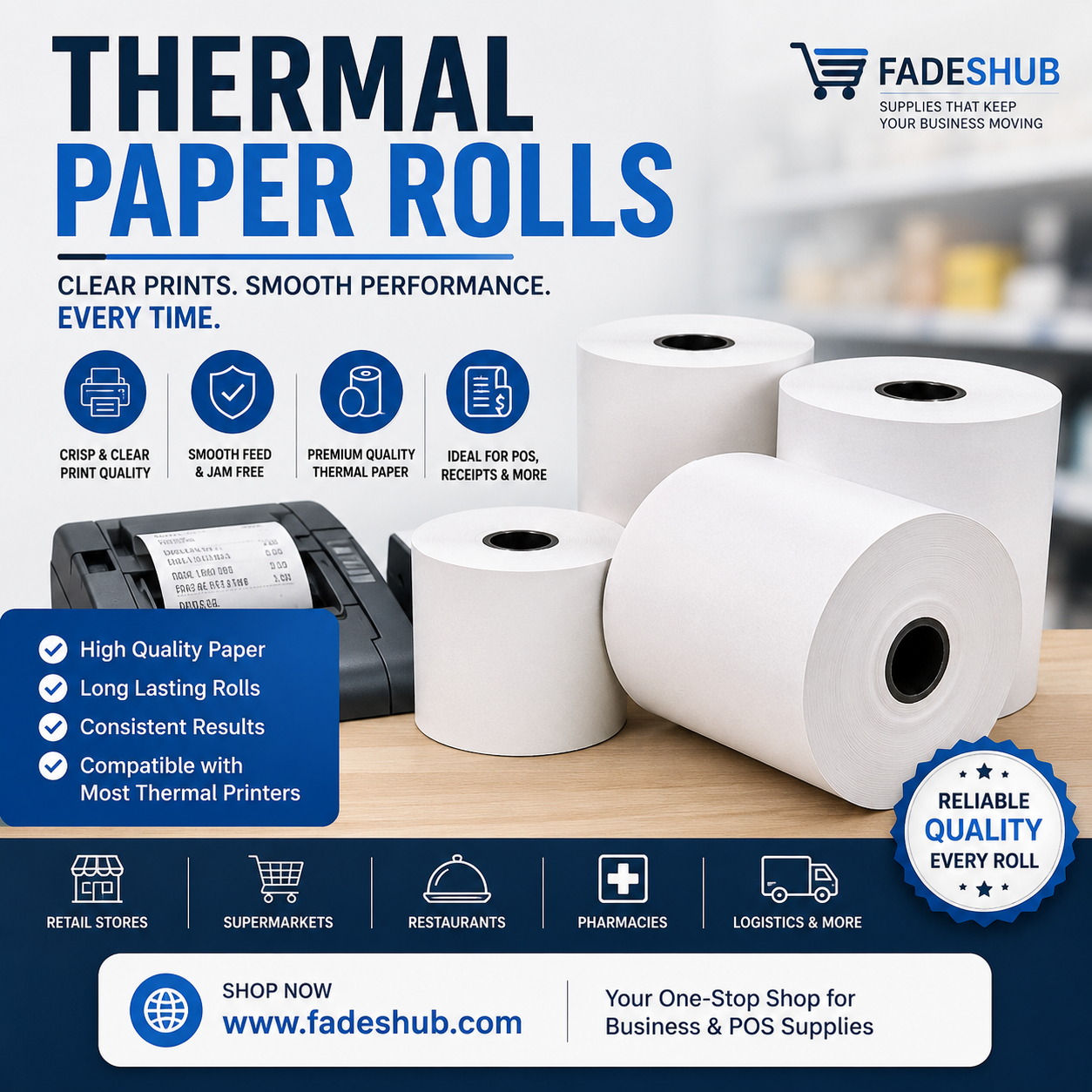
Thermal paper rolls are an essential consumable for businesses that depend on fast, clear and reliable receipt printing. Retail stores, restaurants, cafés, supermarkets, pharmacies and service counters use them for transactions. Unlike conventional paper, thermal paper has a heat-sensitive coating that allows compatible printers to create an image without ink or toner. This makes thermal printing convenient and efficient. Choosing the right roll involves printer compatibility, paper quality, dimensions and storage.
Thermal paper rolls are continuous rolls of specially coated paper designed for thermal printing systems. In direct thermal printing, a printhead applies controlled heat to selected areas of the coating. The heated sections change colour, producing text, numbers, logos, barcodes or simple graphics. Direct thermal systems do not require ink cartridges, which is useful in busy environments where receipts need to be produced quickly and printers must remain simple to operate.
A thermal printer contains a printhead with tiny heating elements. As the roll moves underneath it, selected elements activate precise areas of the coated surface. The result appears almost immediately. The paper must be manufactured specifically for this printing process.
The technology appears in business environments. Retailers use rolls for receipts, while restaurants may print bills and kitchen tickets. Card payment terminals often use compact rolls, and ticketing systems rely on thermal media for printed information.
Other applications include:
Point-of-sale receipts
Payment terminal slips
Queue tickets
Weighing scale printouts
Barcode and identification labels
Portable receipt printing
Size is one of the most important factors when purchasing thermal rolls. Printers can require different paper widths, core dimensions, outer diameters and roll lengths.
The width must fit the printer's paper path, while the core must work with its holder or spindle. A roll can have the correct width but still be unsuitable if its core is incompatible. The maximum diameter determines whether the roll fits inside the printer. Length affects replacement frequency, with longer rolls potentially reducing interruptions.
Always check the printer manufacturer's specifications before ordering large quantities.
The coating is central to print performance. A consistent surface can produce sharp characters and even print density. Lower-quality paper may create faint areas or excess dust.
For checkout receipts, clear and consistent printing is usually the main priority. Longer-retention applications may require improved image stability.
Heat, sunlight, friction and certain chemicals can affect thermal images. No thermal receipt should be assumed to have unlimited archival life.
Thermal paper and standard printer paper serve different purposes. Ordinary paper depends on ink or toner, whereas direct thermal paper relies on a heat-sensitive coating.
|
Feature |
Thermal Paper |
Standard Printer Paper |
|
Printing method |
Heat-sensitive coating |
Ink or toner |
|
Common format |
Roll |
Sheets |
|
Ink required |
No for direct thermal |
Yes |
|
Typical use |
Receipts and tickets |
Documents |
|
Printer type |
Thermal printer |
Inkjet or laser |
This difference explains why ordinary paper cannot replace thermal paper in a receipt printer.
Point-of-sale printers operate where speed and consistency matter. The roll should match the printer's supported dimensions and paper requirements.
A suitable product should provide smooth feeding, clean cutting and readable printing. Businesses should consider whether they need standard receipt paper or a product with additional durability characteristics.
Retail counters may prioritise long rolls and consistent output because staff handle frequent transactions. Restaurants may place greater importance on clear kitchen tickets and reliable feeding during busy service periods.
Payment terminals typically require smaller rolls designed around compact paper compartments.
Thermal paper is sensitive to heat, so storage deserves attention. Unused rolls should generally be kept away from direct sunlight, excessive heat, moisture and substances that could affect the coating.
A cool, dry storage area can help preserve the paper before use. Keeping rolls in packaging until needed can reduce unnecessary exposure.
Printed receipts should be protected from prolonged heat and strong light when their information needs to remain readable.
Paper quality is only one part of reliable thermal printing. A dirty or worn printhead can produce faint or uneven results even when the correct paper is installed.
Regular equipment care can help maintain consistent output. Rolls should be loaded correctly and the paper path kept clean.
Using compatible thermal paper rolls reduces the risk of fit and feeding problems and helps maintain predictable printing.
There is no single roll that is ideal for every printer or application. A small payment terminal, busy POS counter and label printer can all require different specifications.
Comparing width, diameter, core, length, coating and intended use provides a stronger basis for purchasing decisions than focusing on price alone. Reliable paper can help businesses avoid interruptions and maintain clear printed records.
For further more related blogs or informations click here
Direct thermal rolls do not need conventional ink or toner. The printer creates the image by heating the paper's reactive coating.
Yes. Width, core size, diameter and length vary between printers and applications.
Exposure to heat, sunlight, friction and unsuitable chemicals can affect the heat-sensitive image over time.
No. A direct thermal printer requires compatible thermal media designed for its printing mechanism.
Store unused rolls in a cool, dry place away from direct sunlight, excessive heat and conditions that could damage the coating.
Check the printer model, supported roll width, core size, maximum diameter, required length and intended printing application.