English
 Arabic
 French
 Spanish
 Portuguese
 Deutsch
 Turkish
 Dutch
Dutch
 Italiano
 Russian
 Romaian
 Portuguese (Brazil)
 Greek
Greek
Fat transfer in Dubai: Understanding Consultation and Surgical Fees
Health |
2026-08-08 07:26:37
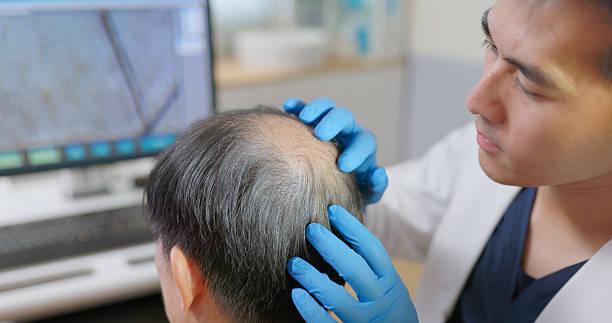
Hair Transplant in Abu Dhabi can be considered for people who have permanent gaps or unusually sparse areas along the hairline from birth. Unlike progressive hair loss, congenital gaps may remain stable for years, but their shape, follicle density, and surrounding hair direction still need careful assessment before graft placement.
A congenital hairline gap is an area that has naturally developed with fewer visible terminal hairs than the surrounding scalp. It may appear as a small empty section, a narrow separation between naturally dense areas, or an irregular zone that becomes more noticeable when the hair is pulled back.
These gaps are different from ordinary recession. There may be no active process causing the area to enlarge, which changes how a transplant should be planned.
The objective is usually not to redesign the entire hairline. Instead, the focus can be on integrating a relatively small number of follicles into an existing pattern while preserving the patient's natural proportions.
Congenital sparsity can occur in several locations:
The exact location matters because each region has a different hair direction and angle.
A small defect does not automatically mean a simple procedure. When the surrounding hair is dense, an incorrectly positioned graft can become more visible than the original gap.
The surgeon needs to evaluate the transition between existing and transplanted follicles. This includes the angle at which hairs emerge, their direction, spacing, caliber, and relationship to nearby follicles.
A successful design should make the transplanted hairs behave visually like part of the original hairline rather than appearing as a separate implanted section.
A congenital gap may require fewer grafts than a conventional transplant, but each graft can have greater visual importance.
At the leading edge of the hairline, single-hair follicular units are often useful for creating a soft transition. Behind this zone, follicular units with greater hair counts may contribute to density where appropriate.
The direction should follow the surrounding anatomy rather than using one uniform angle across the entire recipient area.
Before planning Hair Transplant in Abu Dhabi, the existing hair surrounding the congenital gap should be evaluated.
The assessment can consider:
This distinction is important because a congenital gap can coexist with ordinary androgenetic hair loss. A patient may have been born with one sparse area but later develop recession elsewhere.
If both conditions are present, graft allocation needs to account for possible future changes rather than treating the congenital gap in isolation.
The most noticeable mistake in localized hair restoration is creating a hard boundary between implanted and native hair.
A better approach is usually to create a gradual transition. The first row should not necessarily be a perfectly straight line of follicles. Natural hairlines contain variations in spacing, direction, and density.
For congenital gaps, the existing hairline provides an important template.
The surgeon can examine the neighboring follicles to determine:
These characteristics help determine where individual grafts should be positioned.
Graft selection should be based on the visual requirement rather than simply filling the empty space.
Single-hair grafts may be appropriate near the visible border, while naturally occurring multi-hair units can be positioned farther behind the transition where additional density is needed.
Overpacking is not automatically better. Excessive graft concentration can place unnecessary demand on the donor area and may not improve the final appearance proportionally.
| Planning factor | Why it matters | Restoration goal |
|---|---|---|
| Gap size | Determines approximate coverage | Avoid unnecessary graft use |
| Native density | Defines the surrounding visual standard | Blend transplanted follicles |
| Hair caliber | Influences perceived fullness | Match surrounding appearance |
| Hair direction | Controls visual integration | Follow natural emergence pattern |
| Donor availability | Limits available grafts | Preserve long-term options |
| Hairline shape | Influences facial proportions | Maintain natural geometry |
Stability is one of the important differences between congenital gaps and active hair loss.
If the area has looked substantially unchanged for many years, the surgeon may be able to plan restoration around a relatively stable defect. However, stability should not be assumed simply because the gap has existed since childhood.
A detailed history can help distinguish a congenital pattern from gradual recession that was simply noticed at a young age.
If native follicles around the gap are progressively becoming finer, transplantation alone may not address the broader issue.
In such cases, the treatment plan may need to separate two objectives:
This prevents the transplant from being designed solely around the current appearance while ignoring potential changes in adjacent areas.
Because congenital gaps are often relatively small, donor requirements may be modest. That does not eliminate the importance of donor assessment.
The surgeon should determine whether the available donor follicles are sufficiently stable and suitable for the recipient area.
A donor area with strong density can provide flexibility for localized restoration. Conversely, limited donor supply may influence whether the gap should be completely filled or softened with a more conservative design.
Donor preservation remains important even when the immediate treatment area is small.
Two people can receive a similar number of grafts and achieve very different visual results.
Hair caliber, curl pattern, color, skin tone, and the contrast between hair and scalp can influence how dense an area appears.
For a congenital gap, matching the visual characteristics of neighboring hair can therefore be more important than simply maximizing the number of implanted follicles.
A well-planned restoration should look appropriate under normal indoor lighting as well as strong outdoor light, which is particularly relevant in Abu Dhabi's bright environment.
Recovery for a localized transplant can still involve temporary redness, swelling, sensitivity, crusting, or itching in the treated region.
Patients should follow the individual aftercare instructions provided by their medical team. Early handling of the grafts, excessive sweating, strenuous activity, or unprotected sun exposure may interfere with comfortable recovery.
Abu Dhabi's strong sunlight also makes postoperative sun protection especially relevant. The scalp should be protected according to the surgeon's instructions during the healing period.
A small restoration may be easier to schedule around professional commitments, but visible redness or crusting can still occur temporarily.
Patients with client-facing jobs, frequent meetings, or public-facing responsibilities may therefore want to plan the procedure around several quieter days.
The actual recovery timeline varies according to the number of grafts, technique, individual healing, and the treated area.
Hair transplantation does not recreate the exact follicular arrangement that would have developed naturally.
The objective is to create an appearance that integrates convincingly with existing hair.
Patients should understand that transplanted follicles require time to progress through the growth cycle. Early changes do not represent the final density, and maturation can continue over several months.
A realistic consultation should therefore focus on proportional improvement rather than promising a perfectly reconstructed original hairline.
Not every small congenital gap requires surgery.
A specialist may recommend observation or another approach when:
A consultation should determine whether transplantation provides a meaningful visual advantage compared with leaving the area untreated.
The hairline should be evaluated in relation to the entire face rather than treated as an isolated strip of scalp.
Small congenital gaps can sometimes contribute to an asymmetrical visual impression, but correcting every minor irregularity may produce a less natural result than preserving some variation.
The design should consider the forehead, temples, facial width, existing hairline, and natural asymmetry.
This is especially important when the congenital gap is close to the central hairline, where even a small change can affect the overall appearance.
Localized congenital restoration often benefits from restraint.
Instead of filling every visible millimeter, a surgeon may focus on reducing the visual contrast between the sparse area and surrounding hair. This can achieve a more natural result while conserving donor follicles.
For patients researching hair restoration options in Dubai, the same principle applies: the quality of planning should be judged by how naturally the result integrates, not simply by the number of grafts used.
Before proceeding, the consultation should clarify several practical points.
The patient should understand:
These factors create a more realistic treatment plan than evaluating the gap from photographs alone.
A congenital hairline gap can be small in physical size but significant in visual impact. Hair Transplant in Abu Dhabi can provide a targeted restoration option when the defect is stable, the donor supply is appropriate, and the transplanted follicles can be integrated with the existing hair pattern.
The strongest result comes from precise assessment rather than aggressive graft placement. Matching follicle direction, spacing, caliber, facial proportions, and surrounding density allows a localized restoration to look like a natural continuation of the patient's own hair.
For patients considering a carefully planned approach to congenital hairline restoration, Tajmeels Clinic can provide a consultation focused on donor assessment, recipient design, graft planning, and individualized hair restoration goals.