English
 Arabic
 French
 Spanish
 Portuguese
 Deutsch
 Turkish
 Dutch
Dutch
 Italiano
 Russian
 Romaian
 Portuguese (Brazil)
 Greek
Greek
Best Applique Embroidery Digitizing for Sharp, Clean Designs
Art |
2026-09-04 11:13:53
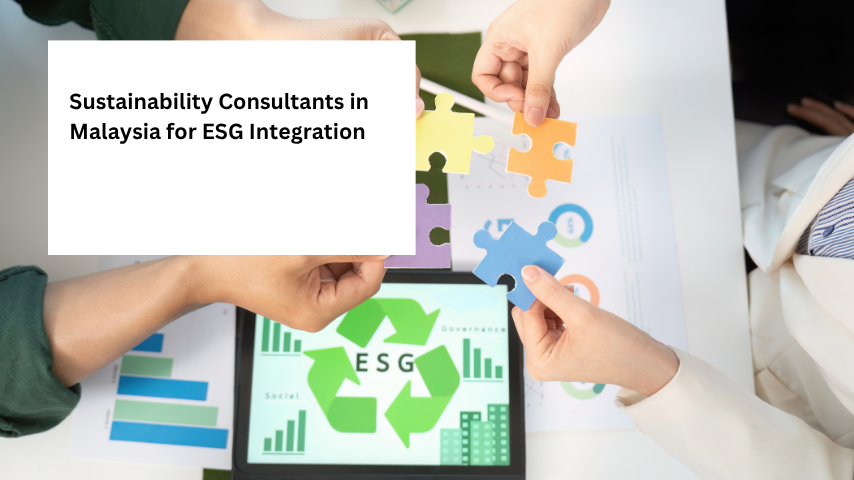
Awareness of ESG has spread through corporate Malaysia far faster than the ability to actually act on it. Research from Alliance Bank Malaysia found that ESG awareness among Malaysian SMEs jumped from just 14 percent to 80 percent between 2023 and 2025, yet only 28 percent had actually incorporated ESG practices into their business strategy in that same period. That gap, between knowing ESG matters and embedding it into how a company actually operates, is exactly what ESG integration is meant to close, and it is why Sustainability Consultants in Malaysia are increasingly hired specifically for integration work rather than reporting alone.
ESG integration means embedding environmental, social, and governance considerations directly into an organization's core business decisions, risk management, and operations, rather than treating sustainability as a separate reporting function that runs alongside the "real" business. It is the difference between a company that produces a sustainability report once a year and one whose sustainability priorities actively shape procurement, capital allocation, and day-to-day operational choices.
The term originated largely in investment contexts, where ESG integration refers to systematically incorporating ESG factors into financial analysis and investment decisions, but the same underlying logic applies inside operating companies. A logistics firm integrating ESG does not simply disclose its emissions; it factors decarbonization into fleet purchasing decisions. A manufacturer does not just report on waste; it redesigns processes to reduce it. Sustainability Consultants in Malaysia focused on integration work are typically brought in to help make that operational shift, moving ESG considerations out of the sustainability team's annual report and into the decisions line managers make every week.
ESG integration is becoming urgent for Malaysian businesses because multinational buyers and large public-listed companies are increasingly requiring ESG performance from their suppliers as a condition of doing business, which means even companies with no direct regulatory obligation are now facing ESG expectations through their commercial relationships. For many Malaysian SMEs, this makes integration a matter of market access rather than voluntary good practice.
A joint report by Capital Markets Malaysia and PwC Malaysia found that SMEs make up the majority of suppliers to Malaysian public-listed companies, contributing 38 percent of national GDP and accounting for 48 percent of national employment, which means the ESG expectations flowing down from PLCs to their supply chains touch a very large share of the economy. Malaysia's Deputy Investment, Trade and Industry Minister has directly urged local micro, small, and medium enterprises, exporters, and supply chain companies to proactively integrate ESG practices, warning that failure to do so risks excluding their products from international markets subject to ESG-related import restrictions. This pressure explains why ESG integration is increasingly framed in Malaysia not as a compliance cost but as a commercial necessity tied to staying inside global and regional supply chains.
Best sustainability consultants in Malaysia such as Wellkinetics help companies move from awareness to integration by translating high-level ESG commitments into specific operational changes, assigning ownership across business functions, and building the internal processes needed to make ESG considerations a routine part of decision-making rather than a periodic reporting exercise. This is precisely the gap the Alliance Bank Malaysia research identified: most SMEs know ESG matters, but far fewer have built the internal mechanisms to act on it consistently.
This work often starts with identifying where ESG factors intersect most directly with existing business decisions, such as energy costs in procurement, labor practices in supplier selection, or emissions in logistics routing, since integration tends to succeed fastest where it can be tied to decisions a company is already making rather than requiring an entirely new process. Sector-specific guidance matters here too: agricultural businesses, particularly in Malaysia's palm oil sector, focus integration efforts on deforestation risk monitoring and plantation-to-refinery traceability, while manufacturers focus on production emissions and circular-economy practices. Consultants tailoring integration work to these sector realities tend to see far more traction than those applying a single generic ESG framework across every client.
Malaysia's capital market plays a significant role in driving ESG integration by creating investor-facing incentives, most notably through ESG-linked indices and funds, that reward companies for demonstrable ESG performance rather than disclosure alone. These market mechanisms complement regulatory requirements by giving companies a commercial reason to integrate ESG beyond meeting a minimum compliance bar.
Bursa Malaysia launched the FTSE4Good Bursa Malaysia Index in December 2014, Asia's first ESG index of its kind, starting with 24 constituent companies and growing to 43 as ESG practices among Malaysian corporates matured. More recently, in November 2025, Bursa Malaysia and AmInvest launched the FTSE4Good Bursa Malaysia ETF, Malaysia's first and only Sustainable and Responsible Investment-qualified exchange-traded fund, giving investors a direct way to allocate capital toward companies with demonstrated ESG integration rather than merely ESG reporting. Inclusion in indices like this depends on an underlying ESG Scores model built from more than 300 individual indicators across environmental, social, and governance pillars, which means companies genuinely aiming for index inclusion need ESG performance embedded across operations, not just documented in a standalone report.
No, ESG integration is not only relevant for large, listed companies, since Malaysian SMEs are increasingly required to demonstrate ESG performance to secure contracts with larger buyers, access financing, and remain competitive in supply chains that are tightening their sustainability expectations regardless of a supplier's own listing status. The pressure toward integration has moved well beyond Bursa-listed issuers.
Malaysia's Simplified ESG Disclosure Guide (SEDG) reflects this shift directly, giving SMEs a tiered framework to begin ESG integration without needing the full reporting infrastructure of a large PLC. Sector-specific guidance under this framework, covering agriculture, manufacturing, and logistics among others, allows smaller companies to demonstrate progressive ESG maturity in ways relevant to their specific operations, such as a logistics company tracking transport emissions and electrification plans rather than attempting to replicate a bank's governance disclosures. A Sustainability Consultant in Malaysia working with SMEs generally recommends starting integration efforts around whichever ESG factor is most directly tied to that company's largest commercial risk or opportunity, rather than attempting comprehensive integration across all three ESG pillars simultaneously.
ESG integration differs from sustainability reporting in that reporting documents what has already happened, typically once a year, while integration changes how decisions are made going forward, embedding ESG considerations into the ongoing operational and strategic choices a company makes throughout the year. A company can report extensively without ever truly integrating, and the reverse, while rarer, is also possible.
This distinction explains why the Alliance Bank Malaysia finding is so telling: rising ESG awareness does not automatically translate into integrated practice, and a company can understand ESG concepts thoroughly while still making procurement, hiring, and operational decisions with no reference to ESG factors at all. Sustainability Consultants in Malaysia increasingly treat reporting as the output of a well-integrated system rather than the starting point of the work, since a report built on genuinely integrated ESG practices tends to be more accurate, more defensible under assurance, and considerably easier to produce than one assembled retroactively from disconnected data.
The biggest barriers to ESG integration in Malaysia are cost, a lack of internal expertise, and the difficulty of embedding ESG into functions that were never designed with sustainability in mind, particularly for smaller companies and sectors like logistics where sustainability initiatives are often viewed as an added expense rather than a source of value. These barriers explain why integration lags well behind awareness across much of corporate Malaysia.
Industry commentary on Malaysia's logistics sector specifically notes that ESG integration is often seen as costly to implement, even as multinational partners increasingly expect logistics providers to address supply chain emissions as a condition of continued business. Deputy transport minister commentary at a recent CEO Action Network workshop went further, describing a needed mindset shift toward self-regulation and genuine internalization of sustainability principles, rather than treating ESG as an externally imposed obligation. Sustainability Consultants in Malaysia addressing these barriers typically focus first on identifying integration opportunities that also reduce cost or operational risk, such as energy efficiency or waste reduction, since these tend to overcome cost-related resistance more easily than integration efforts framed purely around compliance.
Malaysian companies should structure an ESG integration program by first identifying which business functions and decisions are most exposed to ESG-related risk or opportunity, then embedding specific ESG criteria into the existing decision processes of those functions, and finally building governance mechanisms to sustain and monitor that integration over time, rather than attempting to integrate ESG across every part of the business simultaneously.
ESG integration should generally start with the functions most exposed to ESG-related commercial risk, such as procurement and supplier selection for companies facing supply chain pressure, or product design and operations for companies facing direct emissions or resource-use scrutiny, since starting where the pressure is greatest tends to produce faster, more visible results.
There is no fixed timeline, but genuine ESG integration, meaning ESG factors becoming a routine part of decision-making rather than a special initiative, typically takes at least one to two years to embed across a business function, since it requires changing established processes and habits rather than simply adding a new reporting requirement.
Perspectives differ on the pace of ESG integration in Malaysia: some businesses, particularly SMEs facing genuine cost constraints, argue that integration should proceed gradually and only where a clear commercial case exists, while government bodies, capital market institutions, and much of the sustainability profession argue that faster, more proactive integration is necessary to protect Malaysian companies' access to international markets and supply chains.
The case for a gradual, cost-conscious approach reflects real constraints; commentary on Malaysia's logistics sector specifically frames ESG initiatives as costly relative to post-pandemic economic pressures, and a smaller company with thin margins may reasonably prioritize integration efforts only where a direct commercial case, such as a specific buyer's requirement, already exists. The case for faster integration rests on the warning from Malaysia's own Investment, Trade and Industry Ministry that companies failing to integrate ESG risk exclusion from international markets as trading partners tighten ESG-related requirements, a risk that compounds the longer integration is delayed. A reasonable middle position, and one many Sustainability Consultants in Malaysia advocate, is to sequence integration around the ESG factors most directly tied to a company's existing commercial exposure first, building genuine capability there before expanding into areas with less immediate business pressure attached.
ESG integration matters more than awareness alone because knowing that ESG is important does not, by itself, change how a company operates, and the data from Malaysia's own SME sector makes that gap explicit: 80 percent awareness against only 28 percent actual integration is not a small shortfall to close. Awareness is where the ESG journey starts in Malaysia; integration is where it actually delivers value, whether that value shows up as continued access to a multinational buyer's supply chain, inclusion in an ESG-linked index, or simply a more resilient way of running the business.
As Malaysia's regulatory requirements, capital market incentives, and supply chain pressures continue reinforcing one another, Sustainability Consultants in Malaysia are likely to find integration work, not reporting alone, at the center of what genuinely moves a client's sustainability performance forward. Reports document what a company has done; integration determines what a company actually does next.