
Peptide Therapy in Dubai: Which Peptides Are Used?
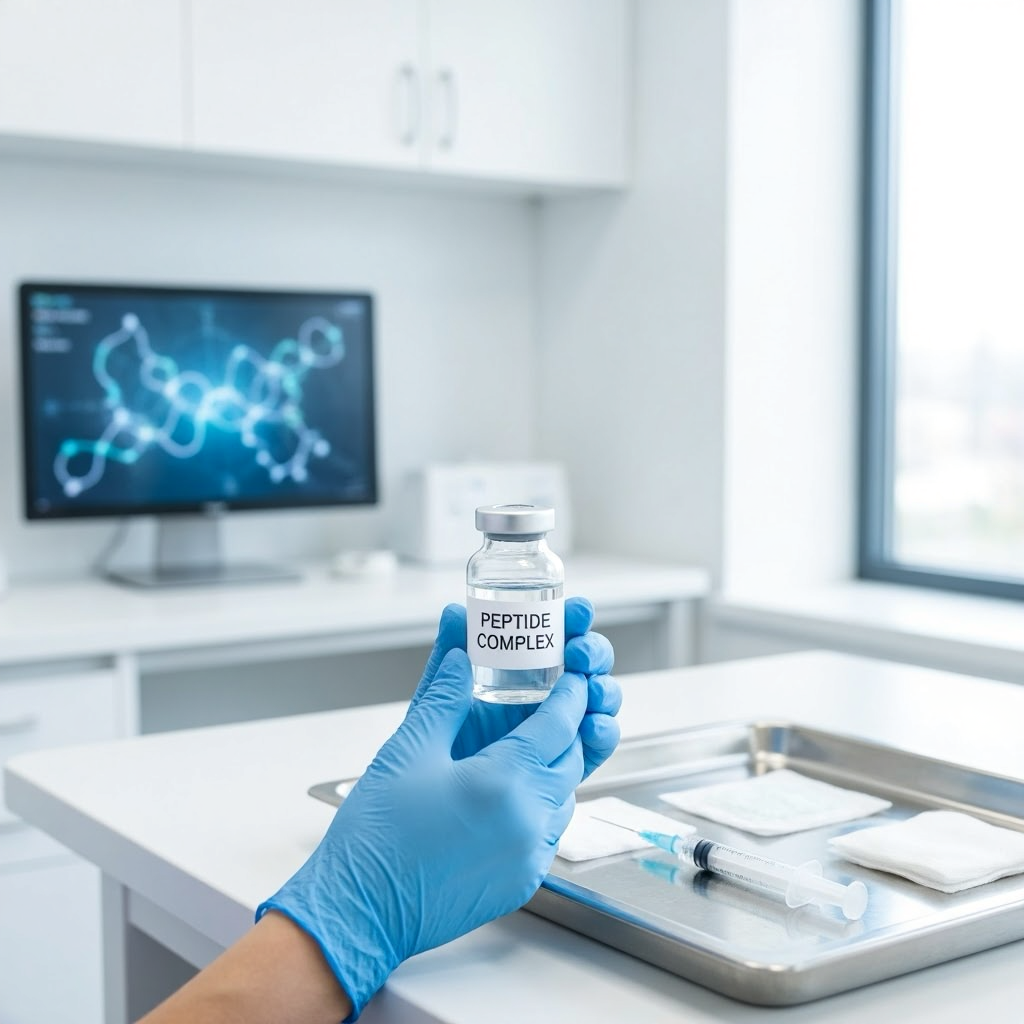
Few questions expose the gap between marketing and medicine faster than "which peptide, exactly?" A clinic that cannot name the compound it intends to use is not offering a medical plan. For patients researching peptide therapy in Dubai, understanding the categories of peptides used in clinical settings — and how they differ — is essential groundwork before any consultation. This article covers the main categories, how they are classified, and what patients should verify.
How Peptides Are Categorised
Rather than listing brand names, it helps to think in functional categories. Peptides used in clinical or aesthetic contexts generally fall into groups based on what biological pathway they interact with. Broad groupings include:
-
Repair and tissue-signalling peptides — studied in relation to wound healing and connective tissue
-
Skin and collagen-related peptides — explored for effects on skin structure and appearance
-
Metabolic and metabolic-signalling peptides — investigated in relation to energy regulation and body composition
-
Hormonal signalling peptides — those that influence or mimic endocrine pathways
-
Immune and cellular signalling peptides — early-stage research into cellular processes
Each category carries its own evidence level, its own regulatory position, and its own risk profile. They are not interchangeable.
Why Naming the Compound Matters
"Peptide therapy" describes a delivery format, not a treatment. Two clinics offering "peptide therapy" may be using entirely different compounds for entirely different purposes.
Patients should expect a specific answer when they ask what is being proposed. Vague responses — "a peptide blend," "our proprietary formula," "a signalling peptide" — are not adequate. Without a name, you cannot research the evidence, verify the regulatory status, or give informed consent.
Peptide Therapy in Dubai: Regulatory Status Varies
This is the point where many patients are surprised. Regulatory treatment of peptides is not uniform. Some compounds are approved for specific medical indications in certain jurisdictions. Others are restricted, unapproved for human use, or available only under particular conditions.
In the UAE, as internationally, the legal position differs compound by compound. A responsible clinic will be transparent about this and will only offer options that meet applicable requirements. Patients should be cautious of any provider who dismisses regulatory questions as unimportant.
Evidence Is Not Distributed Evenly
Some peptides have controlled human trial data supporting defined uses. Others rest on laboratory work, animal studies, or anecdotal reports. A few are marketed heavily despite thin human evidence.
A practical question to ask: what is the highest quality of evidence for this compound, for my specific goal? The answer will differ depending on the peptide, and an honest clinician will say so rather than implying uniform certainty.
Delivery Methods and Why They Differ
Peptides may be administered by injection, orally, topically, or through other routes. The method affects absorption, dosing accuracy, and patient experience.
Injectables typically offer more predictable delivery but require sterile technique and proper instruction. Oral forms may be more convenient but can face digestion-related limitations. Topical application is generally limited to local effects. The appropriate route depends on the compound and the goal.
Quality, Sourcing, and Purity
A named peptide is only as good as its source. Patients should be able to ask, and receive clear answers, about:
-
Where the product is manufactured
-
Whether purity is verified
-
How it is stored and handled
-
Whether it comes through regulated supply channels
Compromised sourcing introduces risks that no clinical protocol can offset.
What a Consultation Should Clarify
During assessment, you should be able to establish:
-
The specific compound proposed
-
Its regulatory status in the UAE
-
The evidence supporting it for your goal
-
Why it was selected over alternatives
-
What monitoring is required
If any of these remain unclear after the appointment, the assessment is incomplete.
The Wider Context
Peptides are a genuinely active area of research, and the field is evolving. That is precisely why specificity matters. Broad enthusiasm helps no one; targeted, evidence-aware selection helps patients make decisions they can stand behind.
Closing Perspective
The right question is never "should I try peptides?" but "which peptide, for what purpose, on what evidence, and under whose supervision?" Tajmeels Clinic in Dubai approaches peptide therapy with that specificity in mind — identifying the compound, explaining its basis, and matching it to the individual rather than the trend. For anyone weighing peptide therapy in Dubai, insisting on a named compound and a clear rationale is the simplest way to separate clinical care from clever marketing.
Ready for a Change? Book Your Consultation Today
WhatsApp: +971 56 203 8751
Phone: +971 4 373 9000
Social Media:

 Arabic
 French
 Spanish
 Portuguese
 Deutsch
 Turkish
 Dutch
Dutch
 Italiano
 Russian
 Romaian
 Portuguese (Brazil)
 Greek
Greek