
What Does Vitamin C Cream Do? Benefits, Ingredients and How to Use
Uneven skin tone, dullness and stubborn dark spots are skincare problems. Sun exposure, -acne marks and changes in pigmentation can slowly change the way the skin looks causing the complexion to appear less even. Among the ingredients used to deal with these issues Vitamin C Cream has become very popular because of its effects and its ability to make the skin look brighter.
A vitamin C cream that is properly made can be a part of your daily skin care. It can help make your skin look even and brighter while also giving it moisture and protection from harmful things. But how does vitamin C really work? What other ingredients go well with it. What should you think about before picking a product?
Let's explore the science behind vitamin C creams and how they can support healthier-looking skin.
What Is Vitamin C Cream?
Vitamin C cream is a topical skincare product formulated with vitamin C or one of its derivatives. It is commonly used to improve the appearance of dullness, uneven skin tone, and visible pigmentation.
Vitamin C is an antioxidant that helps neutralize free radicals generated by environmental factors such as UV exposure and pollution. These free radicals contribute to oxidative stress, which can affect the skin's appearance over time.
Unlike some lightweight vitamin C serums, creams also offer a moisturizing base that helps maintain skin hydration and comfort.
One important consideration is the type of vitamin C used in a formulation. Different derivatives have different stability, solubility, and formulation characteristics, so not every vitamin C cream performs in the same way.
How Does Vitamin C Cream Work on the Skin?
Vitamin C supports skin appearance through several mechanisms that make it a popular ingredient in brightening skincare formulations.
1. Supports a More Even Skin Tone
Excess melanin production can contribute to dark spots and uneven pigmentation. Vitamin C has properties that can help influence processes involved in melanin production, making it useful in skincare routines targeting uneven skin tone.
With consistent use, suitable topical formulations may help improve the appearance of discoloration and promote a more uniform complexion.
2. Provides Antioxidant Protection
Everyday environmental exposure can generate free radicals that contribute to oxidative stress.
Vitamin C acts as an antioxidant, helping neutralize these unstable molecules. This makes it a valuable ingredient in routines designed to support skin against environmental stressors.
However, topical vitamin C should complement sunscreen rather than replace it.
3. Supports Collagen Production
Collagen is an important structural protein that helps maintain skin firmness and elasticity.
Vitamin C plays a role in collagen synthesis, which is why it is frequently included in skincare formulations targeting visible signs of aging, including fine lines and changes in skin texture.
4. Helps Improve the Appearance of Dullness
A dull complexion can result from several factors, including uneven pigmentation, dehydration, and environmental exposure.
Antioxidant ingredients such as vitamin C can support a fresher, more radiant appearance when incorporated into a consistent skincare routine.
Key Ingredients That Work Well with Vitamin C
The effectiveness of a skincare formula depends on more than one ingredient. Combining complementary actives can help address different aspects of uneven skin tone while maintaining skin comfort.
Here are some ingredients commonly used alongside vitamin C in brightening formulations.
Sodium Ascorbyl Phosphate
Sodium Ascorbyl Phosphate is a stable, water-soluble derivative of vitamin C. It is commonly used in skincare formulations because of its antioxidant properties and formulation stability.
It helps support a brighter-looking complexion and provides an alternative to pure ascorbic acid in topical products.
Niacinamide
Niacinamide, also known as vitamin B3, is a versatile skincare ingredient that helps support the skin barrier and improve the appearance of uneven skin tone.
It also helps maintain moisture balance and can be useful for people dealing with dullness, visible pores, and excess oil.
Alpha Arbutin
Alpha arbutin is widely used in skincare products formulated for pigmentation concerns. It works by influencing tyrosinase activity, an enzyme involved in melanin production.
When included in a suitable formulation, it can complement other brightening ingredients and help improve the appearance of dark spots over time.
Kojic Acid
Kojic acid is another popular ingredient used in products targeting hyperpigmentation. It works by inhibiting tyrosinase activity, helping regulate processes involved in melanin production.
It is commonly incorporated into creams and serums designed for uneven skin tone.
Combining these ingredients requires attention to formulation, concentration, and skin tolerance. More active ingredients do not automatically mean better results.
What Are the Benefits of Using Vitamin C Cream?
Adding a suitable vitamin C cream to your skincare routine can offer several benefits.
-
Brighter-looking complexion: Helps improve the appearance of dullness and uneven tone.
-
Pigmentation support: Supports skincare routines targeting visible dark spots and discoloration.
-
Antioxidant benefits: Helps protect against oxidative stress caused by environmental exposure.
-
Hydration: Cream-based formulations provide moisture alongside their active ingredients.
-
Skin texture: Supports a smoother, healthier-looking appearance with consistent skincare.
-
Ageing support: Vitamin C contributes to collagen synthesis and helps address some visible signs of photoageing.
Results depend on the formulation, consistency of use, individual skin characteristics, and the underlying cause of pigmentation.
How to Use Vitamin C Cream in Your Daily Skincare Routine
Using a vitamin C cream does not require a complicated skincare routine. Consistency and proper product application are more important than using numerous products together.
Follow these basic steps:
Step 1: Cleanse Your Face
Start by washing your face with a gentle cleanser to remove excess oil, dirt, and accumulated impurities.
Step 2: Apply Vitamin C Cream
Apply an appropriate amount of skin brightening cream to clean, dry skin. Follow the product's application instructions and avoid the immediate eye area unless the product is specifically formulated for it.
Step 3: Maintain Skin Hydration
A cream-based vitamin C product can provide moisturizing benefits alongside its active ingredients. Add another moisturizer if your skin needs additional hydration.
Step 4: Apply Sunscreen During the Day
Daily sun protection is essential when addressing pigmentation. Choose a broad-spectrum sunscreen with SPF 30 or higher and reapply as directed, particularly when spending time outdoors.
Step 5: Stay Consistent
Brightening skincare works gradually. Give your routine time to work rather than expecting dark spots and uneven pigmentation to disappear overnight.
Is Vitamin C Cream Suitable for Every Skin Type?
Vitamin C creams can be suitable for different skin types, but the formulation matters.
People with dry skin may appreciate cream-based products because they provide hydration alongside antioxidant benefits.
Those with oily or combination skin can look for lightweight, non-greasy textures that feel comfortable throughout the day.
Sensitive skin users should pay attention to ingredient combinations and introduce new products gradually. A patch test is a sensible precaution before applying a new formulation across the face.
Stop using a product if it causes persistent burning, redness, or irritation.
Choosing the Right Vitamin C Cream
Not all vitamin C products are formulated equally. Before purchasing one, consider the following factors:
Vitamin C Derivative: Check which form of vitamin C the formulation contains. Sodium Ascorbyl Phosphate, for example, is a stable derivative frequently used in cream-based products.
Complementary Ingredients: Look for ingredients such as niacinamide, alpha arbutin, and kojic acid if your primary concern is uneven skin tone.
Texture and Hydration: Choose a formula that feels comfortable on your skin and fits your existing routine.
Ingredient Transparency: A clearly displayed ingredient list makes it easier to understand what you are applying to your skin.
Daily Compatibility: Consider whether the product can be comfortably incorporated into your morning or evening routine.
Final Thoughts
Vitamin C cream can be a valuable part of a skincare routine focused on dullness, uneven skin tone, and visible pigmentation. Its antioxidant properties, combined with complementary ingredients such as niacinamide, alpha arbutin, and kojic acid, make it a popular choice for people seeking a brighter-looking complexion.
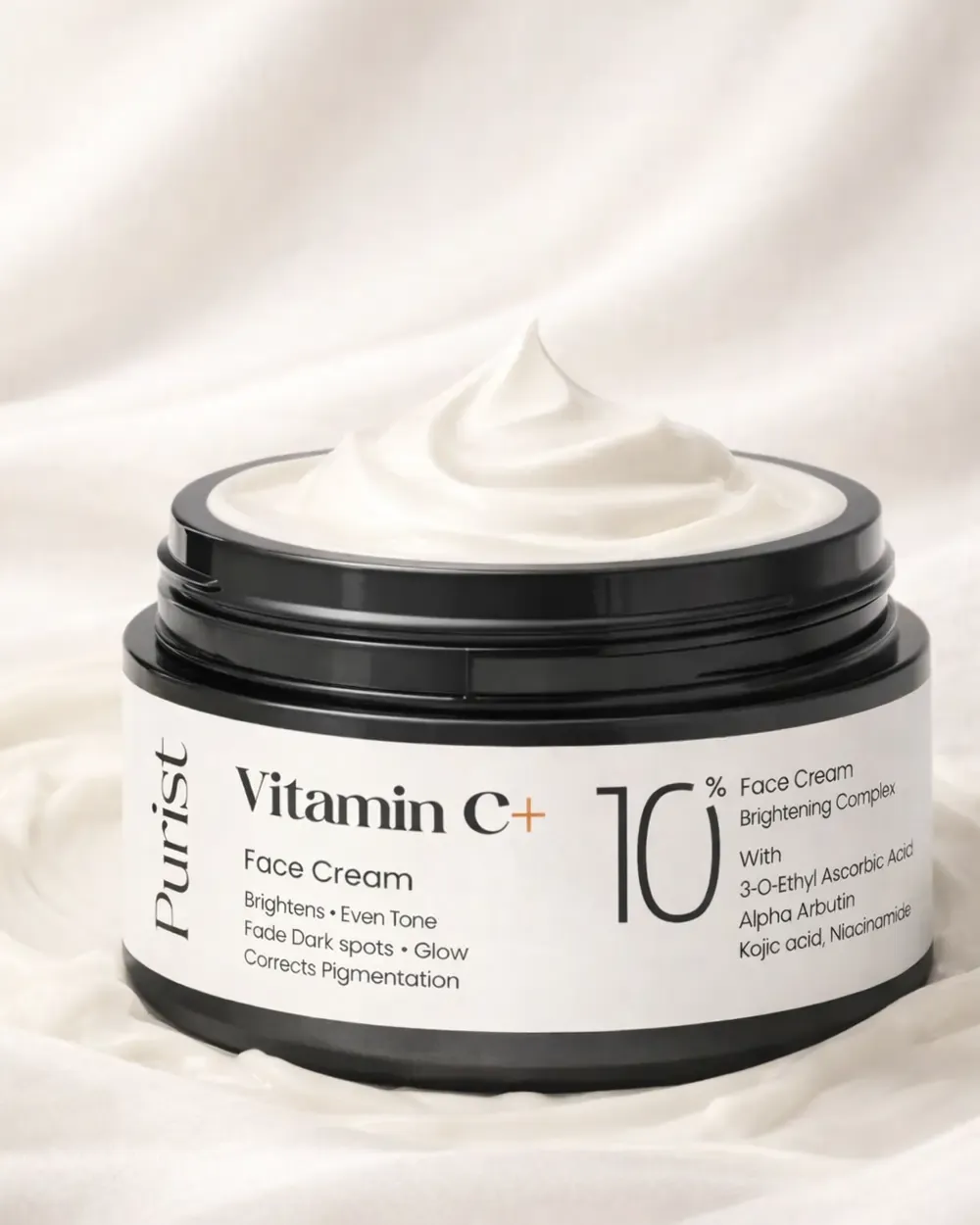
For those looking for a multi-ingredient formulation, Purist Vitamin C+ 10% Brightening Cream combines Sodium Ascorbyl Phosphate, niacinamide, alpha arbutin, and kojic acid in a moisturizing formula. It is designed to support skin clarity, hydration, and a more even-looking complexion without a heavy finish.
Ultimately, healthy-looking skin comes from choosing suitable ingredients, maintaining a consistent routine, and protecting your skin from daily sun exposure.

 English
 Arabic
 French
 Portuguese
 Deutsch
 Turkish
 Dutch
 Italiano
 Russian
 Romaian
 Portuguese (Brazil)
 Greek