
Can an Inverter Ceiling Fan Run During Load Shedding?
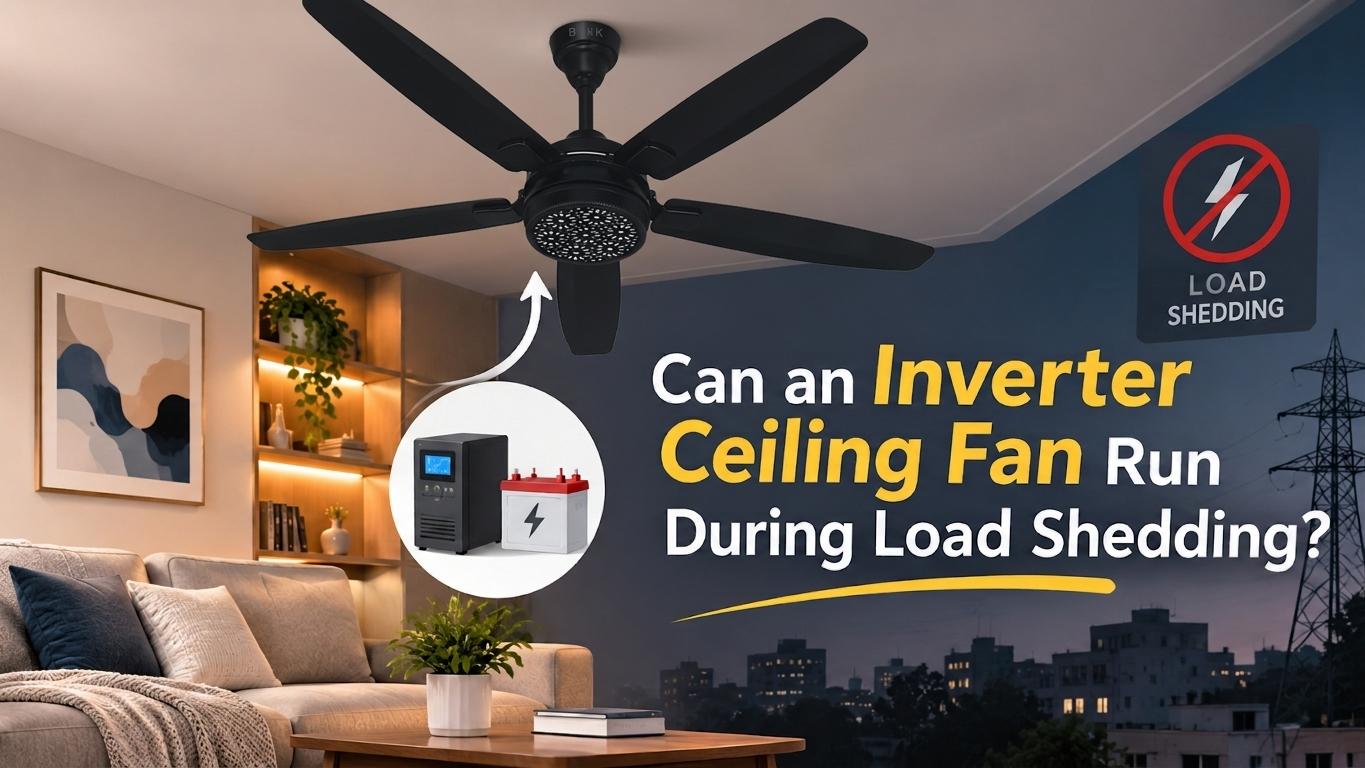
Load shedding can make hot days and nights uncomfortable, especially when you depend on a ceiling fan to keep your room cool. When the electricity goes out, a conventional AC fan stops unless it is connected to a suitable backup system. This is where an inverter ceiling fan can make a difference.
An inverter ceiling fan with AC/DC compatibility can continue running during power outages when connected to a compatible UPS, inverter or battery system. However, its backup time depends on the fan's wattage, battery capacity, inverter efficiency and other connected appliances.
If you are considering an inverter fan for your home, understanding how it works can help you choose a suitable model and manage electricity consumption during load shedding.
How Does an Inverter Ceiling Fan Work During Load Shedding?
An inverter ceiling fan uses an energy-efficient motor and electronic control system to operate with lower electricity consumption. AC/DC models can work with compatible AC and DC power sources.
When the main electricity supply is available, the fan operates using the normal electrical supply. During load shedding, a connected UPS or inverter system supplies power from its battery.
This allows the fan to continue operating without requiring you to switch to a separate fan.
Many modern inverter ceiling fans use BLDC motor technology. These motors are designed to reduce power consumption while maintaining useful airflow.
For households that experience frequent power outages, this can make a difference in daily comfort and battery usage.
Can Every Ceiling Fan Run on a UPS or Inverter?
No. Not every conventional ceiling fan is designed to operate directly with a DC power source.
A standard AC ceiling fan generally requires an appropriate inverter or UPS system to convert battery power into AC electricity.
An AC/DC inverter ceiling fan is designed to support compatible power sources, including certain battery and solar systems.
Before connecting a fan to a backup system, check the following:
- Whether the fan supports AC/DC operation.
- Its rated voltage and power consumption.
- Whether the UPS or inverter supports the required output.
- Battery capacity and condition.
- Compatibility of the wiring and controller.
Choosing a compatible fan can help avoid connection problems and unnecessary power losses.
How Long Can an Inverter Ceiling Fan Run During Load Shedding?
Backup time is one of the main concerns for buyers considering an inverter ceiling fan.
The actual running time depends on the battery's usable energy and the fan's power consumption.
For example, consider a 12V, 100Ah battery.
Its nominal energy capacity is:
12V × 100Ah = 1,200Wh
If a ceiling fan consumes 30 watts, a simple calculation gives:
1,200Wh ÷ 30W = 40 hours
However, this is a theoretical figure. Actual backup time will be lower because of battery discharge limits, inverter losses, battery condition and other connected loads.
Here is a simplified comparison:
|
Fan power consumption |
Theoretical runtime with 1,200Wh |
|
30W |
40 hours |
|
40W |
30 hours |
|
70W |
17.1 hours |
|
100W |
12 hours |
These figures assume the entire nominal battery capacity is available and exclude system losses. They are not guaranteed backup times.
A compatible 30W inverter fan can place a smaller load on a battery than a conventional fan consuming 70W to 120W.
This is one reason many households consider low-wattage inverter fans for areas with frequent load shedding.
Why Does a 30W Inverter Ceiling Fan Use Less Battery Power?
Power consumption directly affects how quickly a battery loses its charge.
A conventional ceiling fan may consume between 70W and 120W, depending on its motor and operating speed. Selected Belvin inverter ceiling fans operate at approximately 30W to 35W.
Consider a comparison between two fans operating for 10 hours.
Conventional 80W fan:
80W × 10 hours = 800Wh
Inverter 30W fan:
30W × 10 hours = 300Wh
The difference is 500Wh over 10 hours.
This means the 30W fan uses 62.5% less energy under these example conditions.
Actual consumption depends on the fan model and selected speed. However, the calculation shows why low-wattage fans can help reduce battery usage during power outages.
What Happens to an Inverter Ceiling Fan When Electricity Returns?
When the main electricity supply returns, an AC/DC inverter ceiling fan connected to a compatible system can continue operating through the available supply.
The exact changeover process depends on the connected UPS or inverter system and the fan's electrical configuration.
A properly installed system should manage the power transition according to its design.
If your fan stops, makes unusual sounds or behaves inconsistently when electricity returns, have the electrical connections and backup system inspected by a qualified technician.
Avoid changing internal wiring or connecting AC and DC supplies without checking the manufacturer's instructions.
How to Choose an Inverter Ceiling Fan for Frequent Load Shedding?
If your area experiences regular power outages, choosing a suitable ceiling fan requires more than checking its appearance or speed.
Consider these factors before buying.
Check the Wattage
A lower-wattage fan generally consumes less electricity at its rated operating condition.
Compare the power ratings of available models and check whether the stated consumption applies at a particular speed or across all speed settings.
Check AC/DC Compatibility
Make sure the fan is designed to work with your intended UPS, inverter or battery system.
Do not assume that every inverter-branded fan supports direct DC battery operation.
Consider Airflow
Low power consumption is useful, but the fan must also provide sufficient airflow for your room.
Check blade design, fan size and available speed settings before making a decision.
Look for Speed Control
Remote controls and adjustable speed settings allow you to manage airflow according to your requirements.
Some models also include sleep and boost modes.
Check Warranty and Product Support
Review the warranty period, installation requirements and available service support before purchasing.
These details matter when choosing an appliance for regular household use.
How Much Do Inverter Ceiling Fans Cost in Pakistan?
The Ceiling Fans Price in Pakistan varies according to motor technology, power consumption, product series, remote control options and overall construction.
Conventional AC fans generally have a lower initial purchase price, while inverter and AC/DC models may cost more because of their motor technology and electronic components.
However, the purchase price is only one part of the cost.
You should also consider:
- Daily operating hours.
- Electricity consumption.
- Expected battery backup requirements.
- Maintenance and warranty.
- Long-term electricity expenses.
For example, a 30W inverter fan uses less electricity than an 80W conventional fan when both operate for the same number of hours at those power ratings.
If you want to compare different models, check the available specifications and current prices in Belvin's official ceiling fan collection.
Why Consider Belvin Inverter Ceiling Fans?
Belvin manufactures ceiling fans for Pakistani households, where electricity consumption, voltage fluctuations and load shedding are common concerns.
Its product range includes conventional AC fans, AC/DC models and Super Inverter ceiling fans.
Selected models offer the following features:
30W Super Inverter Technology
Selected models operate at approximately 30W to 35W, helping reduce electricity consumption compared with conventional fans.
AC/DC Compatibility
Compatible models can operate with suitable UPS, inverter and battery systems, making them relevant for homes with frequent power outages.
BLDC Motor Technology
Selected inverter models use BLDC motor technology, designed for efficient power consumption and smooth operation.
Remote Control
Selected models include remote operation with a stated range of up to 20 feet.
Sleep Mode
The Sleep Mode feature reduces the fan speed by one level every two hours on supported models.
Boost Mode
Boost Mode allows the fan to operate at its highest speed on supported models.
Belvin also offers different product series, including Decora, Platinum, Supersonic, Standard and Export.
If you are comparing the best fan company in Pakistan, consider motor technology, actual power consumption, airflow, warranty and backup compatibility instead of relying only on brand claims.
You can compare Belvin's available products through its official ceiling fan collection.
Practical Tips for Getting Longer Backup from Your Ceiling Fan
You can manage battery power more effectively by following a few simple practices.
- Use a lower fan speed when maximum airflow is unnecessary.
- Avoid connecting unnecessary appliances to the same battery system.
- Check your battery's health and charging condition regularly.
- Use a compatible inverter and battery combination.
- Keep electrical connections secure and properly maintained.
- Compare fan wattage before purchasing a replacement.
- Follow the manufacturer's instructions for installation and operation.
Remember that battery capacity alone does not determine backup time. The total connected load and system efficiency also matter.
Frequently Asked Questions
Can an inverter ceiling fan run during load shedding?
Yes. An AC/DC inverter ceiling fan can continue operating during load shedding when connected to a compatible UPS, inverter or battery system.
Can I run a 30W ceiling fan on a UPS?
A 30W ceiling fan can operate on a suitable UPS if its output, voltage and connection method are compatible with the fan. Check the manufacturer's specifications before connecting it.
How many hours can an inverter ceiling fan run on a battery?
Backup time depends on battery capacity, fan wattage, battery condition and system losses. A 30W fan uses less energy per hour than an 80W fan, so it can generally run longer under comparable conditions.
Are AC/DC ceiling fans suitable for load shedding?
Yes. AC/DC ceiling fans are designed to support compatible AC and DC power sources. They are a practical option for homes that regularly experience power outages.
Does an inverter ceiling fan consume electricity when running on a battery?
Yes. The fan continues to consume electrical energy from the battery. Its power consumption determines how quickly the battery discharges.
Is a 30W inverter fan better than a conventional ceiling fan?
A 30W inverter fan uses less electricity than a conventional fan consuming 70W to 120W under the stated operating conditions. However, you should also compare airflow, room coverage, build quality and price.
What should I check before buying an inverter ceiling fan in Pakistan?
Check wattage, AC/DC compatibility, airflow, motor technology, remote control options, warranty and compatibility with your existing backup system.
Where can I check Ceiling Fans Price in Pakistan?
You can visit Belvin's official ceiling fan category to compare available models, product specifications and listed prices.
Conclusion
An inverter ceiling fan can continue running during load shedding when it supports the connected backup system. Its lower power consumption can also help you use battery energy more efficiently than a conventional fan.
Before buying, check the fan's wattage, AC/DC compatibility, airflow and warranty. These details will help you select a model that matches your home and backup requirements.
Belvin offers different ceiling fan options, including AC/DC and Super Inverter models for Pakistani households. Visit the official collection to compare the available fans and their specifications.

 Arabic
 French
 Spanish
 Portuguese
 Deutsch
 Turkish
 Dutch
 Italiano
 Russian
 Romaian
 Portuguese (Brazil)
 Greek