
Building an Annual Budget for Kobelco Parts Replacement
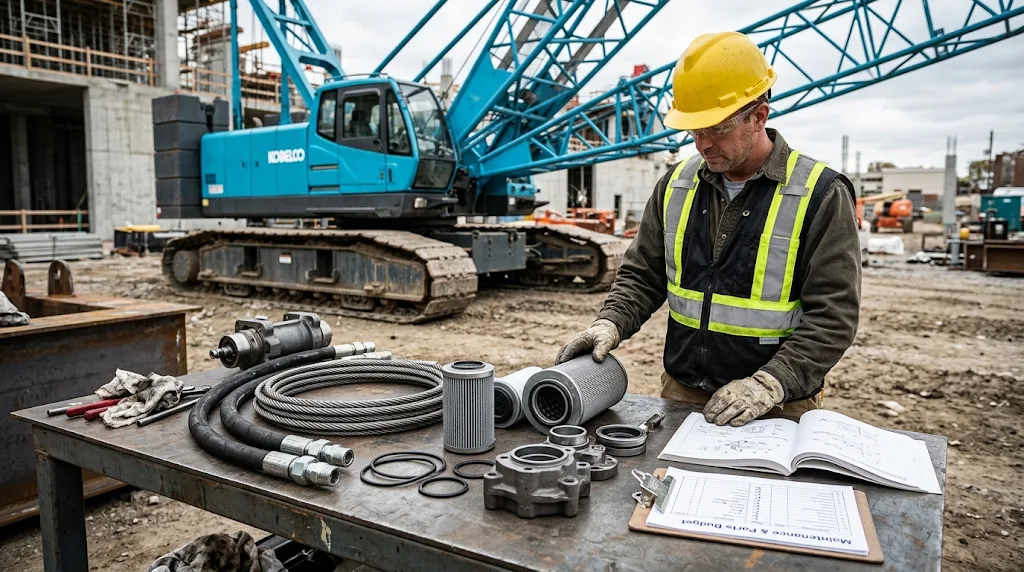
Annual parts spending is a cost that many crane owners would rather not examine. A Kobelco can run for months with only filters, grease, and a hose. Then a wire rope, swing motor seal, and hydraulic pump fail in one quarter, and the site waits for replacements. A budget cannot prevent those events. It can change how they affect cash flow.
Planning replaces panic buying with deliberate spending. Instead of paying whatever the counter quotes that morning, you draw on funds set aside earlier. This guide explains how to plan a year of replacement spending for one machine or a fleet. The same approach applies to different crane models and job types.
Begin With the Service Manual
Before checking current prices, open the service manual. Every Kobelco crane includes a periodic maintenance table. That table works like a yearly shopping list. It lists inspection and replacement tasks at each interval, from daily checks to annual service.
Start with the consumables. Filters, hydraulic oil, grease, fuel filters, and cab items are fixed costs. A supplier that handles quality crane parts can quote these items quickly. The machine uses them in good years and bad, so they are simple to price. A dealer or parts counter can confirm current figures in an afternoon.
The manual cannot predict when wear items will fail. That problem needs a different method. Inspection records help owners price wear items before failure. Those records show which parts are moving toward replacement. They also reveal how quickly components are wearing on a specific machine.
Group Expenses Into Three Categories
Every component bought this year fits one of three groups. Each group gets separate budget treatment. The groups are consumables, wear items, and breakdowns.
Consumables are scheduled items. Filters, fluids, grease, wipers, and bulbs belong here. They are predictable, priced from the manual, and bought on a calendar. Most owners can estimate this line with little uncertainty.
Wear items age with the machine. Wire rope, brake components, hydraulic hoses, seals, O-rings, pins, bushings, and crawler undercarriage fit this group. Owners who track inspections can price Kobelco parts before a failure occurs. Measurements decide when replacement is due. The inspection interval should match the manual and the site conditions.
Breakdowns cover everything else. A sensor may fail without warning, or a pump may start whining in November. No one can forecast these events. Only contingency money addresses them.
Budgeting all three groups as one number is a common error. A filter is a scheduled cost, while a pump is an insurance question. Separating them makes the budget more accurate. It also shows which spending is controllable and which is not.
Account for Machine Age, Hours, and Site Conditions
Two cranes of the same model can cost very different amounts to maintain. Three factors usually explain the gap. They are age and hours, duty cycle, and environment.
Age and hours matter. A low-hour machine under five years old mostly needs consumables. After 10,000 hours, wear items begin to accumulate. Hoses may weep after years of heat cycles, seals dry out, and pins and bushings loosen. Budgets should rise as the machine ages, even when the model is the same.
Duty cycle also affects spending. Heavy demolition work consumes components faster than occasional steel erection. High hours on rough ground punish the undercarriage. A crane that works two shifts will wear faster than one used part-time.
Environment adds another variable. Dust shortens air filter and hydraulic life. Coastal salt speeds corrosion on wire rope and exposed pins. A specialist in quality crane parts can help translate those trends into a forecast. Machines in harsh conditions need a larger allowance.
Two years of invoices provide a useful base. Average them and add 10 to 15 percent for aging. Without history, ask a dealer’s parts counter or another owner with the same model. Either source is more useful than an industry average. Local data beats a national figure every time.
Choose Sourcing by System
Three realistic sources exist, and each has a place in the plan. Assign each crane system to a source before the year starts. That decision affects both cost and availability.
Genuine components cost the most and reduce uncertainty. Kobelco parts are a sensible default for hydraulic components and safety systems. They also suit anything inside a winch or swing drive. When a failure would idle the crane for a week, the cost gap matters less.
Aftermarket parts cover a wide range. Quality crane parts from a specialist who knows the machine can save money on filters, hoses, pins, and undercarriage items. Poor suppliers sell substandard components that fail early. Those failures can damage seals and pumps. Judge a supplier by support and accountability, not by price alone.
Used and rebuilt parts from dismantled machines suit older cranes. A new component can cost more than the machine is worth. These parts are fine for cabs, covers, and cosmetic items. They are risky for anything that carries load or holds pressure.
Most fleets combine all three sources. That is practical sense, not corner-cutting. Decide the sourcing strategy by system before the year begins. The choice changes the figures in the budget. Write the strategy down so buyers and operators follow the same approach.
Assemble the Figures per Machine
Calculate per machine, not per fleet. A five-year-old crawler and a fifteen-year-old rough terrain crane have little in common. Start with the fixed line and price consumables from the manual with your supplier.
Add wear items due this year. Inspection records are valuable at this stage. Price a wire rope nearing its discard limit. Price hoses with cracked covers and brake wear noted last quarter. Include any item that is close to its replacement threshold.
Price replacements even when the date is uncertain. If a major service is due, obtain the parts list and quote it. Then add a contingency of 10 to 20 percent. Older machines and heavy duty cycles justify the higher end. The reserve covers the unexpected failure that no inspection can predict.
Keep labor out of the parts budget because it muddies both figures. Track freight separately as well. Set aside a reserve for Kobelco parts before spending it on non-critical items. Ordering a wire rope two weeks early costs less than overnighting one after a failed inspection.
A reliable supplier of quality crane parts can confirm lead times before the quote is final. Planning beats premium freight every time. The result is a yearly number for each machine. It will not be perfect, but it will be honest.
Calculate the Cost of Idle Time
A parts budget is not only about parts. It is about keeping the crane earning. An idle machine costs money every day through lost rental income, contract penalties, and idle crews. Those costs can dwarf the part that failed.
A low-cost seal that fails after six weeks can erase savings. The machine sits while a replacement is found. That risk supports three habits. Order ahead to avoid expedited freight. Keep a small shelf of critical spares if utilization is high. Buy from suppliers who stock quality crane parts rather than drop-shipping them.
Reliable availability matters when a machine is down. The total cost of downtime usually outweighs the part price difference. Review these habits each quarter as utilization changes. A spare that sits unused for a year can still be cheaper than a week of lost work.
Revisit the Plan Each Quarter
A budget is a guess until it is compared with actual spending. Set a quarterly reminder to review the figures. Compare planned and actual costs. Keep the review short and focused on variances.
Note which items failed early and which were deferred. If the contingency remains untouched for two quarters, estimates may be high. If it is exhausted by June, the fleet is aging faster than assumed. Adjust the remaining quarters rather than waiting for year-end.
Record supplier lead times and any parts that caused delays. A review of Kobelco parts spending should also capture recurring small purchases that add up. Those details improve the next forecast. By the second or third year, the numbers become more accurate.
The figures then reflect your machines, jobsites, and operators rather than industry averages. That specificity is more valuable than any template. Keep the notes with the budget so the next review starts from evidence.
The Long-Term Benefit
Annual parts replacement budgeting is not glamorous work. Pull the manual, group spending into categories, price sourcing options, add a buffer, and review the figures four times a year. The process takes time upfront but reduces surprises later.
Done consistently, the process turns annual spending into a planned line item. Your accountant will appreciate the predictability. You will appreciate it the week a winch motor fails in March.

 Arabic
 French
 Spanish
 Portuguese
 Deutsch
 Turkish
 Dutch
 Italiano
 Russian
 Romaian
 Portuguese (Brazil)
 Greek