Concussion Symptoms You Should Never Ignore
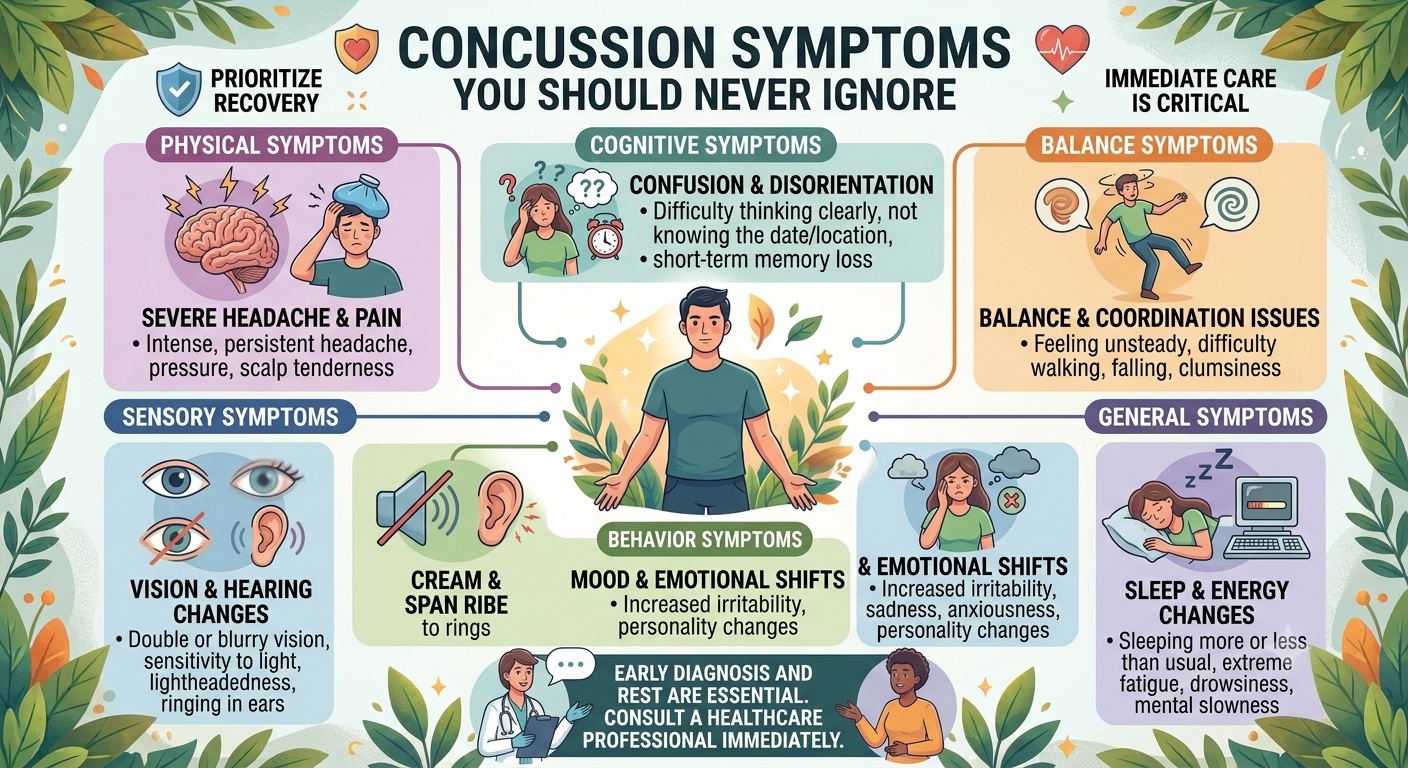
Every day, I see patients who've had a knock on the head and dismissed it as nothing. A fall, a sports injury, a car accident they brush it off, pop a paracetamol, and get on with their day. And sometimes, that's fine. But sometimes, it's not.
As a neurosurgeon I’ve personally seen what happens when people just brush off concussion symptoms, you know, they can drag on for a long time, and in rare cases it turns into something genuinely catastrophic. This isn’t me trying to scare you or anything like that. It’s more about giving you the facts and the context you need to make the right decision, not just the fast one.
What Actually Happens in a Concussion
Let's start with the basics. A concussion is a mild traumatic brain injury. The brain is soft tissue floating in fluid inside your skull. When your head gets hit or shaken violently, the brain bumps against the inside of the skull. This causes chemical changes in the brain and sometimes stretches or damages brain cells.
The word "mild" is misleading. Any brain injury is serious. The "mild" refers to the absence of structural damage visible on a CT scan. It doesn't mean the symptoms aren't real or significant.
The Red Flag Symptoms That Demand Immediate Attention
Some symptoms require emergency medical care. If you or someone you know experiences any of these after a head injury, don't wait. Don't sleep it off. Get to a hospital.
Loss of Consciousness
Even for a few seconds, this is a red flag. It means the brain has been shaken enough to disrupt normal function. Any loss of consciousness after a head injury warrants immediate evaluation.
Persistent or Worsening Headache
A headache that gets progressively worse is concerning. It can indicate increasing pressure inside the skull. If your headache is severe, persistent, or worsening, seek help.
Repeated Vomiting
One bout of nausea after a head injury isn't uncommon. But repeated vomiting is different. It suggests increased intracranial pressure, which is a neurosurgical emergency.
Seizures or Convulsions
Any seizure after a head injury is serious. Even if it's brief, it indicates significant brain irritation and requires immediate evaluation.
Clear Fluid or Blood from Ears or Nose
This could be a skull fracture. If you notice clear liquid (cerebrospinal fluid) or blood coming out from your ears or nose right after a head injury , get emergency care.
Weakness or Numbness
If you notice sudden weakness, numbness, or that tingling sort of feeling in any part of your body, it points toward a neurological impairment. That sometimes can mean there’s bleeding, or swelling, in certain areas of the brain.
Symptoms You Shouldn't Ignore Even Without Red Flags
Not every concussion presents with dramatic symptoms. Many people experience subtle changes they dismiss as tiredness or stress. Don't. These symptoms matter.
Persistent Dizziness or Balance Problems
If you feel a bit unsteady on your feet days after a head injury, that can be a sign your brain hasn’t really done its recovery. Balance is controlled by intricate neurological pathways and when it keeps acting up it usually means there is still some active damage. It’s not just a simple tired feeling, it can be your coordination system lagging behind.
Visual Disturbances
Blurred vision, double vision, or difficulty focusing are common after concussions. If these persist beyond the first few hours, they need evaluation.
Sensitivity to Light or Noise
This is surprisingly common. Many concussion patients become sensitive to light and sound. It's caused by changes in the brain's processing centres and typically resolves, but it can take time.
Memory Issues
Forgetting things, having difficulty concentrating, or feeling like your thoughts are foggy these cognitive symptoms are classic after a concussion. If they persist, don't ignore them.
The Difference Between Concussion and Stroke
I'm often asked about this, and it's worth clarifying. Some concussion symptoms overlap with stroke symptoms. The key difference is that stroke symptoms develop suddenly and typically affect one side of the body. Concussion symptoms develop after a head injury and may affect both sides.
But here's the thing. If you're unsure, don't wait to find out. The risk of a missed diagnosis is too high. Seek emergency care.
Why Children and Elderly Are Particularly Vulnerable
Children and the elderly require special consideration. Their brains respond differently to injury.
Children's brains are still developing, and concussion can affect cognitive development. Symptoms in children may be more subtle—they might become irritable, clingy, or have trouble at school. They may not be able to articulate how they're feeling. If your child has had a head injury and is acting differently, get them assessed.
The elderly are at higher risk because they're more likely to be on blood-thinning medication and more likely to have pre-existing conditions that complicate recovery. Even a minor fall can have serious consequences. If you or an elderly relative has a head injury, even if it seems minor, get checked.
When Should You Consult a Neurosurgeon?
This is the question everyone wants answered. You don't need to see a neurosurgeon for every bump on the head. Most concussions resolve with rest and conservative management.
But there are situations where specialist consultation is essential.
Persistent Symptoms
If your symptoms last more than a week or two, you should see a specialist. Persistent symptoms require evaluation to exclude underlying issues.
Worsening Symptoms
If your symptoms are getting worse, not better, seek help. It suggests something more serious is happening.
Your Doctor Recommends It
If your primary care physician recommends a specialist consultation, don't delay. There's a reason they're making that recommendation.
If you're in Jharkhand and need specialist consultation, you can consult with best neurosurgeon in Ranchi. The city has excellent neurosurgical facilities, and early consultation makes a significant difference to outcomes.
If you , or a family member, need a checkup, visit the clinic of Neuro Doctor in Ranchi for proper evaluation. We get how worrying neurological symptoms can feel, and we take each patient seriously , no matter what.
The Recovery Process
Recovery from concussion takes time. It's frustrating, it's unpredictable, and it's different for everyone.
The big deal here is rest. Your brain really needs that time, like a kind of slow reboot or something, to heal up properly. So it’s not only physical rest, but also cognitive rest, like giving your attention a break too. Try to avoid screens, any reading, and basically anything that demands concentration. I know this is hard to actually do , especially if you’re stuck trying to work or study, but honestly it’s essential.
Then later you can ease back into normal activities. Just don’t rush it though. If your symptoms come back when you start moving around again, that’s usually a sign you’re doing too much too soon.
Return to sports and high-risk activities only when cleared by a doctor. We see patients who return to sport too soon and suffer a second concussion before the first has healed. This is extremely dangerous and can lead to permanent damage.
Our Final Thoughts
Concussion is a pretty serious injury, and it’s not always obvious in the beginning. Sometimes the symptoms seem small or they can show up later, and if you just ignore them the consequences can get really bad. That said, when the situation is evaluated properly, and managed with care, most people bounce back pretty well.
The main point is to get the right help at the right time, not later. If you’re feeling any symptoms after a bump to the head, it’s smart to talk with a specialist. Early intervention helps stop complications from building up, and it can make recovery smoother.
Don't play doctor with your brain. Your brain is your most important organ, and it doesn't regenerate. You only get one. Protect it. Listen to its symptoms. Seek help when you need it.

 English
 Arabic
 French
 Spanish
 Portuguese
 Turkish
 Dutch
Dutch
 Italiano
 Russian
 Romaian
 Portuguese (Brazil)
 Greek
Greek