
Spatula Liposuction Cannula: When Flat Tips Suit Superficial Fat Layers
Most liposuction cannulas end in a round, bullet-shaped tip. That shape works well in deep, thick fat. It struggles when the target sits just beneath the skin. Here, a round tip can wander, dig, or leave dents. Surgeons who treat thin layers often reach for a flatter tool instead. The flat tip rides along a plane rather than boring through it. I have used both styles on revision cases and on stubborn flanks. The difference showed in surface smoothness. Flat tips are not for every patient, though. They demand more care and better judgment. This article explains how they work, where they fit, and where they do not. It also covers technique, safety, and buying advice.
What a Flat Tip Changes
A flat tip changes how the tool moves through tissue. A round tip pushes outward in every direction. A flattened tip spreads that force across a wider, thinner face. Think of a butter knife compared with a pencil. The knife slides along a layer, while the pencil punches through it. Openings usually sit on one side or both faces, depending on the design. Surgeons can then aim the openings toward the fat and away from the skin. That directional control matters in thin layers. The wider face also helps release fibrous bands, which hold skin down in scarred or dense areas. But the flatter profile also shifts risk. Edges are less forgiving than a smooth bullet. Slow, deliberate motion is essential with any flat design.
A spatula liposuction cannula suits the superficial layer, where fat sits close to the dermis. This zone is thin, and mistakes show quickly. Removing too much leaves waves, grooves, or visible tracks. The flat tip glides at a steady depth and treats the layer evenly. That makes it useful for finishing work after bulk removal. Many surgeons first debulk with a larger round-tip cannula. They then refine the surface with a finer flat one. The method trims ridges and blends edges into surrounding skin. Results still depend on technique, not tool shape alone. Choose a size matched to the zone, and test it on a model first. Ask suppliers for exact dimensions and edge finish before you buy.
Where Flat Tips Fit Best
Superficial Layer Refinement
Thin, visible zones reward gentle control. Examples include the upper abdomen, lateral chest, and areas near the waist. After the deep layer is treated, a thin cushion of fat often remains. If left uneven, it creates lumps under the skin. A flat tip lets you treat that layer in smooth, parallel strokes. Keep the openings facing the fat, not the dermis. Use light pressure and let the tool follow the plane. Fan out in several directions to avoid tracks. Pinch the skin often to check thickness. Stop when the layer feels even and supple. Do not chase perfection with extra passes. Over-treatment in thin tissue leaves permanent marks. Small, measured steps give better, safer contours.
Fibrous Areas and Revision Work
Dense tissue resists round tips. Scar bands, old surgical planes, and fibrous zones such as the upper back can feel like rubber. A flat tip can slide through those bands and release them more evenly. It also helps in secondary cases, where earlier surgery left uneven pockets. The wider face spreads the force and lowers the chance of puncturing the layer. Even so, revision work carries extra risk. Scarring can hide vessels and distort normal planes. Work slowly, and expect more resistance than usual. Many surgeons switch back to a round tip once the bands release. That keeps the final removal smooth. Plan these cases carefully, and tell patients that healing in scarred zones may take longer.
Technique That Protects the Skin
Technique matters more with flat tools. Infiltrate evenly before you start, and wait for the full effect of epinephrine. Blanched, firm tissue gives better feedback. Use a small incision placed to allow crossing strokes. Cross-tunneling from two directions keeps the surface even. Keep the flat face parallel to the skin surface. Twisting the tip can catch tissue and cause tracks. Use smooth, short strokes instead of long, fast ones. Keep your free hand on the skin to feel the tip and judge depth. Maintain moderate suction, because high pressure pulls tissue into the openings. Watch for heat at the incision, and protect it with moist gauze. If resistance rises suddenly, pause and reassess. Never force the tool through a tight spot.
Safety Limits and Common Mistakes
Flat tips carry limits you should respect. They are not made for bulk removal in deep fat. Large volumes need wider round-tip cannulas. They are also a poor fit for patients with very thin skin and little fat, since contour irregularities appear easily. The most common mistake is using too much pressure. A flat edge can dig where a round tip would glide. The second is aiming the openings toward the dermis. That strips the layer unevenly. The third is staying in one spot too long. Heat and trauma build quickly. The fourth is skipping wear checks. A bent or burred edge can scratch tissue. Finally, avoid improvising with unfamiliar tools on a live case. Practice on a model first, and ask a mentor to watch your technique.
Choosing and Caring for the Tool
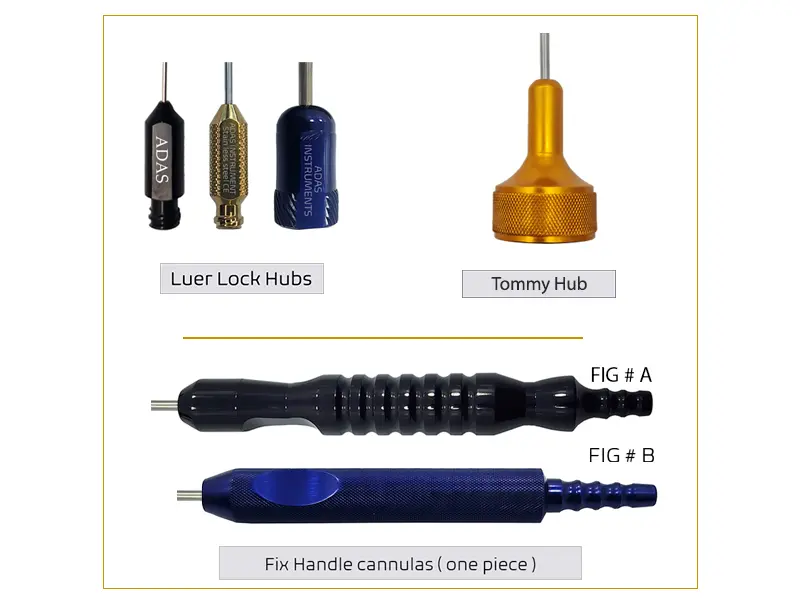
Pick a flat tip by zone, not by habit. Narrow versions of 2 to 3 millimeters suit small, thin areas. Wider ones suit larger flat surfaces. Look for smooth, rounded corners, since sharp corners raise trauma risk. Ask where the openings sit and how large they are. Choose surgical-grade stainless steel with a polished finish. Check that the hub fits your handpiece or syringe. Single-use items cut reprocessing errors. Reusable ones need brushes that reach every opening and logged sterilization cycles. Inspect each shaft before every case under bright light. Retire any piece that looks bent, scratched, or dull. Order a sample before any bulk purchase. Keep both flat and round tips on the tray, so you can switch smoothly.
Frequently Asked Questions
Can a flat tip replace a round one?
No. It suits thin layers and fibrous zones. Deep bulk removal still needs round tips.
Which direction should the openings face?
Toward the fat, away from the dermis. That protects the skin from uneven stripping.
Is it safe for beginners?
Only with practice and supervision. Train on a model before using it on patients.
Does it cause more bruising?
It can if misused. Gentle strokes and moderate suction keep bruising low.
What size works for the superficial layer?
Narrow sizes, often 2 to 3 millimeters. Choose by the thickness of the zone.
Final Thoughts
A flat tip is a finishing tool, not a daily workhorse. Use it for thin layers, fibrous bands, and careful refinement. Keep strokes slow, aim the openings wisely, and inspect edges often. Pair it with a round tip, and let each do the job it suits best.

 English
 Arabic
 French
 Spanish
 Deutsch
 Turkish
 Dutch
 Italiano
 Russian
 Romaian
 Portuguese (Brazil)
 Greek