
Why Are Silhouette Threads Different From Standard PDO Threads?
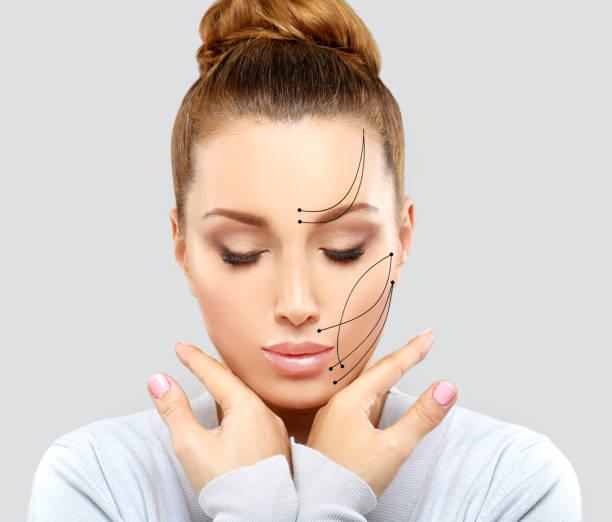
The distinction between Silhouette Soft and standard PDO threads is not a matter of branding—it is a fundamental difference in material science, anchoring design, and biological response. Facelift with Silhouette Threads in Dubai utilizes poly-L-lactic acid (PLLA) cones that provide superior tissue anchoring and sustained collagen stimulation, while PDO threads rely on polydioxanone barbs that degrade quickly and offer minimal long-term biological support. The primary benefit of Silhouette technology is durability: results last 18 to 24 months compared to 6 to 9 months for PDO threads.
The Material Science Difference
PDO: The Surgical Suture
Polydioxanone (PDO) is a polymer that has been used in surgical sutures for decades. It is biocompatible, absorbable, and well-understood. When used in thread lifts, PDO is formed into thin filaments with small barbs or cogs that catch tissue during insertion.
The problem with PDO is its degradation profile. PDO dissolves completely within 4 to 6 months. During this period, it provides a temporary mechanical lift, but the barbs gradually lose their grip as the material hydrolyzes. Once the thread is gone, the lift is gone. The collagen stimulated during this period is minimal—a mild inflammatory response that produces sparse, disorganized fibers that fade quickly.
PDO threads are not a bad product—they are simply a short-acting one. Patients who choose PDO threads accept a treatment that must be repeated every 6 to 9 months to maintain results.
PLLA: The Bio-Stimulator
Poly-L-lactic acid (PLLA) is a different material with a different biological profile. PLLA has been used for decades as a collagen stimulator—most notably in Sculptra, the injectable filler that builds volume gradually over time. When formed into the cones of Silhouette Soft threads, PLLA provides two distinct benefits:
Mechanical Anchoring: The cones are smooth, bidirectional structures that distribute tension across a wider surface area than PDO barbs. This prevents the "cheese-wiring" effect—where a thin barbed thread slices through delicate facial tissue under tension.
Biological Stimulation: As the PLLA cones hydrolyze over 12 to 18 months, they release lactic acid. This triggers a sustained inflammatory response that stimulates fibroblasts to produce new collagen. The collagen matrix that forms around the cones provides structural support that persists even after the threads dissolve.
Data Comparison: Silhouette Soft vs. PDO Threads
Clinical Parameters Compared
The table below provides a detailed comparison between Silhouette Soft and PDO threads for a facelift with Silhouette Threads in Dubai.
| Parameter | Silhouette Soft (PLLA Cones) | PDO Threads (Barbs/Cogs) |
|---|---|---|
| Material | Poly-L-lactic acid (PLLA) | Polydioxanone (PDO) |
| Anchoring System | Smooth bidirectional cones | Barbed or cogged suture |
| Tension Distribution | Wide surface area (cones) | Narrow points (barbs) |
| Risk of Tissue Tearing | Low | Moderate to high |
| Collagen Stimulation | Significant, sustained (12+ months) | Minimal, transient (3-4 months) |
| Dissolution Time | 12-18 months | 4-6 months |
| Result Duration | 18-24 months | 6-9 months |
| Procedure Safety | Blunt cannula insertion | Sharp needle or cannula |
| Bruising Risk | Lower | Higher |
| Cost per Treatment | Higher upfront | Lower upfront |
| Cost per Month of Result | Lower (spread over 24 months) | Higher (repeated every 6 months) |
The data confirms that Silhouette Soft is the superior choice for patients seeking durable, natural results with fewer repeat procedures.
Facelift with Silhouette Threads in Dubai: The Clinical Difference
The Insertion Safety Profile
At Tajmeels Clinic, the safety advantages of Silhouette Soft threads are a key consideration. The threads are inserted using a blunt-tipped cannula, which pushes aside blood vessels and nerves rather than cutting through them. This reduces the risk of neurovascular injury and minimizes post-procedure bruising.
PDO threads, by contrast, are typically inserted using a sharp needle or cannula. The sharp tip can damage small vessels and nerves, leading to more bruising and a higher risk of complications. The barbed design also creates micro-tears in the tissue during insertion, contributing to post-procedure swelling.
For patients seeking a facelift with Silhouette Threads in Dubai, this safety profile is a critical differentiator. The blunt cannula technique is gentler on the tissue, resulting in a smoother recovery and fewer visible signs of treatment.
The Result Character
The difference between Silhouette Soft and PDO threads becomes apparent over time. At month one, both treatments show a visible lift. At month six, the PDO threads are dissolving, and the lift is fading. The Silhouette threads are still in place, and the collagen phase is just beginning.
At month twelve, the PDO result is essentially gone—the patient needs another treatment. The Silhouette result is peaking—the collagen matrix is mature, and the face looks better than it did at month three.
"I had PDO threads before switching to Silhouette. The PDO lift was good for about three months, then it disappeared. The Silhouette lift is different—it's been over a year, and my face still looks lifted. I'll never go back to PDO."
— Reem A., Dubai Marina
Facelift with Silhouette Threads in Dubai: Expected Results
The Longevity Advantage
The most significant difference between Silhouette Soft and PDO threads is longevity. A facelift with Silhouette Threads in Dubai delivers results that last 18 to 24 months. PDO threads deliver results that last 6 to 9 months.
This difference has practical implications. A patient who chooses PDO threads will need two to three treatments over the same period that a Silhouette patient needs one. The cumulative cost, cumulative downtime, and cumulative stress on the tissue all favor Silhouette Soft.
The Collagen Quality
The collagen stimulated by Silhouette Soft threads is fundamentally different from that stimulated by PDO threads. PLLA produces dense, well-organized collagen fibers that integrate with the existing dermal matrix. This collagen provides structural support that mimics the face's natural scaffolding.
PDO produces sparse, disorganized collagen that provides minimal support. The collagen response is short-lived and fades quickly after the threads dissolve.
For those seeking the most durable and biologically sophisticated option, opting for a professional Facelift with Silhouette Threads in Dubai at a center that prioritizes material science over cost-cutting guarantees a result that endures.
The Strategic Investment
Why Material Science Matters
The difference between Silhouette Soft and PDO threads is not marketing—it is chemistry. The PLLA cones are designed to provide superior anchoring and sustained collagen stimulation. The PDO barbs are designed to provide temporary lift. Understanding this distinction is essential for patients making an informed decision.
The Dubai Context
Dubai patients are sophisticated consumers. They understand that quality matters. Tajmeels Clinic prioritizes clinical outcomes over cost-cutting. The goal is not to offer the cheapest threads—it is to offer the threads that deliver the best results.
Frequently Asked Questions
1. Are Silhouette threads worth the higher cost than PDO threads?
Yes. When calculated on a per-month basis, Silhouette threads are often more economical than PDO threads. A Silhouette result lasting 24 months costs less per month than three PDO treatments over the same period.
2. Can I switch from PDO to Silhouette threads?
Yes. Many patients try PDO threads first due to the lower upfront cost, then switch to Silhouette Soft when they experience disappointment with longevity. There is no medical contraindication to switching.
3. Why do some clinics push PDO threads over Silhouette?
PDO threads have a lower wholesale cost, allowing clinics to offer competitive pricing. Some clinics also prefer PDO because the shorter duration means patients return more frequently for repeat treatments—a revenue advantage for the clinic, not a clinical advantage for the patient.
4. Is the procedure more painful with Silhouette threads?
No. Both procedures are performed under local anesthesia. Silhouette threads are inserted with a blunt cannula, which may actually be more comfortable than the sharp needle used for PDO threads.
5. Which thread type is better for the jawline?
Silhouette Soft is superior for the jawline because the cones provide stronger anchoring and longer-lasting support. The jawline is a high-tension area, and PDO barbs are more likely to slip or fail in this region.
6. Can I combine PDO and Silhouette threads?
There is no clinical benefit to combining the two. Silhouette Soft threads provide superior anchoring and longevity. Adding PDO threads would not enhance the result and would increase tissue trauma. A single, well-planned Silhouette treatment is more effective.

 English
 Arabic
 French
 Spanish
 Portuguese
 Deutsch
 Turkish
 Dutch
Dutch
 Italiano
 Russian
 Romaian
 Greek
Greek