
Cyber Risk Quantification for Better Business Security
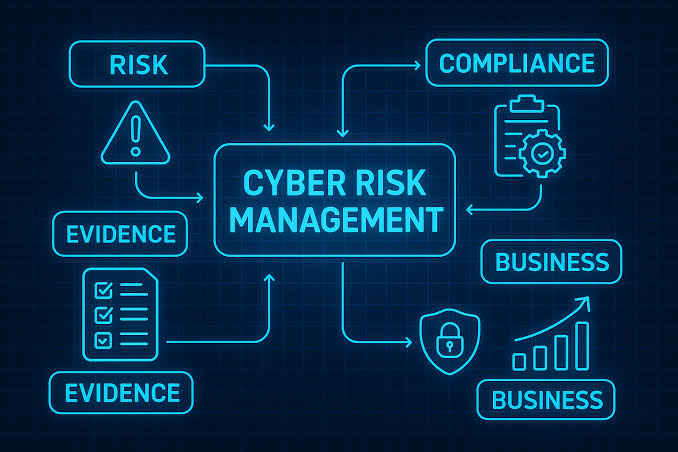
Cybersecurity decisions should no longer be based only on fear, assumptions, or generic threat reports. Modern businesses need measurable insights to understand how cyber incidents could affect revenue, operations, customers, and long-term growth. Cyber risk quantification helps organisations convert technical security concerns into financial information that business leaders can understand and act upon. A reliable Ransomware Protection Guide can also support this process by helping businesses identify the controls needed to reduce one of the most expensive and disruptive cyber threats.
What Is Cyber Risk Quantification?
Cyber risk quantification is the process of measuring cybersecurity risk in financial and business terms. Instead of simply describing a threat as “high” or “critical,” the process estimates the potential cost and probability of a security incident.
For example, a business may identify ransomware as a major risk. A traditional assessment may classify it as high risk, while cyber risk quantification can estimate possible financial losses caused by downtime, recovery costs, lost revenue, legal expenses, and data restoration.
This approach helps decision-makers understand the real business impact of cybersecurity threats.
Why Businesses Need Measurable Cyber Risk Data
Business leaders must make decisions about budgets, technology investments, insurance, and risk management. However, technical security reports can sometimes be difficult for non-technical executives to interpret.
Cyber risk quantification translates security information into more useful business questions, such as:
- How much could a ransomware incident cost?
- What is the potential cost of a data breach?
- Which security control provides the greatest financial benefit?
- How much financial risk could be reduced by implementing MFA?
- Is the organisation spending enough on cybersecurity?
- How much cyber insurance coverage may be required?
These answers allow cybersecurity teams to communicate risk more effectively with executives and financial stakeholders.
The Main Components of Cyber Risk Quantification
A strong cyber risk model generally considers several important factors.
Threat Likelihood
The first step is estimating the probability that a specific threat could affect the organisation. This depends on the business sector, technology environment, existing security controls, threat activity, and previous incidents.
For example, a company with outdated software and weak authentication may have a higher probability of experiencing a successful attack than an organisation with mature security controls.
Vulnerability Exposure
Vulnerabilities increase the opportunity for attackers to gain access to systems or data. These may include unpatched software, weak passwords, exposed remote access systems, excessive user permissions, or insecure cloud configurations.
Quantifying vulnerability exposure helps businesses identify where investments can reduce the greatest amount of risk.
Financial Impact
The financial impact of an incident can include much more than immediate recovery costs. Businesses should consider:
- Lost revenue during downtime
- Data recovery expenses
- Incident response costs
- Legal expenses
- Regulatory penalties
- Customer notification costs
- Public relations expenses
- Business interruption
- Third-party liability
Understanding the full financial picture is essential for accurate cyber risk decisions.
Quantifying Ransomware Risk
Ransomware remains one of the most significant threats to business continuity because it can disrupt operations and make important systems unavailable.
When quantifying ransomware risk, organisations should estimate how long critical systems could remain unavailable. A few hours of downtime may be manageable for one company but extremely costly for another.
Businesses should evaluate the potential impact on:
- Daily revenue
- Employee productivity
- Customer services
- Supply chains
- Financial transactions
- Data access
- Recovery operations
Security controls such as multi-factor authentication, endpoint detection and response, secure backups, network segmentation, and employee training can reduce ransomware exposure. Quantifying the financial benefit of these controls helps businesses prioritise their cybersecurity investments.
The Role of Data Breach Cost Analysis
A data breach can create direct and indirect financial consequences. Direct expenses may include forensic investigations, legal support, customer notification, and technology recovery.
Indirect costs may include customer loss, reputational damage, reduced trust, and future revenue losses.
The potential cost depends on several factors, including the amount of data affected, the type of information exposed, regulatory requirements, and the speed of incident detection.
Businesses that handle sensitive personal, financial, or health information may face significantly greater exposure than organisations with limited customer data.
How Security Controls Reduce Quantified Risk
Cyber risk quantification is not only about calculating possible losses. It also helps businesses measure the value of security improvements.
For example, an organisation may compare its estimated financial exposure before and after implementing a new control. If multi-factor authentication significantly reduces the likelihood of credential-based attacks, the model can estimate how much potential financial risk has been reduced.
This creates a stronger business case for cybersecurity investments.
Important controls may include:
- Multi-factor authentication
- Endpoint detection and response
- Security awareness training
- Vulnerability management
- Secure data backups
- Network segmentation
- Access management
- Incident response planning
The goal is to identify which controls provide the greatest reduction in financial exposure.
Using Cyber Risk Data for Better Security Investments
Every business has a limited cybersecurity budget. Cyber risk quantification helps organisations avoid spending money only on the most popular security technologies.
Instead, decision-makers can focus on the risks with the highest potential business impact.
For example, a company may discover that improving backup security and ransomware recovery capabilities would reduce more financial risk than purchasing another monitoring tool.
This approach supports smarter security budgeting and allows organisations to prioritise investments based on measurable outcomes.
Cyber Risk Quantification and Executive Decision-Making
Executives often need cybersecurity information in financial and operational terms rather than technical language.
A quantified risk report can help security teams explain:
- The potential financial cost of major threats
- The value of proposed security investments
- The impact of business downtime
- The organisation's current cyber exposure
- The expected benefit of reducing specific risks
This improves communication between technical teams, finance departments, risk managers, and senior leadership.
The Importance of Continuous Cyber Risk Assessment
Cyber risk changes as businesses introduce new systems, hire employees, expand operations, and adopt cloud technology. Threat actors also continue to develop new attack methods.
For this reason, cyber risk quantification should not be treated as a one-time project. Businesses should regularly update their risk models and reassess important assumptions.
Continuous monitoring can help organisations identify changes in exposure before they develop into major security problems.
Conclusion
Cyber risk quantification gives businesses a more practical way to understand cybersecurity threats and make informed security decisions. By estimating the probability and financial impact of incidents, organisations can prioritise investments, improve executive communication, and focus resources on the risks that matter most. Strong security strategies should combine technical protection with measurable financial insight, helping businesses build resilience against ransomware, data breaches, and operational disruption. A Breach Cost Calculator can support this process by helping organisations estimate potential financial exposure and make smarter decisions about cybersecurity investments.

 English
 Arabic
 French
 Spanish
 Portuguese
 Turkish
 Dutch
Dutch
 Italiano
 Russian
 Romaian
 Portuguese (Brazil)
 Greek
Greek