
How to Improve Tool Performance in High-Precision Machining Operations
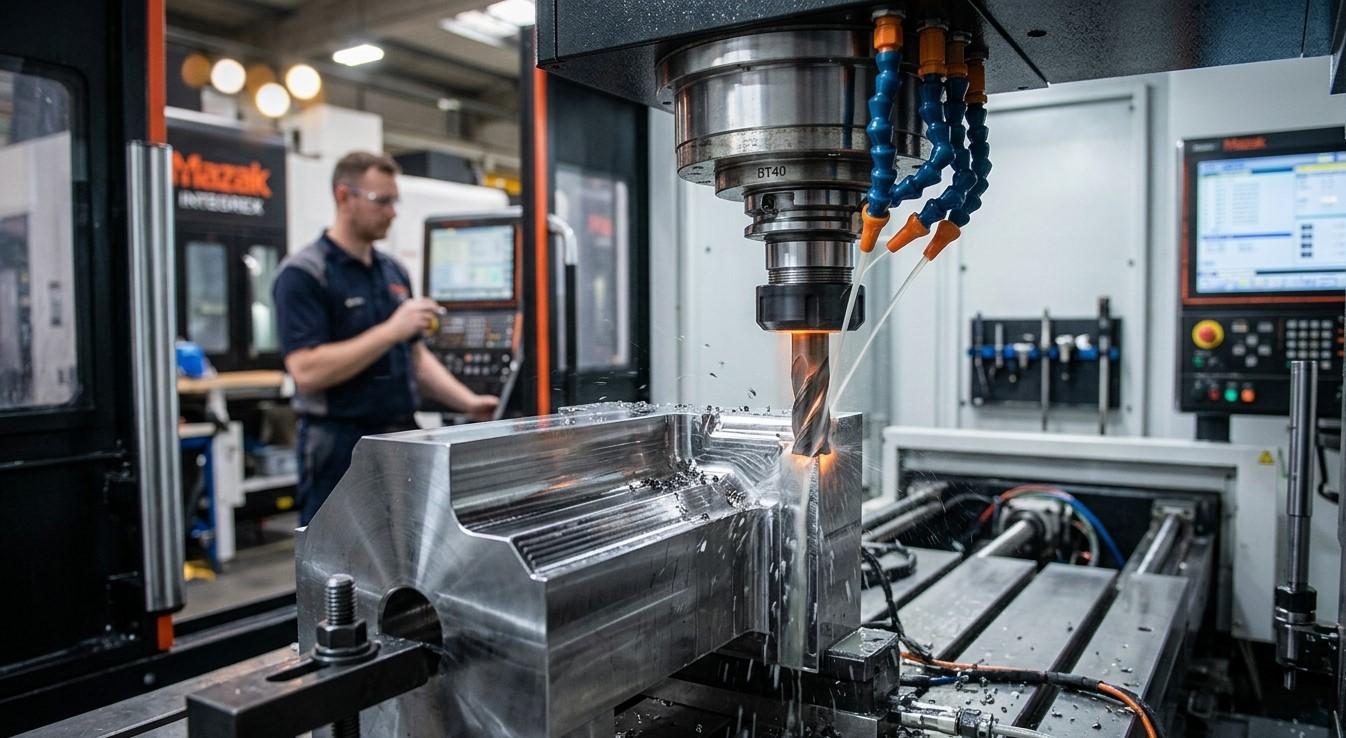
High-precision machining requires more than advanced CNC equipment. The performance, condition, and selection of machining tools directly influence dimensional accuracy, surface finish, productivity, and overall production costs. For manufacturers working with tight tolerances, even minor tool wear or incorrect tooling can result in rejected components and unnecessary downtime. Khokhawala Trading LLC, an experienced Industrial Tools Supplier in Dubai, provides a wide range of industrial and precision tooling solutions designed to support demanding machining and manufacturing applications.
Improving tool performance is not simply about purchasing premium tools. It involves selecting the correct tool for the material and operation, using appropriate cutting parameters, maintaining proper tool condition, managing coolant effectively, and ensuring accurate machine setup. This guide explains practical ways manufacturers can improve machining tool performance and achieve consistent results in high-precision operations.
Why Tool Performance Matters in Precision Machining
Machining tools are responsible for removing material accurately and consistently. When a tool performs properly, manufacturers can maintain required dimensions while achieving the desired surface finish and production rate.
Poor tool performance can lead to several problems, including:
- Dimensional inaccuracies
- Poor surface finish
- Excessive tool wear
- Chatter and vibration
- Increased machining time
- Higher scrap and rework rates
- Unexpected machine downtime
- Increased tooling costs
For industries such as aerospace, automotive, medical equipment, electronics, mold manufacturing, and precision engineering, these problems can have a significant impact on production quality.
1. Select the Right Tool for the Application
One of the most important factors affecting tool performance is correct tool selection. A tool designed for one material or machining operation may not deliver the same results in another application.
When selecting industrial cutting tools, consider factors such as:
- Workpiece material
- Hardness of the material
- Type of machining operation
- Required tolerance
- Desired surface finish
- Cutting speed
- Feed rate
- Depth of cut
- Machine capability
- Production volume
For example, carbide cutting tools are commonly selected for applications requiring high wear resistance and cutting performance. Specialized tooling may be required for hardened steels, stainless steel, aluminum, titanium, composites, or other difficult-to-machine materials.
Selecting the correct tool geometry and material can significantly improve tool life and machining consistency.
2. Use the Correct Cutting Parameters
Even a high-quality tool can perform poorly if cutting parameters are incorrect. Cutting speed, feed rate, and depth of cut must be matched to the tool, workpiece material, and machine.
Cutting Speed
Cutting speed determines how quickly the cutting edge moves through the workpiece. Excessive speed can increase heat generation and accelerate tool wear, while an unnecessarily low speed can reduce productivity.
Feed Rate
Feed rate affects material removal, surface finish, and cutting forces. A feed rate that is too high may cause excessive cutting pressure, while an excessively low feed can sometimes increase rubbing and heat.
Depth of Cut
The depth of cut should be appropriate for the tool's geometry, machine rigidity, and workpiece requirements. Heavy cuts can increase tool loading, while inefficiently shallow cuts may reduce productivity.
Manufacturers should use tooling recommendations as a starting point and optimize parameters based on actual machining conditions.
3. Maintain Proper Tool Geometry
Tool geometry has a major effect on cutting efficiency. Rake angle, clearance angle, cutting-edge preparation, flute design, and tool diameter all influence how effectively a tool removes material.
The right geometry can help:
- Reduce cutting forces
- Improve chip evacuation
- Reduce heat generation
- Improve surface finish
- Minimize vibration
- Extend tool life
For precision machining, tool geometry should be selected according to the material and operation rather than simply choosing a general-purpose tool.
4. Control Tool Runout
Tool runout is a critical issue in high-precision CNC machining. Runout occurs when the cutting tool does not rotate perfectly around its intended axis.
Excessive runout can cause one cutting edge to carry more load than others. This may result in:
- Uneven tool wear
- Poor surface finish
- Dimensional variation
- Increased vibration
- Reduced tool life
Using high-quality tool holders, chucks, collets, and machining accessories can help minimize runout. Proper cleaning of mating surfaces is equally important because chips, dirt, or contamination between components can affect tool alignment.
5. Improve Workholding Stability
Tool performance depends not only on the cutting tool but also on how securely the workpiece is held. Poor workholding can cause movement, vibration, and inconsistent machining results.
Reliable chucks and vises provide the stability required for precision operations. The workpiece should be positioned securely without excessive clamping force that could distort thin or delicate components.
For CNC machining, workholding systems should provide sufficient rigidity while allowing efficient access to the machining area.
6. Reduce Vibration and Chatter
Chatter is one of the most common problems affecting machining quality. It occurs when vibration develops between the cutting tool, machine, workholding system, and workpiece.
Chatter can create visible marks on the surface and may shorten tool life.
To reduce vibration:
- Use rigid tool holders
- Minimize tool overhang
- Secure the workpiece properly
- Select appropriate cutting parameters
- Use the correct tool diameter
- Avoid unnecessarily long tools
- Check machine and spindle condition
In difficult applications, changing cutting speed, feed, or depth of cut can help move the operation away from unstable cutting conditions.
7. Use Effective Coolant and Lubrication
Heat is a major contributor to tool wear. Effective coolant or lubrication can help control cutting temperatures, improve chip removal, and reduce friction.
Coolant requirements vary according to the workpiece material, tool type, and machining operation. In some applications, dry machining may be appropriate, while others benefit from flood coolant, mist, or minimum quantity lubrication.
Coolant management should include:
- Maintaining appropriate concentration
- Keeping coolant clean
- Ensuring adequate flow
- Directing coolant toward the cutting zone
- Monitoring contamination
Using the wrong coolant or poor coolant concentration can negatively affect both tool performance and workpiece quality.
8. Improve Chip Evacuation
Efficient chip removal is especially important during drilling, milling, grooving, and deep-hole machining. If chips remain trapped in the cutting zone, they can be recut, generate additional heat, damage the workpiece, or interfere with the cutting edge.
Tools should therefore be selected with suitable flute geometry and chip-breaking characteristics.
For difficult materials, specialized industrial drill bits, milling tools, or cutting inserts may provide better chip control.
Good chip evacuation improves machining stability and reduces the risk of tool failure.
9. Monitor Tool Wear Regularly
Tool wear is unavoidable, but uncontrolled wear can create serious quality problems. Regular inspection allows manufacturers to replace or adjust tooling before performance deteriorates significantly.
Common signs of tool wear include:
- Increased cutting forces
- Poor surface finish
- Dimensional changes
- Unusual noise
- Excessive vibration
- Visible edge damage
- Increased spindle load
For high-volume CNC production, tool-life monitoring can be integrated into production systems. Establishing a tool replacement strategy based on actual performance can help prevent unexpected tool breakage.
10. Use Precision Measuring Tools
High-precision machining requires accurate measurement. Even if a tool performs correctly, manufacturing quality cannot be confirmed without reliable inspection equipment.
Precision measuring tools such as calipers, micrometers, dial indicators, bore gauges, height gauges, and other measuring instruments help verify component dimensions.
Measurement should be performed at appropriate stages of production rather than waiting until the final inspection. In-process checks can identify dimensional changes caused by tool wear and allow operators to make adjustments before large quantities of parts are produced.
Working with a reliable Precision Measuring Tools Supplier in Dubai can also help manufacturers select suitable inspection equipment for their applications.
11. Maintain Tool Holders and Machining Accessories
Tool holders and other machining accessories play an important role in maintaining precision. A damaged, contaminated, or worn holder can negatively affect tool positioning and stability.
Regularly inspect:
- Tool holders
- Collets
- Chucks
- Vises
- Adapters
- Inserts
- Clamping components
Clean all contact surfaces before installation. Avoid using damaged components and follow the manufacturer's recommended maintenance procedures.
A well-maintained tooling system provides better repeatability and reduces setup-related problems.
12. Store Tools Correctly
Proper storage is often overlooked but can significantly influence tool performance. Cutting edges can be damaged if tools are stored loosely in drawers or placed against other metal components.
Industrial tools should be stored in clean, dry, organized locations. Precision tools should receive additional protection against impact, contamination, and corrosion.
Organized storage also makes it easier for operators to identify the correct tool quickly, reducing setup time and preventing incorrect tool selection.
13. Train Machine Operators
Even the best CNC machining tools cannot deliver consistent performance if operators do not understand how to use them correctly.
Training should cover:
- Tool selection
- Tool installation
- Cutting parameters
- Tool inspection
- Coolant practices
- Workholding
- Measurement techniques
- Tool wear identification
- Machine safety
Experienced operators can often identify early warning signs of tool problems before they become major production issues.
Benefits of Optimizing Tool Performance
A systematic approach to tooling can provide several important benefits:
Longer Tool Life
Correct tool selection and cutting parameters reduce unnecessary stress and wear.
Better Surface Finish
Stable cutting conditions and sharp cutting edges improve component quality.
Higher Productivity
Efficient tools allow manufacturers to maintain appropriate cutting speeds and feeds.
Lower Production Costs
Longer tool life, fewer rejected parts, and reduced downtime can lower overall machining costs.
Improved Accuracy
Reliable tooling, workholding, and measurement systems support tighter dimensional control.
Greater Production Consistency
Standardized tooling practices help maintain repeatable results across multiple production cycles.
Practical Checklist for Better Tool Performance
Before starting a high-precision machining operation, manufacturers should check:
- Is the tool suitable for the workpiece material?
- Is the tool geometry appropriate for the operation?
- Are cutting speed and feed rate correctly selected?
- Is tool runout within acceptable limits?
- Is the workpiece securely clamped?
- Is tool overhang minimized?
- Is coolant or lubrication appropriate?
- Is chip evacuation effective?
- Are tools inspected for wear?
- Are precision measurements being performed regularly?
- Are tool holders and accessories clean and undamaged?
- Are operators properly trained?
Following this checklist can help reduce avoidable tooling problems and improve overall machining performance.
Conclusion
Improving tool performance in high-precision machining requires a complete approach that combines proper tool selection, optimized cutting parameters, rigid workholding, accurate measurement, effective coolant management, and regular tool maintenance. Manufacturers should also monitor tool wear and invest in high-quality industrial cutting tools, CNC machining tools, tool holders, and precision measuring instruments to achieve reliable results.
For businesses looking for dependable tooling solutions, Khokhawala Trading LLC is an established Industrial Tools Supplier in Dubai, offering a broad range of industrial tools and machining solutions for manufacturing, engineering, CNC, fabrication, maintenance, and other industrial applications. Choosing the right tools and using them correctly can help businesses improve accuracy, extend tool life, reduce downtime, and achieve more efficient machining operations.

 English
 Arabic
 French
 Spanish
 Portuguese
 Deutsch
 Turkish
 Dutch
 Italiano
 Russian
 Romaian
 Greek