English
 Arabic
 French
 Spanish
 Portuguese
 Deutsch
 Turkish
 Dutch
Dutch
 Italiano
 Russian
 Romaian
 Portuguese (Brazil)
 Greek
Greek
Business Consultant in Dubai | Business Consultant & Company Formation
Wellness |
2026-09-04 13:30:00
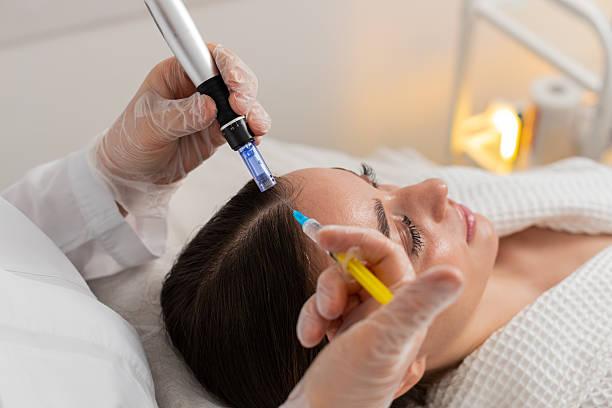
Hair regeneration is not controlled by a single structure or biological signal. Exosome Hair in Dubai is being investigated because exosomes may influence communication between cells within the hair follicle environment, including pathways involved in growth, inflammation, and follicular activity. Understanding this biology helps explain both the potential of the treatment and why results cannot be guaranteed for every type of hair loss.
A hair follicle is more than a simple opening in the scalp.
It is a complex mini-organ containing multiple interacting cell types, signaling molecules, blood vessels, connective tissue, and stem-cell populations.
Hair growth depends on communication between these components.
The follicle repeatedly moves through different stages of its growth cycle, meaning its activity changes over time rather than remaining permanently switched on.
This biological complexity is one reason regenerative hair research focuses on the follicular environment rather than only the visible hair shaft.
The follicular microenvironment refers to the local biological conditions surrounding and supporting the hair follicle.
It includes neighboring cells, signaling molecules, extracellular matrix components, immune activity, vascular factors, and other influences that can affect follicular behavior.
When these interactions support healthy cycling, the follicle can continue producing hair.
When signaling becomes disrupted, follicles may progressively produce thinner or shorter hairs in certain forms of alopecia.
Research into exosomes is partly focused on whether these nanoscale extracellular vesicles can influence this local communication network.
Exosomes are extracellular vesicles released by cells.
They can contain biologically active materials such as proteins, lipids, and nucleic acids, including microRNAs.
Rather than functioning like a conventional nutrient or simple topical ingredient, exosomes are studied for their potential role in cell-to-cell communication.
A 2026 review of hair-regeneration research describes exosome-mediated effects involving several biological pathways associated with follicular activity, vascular signaling, fibrosis, and immune regulation.
This is one reason exosome-based therapy has attracted interest within regenerative medicine.
Dermal papilla cells are located within the hair follicle and play an important role in regulating hair growth.
They communicate with surrounding follicular cells and participate in signaling processes that influence the hair cycle.
Research into hair regeneration has therefore paid considerable attention to how dermal papilla cells respond to different molecular signals.
A review of exosome research describes the interaction between dermal papilla cells, hair follicle stem cells, and signaling pathways as an important part of understanding hair regeneration.
This does not mean that stimulating one cell type automatically produces permanent hair growth.
Hair biology involves several interconnected systems.
The Wnt/β-catenin pathway is one of the signaling systems frequently discussed in hair-regeneration research.
It is involved in follicular development and cycling.
Preclinical studies summarized in recent reviews suggest that exosomes may influence Wnt/β-catenin signaling, potentially supporting processes associated with hair follicle activity.
However, evidence from molecular or laboratory studies should not be interpreted as proof of a predictable cosmetic result in every patient.
A biological mechanism can explain why a treatment is being investigated without establishing how effective it will be clinically.
Hair biology involves multiple pathways rather than a single molecular switch.
Recent reviews discuss pathways including:
These pathways participate in different aspects of follicular development, cellular communication, inflammation, and tissue behavior.
This multi-pathway activity is one reason exosomes are sometimes described as a potentially broad regenerative platform.
It is also why treatment outcomes are difficult to predict using a single biological mechanism.
Hair follicles do not continuously produce hair at the same rate.
The cycle includes growth, regression, and resting phases.
The relative duration and transition between these phases influence visible hair density and length.
Research into regenerative therapies often examines whether signaling can influence the transition toward the active growth phase.
Recent reviews describe exosome-related research involving pathways that may support anagen activity and follicular regeneration.
This helps explain why hair treatments may require time before visible changes can be evaluated.
Hair follicles require an appropriate local environment that includes vascular support.
Research into exosome-mediated regeneration has investigated angiogenic signaling, including pathways involving vascular endothelial growth factor.
Recent reviews identify promotion of angiogenesis as one proposed mechanism through which exosome-based approaches may influence the follicular environment.
Again, this is primarily a biological research concept.
It should not be converted into a guarantee that an exosome treatment will increase blood supply or produce a particular degree of hair growth in an individual.
The immune environment around the follicle can affect hair biology.
Excessive or persistent inflammatory signaling may interfere with normal tissue behavior in some forms of hair loss.
Researchers are therefore investigating whether exosome cargo can influence inflammatory pathways.
Recent reviews describe potential immunomodulatory effects as part of the proposed mechanism of exosome-based hair regeneration.
This area remains scientifically complex because different types of alopecia involve different biological processes.
In androgenetic alopecia, affected follicles can progressively produce finer hairs.
The follicle may remain present while its output changes.
This distinction is important because regenerative research frequently focuses on supporting follicles that retain some biological activity rather than assuming that every area of visible hair loss contains equally viable follicles.
The degree of miniaturization can therefore be relevant when considering whether a regenerative strategy has a reasonable biological rationale.
A regenerative approach and a hair-transplant procedure operate differently.
Hair transplantation physically relocates follicles from one area of the scalp to another.
A regenerative approach seeks to influence biological processes around existing follicles.
This difference means that the condition of the existing follicles can be an important part of treatment planning.
Where follicles are significantly damaged or absent, simply changing local signaling may not produce the same outcome as it might in an area containing functioning but weakened follicles.
Two people can have apparently similar thinning while having different scalp conditions.
One person may have relatively healthy scalp skin and gradual follicular miniaturization.
Another may have inflammation, scaling, irritation, scarring, or another condition affecting the local environment.
This is why a standardized treatment approach cannot necessarily be applied identically to every patient.
The biological context matters.
The follicular environment should not be confused with the external environment, but daily scalp conditions can still affect comfort and routine.
Dubai's heat, strong ultraviolet exposure, perspiration, swimming, and extensive air-conditioning can influence how people manage their scalp.
These environmental factors do not directly determine whether an exosome treatment will work.
They are better viewed as practical considerations surrounding scalp care and treatment planning.
The scientific rationale for exosome hair therapy is increasingly detailed, but clinical evidence remains less mature than the underlying laboratory research.
A 2026 systematic review examining exosome-driven treatments for androgenetic alopecia included 39 studies in its qualitative synthesis. Early clinical studies reported improvements in hair density and shaft thickness, while the authors highlighted limitations involving small samples, retrospective designs, lack of control groups, and inconsistent outcome measures.
A separate 2025 systematic review identified 11 clinical studies across different alopecia types and exosome sources and likewise emphasized heterogeneity between studies.
The distinction between mechanism and clinical proof is therefore essential.
| Scientific concept | What it can explain | What it cannot guarantee |
|---|---|---|
| Wnt/β-catenin signaling | Why follicular activity is being investigated | A specific amount of regrowth |
| Dermal papilla signaling | How follicular communication may change | Uniform response between patients |
| Angiogenic signaling | Potential vascular support mechanisms | Guaranteed increased density |
| Immunomodulation | Potential influence on inflammatory signaling | Resolution of every inflammatory scalp condition |
| Hair-cycle regulation | Why timing may matter | A fixed treatment timeline |
| Cellular communication | How exosomes may affect neighboring cells | Permanent hair restoration |
This distinction helps keep scientific explanations accurate.
The word “exosome” does not identify a single standardized biological product.
Exosomes can originate from different cell sources and may differ in composition, preparation, concentration, and handling.
A 2026 review specifically notes the diversity of exosome origins and delivery approaches investigated in hair-regeneration research.
Consequently, findings from one study cannot automatically be applied to every product marketed under the same general terminology.
How a regenerative substance reaches the scalp can influence its interaction with tissue.
Research is examining different delivery approaches, including injection-based methods and emerging technologies designed to improve localized delivery.
This means “exosome treatment” is not necessarily one identical procedure everywhere.
The source, formulation, dose, delivery technique, and treatment protocol can all affect how a study should be interpreted.
Understanding follicular biology does not replace diagnosis.
Before considering Exosome Hair in Dubai, a clinician should consider the type and pattern of hair loss, scalp condition, follicular status, medical history, previous treatments, and realistic treatment objectives.
The biological theory is only useful when it corresponds to the patient's actual clinical situation.
The most accurate way to describe exosome-based hair treatment is as an emerging regenerative approach supported by a growing body of mechanistic and early clinical research.
The science suggests several plausible ways exosomes could influence the follicular environment, including cellular communication, signaling pathways, vascular support, and immune regulation.
But promising mechanisms should not be confused with guaranteed outcomes.
The quality of evidence, product characteristics, delivery method, patient selection, and underlying diagnosis all matter.
A deeper understanding of the follicle helps explain why regenerative hair therapy is scientifically interesting.
It also explains why responsible treatment planning cannot rely on marketing terminology alone.
For people researching Exosome Hair in Dubai, the important questions extend beyond whether exosomes are “good” or “bad.” The more useful questions concern the underlying hair-loss pattern, follicular condition, biological rationale, evidence quality, product characteristics, and clinical monitoring.
Those exploring broader hair and aesthetic treatment options in Dubai can review the services and information available through Tajmeels Clinic before discussing an appropriate treatment pathway with a qualified professional.
Regenerative medicine is most useful when scientific potential is matched with careful patient selection, transparent evidence, and realistic expectations.