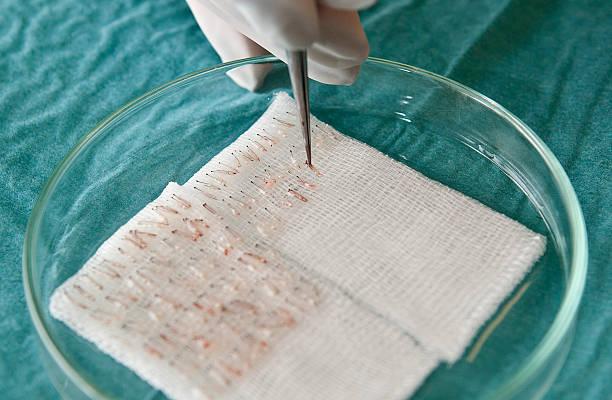
A low price per graft does not automatically indicate better value in hair restoration. With a 1 Dirham Hair Transplant in Dubai, patients should consider what the graft price represents alongside follicle quality, donor assessment, extraction technique, graft handling, implantation, surgical planning, and postoperative care.
Two clinics can advertise different prices per graft while delivering very different treatment plans. The meaningful comparison is therefore not simply the cost of each graft, but how effectively suitable grafts are selected and used.
What Makes a Hair Transplant Graft Valuable
A graft is a follicular unit containing one or more naturally grouped hairs. Its value depends on more than the number of hairs it contains.
A strong graft plan considers whether the follicle is stable, how it can be extracted safely, where it should be implanted, and how it contributes to the overall density pattern.
Single-Hair Grafts
Single-hair units can be particularly useful around the leading edge of the hairline.
Their smaller hair count allows the surgeon to create a gradual transition from forehead to transplanted scalp rather than producing an abrupt wall of density.
Multi-Hair Grafts
Two-, three- and occasionally larger follicular units can contribute more coverage when placed behind the frontal transition.
Using these grafts strategically can improve density without requiring every available follicular unit to be used at the same visual density.
Why Graft Count Alone Can Be Misleading
A quotation containing 2,000 grafts does not necessarily represent the same biological or cosmetic resource as another 2,000-graft quotation.
The composition of those grafts matters.
Hair Count Per Graft
Suppose two treatment plans each contain 2,000 grafts. If one contains a greater proportion of multi-hair follicular units, the total number of transplanted hairs can be different.
This does not mean that more hairs automatically produce a better result. The distribution and placement of those hairs remain critical.
Hair Caliber
Thicker hair shafts generally provide stronger visual coverage than very fine shafts.
Consequently, two patients receiving the same graft number can experience different visual improvements.
Donor Quality Should Be Part of the Price Discussion
The donor area is the source of transplanted follicles, making its quality fundamental to treatment planning.
Before discussing the final number of grafts, the surgeon should evaluate density, follicular-unit composition, hair caliber and the stability of the donor region.
Dense Donor Area
A strong donor area can provide greater flexibility when planning restoration.
However, even a dense donor zone should not be treated as unlimited. Safe extraction remains essential.
Weak or Limited Donor Area
A low-density donor region requires greater selectivity.
In these situations, preserving donor resources and allocating grafts to the areas with the greatest cosmetic impact can be more important than maximizing the immediate graft count.
Extraction Quality Can Affect Graft Value
The extraction stage requires precision because follicular units have different orientations beneath the scalp.
Improper positioning of the extraction device or excessive force can increase the risk of follicular damage.
Transection Risk
A damaged follicular unit may not provide the same potential as an intact graft.
This is why the number of extracted grafts should be considered together with the quality and integrity of those grafts.
Donor Overharvesting
Extracting too aggressively can create visible thinning in the donor region.
A lower price for a large number of grafts is not necessarily advantageous if the treatment unnecessarily compromises future donor capacity.
Graft Handling Is Part of Treatment Quality
After extraction, follicular units are temporarily outside the scalp.
They need to be handled carefully and maintained under appropriate conditions until implantation.
Time Outside the Body
Surgical workflow should minimize unnecessary delays between extraction and implantation.
Longer procedures require organized graft handling so that the follicular units remain protected throughout the session.
Sorting and Organization
Grafts can be organized according to their follicular composition and intended recipient location.
This allows the surgical team to use appropriate graft types in different areas of the scalp.
Recipient-Site Design Determines How Grafts Are Used
Even high-quality grafts can produce a poor cosmetic result if they are placed without appropriate attention to anatomy.
The recipient sites should reflect the natural direction and angle of surrounding hair.
Hairline Direction
Hair at the frontal edge usually grows forward with relatively acute angles.
As the placement moves backward, the angle and direction gradually change.
Crown Direction
The crown follows a rotational growth pattern around the whorl.
Simply placing grafts in parallel rows can therefore produce an unnatural appearance in this region.
Price Should Be Evaluated Against Surgical Planning
A per-graft price is useful because it provides a transparent numerical basis for estimating treatment cost.
But price alone cannot tell a patient whether the graft allocation is appropriate.
For example, a patient with frontal recession may not benefit from allocating a large proportion of grafts to the crown simply because the package includes a high graft count.
The treatment should address the patient's actual pattern of loss.
How the 1 Dirham Model Changes the Price Conversation
The 1 Dirham model is based on a straightforward per-graft calculation.
If 1,200 grafts are clinically planned, the graft component under a 1 AED-per-graft structure would be 1,200 AED. If 2,500 grafts are planned, the corresponding calculation would be 2,500 AED.
The key question is therefore not simply whether one clinic charges less per graft.
It is whether the proposed graft number, graft quality, surgical technique and treatment scope are appropriate for the patient's anatomy.
A Lower Price Is Not Always a Lower Total Cost
A low initial quotation can become less attractive if it does not provide the coverage the patient actually needs.
Underestimating Grafts
If too few grafts are allocated to a large recipient area, the resulting density may be insufficient.
The patient may later require another procedure if adequate donor supply remains.
Overestimating Grafts
The opposite problem can also occur. A very high graft recommendation may unnecessarily consume donor follicles when a more conservative allocation could achieve a satisfactory result.
The correct number should be clinically justified rather than selected to make the quotation appear cheaper or more comprehensive.
Hairline Quality Versus Graft Quantity
The frontal hairline demonstrates why quality can matter more than raw numbers.
A natural hairline requires careful control of graft composition, spacing, angulation, irregularity and transition density.
Soft Frontal Transition
Fine single-hair grafts can create a softer leading edge.
Behind this area, denser placement can increase visual coverage without making the hairline look artificially heavy.
Facial Proportion
The hairline should complement the patient's facial structure.
Lowering it simply to increase the apparent amount of hair can consume donor resources and potentially produce an unnatural proportion.
Crown Quality Versus Graft Quantity
The crown presents another example of why graft numbers must be interpreted carefully.
A large number of grafts may be required for a large vertex, but the surgeon must still reproduce the rotational direction of native hair.
Whorl Reconstruction
The central whorl influences how the surrounding grafts should be oriented.
The objective is to integrate transplanted follicles with existing hair rather than create a visually separate transplanted patch.
Strategic Coverage
In advanced hair loss, it may be preferable to establish stronger coverage in cosmetically important zones rather than distribute a limited donor supply too thinly across the entire scalp.
For patients comparing hair transplant options in Dubai, this distinction is particularly important when reviewing per-graft offers.
Future Hair Loss Changes the Value of Today's Grafts
Hair transplantation does not necessarily stop native hair from continuing to miniaturize.
A patient may have strong donor hair but unstable native hair in the recipient region.
Planning for Progression
A surgeon should consider how the scalp could look if untreated native hairs become weaker over time.
This is particularly important in younger patients and those with a strong family history of progressive hair loss.
Preserving Donor Reserves
Future procedures may become necessary for some patients.
Protecting the donor area during the first procedure can preserve options for later restoration.
Comparing Two Per-Graft Offers
Patients can use a structured approach when comparing treatment quotations.
| Comparison factor |
Why it matters |
| Price per graft |
Establishes the basic numerical cost |
| Planned graft count |
Determines the treatment scale |
| Graft composition |
Influences potential hair coverage |
| Donor assessment |
Establishes whether graft supply is adequate |
| Extraction technique |
Can affect follicular integrity |
| Graft handling |
Helps protect follicles before implantation |
| Recipient-site design |
Determines direction and distribution |
| Surgeon involvement |
Influences surgical planning and execution |
| Aftercare |
Supports postoperative recovery |
| Future-loss planning |
Protects long-term restoration strategy |
This makes the comparison more meaningful than looking at price alone.
Questions to Ask Before Choosing a Low-Cost Graft Package
Does the price include all surgical services?
Ask what is included in the quoted price, including consultation, extraction, implantation, medication, follow-up and other applicable services.
How was my graft number determined?
The graft count should be based on the size and pattern of hair loss, donor capacity and desired coverage rather than a generic package.
Does every graft contain the same number of hairs?
No. Follicular units naturally contain different numbers of hairs, so graft count and total hair count are not identical measurements.
Is a cheaper graft necessarily lower quality?
Not necessarily. Price differences can result from clinic structure, technique, treatment scope and other factors. Quality should be assessed independently of price.
Can extracting more grafts improve my result?
Not automatically. Excessive extraction can reduce donor density, while inappropriate distribution can waste valuable follicles.
Should I choose the clinic offering the lowest price per graft?
Price should be one consideration, not the sole selection criterion. Surgical planning, donor preservation, graft handling and realistic long-term expectations are equally important.
The Right Way to Think About Graft Value
A hair transplant graft has value because it represents a limited biological resource.
Once a stable donor follicle is removed and transplanted, it cannot simply be replaced with another identical follicle from the same location. This makes donor management particularly important in patients with extensive hair loss.
The best treatment plan therefore aims to use suitable grafts efficiently rather than simply maximizing the number of extracted follicles.
When Price and Quality Work Together
A transparent per-graft model can make treatment costs easier to understand.
With a 1 Dirham Hair Transplant in Dubai, the arithmetic may be simple, but the clinical decision behind the graft number is not. A reliable plan connects the price to donor capacity, recipient requirements, graft composition and the patient's long-term restoration goals.
Patients should therefore compare the complete treatment plan rather than treating the lowest numerical price as the best value.
A thoughtful consultation can establish whether the proposed graft count is justified, which areas should receive priority, and how donor follicles can be preserved for the future.
For patients researching hair restoration services, Tajmeels Clinic provides further information about available treatment options and hair-restoration planning.
 English
 Arabic
 French
 Spanish
 Portuguese
 Deutsch
 Turkish
 Dutch
Dutch
 Italiano
 Russian
 Romaian
 Portuguese (Brazil)
 Greek
Greek