English
 Arabic
 French
 Spanish
 Portuguese
 Deutsch
 Turkish
 Dutch
Dutch
 Italiano
 Russian
 Romaian
 Portuguese (Brazil)
 Greek
Greek
Best Plastic Surgeon in dubai for Defined Jawline with Endolift
Health |
2026-09-10 11:35:02
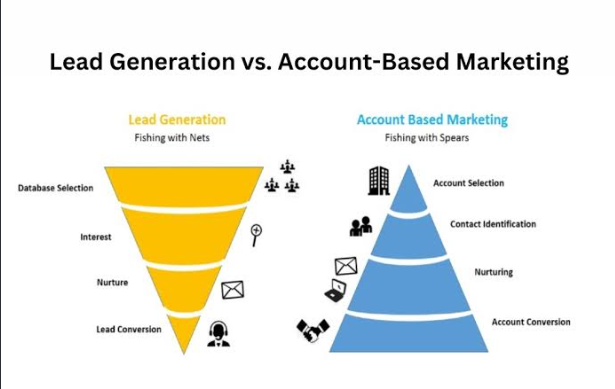
In the modern business world, companies are constantly searching for more effective ways to reach potential customers. Traditional marketing often focuses on attracting as many leads as possible and then determining which ones are most valuable. However, this approach is not always suitable for businesses that sell complex products or services to large organizations. This is where Account-Based Marketing (ABM) becomes valuable.
Account-Based Marketing is a B2B marketing strategy that focuses on specific companies or accounts rather than targeting a broad audience. Instead of creating one general marketing campaign for thousands of potential customers, a business identifies high-value accounts and creates personalized marketing strategies specifically for them.
ABM combines marketing and sales efforts to build stronger relationships with important prospects and existing customers.
Account-Based Marketing is a focused approach in which individual businesses are treated as separate markets. Marketing and sales teams work together to identify organizations that have a strong potential to become valuable customers.
After target accounts are selected, marketers research those organizations, understand their challenges, identify important decision-makers, and create customized campaigns designed to address their specific needs.
For example, a software company selling enterprise management solutions may identify ten large organizations that are likely to need its services. Instead of sending the same advertisement to everyone, the company could develop personalized content and communication for each organization.
The central idea of ABM is simple: focus resources on the accounts that matter most.
A successful ABM strategy usually begins with identifying the right accounts. Businesses examine factors such as company size, industry, location, business needs, purchasing potential, and compatibility with their products or services.
Once target accounts are selected, marketing and sales teams research them in greater detail. They may identify key decision-makers, understand business challenges, and determine what type of information would be most relevant to each organization.
The next step is creating personalized content and campaigns. These might include emails, presentations, advertisements, educational materials, webinars, or direct communication.
Sales teams then use the information generated by marketing to begin or strengthen conversations with people within the target organization.
Finally, businesses measure the results and refine their approach. Accounts that show strong interest may receive additional attention, while less promising accounts can be deprioritized.
ABM can be implemented in different ways depending on the size of the target audience and available resources.
Strategic ABM focuses on a small number of highly valuable accounts. Each account receives a highly personalized marketing strategy.
This approach may involve customized content, dedicated campaigns, personalized presentations, and direct communication with multiple decision-makers.
ABM Lite targets a larger group of accounts while still providing some level of personalization. Instead of creating a completely unique strategy for every organization, businesses may group similar accounts and develop campaigns for each group.
This approach provides a balance between personalization and scalability.
Programmatic ABM uses technology and automation to personalize marketing for a much larger number of accounts. Businesses can use data and automated campaigns to deliver relevant advertisements, emails, and content based on account characteristics and behavior.
This approach allows companies to scale ABM while maintaining a degree of personalization.
One of the biggest advantages of ABM is better resource allocation. Instead of spending marketing resources on a large number of uncertain leads, businesses can concentrate their efforts on accounts with higher potential value.
ABM can also improve marketing and sales alignment. Both teams work toward the same target accounts and share information about prospects. This reduces the separation that sometimes exists between marketing and sales departments.
Another major benefit is personalization. Businesses can create messages based on the specific needs and challenges of an organization. Relevant communication is often more useful than generic promotional messages.
ABM can also contribute to stronger customer relationships. When a company demonstrates that it understands an organization's challenges, it can create a more meaningful business relationship.
Additionally, ABM can help businesses measure marketing performance at the account level. Instead of focusing only on the number of leads generated, companies can examine engagement, opportunities, conversions, and revenue associated with target accounts.
Personalization is one of the most important elements of Account-Based Marketing. However, effective personalization goes beyond simply adding a person's name to an email.
Good personalization involves understanding the organization and its specific circumstances. A marketing message should address relevant challenges, goals, or opportunities.
For example, a company selling cybersecurity services might create different campaigns for a financial institution, a healthcare organization, and a manufacturing company. Although the underlying service may be similar, each industry may have different concerns and priorities.
The more accurately a business understands its target accounts, the more relevant its communication can become.
Data plays an important role in Account-Based Marketing. Businesses need accurate information to determine which accounts are worth targeting and how they should be approached.
Useful information may include company characteristics, industry, business size, previous interactions, purchasing behavior, and engagement with marketing materials.
However, data should be used responsibly. Poor-quality or outdated information can result in marketing campaigns being directed toward the wrong organizations or individuals.
Businesses should regularly review their account information and update their targeting strategies as circumstances change.
Technology has made ABM easier to implement and manage. Businesses can use customer relationship management systems, marketing automation platforms, analytics tools, advertising systems, and communication software to support their ABM programs.
These technologies can help teams organize target accounts, track interactions, automate communication, monitor engagement, and measure campaign performance.
Automation is particularly useful when businesses manage a large number of target accounts. However, technology should support the strategy rather than replace human understanding. Personalized business relationships still require meaningful communication and a clear understanding of customer needs.
Measuring ABM performance requires more than counting website visitors or email clicks. Businesses should evaluate metrics that demonstrate progress within their target accounts.
Important measurements may include:
Account engagement
Meetings with decision-makers
Sales opportunities
Conversion rates
Customer acquisition costs
Deal size
Sales cycle length
Revenue generated
Customer retention
Expansion opportunities
These metrics can help businesses determine whether their ABM strategy is producing meaningful business results.
Although ABM provides many advantages, it also presents challenges. One of the biggest is the need for close cooperation between marketing and sales teams.
ABM can also require significant research and preparation. Highly personalized campaigns take more time to develop than generic marketing campaigns.
Another challenge is selecting the right accounts. If a business targets organizations that are unlikely to purchase its products, valuable resources may be wasted.
Measuring results can also take time because B2B sales cycles are often lengthy. Businesses should therefore avoid judging an ABM campaign too quickly.
Businesses can improve their ABM efforts by following several principles.
First, they should establish clear criteria for selecting target accounts. Second, marketing and sales teams should agree on responsibilities and goals.
Businesses should also research target organizations carefully and create content that addresses genuine customer needs. Personalization should be useful rather than excessive.
Finally, companies should continuously analyze results and adjust their strategies. ABM is not a one-time campaign; it is an ongoing approach to building valuable business relationships.
Account-Based Marketing offers a focused alternative to traditional broad-based B2B marketing. By identifying high-value organizations and creating personalized campaigns for them, businesses can make better use of their resources and build stronger relationships with potential customers.
The success of ABM depends on several factors, including accurate account selection, strong marketing and sales collaboration, useful personalization, reliable data, appropriate technology, and continuous measurement.
Ultimately, Account-Based Marketing is about quality rather than quantity. Instead of trying to reach everyone, businesses focus on reaching the right organizations, the right people, and the right decision-makers with the right message. When implemented effectively, ABM can become a powerful strategy for generating opportunities, increasing revenue, and developing long-term B2B relationships.