
Mental Health Counsellor vs Psychologist: What’s the Difference?
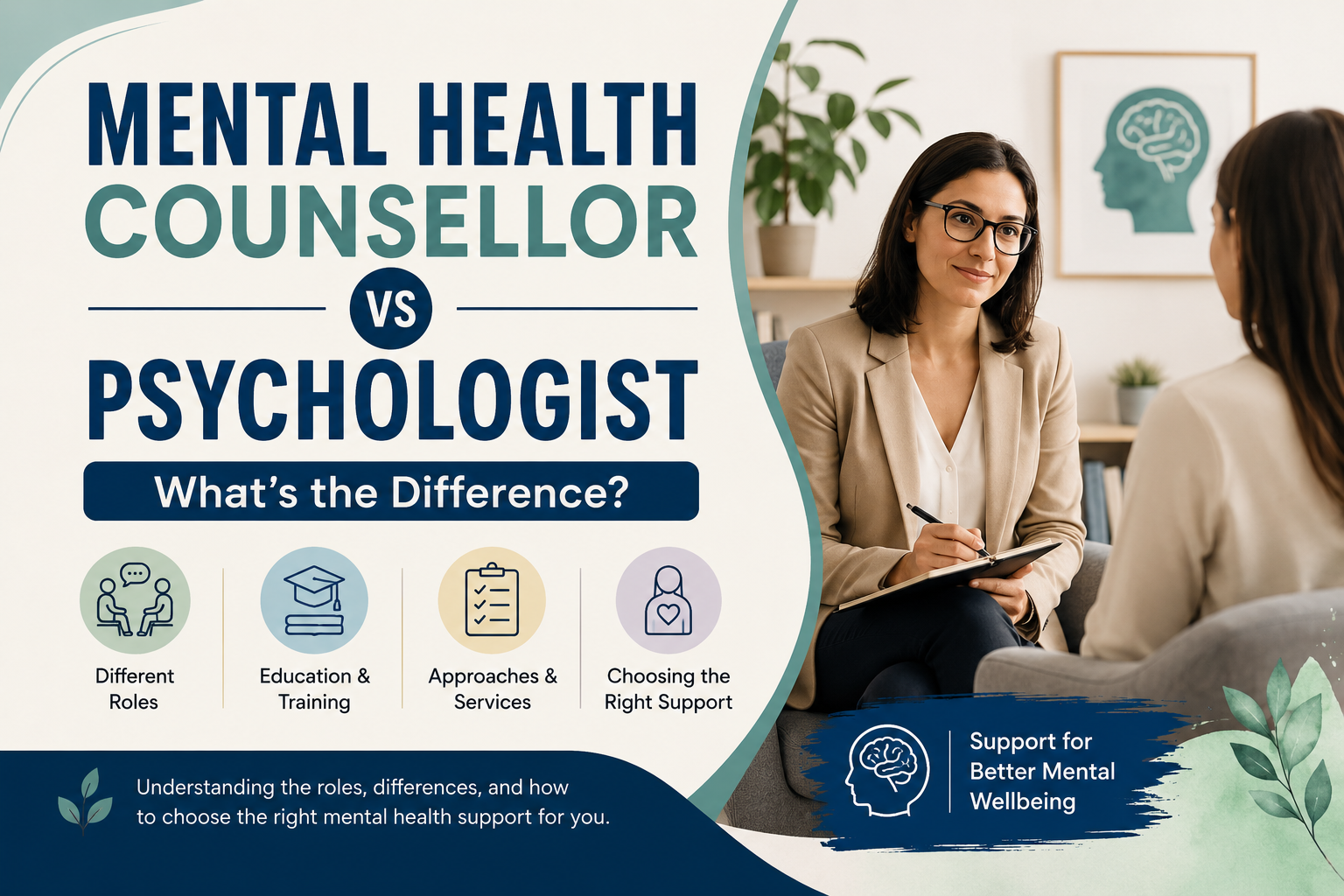
When you are experiencing stress, anxiety, relationship difficulties, emotional challenges, or other mental health concerns, deciding whom to speak with can feel confusing. Two professionals you may come across are a mental health counsellor and a psychologist. Although both can provide support for emotional and psychological wellbeing, their education, areas of expertise, and approaches to treatment can differ.
Understanding the difference between a mental health counsellor and a psychologist can help you choose the type of professional support that is appropriate for your individual needs.
What Is a Mental Health Counsellor?
A mental health counsellor is a trained professional who helps individuals understand and manage emotional, behavioural, and life-related challenges. Counselling often focuses on a person's current concerns and may help them develop practical coping strategies.
People may seek counselling for issues such as stress, anxiety, low self-esteem, relationship problems, grief, workplace difficulties, family concerns, or major life changes.
A mental health counsellor may use approaches such as active listening, supportive counselling, goal setting, and evidence-based therapeutic techniques. Sessions provide a confidential environment where individuals can discuss their concerns and work toward positive changes.
Counselling can be useful for people who want support in understanding their emotions, improving coping skills, strengthening relationships, or navigating challenging situations.
What Is a Psychologist?
A psychologist is a mental health professional with specialized education and training in psychology. Psychologists study human behaviour, emotions, thoughts, and mental processes and may work with individuals experiencing a wide range of psychological concerns.
Depending on their qualifications, training, and local regulations, psychologists may provide psychological assessment, psychotherapy, behavioural interventions, and other forms of mental health support.
Psychologists can work with concerns including anxiety, depression, trauma, behavioural difficulties, relationship problems, emotional distress, and other psychological conditions. Some psychologists also specialize in areas such as clinical psychology, counselling psychology, child psychology, educational psychology, or health psychology.
Mental Health Counsellor vs Psychologist: Key Differences
The main difference between a mental health counsellor and a psychologist often relates to their professional training, scope of practice, and areas of specialization.
1. Education and Training
Both professionals require relevant education and professional training, but the specific requirements vary depending on the country and professional role.
Psychologists generally complete specialized academic training in psychology, followed by supervised professional experience and any licensing or registration requirements applicable in their jurisdiction.
Mental health counsellors also receive professional training in counselling and mental health support. Their qualifications and professional requirements can vary significantly depending on where they practise.
Therefore, it is important to check the qualifications and professional registration of any practitioner you are considering.
2. Areas of Support
A mental health counsellor may commonly help people manage everyday emotional challenges, life transitions, stress, relationship difficulties, and coping concerns.
Psychologists may provide broader psychological services, including psychological assessment and psychotherapy, depending on their specialization and professional credentials.
However, there can be considerable overlap between the two professions. Both may use therapeutic conversations and evidence-based approaches to help people understand their thoughts, feelings, and behaviours.
3. Assessment and Diagnosis
Psychologists with the appropriate training and authorization may conduct psychological assessments and, where permitted by local regulations, assess or diagnose certain mental health conditions.
The ability of a mental health counsellor to diagnose or conduct formal psychological assessments depends on their qualifications, professional designation, and local regulations.
If you believe you may have a mental health condition that requires formal assessment, ask the professional about their qualifications and scope of practice.
4. Treatment Approach
Counselling often focuses on present concerns and practical strategies for managing emotions, relationships, stress, and life challenges.
Psychologists may use a variety of evidence-based psychological therapies depending on their training and the needs of the individual. Therapy may explore patterns of thinking, emotions, behaviours, relationships, and experiences that contribute to psychological difficulties.
The specific approach should be based on the person's concerns, goals, preferences, and professional assessment.
Which Professional Should You Choose?
There is no single answer that applies to everyone. The right professional depends on your concerns and the type of support you are looking for.
A mental health counsellor may be appropriate if you want support with stress, relationship concerns, emotional challenges, personal development, grief, or difficult life changes.
A psychologist may be suitable if you are looking for specialized psychological assessment or psychotherapy, particularly when dealing with persistent or complex psychological concerns.
In some situations, a counsellor and psychologist may work as part of a broader mental health care team. If medication may be appropriate, a medical professional such as a psychiatrist may also be involved.
What Should You Look for in a Mental Health Professional?
Regardless of whether you choose a counsellor or psychologist, consider their qualifications, professional registration, experience, area of specialization, and approach to therapy.
It is also important to feel comfortable communicating with the professional. A good therapeutic relationship can help you feel safe discussing personal concerns and working toward your goals.
Before your first appointment, you can ask about their qualifications, experience with your particular concern, therapeutic approach, confidentiality policies, session format, and fees.
Final Thoughts
Understanding the difference between a mental health counsellor and a psychologist can make it easier to explore professional support. While their training and professional roles can differ, both may help individuals better understand their emotions, develop coping strategies, and work toward improved psychological wellbeing.
If you are unsure which professional is right for you, consider discussing your concerns with a qualified mental health professional. They can explain their scope of practice and help determine what type of support may be appropriate for your needs.
Most importantly, seeking professional help is a practical step toward understanding and managing mental health concerns. You do not have to wait until difficulties become overwhelming before reaching out for support.

 English
 Arabic
 French
 Spanish
 Deutsch
 Turkish
 Dutch
 Italiano
 Russian
 Romaian
 Portuguese (Brazil)
 Greek