
PRP Therapy for Knee Pain: What Patients Should Know Before Treatment
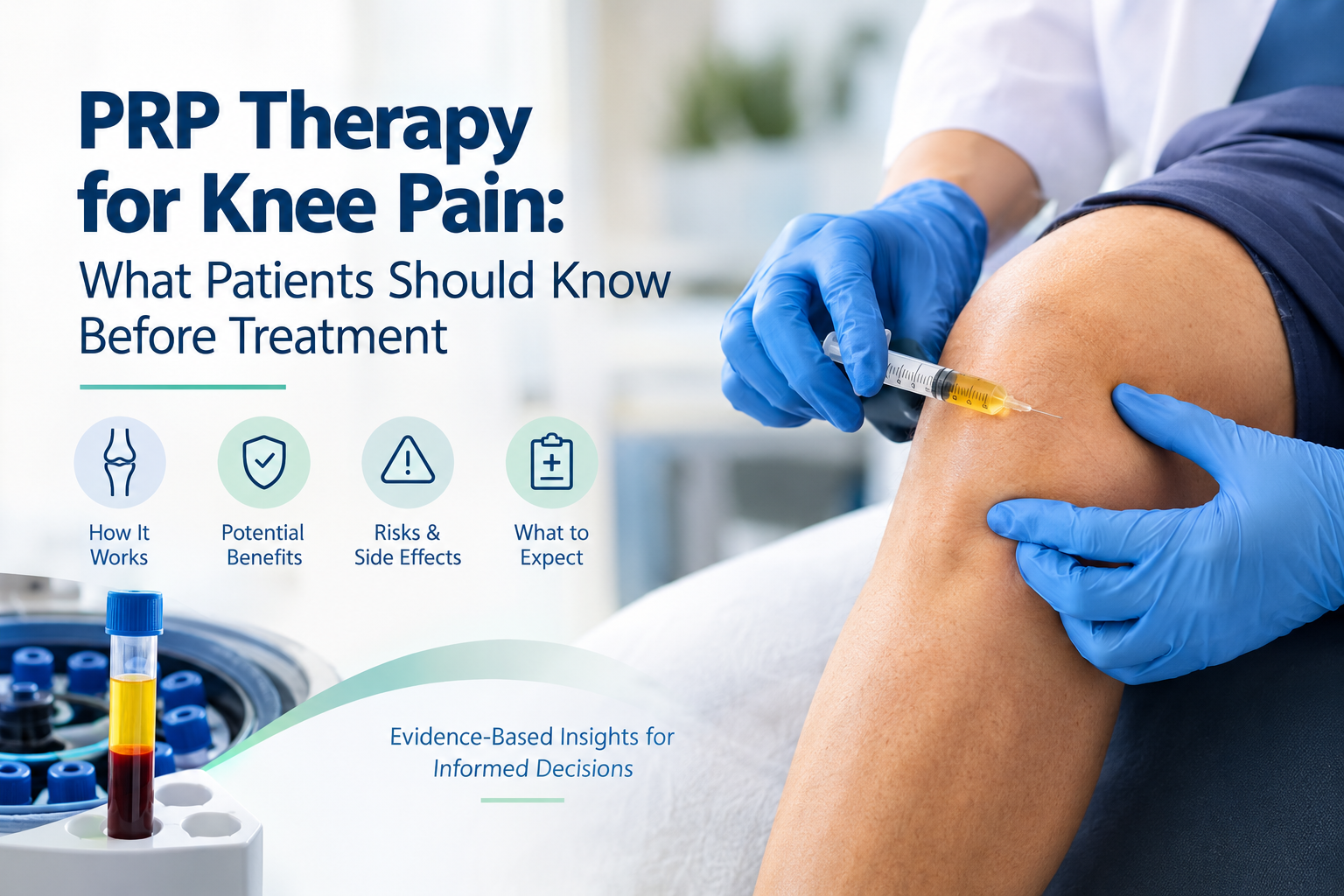
Knee pain can result from osteoarthritis, sports injuries, tendon or ligament problems, cartilage damage, overuse, or other musculoskeletal conditions. When conventional approaches do not provide sufficient relief, platelet-rich plasma (PRP) has emerged as one of the procedures being studied and used in musculoskeletal medicine.
PRP therapy for knee pain involves collecting a small amount of a patient's own blood, processing it to concentrate platelets and other blood components, and injecting the resulting preparation into the affected area. Platelets contain biologically active proteins and growth factors involved in tissue repair and inflammation regulation. However, PRP should not be viewed as a guaranteed method for rebuilding damaged cartilage or curing arthritis.
Research on PRP for knee conditions has produced encouraging findings in some populations, particularly people with mild-to-moderate knee osteoarthritis, but results have not been uniform. Differences in PRP preparation, platelet concentration, leukocyte content, injection protocols, disease severity, and study design make direct comparisons difficult. Recent expert guidance continues to describe PRP as an evolving area of orthobiologic medicine.
Understanding what PRP is, what the evidence actually shows, how treatment is performed, and which factors can influence outcomes can help patients have a more informed discussion with a qualified healthcare professional.
What Is PRP Therapy?
Platelet-rich plasma is a blood-derived preparation containing a higher concentration of platelets than normal circulating blood. Platelets are best known for their role in blood clotting, but they also contain proteins and signaling molecules involved in wound healing and tissue responses.
During PRP preparation, a blood sample is collected and processed, commonly using a centrifuge. Centrifugation separates components of whole blood so that a platelet-enriched fraction can be collected. The resulting preparation is then injected into the selected treatment site.
LifeMed Institute describes its PRP process as an autologous approach, meaning that the material originates from the patient's own blood. Its regenerative therapy information explains that blood is collected, concentrated through centrifugation, and returned to the designated treatment site during the same visit.
The composition of PRP is not identical in every clinical setting. Preparations can differ in:
-
Platelet concentration
-
White blood cell concentration
-
Red blood cell content
-
Total injection volume
-
Activation method
-
Number of injections
-
Interval between injections
These differences matter because PRP is not a single standardized pharmaceutical product. Research has also found substantial variation among preparation protocols, making it difficult to identify one universally optimal formulation.
How PRP May Work in the Knee
The biological rationale for PRP centers on the signaling functions of platelets and other components contained in the preparation.
After platelets become activated, they release numerous signaling proteins and growth factors. These substances can influence inflammatory pathways, cell activity, vascular responses, and tissue-repair processes.
In osteoarthritis, the goal is generally not to replace an absent cartilage surface with new cartilage. Instead, PRP is investigated for its potential effects on the joint environment, inflammation, pain, and physical function.
Johns Hopkins Medicine notes that the mechanism of PRP is not completely understood. Current research suggests that concentrated growth factors and other biological components may influence healing and inflammation, but the precise mechanisms and their clinical significance remain an active area of research.
This distinction is important because the terms regenerative medicine and tissue regeneration are sometimes used in marketing in ways that imply complete structural restoration. Current evidence does not establish PRP as a guaranteed cartilage-regeneration treatment.
PRP for Knee Pain: Which Conditions May Be Considered?
Knee pain has many possible causes, so PRP should not be considered a universal treatment for every painful knee.
Knee Osteoarthritis
Knee osteoarthritis is one of the most extensively studied applications of PRP. Osteoarthritis involves the entire joint and can include cartilage deterioration, changes in the underlying bone, osteophyte formation, and inflammation of the synovial tissues.
Several clinical studies and systematic reviews have reported improvements in pain and physical function following PRP injections in some patients with knee osteoarthritis. Mayo Clinic's review of the research notes that studies generally support potential symptomatic benefits but also emphasizes substantial variability among PRP studies and treatment protocols.
A 2024 ESSKA-ICRS consensus statement found PRP potentially appropriate in selected patients with knee osteoarthritis, particularly those with Kellgren-Lawrence grades 0–III who had not obtained adequate benefit from conservative or injection-based treatments. The same consensus found substantial uncertainty regarding PRP as a first treatment and in end-stage, grade IV osteoarthritis.
Sports-Related and Soft-Tissue Conditions
PRP has also been investigated for certain tendon, ligament, muscle, and other musculoskeletal injuries. The evidence varies considerably by condition.
For this reason, the presence of knee pain alone does not establish PRP as an appropriate treatment. A clinical evaluation is necessary to determine whether the underlying diagnosis and severity are compatible with the expected role of PRP.
What Does the Research Say About PRP Injections for Knee Arthritis?
Evidence regarding PRP injections for knee arthritis has evolved substantially, but it remains mixed.
Some randomized controlled trials and meta-analyses have reported better pain and function outcomes with PRP compared with placebo or certain injection treatments. A recent network meta-analysis examining leukocyte-rich and leukocyte-poor PRP found improvements in functional outcomes at six to 12 months compared with placebo, although differences between PRP preparations and the broader clinical significance of the findings remain important considerations.
Mayo Clinic's clinical review similarly reports that several studies have found PRP beneficial for knee osteoarthritis, with some research showing effects lasting several months. However, Mayo also emphasizes the considerable variability between studies, including differences in platelet concentrations and preparation methods.
The evidence should therefore be interpreted as potential symptomatic improvement, rather than proof that PRP reverses osteoarthritis.
An important distinction exists between:
-
Reducing pain
-
Improving physical function
-
Reducing stiffness
-
Altering inflammatory activity
-
Repairing or replacing damaged cartilage
Evidence for symptom improvement is more established than evidence demonstrating actual regeneration of severely damaged cartilage.
Who May Be Considered for PRP Therapy?
Patient selection is one of the most important aspects of PRP treatment.
A healthcare professional may consider factors such as:
-
The underlying cause of knee pain
-
Osteoarthritis severity
-
Duration of symptoms
-
Previous treatments
-
Physical examination findings
-
Imaging findings when clinically indicated
-
Activity level
-
Age and overall health
-
Medication use
-
Bleeding-related risks
-
Patient expectations
-
Whether conservative management has already been attempted
The 2024 ESSKA-ICRS consensus specifically identified greater appropriateness for selected patients with mild-to-moderate radiographic osteoarthritis after unsuccessful conservative or injection-based treatment, while finding greater uncertainty when PRP is used as the initial treatment or for severe grade IV osteoarthritis.
This does not mean that every patient with mild-to-moderate osteoarthritis will benefit. Individual response can vary.
When PRP May Not Be the First Knee Pain Treatment
PRP is generally not a substitute for establishing the cause of knee pain.
Depending on the diagnosis, conventional knee pain treatment may involve:
-
Exercise and strengthening
-
Physical therapy
-
Weight management when appropriate
-
Activity modification
-
Bracing
-
Topical or oral medications when medically appropriate
-
Management of an underlying injury
-
Corticosteroid injection in selected circumstances
-
Surgical evaluation when structural problems require it
The American College of Rheumatology and Arthritis Foundation guideline for knee osteoarthritis strongly recommends exercise and, for appropriate patients with knee or hip osteoarthritis who are overweight or obese, weight loss. It also supports several conventional pharmacologic and injection-based approaches while recommending against PRP for knee and hip osteoarthritis in its 2019 guideline.
That recommendation is important historical context. More recent expert consensus documents have been more permissive regarding PRP in selected patients, illustrating how clinical recommendations can change as evidence accumulates. The differences also reinforce the need for individualized clinical decision-making rather than assuming that PRP is appropriate for every patient.
What Happens During a PRP Knee Procedure?
A typical PRP procedure involves several stages.
1. Clinical Evaluation
The process generally begins with a medical assessment. The clinician reviews symptoms, medical history, previous treatments, medications, and relevant diagnostic information.
The purpose is to determine whether the knee symptoms are consistent with a condition for which PRP may reasonably be considered.
2. Blood Collection
A small quantity of blood is collected from a vein, commonly in the arm.
3. Centrifugation
The blood is placed into a specialized centrifuge. Centrifugation separates blood components according to their physical properties, allowing the clinician to collect a platelet-enriched fraction.
LifeMed Institute describes its preparation process as taking less than 20 minutes before the PRP is applied to the designated treatment site.
4. Injection
The prepared PRP is injected into the targeted area. Depending on the anatomy and clinical setting, imaging guidance such as ultrasound may be used to help accurately position the needle.
Johns Hopkins Medicine notes that ultrasound may be used for certain PRP injections and describes the treatment as a minimally invasive procedure.
5. Post-Treatment Monitoring
After the injection, the clinician provides individualized instructions regarding activity, medications, rehabilitation, and follow-up.
Post-treatment instructions can differ depending on the condition being treated and the specific PRP protocol.
What Can Patients Expect After PRP?
PRP does not generally produce an immediate therapeutic effect.
Some patients experience temporary soreness, swelling, or discomfort following the injection. Improvement, when it occurs, may become noticeable over the following weeks rather than immediately after treatment.
Johns Hopkins reports that results from joint PRP injections may take several weeks to become apparent.
The number of injections also varies. Some treatment protocols use a single injection, while others involve a series. Current research has not established one universally appropriate number of injections for every patient.
A 2025 systematic review and network meta-analysis found that different PRP dosing schedules produced different outcomes across follow-up periods, further demonstrating why injection frequency should be determined according to the patient's clinical situation and the treating clinician's protocol rather than a universal rule.
How Long Can PRP Benefits Last?
The duration of benefit varies substantially.
Some studies report symptom improvements lasting several months, and Mayo Clinic describes six to 12 months of relief as a commonly observed timeframe in its clinical experience with selected knee osteoarthritis patients. However, this should not be interpreted as a guaranteed duration for every patient.
Factors that can influence duration include:
-
Severity of osteoarthritis
-
Patient characteristics
-
PRP composition
-
Number and timing of injections
-
Activity level
-
Rehabilitation
-
Other knee conditions
-
Treatment technique
PRP is therefore better understood as a treatment that may provide symptomatic improvement for a period of time rather than a permanent cure for knee osteoarthritis.
Potential Benefits of PRP Therapy
Potential advantages of PRP include its autologous nature and minimally invasive delivery.
Uses the Patient's Own Blood
Because PRP is prepared from the patient's own blood, it does not involve introducing donor tissue.
Minimally Invasive
PRP treatment generally involves a blood draw and injection rather than an operative procedure.
Potential Symptom Improvement
Research indicates that selected patients with knee osteoarthritis may experience reductions in pain and improvements in function following treatment.
May Be Considered When Conservative Care Is Insufficient
Current consensus recommendations have identified selected patients who continue to experience symptoms despite conservative treatment as a population in which PRP may be considered.
Risks and Potential Side Effects
PRP is generally considered a minimally invasive procedure, but it is not completely risk-free.
Potential complications include:
-
Temporary pain or soreness
-
Swelling
-
Bruising
-
Bleeding
-
Infection
-
Tissue injury
-
Nerve injury
Johns Hopkins Medicine identifies soreness and bruising as possible short-term effects and notes that infection, bleeding, tissue damage, and nerve injury are less common potential complications.
Any patient experiencing significant or worsening pain, fever, substantial swelling, redness, drainage, or other concerning symptoms after an injection should contact the treating healthcare professional promptly.
PRP Versus Cortisone Injections
PRP and corticosteroid injections are biologically different treatments.
Corticosteroids are anti-inflammatory medications that can provide relatively rapid short-term symptom relief in some patients. PRP is an autologous blood-derived preparation intended to influence the biological environment of the treated area.
Mayo Clinic reports that corticosteroid injections may provide stronger early relief in some comparisons, while PRP may demonstrate benefits later in the follow-up period.
Neither treatment is automatically appropriate for every patient. The choice depends on diagnosis, symptom severity, treatment goals, previous responses, medical history, and the clinician's assessment.
PRP and Other Regenerative Therapies
PRP is part of the broader field of orthobiologic and regenerative medicine. The term regenerative therapies encompasses a range of approaches intended to influence tissue healing or biological repair processes.
However, different regenerative treatments should not be treated as interchangeable.
PRP is derived from a patient's blood and primarily involves concentrated platelets and other blood components. Other approaches may involve bone marrow-derived products or different biologic materials.
The FDA has specifically warned consumers that regenerative medicine products have not been approved for the treatment of orthopedic conditions such as knee osteoarthritis, knee pain, tendonitis, and similar conditions. This warning is particularly relevant when clinics make broad claims about stem-cell or other unapproved regenerative products.
For information about LifeMed Institute's approach to autologous PRP treatment, the Regenerative therapies page provides additional information about its PRP process.
Can Supplements Replace PRP Treatment?
Dietary supplements should not be presented as substitutes for diagnosis, physical rehabilitation, or clinically indicated treatment.
Nutrition can form part of an overall approach to musculoskeletal health, but supplements should not be promoted as treatments for osteoarthritis or as a way to guarantee better PRP outcomes.
LifeMed's online supplement store includes a Joint & Muscle Support category. One product, Inflamma Cure, contains ingredients such as MSM, turmeric extract, Boswellia, ginger, quercetin, and bromelain. The product page explicitly states that its claims have not been evaluated by the FDA and that the product is not intended to diagnose, treat, cure, or prevent disease.
Patients taking prescription medications or managing a medical condition should discuss supplement use with a healthcare professional before adding a new product, particularly because botanical ingredients and other supplements can interact with medications.
How Clinicians Evaluate PRP Candidates
A professional assessment should go beyond simply identifying knee pain.
Confirming the Diagnosis
Knee pain can originate from osteoarthritis, meniscal pathology, ligament injury, tendinopathy, bursitis, referred pain, inflammatory arthritis, or other conditions.
PRP cannot be evaluated appropriately without first determining the likely source of symptoms.
Assessing Disease Severity
Radiographic severity and clinical symptoms can influence treatment decisions. Advanced structural disease may have a different prognosis from mild or moderate osteoarthritis.
Reviewing Previous Treatment
The treatment history provides important information. Exercise therapy, physical therapy, weight management, medication, bracing, and other interventions may be appropriate before or alongside consideration of an injection.
Establishing Realistic Expectations
Patients should understand that PRP may reduce symptoms but does not guarantee cartilage restoration, elimination of arthritis, or avoidance of future surgery.
Discussing the PRP Preparation
Because PRP is not a single standardized product, questions regarding platelet concentration, leukocyte content, preparation method, injection technique, and number of injections can be clinically relevant. Research continues to investigate how these variables affect outcomes.
Common Misconceptions About PRP for Knee Pain
Misconception 1: PRP Permanently Cures Knee Arthritis
Current evidence does not support describing PRP as a permanent cure for osteoarthritis.
Osteoarthritis is a chronic joint disease. PRP may improve symptoms in selected patients, but symptom improvement should not be equated with elimination of the underlying disease.
Misconception 2: PRP Always Regrows Knee Cartilage
There is insufficient evidence to claim that PRP reliably regenerates substantial amounts of damaged articular cartilage.
Research is investigating biological and structural effects, but the strongest clinical evidence concerns outcomes such as pain and function rather than guaranteed restoration of normal cartilage.
Misconception 3: One PRP Formula Works for Everyone
PRP preparations differ considerably.
Platelet concentration, leukocyte content, preparation systems, injection volumes, and treatment schedules can vary. Research has not established one universally superior protocol for every patient.
Misconception 4: PRP Works Immediately
PRP is not generally expected to produce immediate pain relief. Post-injection soreness can occur, while potential therapeutic improvements may develop over several weeks.
Misconception 5: PRP Eliminates the Need for Other Treatment
PRP does not necessarily replace exercise, physical therapy, weight management, medication, or surgical care.
For knee osteoarthritis, treatment is generally most effective when it addresses the broader factors affecting pain, mobility, strength, and function.
Best Practices Before Considering PRP
Patients considering PRP for knee pain can benefit from discussing several questions with the treating clinician:
-
What is the confirmed or suspected cause of the knee pain?
-
What degree of osteoarthritis or structural damage is present?
-
What conservative treatments have already been attempted?
-
Is PRP appropriate for the specific diagnosis?
-
What PRP preparation method will be used?
-
Will imaging guidance be used?
-
How many injections are being recommended and why?
-
What side effects are expected?
-
What activity restrictions apply after treatment?
-
What rehabilitation plan will accompany the injection?
-
How will treatment success be measured?
-
What alternatives are available if PRP does not provide adequate improvement?
These questions can help establish realistic expectations and facilitate shared decision-making.
Frequently Asked Questions
1. What is PRP therapy for knee pain?
PRP therapy is an injection-based treatment that uses a preparation made from a patient's own blood. Blood is processed to concentrate platelets and other components before the preparation is injected into the targeted knee area. PRP has been studied particularly for knee osteoarthritis and certain musculoskeletal conditions.
2. Does PRP help knee arthritis?
Research suggests that selected patients with knee osteoarthritis may experience improvements in pain and physical function after PRP treatment. However, results vary between studies and patients. The effectiveness can also depend on disease severity and differences in PRP preparation and treatment protocols.
3. How long does PRP take to work on knee pain?
PRP generally does not provide immediate relief. Johns Hopkins Medicine reports that results from joint PRP injections may take several weeks to become noticeable. The timing varies according to the patient, diagnosis, injection protocol, and other factors.
4. How many PRP injections are needed for knee pain?
There is no universal number. Some protocols use one injection, while others use multiple injections. Research comparing different dosing schedules is ongoing, and the appropriate approach depends on the clinical situation and the treating clinician's protocol.
5. Is PRP better than a cortisone injection?
PRP and corticosteroid injections have different mechanisms and different evidence profiles. Corticosteroid injections may provide faster short-term relief in some patients, while some research suggests PRP may provide greater benefit later in follow-up. The appropriate choice depends on the diagnosis, medical history, treatment objectives, and previous treatment response.
6. Does PRP rebuild damaged knee cartilage?
PRP should not be promoted as a guaranteed cartilage-regeneration treatment. Although researchers are studying its biological effects on the joint environment and tissue responses, clinical evidence is stronger for potential improvements in symptoms and function than for reliable restoration of severely damaged cartilage.
7. Is PRP considered a regenerative therapy?
PRP is commonly discussed within the broader field of regenerative and orthobiologic medicine because it uses biological components from the patient's own blood to influence healing-related processes. However, regenerative medicine includes multiple different approaches, and the evidence and regulatory status can differ substantially between them.
8. What are the side effects of PRP injections?
Temporary soreness, swelling, and bruising can occur after an injection. Less common complications include bleeding, infection, tissue injury, and nerve injury. A clinician should provide specific post-treatment instructions and explain the relevant risks before treatment.
9. Is PRP FDA-approved for knee arthritis?
PRP should not be described as an FDA-approved drug treatment for knee osteoarthritis. Johns Hopkins notes that PRP is considered investigational for most uses and that the lack of FDA approval can affect insurance coverage. The FDA separately warns that regenerative medicine products have not been approved for orthopedic conditions such as knee pain and osteoarthritis.
10. Can PRP prevent knee replacement surgery?
There is not sufficient evidence to state that PRP prevents or eliminates the need for knee replacement surgery. Some patients may experience meaningful symptom improvement, but severe structural disease can continue to progress and may eventually require surgical evaluation.
11. Is PRP appropriate for severe knee arthritis?
Severe osteoarthritis requires careful individual assessment. The 2024 ESSKA-ICRS consensus identified substantial uncertainty regarding PRP in Kellgren-Lawrence grade IV osteoarthritis and did not consider it appropriate as a first treatment.
12. Can supplements be taken with PRP treatment?
Supplement use should be reviewed with the treating healthcare professional. Supplements are not substitutes for PRP or other evidence-based treatments, and certain ingredients can interact with medications or affect individual medical conditions. LifeMed's supplement products also carry the standard disclaimer that their claims have not been evaluated by the FDA.
Conclusion
PRP therapy represents an increasingly studied option for selected patients experiencing knee pain, particularly those with knee osteoarthritis. The treatment uses a patient's own blood to prepare a platelet-enriched product that is subsequently injected into the affected area.
Current evidence indicates that PRP can provide meaningful improvements in pain and function for some patients, but outcomes are not universal. Differences in PRP preparation, treatment protocols, disease severity, patient characteristics, and study methodology continue to affect the evidence base. Recent consensus guidance supports considering PRP in selected patients while recognizing uncertainty in other clinical situations.
The most important distinction is between symptom management and structural regeneration. PRP may help reduce pain and improve function in appropriately selected patients, but it should not be marketed as a guaranteed cure for arthritis or a proven method for restoring severely damaged cartilage.
A thorough diagnosis, realistic expectations, discussion of alternatives, and individualized clinical assessment remain central to responsible use of PRP for knee pain.

 English
 Arabic
 French
 Spanish
 Portuguese
 Deutsch
 Dutch
Dutch
 Italiano
 Russian
 Romaian
 Portuguese (Brazil)
 Greek
Greek