
How Do Skin Tags Differ From Moles, Warts, and Other Common Skin Growths?
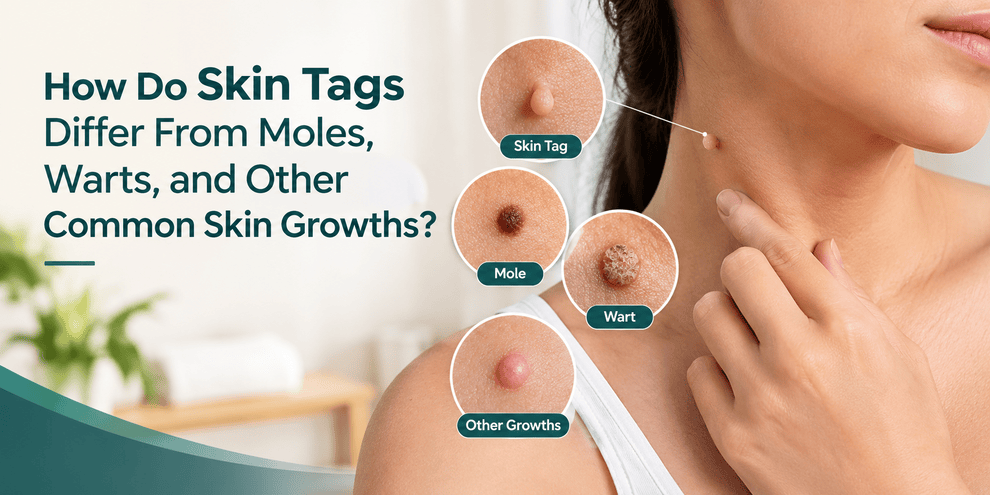
Skin tags differ from moles and warts in structure, cause and behaviour. Skin tags are soft, often stalk-like growths of ordinary skin, moles are clusters of pigment cells, and warts are caused by a virus. A small flap of skin on the neck that catches on a necklace is usually a skin tag. A flat brown spot that has been present for years is more likely a mole. A rough, grainy bump that appeared after a minor cut may be a wart. These distinctions matter because each growth is managed differently. This article explains the practical differences so readers can recognise common patterns and understand when professional assessment is helpful, including when treatment for skin tags removal may be considered.
Many people notice a new bump and immediately wonder which category it belongs to. The three growths can appear in overlapping body sites, yet their origins are distinct. Skin tags form through friction and local tissue response. Moles develop when melanocytes group together. Warts result from human papillomavirus infection of the outer skin. Clear visual and tactile clues usually separate them once the typical features are known.
Location and symptoms provide further clues. Skin tags favour skin folds and areas of repeated rubbing. Moles can appear almost anywhere and often remain unchanged for long periods. Warts may spread locally and sometimes feel rough or tender. Understanding these patterns reduces unnecessary worry and helps people decide whether simple observation is enough or whether a clinical review would add clarity.
Three common growths, three different stories—one look and feel can usually tell them apart.
What Are Skin Tags and How Do They Form?
Skin tags, also called acrochordons, are soft, benign outgrowths of normal skin. They typically hang from a thin stalk and consist of collagen fibres, blood vessels and covering epidermis.
They develop most often where skin rubs against skin or clothing. The repeated mechanical stress appears to encourage a small excess of tissue to project outward. Most remain only a few millimetres long, though some grow larger. They are not caused by a virus and do not turn into cancer. Colour usually matches the surrounding skin or is slightly darker. Many cause no symptoms until they catch on jewellery or clothing and become irritated.
How Do Skin Tags Differ in Appearance From Moles and Warts?
The three growths show consistent visual and tactile differences that support everyday recognition.
These features help separate them during self-examination.
- Skin Tags: Soft and fleshy, often attached by a narrow stalk so they move freely when touched. Surface is usually smooth. Colour is flesh-toned or light brown. They favour the neck, underarms, groin and under the breasts.
- Moles: Flat or raised spots formed by pigment cells. Colour ranges from tan to dark brown and is usually uniform. Borders are often well defined. They can appear on any body site and may grow fine hairs.
- Warts: Firm or hard with a rough, grainy or cauliflower-like surface. Tiny black dots (clotted capillaries) are sometimes visible. They feel less mobile than skin tags and can appear on hands, feet, face or genital skin.
- Attachment: Skin tags are typically pedunculated (stalked). Moles sit directly on or within the skin. Warts are fixed to the surface without a true stalk.
- Growth Behaviour: Skin tags enlarge slowly and stay localised. Moles usually remain stable for years. Warts may multiply or spread to nearby skin through contact.
- Symptoms: Skin tags are usually painless unless twisted or rubbed. Moles rarely hurt unless irritated. Warts can feel rough or tender, especially on weight-bearing sites.
- Number: People may have single or multiple skin tags in friction areas. Moles vary widely in total count. Warts often appear in clusters once infection is established.
Clinical Insight
Clinicians regularly see patients who have labelled every small bump a “mole.” In practice, a soft, movable, stalked lesion in a skin fold is far more likely to be a skin tag. A quick comparison of texture, colour and attachment usually separates the three common growths without difficulty.
Why Do These Growths Appear in Different Locations?
Location reflects the underlying biology of each growth rather than chance.
Skin Tags and Friction Sites
Skin tags concentrate in areas of repeated rubbing—neck, axillae, groin, under the breasts and around the waist. Moisture and skin-to-skin contact in these folds further encourage their formation. Weight gain or pregnancy can increase both the number of folds and the degree of friction.
Moles and Pigment-Cell Distribution
Moles can develop wherever melanocytes are present. Sun-exposed sites such as the face, arms and upper back tend to acquire more moles over time, yet moles also appear on covered skin. Congenital moles are present from early life and may favour certain developmental patterns.
Warts and Sites of Skin Trauma
Warts favour areas where the skin barrier has been broken—hands, feet, knees or sites of shaving or friction. In the genital area the same principle applies: microscopic abrasions allow the virus to enter. Warmth and moisture can support viral activity once infection is established.
What Causes Each Type of Growth?
The causes are distinct and explain why treatment approaches differ.
These origins guide both prevention and management discussions.
- Skin Tags: Primarily mechanical. Repeated friction and local skin-fold conditions stimulate excess tissue. Genetic tendency and higher body weight increase likelihood, yet the growths themselves remain benign.
- Moles: Clusters of melanocytes. Genetics strongly influence total number and pattern. Ultraviolet exposure contributes to the appearance of many acquired moles, especially on intermittently exposed skin.
- Warts: Infection with human papillomavirus. The virus enters through small breaks and causes excess keratin production in the outer skin layers. Different viral types favour different body sites.
- Shared External Factors: Friction can aggravate skin tags and create entry points for the wart virus. Sun exposure mainly affects mole development rather than the other two.
- Immune Influence: A less active local immune response can allow warts to persist or multiply. Skin tags and moles are less directly affected by short-term immune changes.
- Age Patterns: Skin tags become more common with age and cumulative friction. Most acquired moles appear in childhood and adolescence. Warts can occur at any age but are frequent in younger people.
How Can Someone Tell Them Apart in Daily Life?
A few simple checks often separate the three growths without special equipment.
Look first at the attachment: a narrow stalk that allows the lesion to swing suggests a skin tag. Next examine the surface: rough and grainy points toward a wart; smooth and evenly pigmented points toward a mole. Colour uniformity and long-term stability further support a mole. Location supplies additional context—friction folds favour skin tags, while warts prefer sites of previous minor injury. If a growth becomes painful, bleeds without trauma, or changes rapidly, clinical examination is the safest next step regardless of the presumed type.
When Does Clinical Assessment Become Useful?
Most skin tags, stable moles and typical warts can be observed. Certain features make professional review advisable.
Assessment is particularly helpful in the following situations.
- Diagnostic Uncertainty: When a growth does not clearly match the expected features of a skin tag, mole or wart, examination under good lighting and magnification clarifies the nature of the lesion.
- Change in a Mole: Any alteration in size, shape, colour or surface of a pigmented spot warrants review to determine whether further steps are needed.
- Irritated or Multiple Skin Tags: Tags that repeatedly catch, bleed or become inflamed, or large numbers that cause practical difficulty, often lead to discussion of removal options.
- Spreading or Persistent Warts: Lesions that multiply, persist despite simple measures, or appear in sensitive sites benefit from accurate identification and tailored management.
- New Growths in Adulthood: A lesion appearing after the thirties, especially if pigmented or growing, is worth checking to confirm it fits a benign pattern.
- Cosmetic or Functional Concern: When a growth interferes with shaving, clothing or appearance, a clinician can outline the safest way to address it.
What Treatment Approaches Are Used for Each Growth?
Treatment is selected according to the type of growth, its symptoms and its location. The methods used for one are rarely ideal for the others.
Skin Tags
Most skin tags require no treatment. When they cause irritation or practical difficulty, options include snip excision, cautery or cryotherapy under local anaesthetic. Complete removal of the tag is usually straightforward. Treatment for skin tags is considered only after the lesion is confirmed as a typical skin tag and the benefits are weighed against the small scar that may remain.
Moles
Stable, typical moles are observed. Changing, symptomatic or diagnostically uncertain moles may be removed by excision so that tissue can be examined in the laboratory. Mole removal treatment is planned only when clinical features justify it; the priority is accurate diagnosis rather than routine elimination of every pigmented spot.
Warts
Because warts are viral, treatment aims to clear visible lesions and support immune control. Options include topical preparations, cryotherapy, cautery or other destructive methods. Multiple sessions are sometimes needed, and later lesions can still appear while the virus persists in nearby skin.
How Do Recovery and Aftercare Differ?
Recovery reflects the method used and the type of growth removed. Skin-tag removal is usually minor and heals within days. Mole excision may involve sutures and a longer period of wound care because a margin of skin is often taken. Wart treatment can leave temporary raw areas that need protection until re-epithelialised. In every case the clinician provides specific instructions on cleansing, activity and signs that warrant contact. Sun protection of healing sites helps minimise pigment change. New growths of the same or different types can still appear elsewhere, so ongoing skin awareness remains useful.
Correct identification is the shortest route to the right level of care—neither too little nor too much.
Skin Health Snapshot
- Skin tags are friction-related outgrowths of normal skin and are not viral.
- Moles are clusters of pigment cells; most remain stable for years.
- Warts are caused by human papillomavirus and can spread locally.
- Location, texture and attachment provide the most reliable everyday clues.
What Practical Steps Help in Daily Management?
Simple habits reduce irritation and support early recognition of change.
These measures apply across the three growths.
- Friction Reduction: Loose clothing and careful drying of skin folds limit new skin tags and reduce irritation of existing ones.
- Sun Protection: Regular use of shade, clothing and broad-spectrum sunscreen lowers the stimulus for new acquired moles on exposed skin.
- Gentle Skin Care: Avoiding repeated trauma, harsh scrubbing or unproven home removal methods prevents secondary inflammation and scarring.
- Self-Examination: Monthly checks in good light, using mirrors for the back and scalp, help detect change early without constant scrutiny.
- Avoiding Spread: For warts, covering active lesions and avoiding shared towels or razors reduces the chance of inoculating new sites.
- Prompt Review of Change: Any growth that enlarges rapidly, bleeds, itches persistently or looks markedly different from surrounding lesions benefits from clinical assessment.
How Should Long-Term Skin Awareness Be Maintained?
Long-term awareness rests on knowing one’s usual pattern of growths and noticing departures from that pattern. Skin tags may continue to appear in friction areas with age or weight change. New moles become less common after mid-adulthood, so a fresh pigmented lesion at that stage is worth checking. Warts can recur while the virus remains, even after visible clearance. Periodic full-skin review, either through structured self-examination or scheduled clinical checks when risk factors are present, keeps the approach proportionate. The aim is calm familiarity with one’s skin rather than anxiety about every new bump.
Illustrative Example
A person noticed three soft, stalked growths on the neck that caught on clothing and one flat brown spot on the shoulder that had been unchanged for years. Clinical examination confirmed the neck lesions as typical skin tags and the shoulder lesion as a stable mole. The irritating tags were removed under local anaesthetic with minimal downtime; the mole was left under observation. Simple friction-reduction advice was given. This example shows how accurate differentiation leads to selective treatment rather than uniform removal of every growth.
Comparing Skin Tags, Moles and Warts
|
Feature |
Skin Tags |
Moles |
Warts |
|
Primary Cause |
Friction and local tissue response |
Clustering of melanocytes |
Human papillomavirus |
|
Typical Attachment |
Narrow stalk (pedunculated) |
Directly on or within the skin |
Fixed to surface, no true stalk |
|
Surface Texture |
Soft and smooth |
Smooth or slightly raised |
Rough, grainy or cauliflower-like |
|
Colour |
Flesh-toned or light brown |
Tan to dark brown, usually uniform |
Skin-coloured, grey or brown |
|
Common Locations |
Neck, axillae, groin, under breasts |
Anywhere; more on sun-exposed sites |
Hands, feet, face, genital skin |
|
Contagious |
No |
No |
Yes |
|
Usual Behaviour |
Slow enlargement, localised |
Long-term stability |
May multiply or spread locally |
|
Common Management |
Observation or removal if irritating |
Observation; excision if changing |
Topical or procedural clearance |
FAQs About Differentiating Skin Growths
Can a skin tag turn into a mole or a wart?
No. The three growths have different origins and do not transform into one another. A lesion that changes appearance should be examined to confirm its nature.
Are skin tags more common as people age?
Yes. Cumulative friction and age-related skin changes make skin tags more frequent in middle and later adulthood, especially in skin folds.
Do all rough bumps on the skin mean warts?
No. Other conditions can produce roughness. A clinician can distinguish viral warts from non-viral growths through examination.
Should every mole that looks different from surrounding ones be removed?
Not necessarily. Many moles show minor variation yet remain benign. Change over time, symptoms, or diagnostic uncertainty are the usual reasons for considering removal.
Is home removal safe for any of these growths?
Home methods carry risks of bleeding, infection and scarring, and they prevent proper identification. Professional assessment is safer when treatment is desired.
Once the differences are clear, most skin growths become familiar features rather than sources of constant doubt.
To Bring It All Together
Skin tags, moles and warts are distinct entities with different causes, appearances and behaviours. Skin tags are soft, often stalked outgrowths driven by friction. Moles are clusters of pigment cells that usually remain stable for years. Warts are viral and may spread locally. Location, texture, colour and attachment provide reliable clues for everyday recognition. Most examples of each growth are harmless and require only observation. Clinical assessment becomes useful when a lesion changes, causes irritation, multiplies, or cannot be confidently identified. Treatment, when chosen, is matched to the specific type: simple removal for troublesome skin tags, excision with analysis for selected moles, and antiviral or destructive methods for warts. Clear differentiation allows proportionate care and greater confidence in managing common skin growths.
Medical Review
This article is intended for educational purposes only and should not replace professional medical advice, diagnosis, or treatment. If you notice concerning skin changes or have questions about your health, consult a qualified healthcare professional.

 English
 Arabic
 French
 Spanish
 Portuguese
 Deutsch
 Turkish
 Dutch
Dutch
 Russian
 Romaian
 Portuguese (Brazil)
 Greek
Greek