FUE Hair Transplant in Dubai: Complete Guide
What Is FUE Hair Transplant in Dubai?
FUE hair transplant in Dubai is a modern hair restoration technique designed to address visible hair thinning, receding hairlines, and areas with reduced hair density. FUE, or follicular unit extraction, involves carefully removing individual follicular units from a suitable donor area and placing them into areas where additional coverage is needed. Because the follicles are handled individually, the technique allows the placement pattern to be carefully planned according to the existing hair and desired appearance.
How Does FUE Hair Restoration Work?
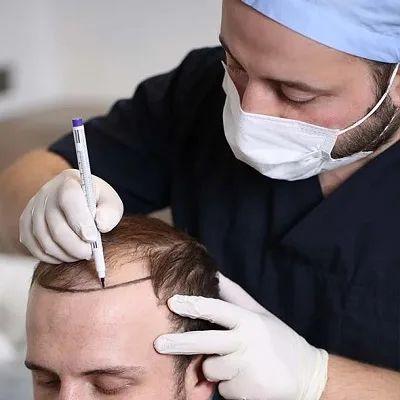
The process begins with an assessment of the scalp and the available donor hair. The treatment area and expected hairline are then planned according to the person's natural facial proportions and existing hair pattern. Individual follicular units are extracted from the donor region using specialized equipment. These grafts are then prepared before being positioned in the recipient area.
Individual Follicle Extraction
Unlike techniques that involve removing a larger strip of scalp tissue, FUE focuses on individual follicular units. This approach can minimize the need for a linear incision and allows the donor area to heal through many small extraction points.
Strategic Graft Placement
The placement of each graft is an important part of achieving natural-looking coverage. Factors such as hair direction, angle, spacing, and existing density can influence the overall appearance. The front hairline usually requires particularly careful planning because it is one of the most noticeable areas of the scalp.
Who May Consider FUE Hair Transplantation?
FUE may be considered by people experiencing different forms of hair loss, including a receding hairline, thinning around the crown, or reduced density across particular areas of the scalp. The suitability of the technique depends on factors such as the extent of hair loss, donor hair availability, scalp condition, and individual growth characteristics.
A thorough assessment is useful because hair restoration is not simply about adding a specific number of grafts. The available donor supply also needs to be considered to support an appropriate distribution of hair across the treatment area.
What Happens After the Procedure?
The scalp may appear slightly red or swollen immediately after the procedure, while small crusts can develop around the transplanted and extraction areas. These temporary changes generally form part of the early healing stage.
Newly transplanted hair does not usually appear fully developed immediately. The follicles go through a natural growth cycle, and visible changes develop progressively. Patience is therefore an important part of the hair restoration journey.
Understanding Hair Growth After FUE
The transplanted follicles need time to establish themselves and enter their normal growth cycle. Early shedding can sometimes occur before new growth becomes noticeable. Over the following months, the hair gradually becomes more visible and develops greater length and density.
The final appearance depends on several individual factors, including follicle characteristics, donor quality, hair growth patterns, and how well the transplanted area develops over time.
Why Natural-Looking Results Require Planning
A successful-looking hair restoration result is not determined solely by the number of transplanted grafts. The relationship between the new hairline, existing hair, donor area, and overall facial appearance is also important.
A carefully designed hairline can help the transplanted hair blend with the surrounding growth. Similarly, appropriate graft distribution can help create balanced coverage rather than concentrating too much hair in one small area.
Caring for the Scalp During Recovery
Following the recommended aftercare routine can help support normal healing. Gentle scalp care, avoiding unnecessary friction, and following instructions regarding washing and physical activity are commonly important during the early recovery period.
The scalp should be treated carefully while the newly placed follicles become established. Recovery instructions may vary depending on the individual procedure and healing response.
What Can Affect FUE Results?
Several factors can influence the eventual outcome of hair restoration. Donor hair quality, follicular characteristics, existing hair density, the extent of hair loss, graft placement, and individual growth patterns all contribute to the final appearance.
Long-term hair loss progression can also influence how the overall scalp looks after transplantation. For this reason, a personalized treatment plan is generally more useful than applying the same approach to every person.
Final Thoughts
FUE hair transplant in Dubai offers a modern approach to restoring hair by using individual follicular units and carefully planned placement. Understanding the extraction process, graft positioning, recovery period, and natural growth cycle can help set realistic expectations for the treatment journey. For those exploring a personalized approach to hair restoration, TAJMEELS CLINIC can be considered as part of the process of learning about suitable hair restoration options.
For More Details, Contact Us Through:
WhatsApp: +971 56 203 8751
Phone: +971 4 373 9000
Social Media:

 English
 Arabic
 Spanish
 Portuguese
 Deutsch
 Turkish
 Dutch
Dutch
 Italiano
 Russian
 Romaian
 Portuguese (Brazil)
 Greek
Greek