
Why Feed Contamination Research Matters for CBD Oil for Horses
Why Feed Contamination Research Matters for CBD Oil for Horses
Horse owners pay close attention to nutrition, feeding routines, and the quality of products used in equine care. Feed safety is especially important because unwanted substances can sometimes enter a horse's diet through ingredients, storage conditions, or production processes.
CBD oil for horses has become relevant to feed safety discussions because research shows that accidental exposure to hemp-derived cannabinoids can occur through contaminated feed.
Understanding Feed Contamination in Equine Care
Feed contamination occurs when an unwanted substance enters hay, grains, supplements, or other materials intended for animal consumption. Contaminants may originate from agricultural practices, raw materials, manufacturing equipment, transportation, or storage conditions.
Research published in 2025 examined contaminants in 108 horse feed samples available in European markets. The researchers identified several categories of contaminants, including fungal metabolites, pesticides, phytoestrogens, and veterinary drug residues. These findings demonstrate why feed quality requires attention throughout the supply chain.
Hemp-derived compounds introduce another consideration. Cannabidiol, commonly called CBD, and cannabidiolic acid, known as CBDA, can occur in hemp materials. If these compounds unintentionally enter feed, horses may consume them without their owners knowing.
Understanding this possibility encourages horse owners to examine ingredient sourcing and feed safety information carefully. It also highlights the importance of communication between feed manufacturers, suppliers, veterinarians, and horse owners.
What Recent Research Reveals About Accidental Cannabinoid Exposure
A study published in the Irish Veterinary Journal in June 2026 investigated CBD and CBDA exposure in twelve Standardbred horses following consumption of experimentally contaminated feed.
The horses received low doses of either compound twice daily over three days. Researchers collected blood and urine samples to examine how the substances appeared in the animals' systems. CBDA was detected in the blood of most horses for up to forty-eight hours, while both compounds were measurable in urine following exposure.
The researchers also observed differences between individual horses. This means that exposure does not necessarily produce identical results in every animal. The study was limited in size and duration, and it was not designed to establish universal detection times.
These findings are important because accidental exposure may have consequences even when the amount consumed is relatively small. They support continued investigation into horse feed contamination and the interpretation of cannabinoid testing results.
Why Feed Sourcing Deserves Attention
Feed sourcing is an important part of responsible horse management. Hay, concentrates, processed forage, and supplementary feeds can come from different farms, suppliers, and manufacturing facilities. Each stage introduces potential opportunities for unwanted substances to enter the supply chain.
Horse owners can ask suppliers about ingredient origins, quality assurance procedures, and measures used to prevent cross-contamination. Feed labels should be reviewed carefully, especially when products contain numerous ingredients or are supplied in bulk.
The same principle applies when researching CBD oil for horses. Owners should understand the source of the hemp extract, the stated cannabinoid content, and the manufacturer's approach to product testing.
A full spectrum hemp extract for horses may contain CBD alongside other naturally occurring hemp compounds. Its precise composition depends on the formulation and processing methods. Therefore, consumers should not assume that every full-spectrum product has an identical cannabinoid profile.
Clear sourcing information can help owners understand what they are purchasing and identify questions that require further clarification.
How Storage and Handling Can Affect Feed Safety
Proper storage helps maintain feed quality and reduces the likelihood of several common storage-related problems. Moisture, unsuitable temperatures, pests, and damaged containers can affect the condition of feed materials.
Horse owners should store feed according to the manufacturer's instructions, keep containers clean, and protect products from excessive moisture. Feed that develops an unusual smell, visible mold, damaged packaging, or other signs of deterioration should be assessed before use.
Storage practices are also relevant to supplements and liquid formulations. CBD tincture for horses should be stored according to its product label, with the container securely closed and kept away from conditions that could compromise its quality.
However, good storage alone cannot guarantee that a product is free from contamination. The original quality of the ingredients and the manufacturer's testing procedures remain important considerations.
The Role of Laboratory Testing
Laboratory testing can help identify the substances present in a feed sample or supplement. Depending on the testing programme, laboratories may examine cannabinoid concentrations, microbial contamination, heavy metals, pesticides, or other specified substances.
A certificate of analysis, commonly called a COA, provides results for particular tests performed on a sample. When reviewing documentation for CBD oil for horses, consumers should check the batch identification, testing date, cannabinoid profile, and substances included in the analysis.
A report should correspond to the product being evaluated. A document for a different batch may not accurately describe the current product, and a test covering cannabinoid content does not necessarily establish that every possible contaminant has been assessed.
The Imbue Botanicals official website can be used to locate published product information and any available testing documentation. If a relevant report is not available, consumers can contact the manufacturer to ask about testing procedures and batch-specific records.
Understanding Competition Rules and Testing Risks
Accidental cannabinoid exposure can be particularly important for horses involved in organised competition. Some equestrian and racing authorities prohibit cannabinoids during competition, so even unintended exposure may create regulatory concerns.
A study of contaminated feed demonstrated that low-level oral exposure can produce measurable cannabinoid concentrations in equine blood or urine. However, the study did not establish a universal detection window, and testing methods can differ.
Owners and trainers should consult the rules of the relevant governing organisation before introducing any product that may contain cannabinoids. They should not rely on general online advice to determine whether a substance is permitted or how long it might remain detectable.
Responsible equine supplement safety involves understanding both the product's composition and the rules applicable to the horse's activities.
Making Informed Decisions About Equine Supplements
Researching CBD oil for horses requires attention to formulation, product instructions, laboratory evidence, and veterinary guidance. The amount stated on a label describes the product's declared strength, but it does not establish that a particular amount is appropriate for every horse.
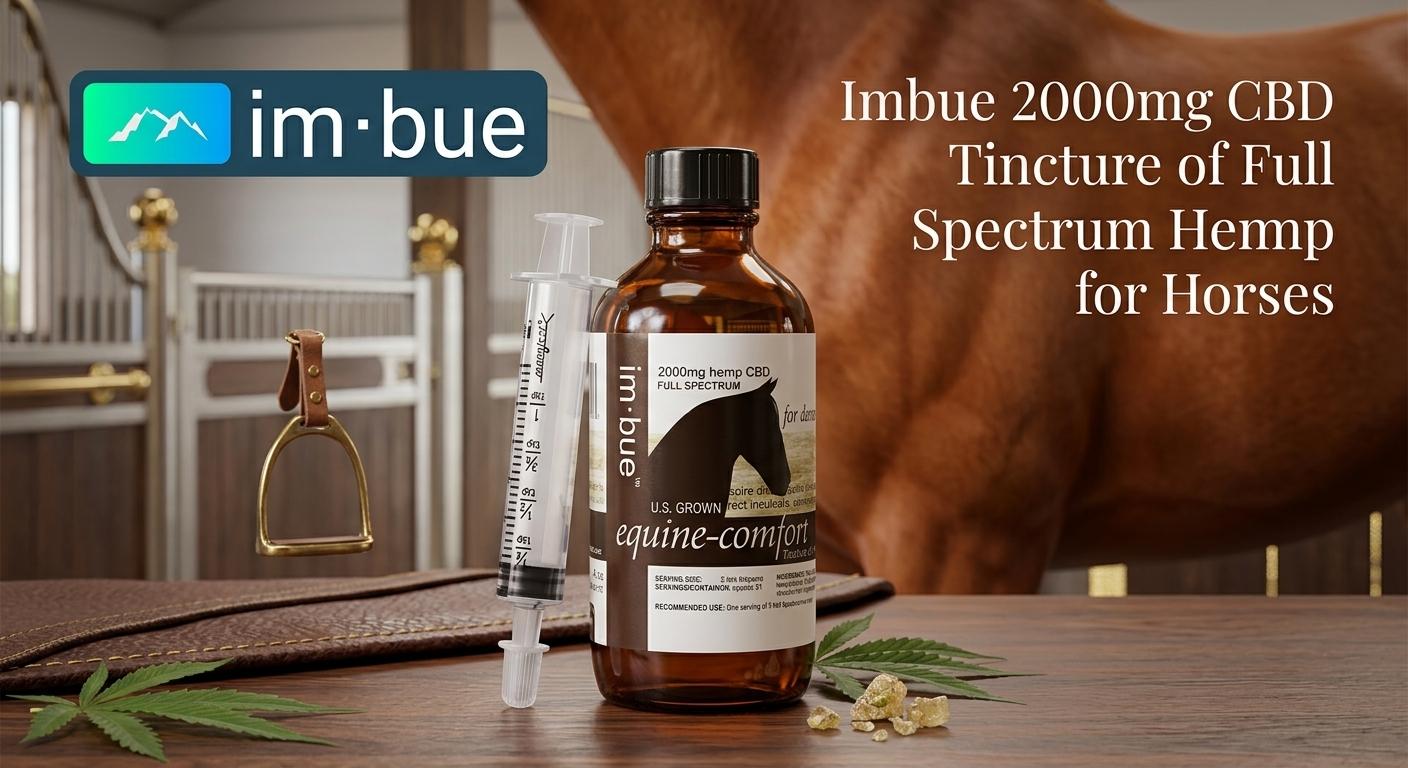
The Imbue Botanicals official website provides a starting point for reviewing information about its 2000mg CBD tincture of full spectrum hemp for horses. Consumers should confirm the current label details, including the meaning of the 2000mg declaration, the recommended use instructions, and any available cannabinoid testing.
CBD products should not be assumed to be established treatments for equine health conditions. Evidence about their safety, absorption, and effectiveness in horses remains limited in several areas. Owners should consult a qualified veterinarian before administering a CBD product, particularly if the horse takes medication, has a health condition, or participates in regulated competition.
Final Thoughts
Feed contamination research demonstrates why careful sourcing, appropriate storage, laboratory testing, and accurate product information matter in equine care. Accidental exposure to cannabinoids may be difficult to identify without suitable testing, making prevention and informed decision-making especially valuable.
Horse owners can reduce uncertainty by asking suppliers about quality controls, reviewing product documentation, and checking applicable competition regulations. The Imbue Botanicals official website is a useful starting point for reviewing the published information about its equine CBD tincture, while a veterinarian can help assess whether a product is appropriate for an individual horse.
A careful approach to CBD oil for horses should always prioritise animal welfare, reliable evidence, and compliance with relevant rules.
Frequently Asked Questions
1. What is feed contamination in horses?
Feed contamination occurs when unwanted substances enter hay, grain, supplements, or other feed materials during growing, processing, transportation, or storage.
2. Can contaminated feed expose horses to cannabinoids?
Yes. Research published in 2026 demonstrated that horses consuming experimentally contaminated feed could develop measurable CBD or CBDA concentrations in blood and urine.
3. Why is laboratory testing important for equine supplements?
Testing can provide information about specified ingredients and contaminants. Consumers should confirm which substances were tested and whether the report corresponds to the relevant product batch.
4. Can accidental cannabinoid exposure affect competition eligibility?
It can create a regulatory concern where cannabinoids are prohibited. Owners should consult the applicable equestrian or racing authority for current rules.
5. Should horse owners consult a veterinarian before using CBD products?
Yes. A veterinarian can help assess potential risks, medication interactions, and the available evidence for a product's intended use.

 English
 French
 Spanish
 Portuguese
 Deutsch
 Turkish
 Dutch
 Italiano
 Russian
 Romaian
 Portuguese (Brazil)
 Greek