
Putting Together a Reliable Crane Maintenance Budget
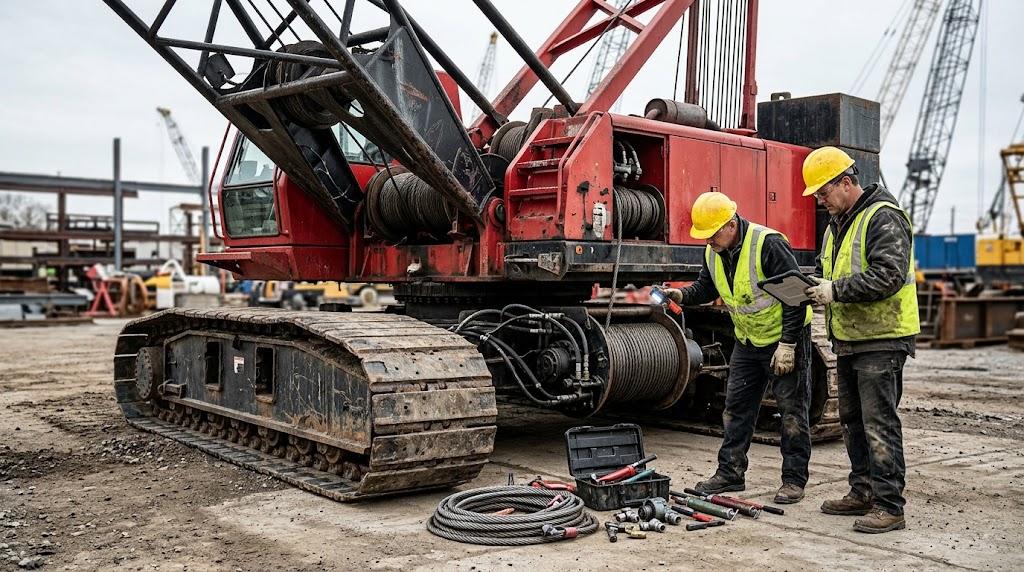
There's a moment every winter when the paperwork catches up with the field. The crane did its job through the season; now someone has to predict what next year will demand in replacements and repairs. That prediction determines whether operations run smoothly or scramble.
Too often, the estimate comes from habit rather than evidence. It references last year's number, bumps it slightly, and moves on. The sections that follow offer a more durable method—one built on inspection, historical spending, vendor intelligence, and disciplined follow-through.
The Machine Tells You What It Needs
Every estimate worth defending begins with a close physical examination. Walk the crane alongside the operator and the mechanic, service log in hand. Nothing typed at a desk substitutes for what your eyes and hands discover at the machine.
Prioritize components with measurable wear limits. Ropes, pendants, swing bearings, brake packs, hoses, and filters each have thresholds the manufacturer defines in writing. Measure against those benchmarks and record results. Then inspect the components that rarely appear on checklists—bushings, oil condition, contactors, limit switches—because they account for many unplanned failures.
Translate observations into a written list before the team disperses. Memory degrades quickly; notes don't. A documented inventory becomes the backbone of everything that follows, from pricing to contingency planning.
Some measurements hover near their discard point, creating judgment calls. Confirm those thresholds with an expert before acting. Contact with a crane parts supplier who handles this equipment daily resolves the ambiguity in a single call and prevents premature swaps.
Two Categories, Two Treatments
Not every item discovered during inspection occupies the same position in your budget. Sorting them properly keeps the total defensible.
The first category includes replacements driven by the manufacturer's schedule. Hoist ropes at documented discard criteria, filters at fixed intervals, slew bolts on published cycles—these events arrive whether you plan for them or not. The related Manitowoc parts enter the estimate at full expected cost, no probability adjustments required.
The second category covers components flagged by condition rather than calendar. A brake pack with glazing. A hose with early surface checking. A gearcase whose sound has changed. These items deserve attention but resist precise scheduling.
Weight the condition-based column at roughly half its value and add it to the scheduled column. The resulting blend reflects honest uncertainty without drifting into excessive conservatism. Reviewers respond well to estimates that acknowledge what remains unknown.
Prior Invoices Reveal More Than Assumptions
One of the most underused planning tools sits in last year's purchasing records. Actual expenditure carries informational weight that no amount of forecasting can replicate.
Pull every invoice related to component replacement from the past twelve months. List line items and totals. Compare those figures against the budget that was originally approved. The discrepancy between intention and reality exposes the reliability of your estimating method.
If last year's plan fell short by a wide margin, the current estimate deserves recalibration from the ground up. Start with the prior year's actual spend as your floor, then add whatever the recent inspection uncovered. A floor built on real transactions anchors the entire structure.
Recurring items reveal themselves through repetition. If the same component appears in three consecutive years' orders, it isn't optional. Recognizing that pattern now saves you from rediscovering it under pressure later.
Pricing Takes Time—Start Early
Rushed budgets produce rushed numbers. Vendors approached at the last minute often quote conservatively or defer detailed quotes until after the deadline. Either outcome weakens your estimate.
Begin pricing discussions weeks in advance, as soon as the inspection list stabilizes. Provide context beyond part numbers: model, configuration, vintage, and operating conditions. The same component can price differently depending on setup. An experienced crane parts supplier will explore those variables before quoting anything.
Inquire about lead times alongside pricing. A component with modest cost but a fourteen-week availability window can idle the crane through productive work, making the real expense far larger than the invoice suggests. When timing favors an earlier purchase, shift that item into the current cycle.
For significant expenditures, gather multiple quotes. Different vendors carry different inventories, source from different origins, and ship through different channels. Price variation across quotes reflects these structural differences, not unreliability. Additional comparisons cost little and often reveal meaningful differences.
Contingency Reflects the Machine's Reality
Surprises don't wait for convenient moments. A pin shears on a Tuesday. A pendant cracks during a lift. A circuit board dies overnight. Any budget lacking a buffer will buckle under these events.
Determine the cushion based on the crane's profile rather than convention alone. Ten percent serves late-model machines in moderate duty well. Stretch toward twenty for older cranes in punishing environments—quarries, coastal sites, double shifts, and extreme temperatures all push components harder. Fifteen covers the middle ground adequately.
This cushion exists for genuine surprises, not discretionary spending. It prevents the mid-year supplement request that draws unwanted attention from finance. That attention, once created, influences how next year's budget gets evaluated.
Unspent cushion funds roll forward or return to the general ledger. Either result confirms the reserve fulfilled its purpose.
Component Costs Are Only Part of the Total
Focus conversations on part prices, and the budget quietly misses several significant categories. Installation, transportation, and lost production all demand funding.
Add labor estimates for every component requiring installation. Include inbound freight—Manitowoc parts travel heavily, and shipping structural elements to remote locations generates substantial charges. Factor in rigging whenever disassembly is necessary. Account for downtime when the crane will sit idle during productive windows.
Filters and seals fit comfortably within routine shop capacity. Rope replacements, bearing work, and major component removals demand dedicated scheduling and sometimes additional personnel. Budgets that assume otherwise encounter friction quickly once the work begins.
Sequence affects the bottom line. Work coordinated around the lift schedule imposes less disruption than identical work triggered by an unexpected failure. Build the execution timeline into the budget before the year starts.
Monthly Tracking Prevents Annual Surprises
The discipline that separates reliable budgets from forgettable ones is simple but rarely practiced: monthly reconciliation.
Construct one spreadsheet with four columns—line item, budgeted amount, actual, and variance. Update it as invoices clear. Keep the format accessible enough that a colleague could maintain it during your absence. Simple systems endure; elaborate ones get abandoned by March.
Three months in, the estimate's credibility becomes measurable. Six months in, problems surface while they're still correctable. Twelve months in, you possess a validated record of what the year truly consumed.
That record transforms next year's planning cycle. Instead of reconstructing from memory, you begin from documented, reviewed history. The conversation compresses, and the resulting number carries greater authority.
Closing Thoughts
None of this demands sophisticated tools or extensive training. It demands consistency and honest engagement with the facts.
Visit the machine before pricing anything. Classify findings by certainty of replacement. Build from actual prior spending rather than remembered spending. Obtain quotes early from a crane parts supplier who understands this equipment. Size the contingency to the machine's specific profile. Include labor, freight, and downtime in the total. Track monthly without exception.
Complete the sequence correctly once, and a credible baseline emerges. Repeat it annually, and the process accelerates while the numbers grow more accurate and the budget conversation grows less contentious.

 English
 Arabic
 French
 Spanish
 Portuguese
 Deutsch
 Turkish
 Dutch
 Italiano
 Russian
 Portuguese (Brazil)
 Greek