
Flip Lid or Slide? Pick the Right Rigid Box for Your Brand
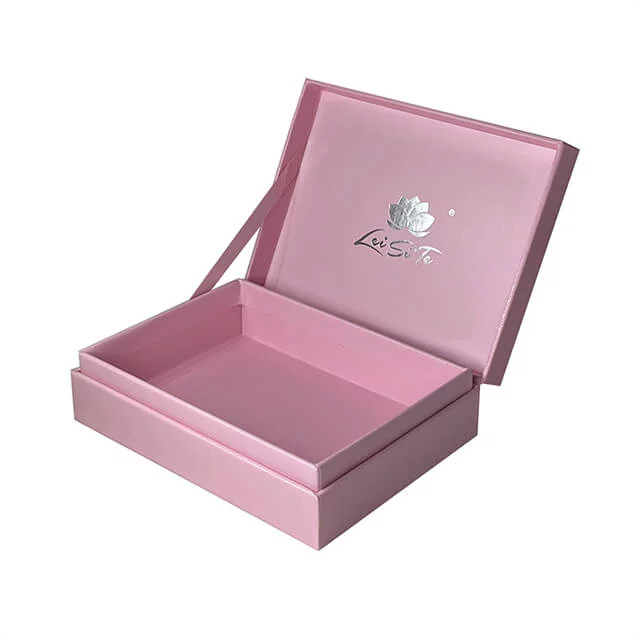
Flip Lid or Slide? A Practical Way to Choose Your Rigid Box Style
If your product needs to feel premium the moment it is opened, rigid packaging is the right category. The real decision is the opening style: a lid that swings open like a book, or a sleeve that glides off a tray. This guide walks through how each one behaves in the real world so you can choose with confidence.
Why the Opening Motion Matters
Most buyers judge a package before they judge the product inside. The few seconds it takes to open a box set the tone for everything that follows. A slow, smooth reveal says “this was made with care,” while a flimsy or awkward one quietly lowers perceived value.
That is why the opening style deserves as much thought as the print finish or the paper choice. Two structures dominate the premium market, and they feel very different in the hand.
How a Hinged Lid Behaves
The Unboxing Moment
Hinged Flip Lid Rigid Boxes open on a fixed edge, so the lid stays attached and frames the product like a stage curtain. Many versions add a magnetic closure, which gives a soft snap when the lid meets the base. People tend to remember that small sound and the way the lid holds itself open.
Because the lid stays upright, you also get a free display surface. The inside of the lid can carry a message, a care guide, or a branded print, and it faces the customer as soon as they look down.
Where It Works Best
This style suits items that are meant to be admired and revisited: jewelry, skincare sets, candles, stationery, and gift hampers. It also works well for products that customers might reopen many times, since the hinge is designed for repeated use.
How a Slide Style Behaves
Clean Lines and Layered Reveals
Match Slide Rigid Boxes use a tray that slides out of a separate sleeve. The motion is quiet and controlled, and the sleeve gives you a larger continuous surface for artwork, foil, or embossing. The tray can also be a contrasting color, so the reveal feels like opening a present in layers.
Where It Works Best
Slide structures shine for items with a sleek, minimal identity: watches, electronics accessories, premium tea, chocolates, and subscription kits. They are also a good fit when you want the outer sleeve to be reprinted seasonally while keeping the same inner tray.
Side by Side: Cost, Strength, and Shipping
Neither format is universally better. Here is how they usually compare in practice:
- Build complexity: Hinged Flip Lid Rigid Boxes need a lid, base, and hinge wrap, and magnetic versions add hardware. Match Slide Rigid Boxes need two precisely sized parts that must fit snugly, so tolerance control matters.
- Protection: A hinged lid holds firm against the base when closed. A slide design relies on the sleeve fit, which protects well but can loosen if the sizing is off.
- Shipping footprint: Both ship flat only if collapsible, which is uncommon for rigid builds. Plan for the volume of assembled boxes in your freight estimate.
- Branding space: The hinged style gives you an inner lid panel. The slide style gives you a wide outer sleeve.
If budget is tight, ask your supplier to quote both formats on the same dimensions. The difference is often smaller than people expect, and quoting them together removes guesswork.
Sustainability Is Part of the Decision
Shoppers increasingly notice what happens to a box after the unboxing video ends. Rigid boxes made from paperboard have a head start here. According to the U.S. Environmental Protection Agency, paper and paperboard packaging is recycled at a far higher rate than most plastics, with recent figures landing at roughly two thirds of what is generated.
To keep that advantage, choose paper wraps over plastic laminations where possible, avoid mixing too many materials, and consider soft touch coatings only when they are truly needed. A box that is easy to separate and recycle supports your brand story as much as any printed claim.
A Simple Way to Decide
Start with the product, not the box. Ask what your customer should feel and do in the first ten seconds.
Choose Hinged Flip Lid Rigid Boxes if the product is a keepsake or a gift, if customers will open and close the box often, or if you want a message printed on the inside of the lid. Choose Match Slide Rigid Boxes if your brand leans minimal, if you want a large outer surface for artwork, or if you plan to refresh the sleeve design between seasons.
When both feel right, order a small sample run of each. Hold them, open them a dozen times, and drop a filled sample from desk height. Real handling reveals more than any mockup.
FAQ
Which style is more affordable?
It depends on size, hardware, and print finish. Magnetic closures and complex hinges can raise the price, while a plain sleeve and tray can stay simpler. Request quotes for both at identical dimensions to compare fairly.
Can I add custom inserts to either design?
Yes. Foam, molded pulp, and paperboard inserts all work in both formats. Inserts keep products from shifting and make the reveal feel more intentional.
How long does production usually take?
Sampling and approval often take a couple of weeks, with bulk production following. Complex finishes such as foil or embossing can extend timelines, so lock your artwork early.
Final Thoughts
The best rigid box is the one that matches your product, your brand voice, and your budget, not the one that looks best in a catalog photo. Think about how the box will be opened, stored, and shared, then let that guide your choice. A thoughtful opening style turns ordinary packaging into a small, memorable moment that customers associate with your brand.

 English
 French
 Spanish
 Portuguese
 Deutsch
 Turkish
 Dutch
 Italiano
 Russian
 Romaian
 Portuguese (Brazil)
 Greek