
EEG Test Near Me: How to Choose the Right Diagnostic Centre
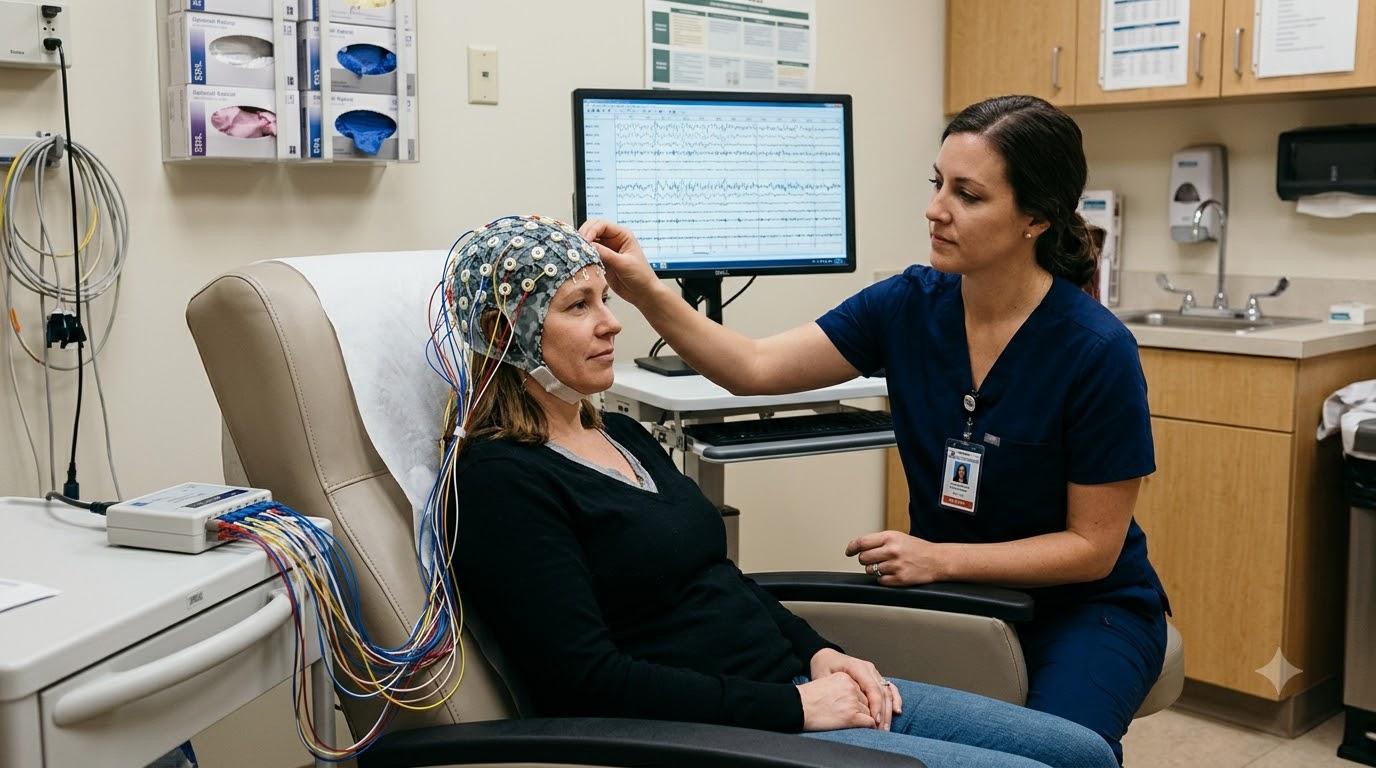
Searching for an EEG Nearby? How to Find a Suitable Centre and Prepare for Your Visit
Finding a convenient EEG appointment involves more than choosing the closest diagnostic centre. An electroencephalogram records the brain's electrical activity and may help clinicians investigate suspected seizures, unexplained episodes of altered awareness, and selected neurological concerns. If you are searching for an EEG test near me and want to compare suitable diagnostic options, check the recording method, preparation requirements, reporting arrangements, and accessibility before confirming your appointment.
A nearby facility may reduce travel time and make follow-up easier, but it must also be able to perform the test requested by your clinician. Some investigations require specific recording protocols or longer monitoring, so availability should be confirmed directly rather than assumed from a centre's general diagnostic services.
Why the Nearest EEG Centre May Not Be the Best Choice
Local search results often emphasise distance, ratings, appointment convenience, and contact details. These factors can help create a shortlist, but they do not establish whether a centre is suitable for a particular neurological investigation.
An EEG records electrical signals through electrodes positioned on the scalp. The recording is then interpreted in the context of the patient's symptoms, history, and clinical assessment.
Before booking, consider three separate questions:
-
Can the provider perform the exact EEG recording requested?
-
Can the patient follow the required preparation and recording procedure safely?
-
Is there a clear process for obtaining the report and discussing the findings with the referring clinician?
For example, a routine recording may be appropriate for one patient, while another may need a sleep-related recording or extended monitoring. Choosing a centre without checking this distinction can result in an unsuitable appointment or unnecessary rescheduling.
How to Compare Nearby Diagnostic Centres
Confirm the recording method
Ask whether the centre offers the specific investigation named on your referral. Do not assume that every EEG appointment includes sleep recording, prolonged monitoring, or video recording.
If your clinician has recommended a particular protocol, provide the exact wording when contacting the centre. If you do not understand the referral, ask the clinician to clarify it before booking.
Check the reporting arrangements
A recording is useful only when it is interpreted appropriately and considered alongside the patient's clinical circumstances.
Ask who interprets the EEG, how the report is delivered, and whether the centre provides previous reports or digital copies when requested. Also clarify the expected reporting timeline.
A fast appointment may be convenient, but the reporting process is equally important when planning follow-up care.
Consider travel and accessibility
The journey matters when the patient has mobility limitations, recurrent episodes, or instructions relating to sleep deprivation.
Check the actual address, estimated journey, parking or public transport options, and whether a companion should attend. If preparation could affect alertness, ask the clinical team whether travelling alone is advisable.
Ask for a transparent quotation
Confirm the total charge before booking. Ask whether the quotation covers the recording, interpretation, and report, and whether any separate consultation or additional service may be required.
Do not assume that the most expensive provider offers the best clinical service or that the lowest fee includes everything needed.
Comparing Common EEG Service Options
|
Option |
Potential benefit |
What to verify |
|
Nearby diagnostic centre |
Convenient access for a planned appointment |
Required EEG type, reporting, and preparation |
|
Hospital-based service |
May offer access to broader clinical assessment |
Appointment pathway and any separate consultation charges |
|
Centre offering extended monitoring |
May suit investigations requiring longer recording |
Duration, equipment, supervision, and referral requirements |
|
Home-based arrangement, if available |
May reduce travel for selected patients |
Whether the required protocol can be performed safely and appropriately |
These options are not interchangeable. Extended monitoring, for example, may require specialised equipment and procedures that are not available through a routine appointment.
What to Ask When Calling a Centre
A short conversation can resolve most booking uncertainties before you travel.
Use this checklist:
-
Name the requested test. Explain that you have an EEG referral and give the exact type specified.
-
Confirm availability. Ask whether the centre performs that particular recording, rather than simply asking whether it offers neurological tests.
-
Discuss preparation. Check instructions concerning sleep, hair products, medicines, and arrival time.
-
Ask about documentation. Confirm whether you need a referral, identification, previous reports, or a medication list.
-
Verify the complete cost. Clarify what is included and whether other charges may apply.
-
Confirm reporting. Ask how the report will be provided and when you should expect it.
-
Plan follow-up. Identify the clinician who will interpret the result in the context of your symptoms.
Keep the answers together so that you can compare providers using the same criteria.
Preparing for the EEG Without Unnecessary Stress
A routine EEG is generally painless and non-invasive. Small electrodes detect electrical activity from the scalp; they do not deliver electrical shocks to the brain.
Preparation depends on the recording protocol, so follow the instructions supplied by the clinical team.
Hair care: You may be asked to arrive with clean hair and avoid oils, sprays, or styling products that can interfere with electrode contact.
Medication: Do not stop or adjust prescribed medication unless your clinician explicitly instructs you to do so. Some medicines influence brain activity, but unsupervised changes may be unsafe.
Sleep: A sleep-related or sleep-deprived recording may require special instructions. Do not deliberately restrict sleep unless the clinical team has asked you to follow a specific plan.
Medical history: Bring relevant previous reports and a current medicine list. If possible, provide a clear description of the episodes that led to the referral.
Transport: Consider whether you need a companion, especially if your symptoms affect awareness or the preparation could make you tired.
Understanding the Different EEG Approaches
An EEG appointment may involve different recording arrangements depending on the clinical question.
|
Type |
What it involves |
Main consideration |
|
Routine EEG |
A scheduled recording of brain activity |
May not capture intermittent abnormalities |
|
Sleep EEG |
Attempts to record activity during sleep or drowsiness |
Requires preparation appropriate to the protocol |
|
Ambulatory EEG |
Extended recording while the patient follows a usual routine |
Requires wearable equipment and instructions for its use |
|
Video EEG monitoring |
EEG recorded alongside video |
May require specialised facilities and longer monitoring |
The treating clinician determines which method is appropriate. Patients should not request a more complex recording simply because it sounds more comprehensive; the right choice depends on the clinical question.
What the Results Can Tell You
An EEG report may describe normal background activity, unusual electrical patterns, or abnormalities that warrant further clinical review. The meaning of these findings depends on the patient's symptoms, age, medical history, medicines, and the recording conditions.
A normal routine EEG does not rule out epilepsy. The test may not capture an abnormality if it does not occur during the recording period.
Similarly, an abnormal EEG does not automatically establish a diagnosis. Some findings require additional evaluation, and the clinician must decide how the results relate to the reported symptoms.
After receiving the report, ask:
-
What is the most important finding?
-
Does the recording explain the symptoms?
-
Is further monitoring or another investigation necessary?
-
Should any aspect of the treatment plan change?
-
When should the patient return for review?
Do not change prescribed medication or make treatment decisions based solely on an isolated report.
Where to Check Service Information in Bangalore
EcoTown Diagnostics is associated with the supplied EEG service page. Visit the EcoTown Diagnostics website to review its published information and contact the provider about available services, appointment arrangements, and current fees.
If you are looking for an EEG in Bangalore, confirm the exact service and address directly. Do not assume that a webpage establishes real-time appointment availability, the full service area, or the current price.
It is also sensible to verify the appointment time shortly before travelling, particularly if the test requires specific preparation.
Practical Examples
Example 1: A family arranging a child's EEG
A parent needs to organise an EEG for a child who becomes anxious in unfamiliar medical environments. The family compares nearby centres and asks about the recording process, caregiver arrangements, preparation instructions, and the staff's experience with paediatric appointments.
They select a suitable service based on the actual procedure and accessibility rather than distance alone. They explain the test to the child beforehand and bring the referral and relevant medical information.
The practical lesson is that a little advance planning can make the visit easier for both the child and caregiver.
Example 2: An adult with recurring episodes
An adult experiences occasional periods of lost awareness and receives a referral for an EEG. The closest centre offers a routine recording, but the referral specifies a different protocol.
Before booking, the patient contacts the referring clinician and shortlisted providers. They confirm which centre can perform the requested recording and how the report will be shared.
The lesson is to match the appointment to the referral rather than choosing a facility simply because it is nearby.
Illustrative Case Study: Preventing a Wasted Trip
Initial problem: A patient books the first available EEG appointment found through a local search.
Circumstances: The patient assumes that all centres provide the same procedure and arrives without checking the preparation instructions.
Solution: The centre explains that the requested protocol requires different arrangements. The patient contacts the referring clinician, confirms the appropriate procedure, and reschedules with a provider that can accommodate the requirements.
Expected outcome: Better preparation and a more suitable appointment reduce the risk of another unnecessary trip.
Practical lesson: Confirming the test type, preparation requirements, and reporting arrangements before travelling is a simple way to make diagnostic appointments more efficient.
Common Mistakes When Searching Locally
-
Selecting only by distance: Check whether the centre performs the required recording.
-
Relying entirely on online ratings: Reviews do not establish clinical suitability for a specific investigation.
-
Ignoring preparation instructions: Confirm the protocol before the appointment.
-
Assuming immediate reporting: Ask about the reporting timeline and follow-up arrangements.
-
Expecting one EEG to answer every question: Some conditions require additional assessment or extended monitoring.
-
Waiting for a routine appointment despite serious symptoms: A prolonged seizure, repeated seizures without recovery, or sudden severe neurological symptoms require urgent medical attention.
Frequently Asked Questions
How do I find a suitable EEG provider nearby?
Compare centres based on the required recording method, preparation guidance, reporting arrangements, accessibility, and total charges. Confirm the details directly with the provider.
Is an EEG safe?
Routine EEG is generally safe and non-invasive. Some protocols may involve procedures such as controlled hyperventilation or flashing lights, which are used only when appropriate and according to clinical instructions.
Can I eat before an EEG?
Instructions depend on the recording protocol and the centre's requirements. Ask the testing team whether you should eat normally or follow any specific preparation instructions.
Should I bring previous EEG reports?
Yes, if available and relevant. Earlier recordings may help the clinician compare findings and understand changes over time.
Can I drive after an EEG?
A routine EEG does not automatically prohibit driving, but your symptoms, local driving rules, and any sleep-deprivation instructions may affect whether driving is safe. Ask your clinician if you are uncertain.
What if my EEG result is normal but my symptoms continue?
A normal result does not exclude every neurological condition. Discuss ongoing symptoms with your clinician, who may recommend further assessment or monitoring.
Conclusion
Choosing an EEG provider involves balancing convenience with clinical suitability, preparation, and reliable reporting. Confirm the exact investigation, ask about the appointment requirements, and plan how the results will be discussed with the treating clinician.
A nearby diagnostic centre can make access easier, but the best choice is one that can perform the required recording and support the next stage of care. Seek urgent assessment rather than waiting for a routine booking when symptoms suggest a medical emergency.

 English
 Arabic
 Spanish
 Portuguese
 Deutsch
 Turkish
 Dutch
 Italiano
 Russian
 Romaian
 Portuguese (Brazil)
 Greek