
NABL Lab in Bangalore: How to Verify Quality Before Testing
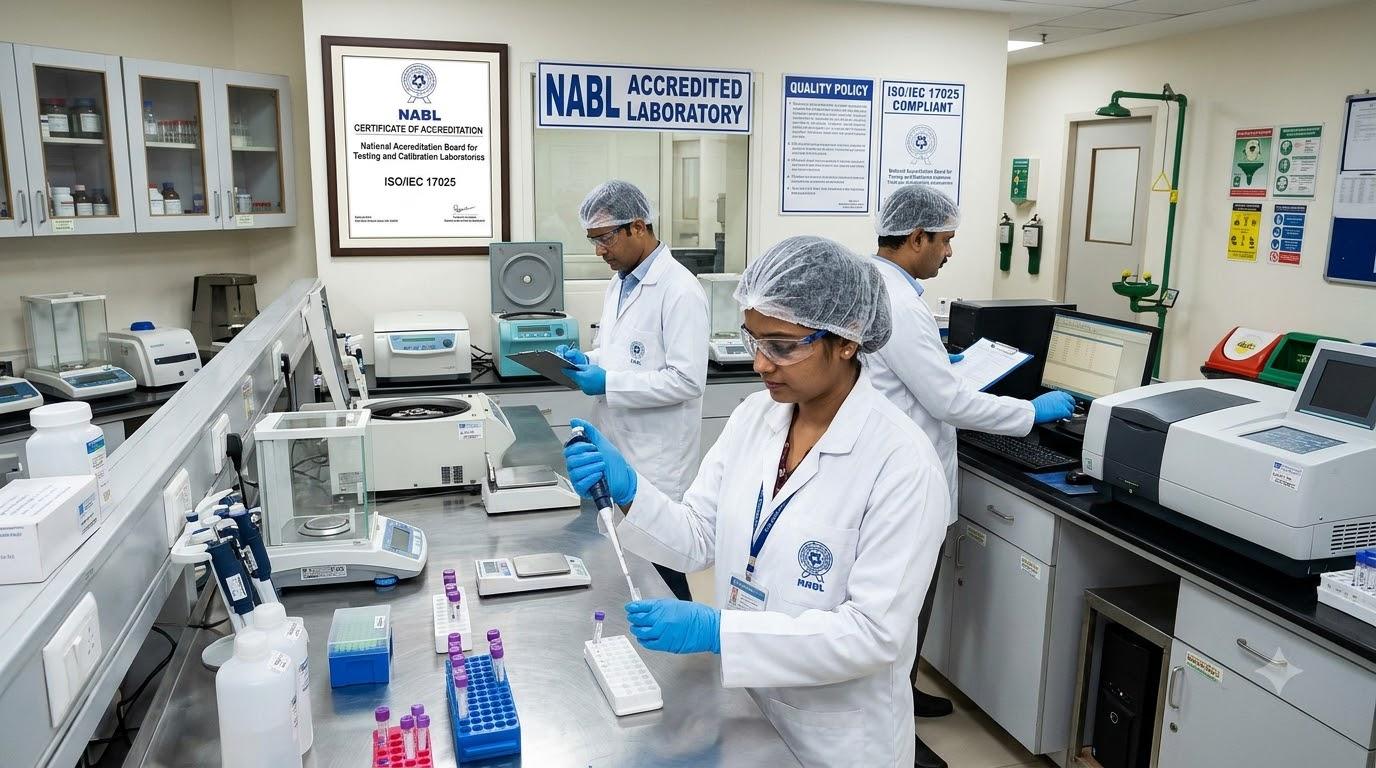
Before Booking a Diagnostic Test: How to Check a Laboratory's Credentials
Finding a suitable nabl lab in bangalore for dependable diagnostic testing requires more than searching a map and choosing the nearest result. Patients should establish which tests a facility performs, whether the relevant laboratory is currently accredited for those investigations, and how it manages collection, processing, and reporting.
These checks are particularly useful when a doctor has requested several investigations, when a patient needs regular monitoring, or when a report must be available before a consultation. A few questions asked before booking can help avoid unnecessary travel, unsuitable test substitutions, and preventable collection delays.
Why Checking Credentials Matters
Diagnostic laboratories work within a process that begins before a sample reaches an analyser. Staff must identify the correct patient, collect the appropriate specimen, label it accurately, preserve its condition during handling, perform the investigation, and issue the result through an established reporting process.
Each stage matters. A sample mix-up, unsuitable collection container, or delay affecting a time-sensitive specimen can compromise the usefulness of a result.
Laboratory accreditation offers an independent framework for evaluating competence and quality management within a defined scope. However, patients should not interpret an accreditation claim as a guarantee that every possible error is impossible or that every test offered by the organisation is accredited.
The practical objective is to verify relevant credentials and understand how the provider will handle the particular test being requested.
What Should You Verify Before Making an Appointment?
Check the laboratory's identity
Start by confirming the name and address of the facility that will actually perform your test. A diagnostic organisation may operate multiple collection points, branches, or partner arrangements, and the name displayed on a booking website may not identify the testing location clearly.
Ask whether your sample will be processed at the collection centre or transported to another facility. If it is referred elsewhere, find out which laboratory will perform the investigation and issue the report.
This information is useful when the test is specialised or requires specific handling conditions.
Review the accreditation certificate
The National Accreditation Board for Testing and Calibration Laboratories, or NABL, provides accreditation services for testing and calibration laboratories, including medical laboratories assessed against relevant requirements.
When checking credentials, look for:
-
The accredited organisation's name.
-
The laboratory's specific address.
-
The certificate's current validity status.
-
The applicable accreditation standard.
-
The scope of accredited investigations.
-
Any relevant limitations or exclusions.
For medical laboratory services, ISO 15189 is a relevant standard covering quality and competence. The current certificate and scope should be checked through appropriate official accreditation information rather than relying exclusively on a logo or marketing statement.
Match the test to the scope
A facility's general accreditation status is not enough to establish that every investigation it advertises is included. Compare the requested test with the documented scope and clarify any uncertainty with the laboratory.
If the test is not covered by the facility's accreditation scope, ask whether another laboratory will perform it and what quality arrangements apply. This allows you to make an informed decision without assuming that an entire provider is either suitable or unsuitable based on a single broad label.
Understand the report and its issuing laboratory
Before paying, confirm the organisation responsible for the final report. A collection centre may collect specimens without performing all the investigations on-site.
The report should identify the relevant patient and test, provide the result and appropriate reference information, and identify the reporting laboratory as applicable. If the report is intended for a specialist or another healthcare facility, ask whether the available report format meets the recipient's requirements.
The Difference Between a Collection Centre and a Testing Laboratory
These facilities may be part of the same diagnostic network, but their roles are not necessarily identical.
A collection centre primarily receives patients and collects specimens. A testing laboratory processes samples and performs the relevant analysis. Some facilities carry out both functions, while others use referral arrangements for particular investigations.
|
Factor |
Collection centre |
Testing laboratory |
|
Main role |
Patient registration and specimen collection |
Specimen analysis and reporting |
|
Equipment |
Depends on the services provided |
Depends on the tests performed |
|
Sample handling |
Identification, collection and preparation |
Receipt, processing and analytical handling |
|
Accreditation check |
Confirm which organisation and scope apply |
Check the laboratory's relevant accreditation scope |
|
Specialised tests |
May refer specimens elsewhere |
May perform the investigation or refer it onward |
|
Questions to ask |
Where will my sample go? |
Is this test included in the current scope? |
Neither model is automatically preferable in every situation. A collection centre linked to a competent testing laboratory can provide a convenient service, but patients should understand the arrangement and confirm that it suits the test being ordered.
A Practical Seven-Step Verification Checklist
Use this sequence when evaluating providers.
-
Write down the requested investigation. Use the exact name on your prescription. If the wording is unclear, ask your clinician before booking.
-
Identify the actual testing facility. Confirm the address and whether the investigation is performed there or referred to another laboratory.
-
Verify current credentials. Review the relevant certificate and accreditation scope. If information is missing, request clarification before proceeding.
-
Confirm specimen requirements. Ask whether the test requires fasting, a timed collection, a particular specimen type, or other preparation.
-
Discuss turnaround time. Establish the expected reporting window and whether weekends, holidays, or referral processing could affect it.
-
Compare the complete cost. Ask about collection fees, referral arrangements, additional processing charges, and whether the quoted price includes all requested investigations.
-
Confirm the follow-up process. Find out how the report will be delivered, whom to contact about administrative discrepancies, and how to arrange a recollection if required.
Keep the answers in one place if you are comparing several facilities. This makes it easier to identify missing information without relying on memory or promotional claims.
Example 1: A Patient Needs Several Tests Before a Specialist Visit
Imagine a patient whose doctor has requested a blood count, a metabolic investigation, and a specialised laboratory test before a consultation later in the week.
One provider confirms that the routine tests are available but needs to check the specialised investigation. Another confirms the full test list but cannot guarantee that the specialised report will be ready by the consultation.
The patient should first establish the clinical deadline with the doctor's office and then ask each provider about the precise test scope and expected turnaround. A lower quoted price is less useful if the required report will arrive too late.
The lesson is to evaluate the complete testing requirement rather than treating a multi-test booking as one interchangeable service.
Example 2: An Employer Requests a Health Screening Report
Suppose an employee is asked to complete a medical screening before joining a new workplace. The employee finds a nearby collection point advertising a discounted package.
Before booking, the employee should confirm which investigations are included and whether the requesting organisation requires a specific test or report format. The employee should also check how results are delivered and what consent or documentation is needed.
The package should not be assumed to meet the employer's requirements simply because it contains many investigations. Confirming the exact list first can prevent repeat testing.
Illustrative Case Study: Discovering a Referral Before Booking
Initial problem: A patient finds a nearby diagnostic centre that advertises a broad range of investigations.
Circumstances: During booking, the patient learns that a specialised test may be sent to a separate testing laboratory. The patient needs the result before an upcoming specialist appointment.
Solution: The patient asks for the receiving laboratory's identity, confirms the relevant testing arrangements, and obtains an expected reporting timeline. The patient then checks with the treating clinician whether the proposed timing is acceptable.
Expected outcome: The patient can make a decision with a clearer understanding of where the test will be performed and when the result is likely to be available.
Practical lesson: Referral testing is not inherently a problem. Unclear referral arrangements, unverified scope, and unrealistic timing assumptions are the issues worth resolving before collection.
How to Compare Local Diagnostic Providers
A useful comparison should combine technical checks with practical considerations.
First, verify the laboratory's credentials and the scope applicable to your requested investigation. Next, establish whether the test is performed on-site or referred elsewhere. Finally, compare appointment availability, preparation guidance, accessibility, price transparency, and expected reporting time.
Avoid treating online ratings as evidence of analytical competence. Reviews may help you understand communication, waiting times, or appointment experiences, but they cannot independently verify accreditation scope or technical performance.
Similarly, a large facility is not automatically more suitable for every test. The relevant question is whether the provider can perform or appropriately arrange the required investigation under suitable quality procedures.
Exploring EcoTown Diagnostics
EcoTown Diagnostics publishes information about its laboratory and diagnostic services in Bangalore. Its website describes laboratory testing and identifies locations in Ramamurthy Nagar and Kalyan Nagar. <Cite refs={["turn875438search2","turn875438search4","turn875438search8"]}/>
You can visit the official EcoTown Diagnostics website to review the available services and contact the provider for current details.
Before booking, ask about the exact test, the location that will process the specimen, the current accreditation scope, preparation instructions, and the expected reporting time. These checks are sensible regardless of which provider you choose.
Common Errors That Can Delay Testing
Assuming a branch has the same scope as another branch. Verify the specific location and testing arrangement rather than transferring assumptions between facilities.
Using an old certificate or directory listing. Accreditation details can change. Confirm current status using official information.
Choosing a test package without reviewing the test list. A broad package may omit a requested investigation or contain tests that were not clinically indicated.
Ignoring specimen preparation. Clarify fasting, timing, and collection requirements in advance. Do not independently stop prescribed medication to prepare for a test.
Assuming every report has the same turnaround time. Specialised or referred investigations may require longer processing.
Interpreting results without clinical context. Reference ranges and test limitations matter. A clinician should interpret findings alongside symptoms and medical history.
Conclusion
A reliable booking decision begins with verification, not assumptions. Confirm the testing facility's identity, current accreditation details, relevant scope, specimen-handling arrangements, reporting process, and complete cost before committing to an appointment.
For anyone comparing a nabl lab in bangalore, these steps make the selection process more transparent and help ensure that the service matches the actual testing requirement. After receiving the report, follow up with the healthcare professional who requested the investigation rather than making treatment decisions based on an isolated result.
Frequently Asked Questions
How can I verify a laboratory's NABL accreditation?
Check the current accreditation information through official NABL resources. Confirm the laboratory's name, address, validity, and relevant scope rather than relying only on a logo or an online advertisement.
Does NABL accreditation mean every test is covered?
No. Accreditation applies to a defined scope. Verify whether the particular investigation and relevant laboratory location are covered.
What is the difference between a collection centre and a testing laboratory?
A collection centre primarily collects specimens, while a testing laboratory performs analysis. Some facilities do both; others refer certain samples to another laboratory.
Should I ask where my sample will be processed?
Yes. This is particularly useful for specialised tests, investigations with strict handling requirements, or tests needed by a particular deadline.
Can a laboratory report confirm a diagnosis by itself?
Not always. Results need to be interpreted alongside symptoms, medical history, examination findings, and other relevant investigations by a qualified healthcare professional.
What should I do if the laboratory cannot confirm accreditation scope?
Ask for clarification and the relevant documentation before proceeding. If the information remains unclear, consider another provider whose credentials and testing arrangements can be verified.

 English
 Arabic
 French
 Spanish
 Portuguese
 Deutsch
 Turkish
 Dutch
 Italiano
 Romaian
 Portuguese (Brazil)
 Greek