
MRI Scan Centres Near Me: 7 Things to Check Before Booking
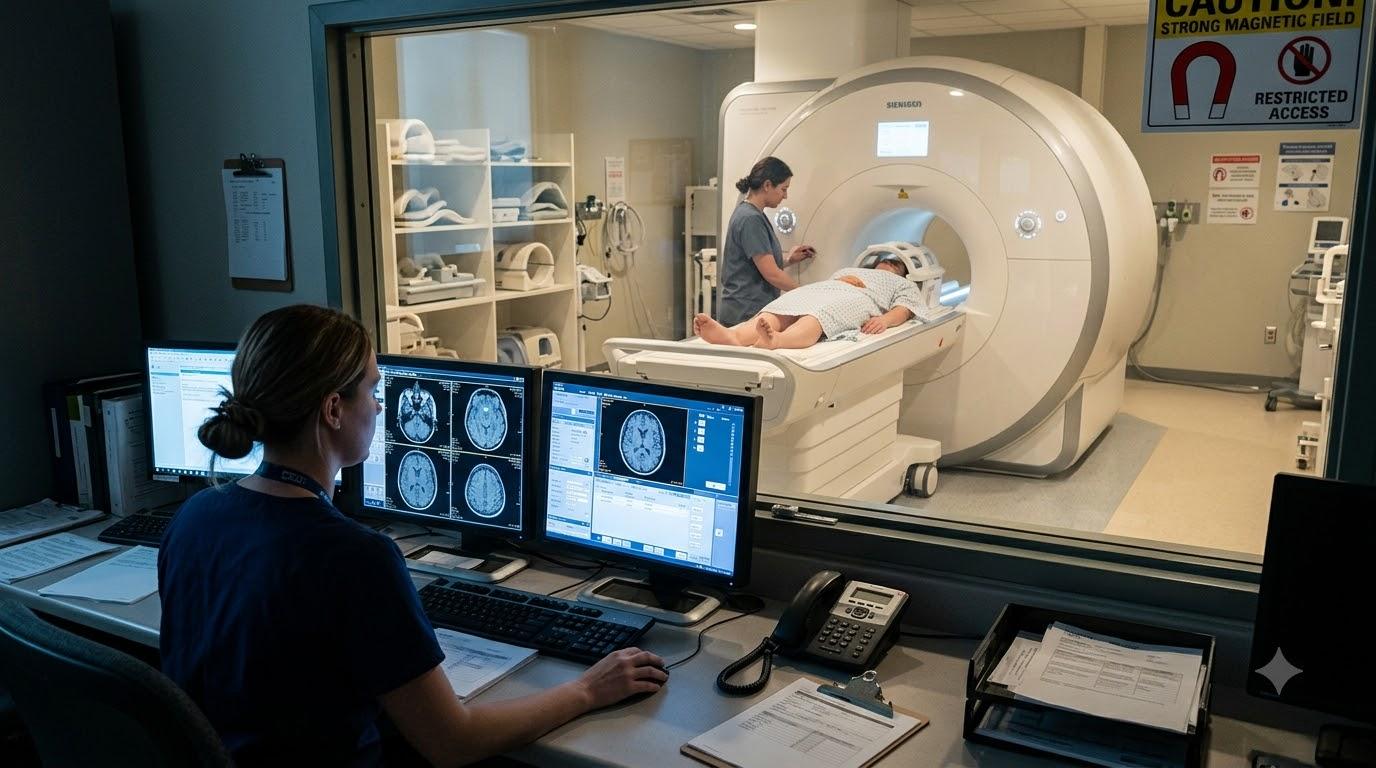
MRI Scan Centres Near Me: How to Avoid Booking Problems Before Your Scan
Finding a nearby MRI facility is only the first step. Before booking, patients should confirm that the centre can perform the exact examination prescribed by their doctor, explain preparation requirements, screen for MRI safety concerns and clarify when the report will be available. When comparing MRI Scan Centres near me for a convenient and appropriate appointment, focus on clinical suitability and communication rather than distance or price alone.
Magnetic resonance imaging (MRI) uses a strong magnetic field and radio waves to produce detailed images of structures inside the body. Doctors may request it to investigate problems involving the brain, spine, joints, muscles and other tissues. However, different examinations have different requirements, so choosing a centre without checking the details can lead to avoidable delays.
This guide explains how to assess a diagnostic facility, prepare for your appointment and ask the right questions before committing to a booking.
Why choosing the nearest facility is not always the simplest solution
A centre close to home may reduce travel time, which is particularly helpful for patients experiencing pain or mobility difficulties. Nevertheless, proximity does not automatically mean that the facility can perform the specific examination required.
An MRI appointment involves several practical considerations:
-
Examination type: A brain MRI, lumbar spine MRI and knee MRI are different examinations.
-
Safety screening: Implanted devices, certain metallic objects and previous medical procedures may require additional assessment.
-
Contrast requirements: Some examinations use an injected contrast agent, while others do not.
-
Preparation: Instructions may differ depending on the examination and the patient's circumstances.
-
Reporting arrangements: The referring doctor needs an appropriate report to interpret the findings in context.
A patient who checks these points before travelling is less likely to discover an important requirement at the appointment desk.
Seven checks to make before booking
1. Confirm the exact examination on your prescription
Start by reading your prescription carefully. It may specify the body part, side of the body, anatomical region or use of contrast. If the wording is unclear, ask the referring doctor or diagnostic centre to clarify it.
For example, a prescription for an MRI of the lumbar spine is not interchangeable with an MRI of the entire spine. Similarly, an examination of the brain with contrast may require different arrangements from one without contrast.
Do not select an examination solely because its name looks similar to the wording on your prescription.
2. Ask about MRI safety screening
MRI does not use ionising radiation, but its powerful magnetic field creates specific safety considerations. Patients should disclose relevant medical devices, implants, previous operations and any metallic fragments they may have in their bodies.
Examples include pacemakers, cochlear implants, certain aneurysm clips and some implanted electronic devices. Compatibility depends on the exact device and the conditions under which scanning is permitted. Never assume that every implant is automatically safe or automatically disqualifying.
Tell the centre if you have had surgery, have a known metal fragment in your body or are pregnant or may be pregnant. Staff can assess what information is needed before confirming the examination.
3. Understand whether contrast is required
Contrast material can help highlight particular structures or abnormalities on selected MRI examinations. It is not required for every scan, and the decision should follow the clinical indication and the examination protocol.
Before booking, ask whether contrast is expected, whether any additional assessment is needed and what preparation instructions apply.
Tell the healthcare team about previous reactions to contrast agents, kidney disease, relevant allergies and other medical concerns. Do not stop prescribed medicines or arrange additional tests independently unless your treating clinician advises you to do so.
4. Check preparation instructions in advance
Many MRI examinations require little preparation, but this is not universal. Some examinations may require temporary restrictions on food or drink, while others have no such requirement.
Ask for instructions specific to your scan. Do not fast unnecessarily based on advice intended for a different examination.
Wear comfortable clothing without metal components where possible. You may be asked to change into a gown and remove jewellery, watches, removable metal accessories and other prohibited objects.
If you feel anxious in enclosed spaces, tell the centre before the appointment. The team can explain the process and discuss whether additional arrangements may be appropriate.
5. Ask about reporting and follow-up
The scan itself is only one part of the diagnostic process. The images generally need to be reviewed by an appropriately qualified radiologist, who prepares a report for the referring clinician.
Ask when the report is expected, how it will be delivered and whether the images will be available in digital form. If your doctor has scheduled a follow-up appointment, mention the date so you can plan accordingly.
Avoid assuming that completing the scan means you will immediately receive a final interpretation. Reporting time can vary according to the examination, staffing, complexity and facility workflow.
6. Compare the complete cost, not just the advertised price
A low starting price does not always describe the full cost of the examination. Confirm the amount for the exact scan and ask whether contrast, additional sequences, image copies or other necessary services affect the quoted price.
You should not purchase an additional examination simply because it is offered as a package. The requested test should remain consistent with the doctor's clinical instructions.
7. Consider accessibility and appointment logistics
Travel time, parking, public transport, wheelchair access and the availability of assistance can all influence how manageable an appointment will be.
If you need a family member to accompany you, ask whether the facility has any restrictions on accompanying persons. Also confirm the appointment time, expected arrival time and what documents to bring.
A centre that communicates these details clearly can make the visit easier to plan.
A practical comparison of diagnostic facilities
Use this table to compare your options before making a booking.
|
What to compare |
Questions to ask |
Why it matters |
|
Scan suitability |
Can you perform the exact examination on my prescription? |
Helps prevent booking the wrong test |
|
Safety screening |
What implant or medical-device information do you need? |
Allows safety concerns to be assessed |
|
Contrast |
Is contrast planned, and what preparation is required? |
Clarifies additional requirements |
|
Preparation |
Should I fast or change my medication routine? |
Helps avoid incorrect preparation |
|
Reporting |
When and how will my report be delivered? |
Supports follow-up planning |
|
Total cost |
What is included in the quoted price? |
Reduces unexpected expenses |
|
Accessibility |
Is the centre practical for my mobility and travel needs? |
Makes the appointment easier to manage |
A useful comparison is one that considers the whole appointment, not simply the shortest distance or lowest advertised fee.
A step-by-step process for booking with fewer surprises
If you are searching for MRI Scan Centres near me, use the following process to narrow your options systematically.
Step 1: Keep your prescription ready. Note the body part, examination type and any instructions written by the doctor.
Step 2: Contact two or three suitable facilities. Ask whether they can perform the prescribed examination and whether appointments are available on a suitable date.
Step 3: Complete the initial safety discussion. Mention implants, previous operations, possible pregnancy, severe claustrophobia and other relevant concerns. Follow the centre's screening procedure.
Step 4: Confirm preparation and price. Ask for examination-specific instructions and the complete expected fee. Request clarification if contrast or additional procedures are mentioned.
Step 5: Check reporting arrangements. Find out when the report and images should be available and whether the facility can provide them in the format your doctor needs.
Step 6: Confirm the booking. Record the date, time, location, contact details and documents required. Bring your prescription and any previous imaging or reports that may help the radiologist.
Step 7: Follow the instructions provided. If you develop a new concern or realise that you have not disclosed an implant or other important detail, contact the facility before attending.
This approach helps you make an informed choice without attempting to interpret your symptoms or decide independently which MRI examination you need.
Two realistic examples: What can go wrong?
Example 1: A patient books based only on distance
Suppose a patient has been prescribed an MRI of the knee and finds a nearby facility advertising MRI services. The patient books immediately but does not confirm the exact examination or whether the facility can accommodate the requested protocol.
At the appointment, the mismatch is discovered and the patient must rearrange the scan.
A better approach: Confirm the exact examination before paying or travelling. The facility should clarify any uncertainty rather than asking the patient to choose a substitute.
Example 2: A patient forgets to mention an implant
Consider someone who has an implanted medical device and assumes it will not affect an MRI because the device was fitted several years ago. The patient books an appointment without disclosing it.
The centre may need to postpone the examination until the device details and applicable MRI conditions have been assessed.
A better approach: Disclose the device when making the appointment and provide identification or documentation if available. The MRI team can determine whether the examination can proceed under the relevant safety conditions.
Both examples illustrate why a short telephone conversation before booking can prevent avoidable complications.
Illustrative Case Study: Planning an MRI appointment in East Bengaluru
Situation: A hypothetical patient in East Bengaluru receives a prescription for an MRI of the lower back. The patient wants a convenient appointment because travelling while experiencing back discomfort is difficult.
Problem: The patient initially compares facilities by distance and advertised price alone. The prescription also contains specific examination details, and the patient has a previous surgical history that needs to be disclosed.
Actions taken: The patient contacts prospective facilities, confirms that the requested examination can be performed, describes the previous surgery and asks what safety information is required. The patient also checks preparation instructions, the complete quoted cost and report delivery arrangements.
Expected outcome: The patient has a clearer understanding of the booking requirements before travelling. If additional medical information is needed, it can be addressed before the appointment rather than discovered at the last moment.
Transferable lesson: A successful booking is not simply a confirmed time slot. It is an appointment for the correct examination, with the relevant safety information reviewed and the practical arrangements understood.
This is an illustrative scenario, not a report of an actual patient or a guarantee that every appointment will proceed without delays.
What makes a diagnostic visit easier for patients?
Clear communication is one of the most useful qualities to look for when evaluating MRI Scan Centres near me. Patients should be able to ask practical questions without feeling pressured to choose unnecessary tests or accept unexplained charges.
For example, a centre should be able to explain what documents are needed, where to report on arrival and whom to contact if the appointment time changes.
Patients should also receive clear instructions about safety screening. If the staff cannot immediately confirm whether a particular implant is compatible with MRI, a careful review is more appropriate than an unsupported assurance.
For people comparing options in Bengaluru, Ecotown Diagnostics provides information about its diagnostic services and locations in Ramamurthy Nagar and Kalyan Nagar. Patients can contact the centre to confirm the availability, suitability, preparation requirements and pricing of their specific examination before making an appointment.
The important point is to verify the details directly. Do not assume that every scan, time slot or service is available at every location.
Common mistakes to avoid before your MRI
Several avoidable errors can make the booking process more difficult:
-
Choosing a scan without checking the prescription: Similar examination names may refer to different body regions or protocols.
-
Withholding implant information: Safety screening depends on accurate medical details.
-
Assuming every MRI requires fasting: Preparation varies by examination, so follow the instructions supplied for your specific test.
-
Ignoring the reporting timeline: Your scan and your follow-up consultation may need to be scheduled separately.
-
Comparing prices without checking what is included: Ask for a clear quotation for the prescribed examination.
-
Leaving previous images at home: Earlier scans and reports may help the radiologist assess changes over time.
-
Treating a report as a diagnosis by itself: Findings need to be interpreted alongside symptoms, examination findings and other clinical information by your doctor.
If you are unsure about any requirement, ask before the appointment rather than relying on assumptions or general advice from another patient.
Conclusion: Make the booking decision before the travel decision
The most suitable diagnostic facility is one that can perform the examination your doctor requested, assess relevant safety information, communicate preparation requirements and explain the reporting process clearly. Distance and price matter, but neither should replace these basic checks.
Before finalising MRI Scan Centres near me, keep your prescription ready, disclose relevant medical information, compare the complete cost and confirm the appointment details directly with the centre. These simple steps can reduce avoidable uncertainty and help you prepare for the examination more confidently.
The next step is straightforward: contact a suitable facility, explain the examination prescribed by your doctor and clarify any questions before confirming your booking.
Frequently Asked Questions
1. Do I need a doctor's prescription for an MRI scan?
Requirements can vary according to the facility, examination and local procedures. Keep your prescription available and ask the centre what documentation is required before booking.
2. How long does an MRI scan take?
The duration depends on the body part being examined, the imaging protocol and whether additional sequences are needed. Ask the facility for an estimate for your specific examination, including any arrival and preparation time.
3. Is an MRI scan painful?
MRI itself is generally painless, although remaining still for the examination may be uncomfortable for some patients. Tell the staff if you have pain or difficulty maintaining the required position so they can explain possible accommodations.
4. Can I eat before an MRI?
Many examinations do not require fasting, but some have specific food or drink restrictions. Follow the instructions provided for your exact scan rather than applying a general rule to every MRI.
5. What should I tell the MRI centre before my appointment?
Disclose relevant implants, medical devices, previous operations, possible pregnancy, kidney disease where relevant to the planned examination, previous contrast reactions and severe anxiety about enclosed spaces. The team will determine which details require further assessment.
6. Should I bring previous scan reports?
Yes, if they are available and relevant. Previous images and reports may help the radiologist compare findings, while your referring doctor can explain how the new examination fits into your care plan.

 English
 Arabic
 French
 Spanish
 Portuguese
 Deutsch
 Turkish
 Dutch
 Italiano
 Russian
 Romaian
 Portuguese (Brazil)