
NCV Blood Test: Why This Nerve Test Does Not Require a Blood Sample
NCV Blood Test: What You Actually Need When a Doctor Requests Nerve Testing
If you have been told to get an ncv blood test to investigate nerve-related symptoms, it is worth checking the name of the examination before booking. An NCV test, short for nerve conduction velocity test, is not a conventional blood test. It measures how electrical signals travel through selected peripheral nerves, using electrodes and controlled electrical stimulation rather than a blood sample.
The confusion is understandable: diagnostic centres offer many tests, and patients may hear an unfamiliar abbreviation during a consultation. However, booking the wrong type of test can lead to an unnecessary appointment and delay the investigation your doctor intended.
This guide explains what NCV testing measures, how it differs from blood testing, why doctors may recommend it and how to confirm the correct examination.
What Does NCV Stand For?
NCV stands for nerve conduction velocity. The test assesses aspects of how quickly and effectively electrical signals travel along selected peripheral nerves.
Peripheral nerves carry information between the brain and spinal cord and other parts of the body. They contribute to movement, sensation and other functions. When a clinician suspects a problem affecting these nerves, nerve conduction testing may provide useful information.
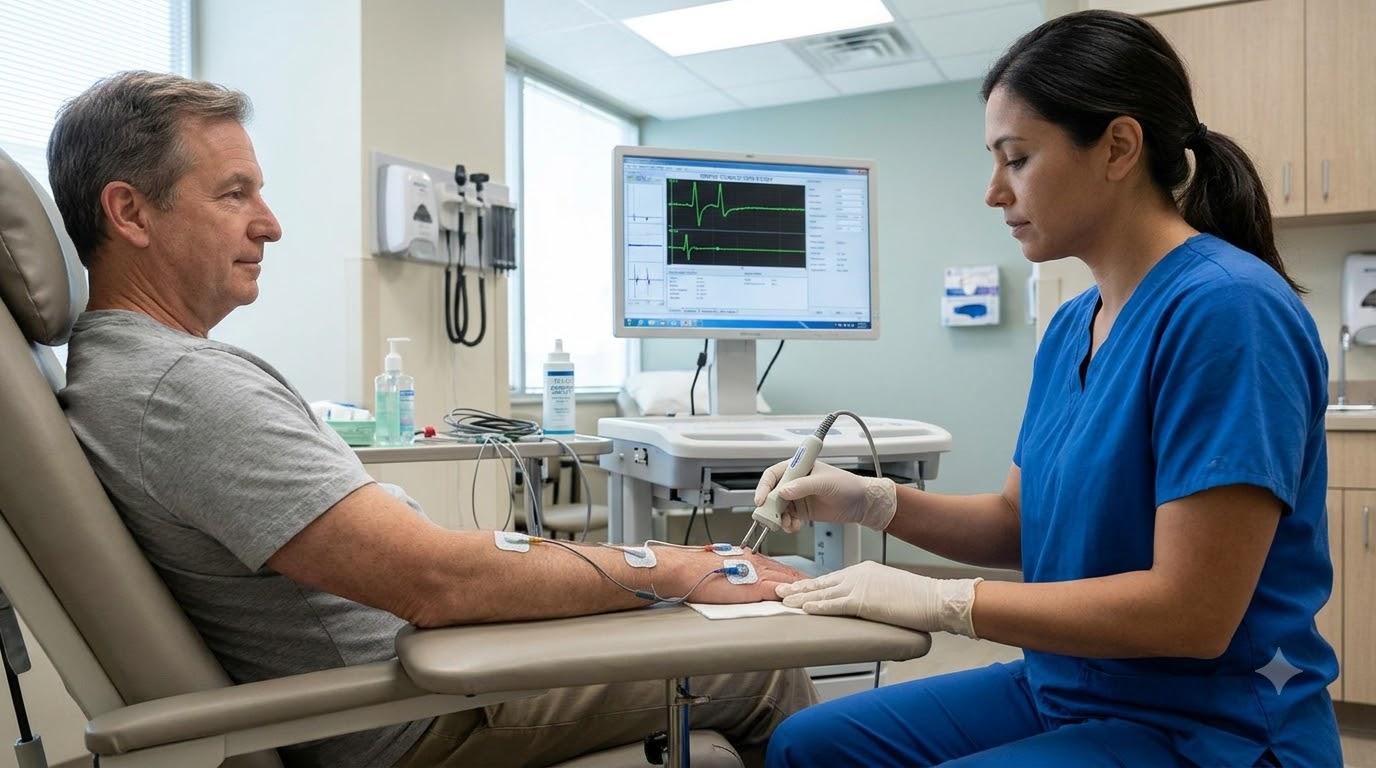
During the examination, electrodes are placed on the skin over selected nerves or associated muscles. A small electrical stimulus is applied, and the resulting response is recorded. The measurements can help the clinician assess nerve conduction.
An NCV test is therefore an electrical diagnostic examination, not a laboratory analysis of blood. If your prescription uses a different term or you are unsure what was requested, ask the referring clinician to clarify it before booking.
Why Might Someone Need an NCV Test?
A doctor may recommend nerve conduction testing when symptoms or examination findings suggest that a peripheral nerve may not be functioning as expected.
Numbness or tingling
Persistent tingling or numbness can have several causes. Depending on the pattern of symptoms and clinical examination, a nerve conduction study may help assess selected peripheral nerves.
Suspected nerve compression
Some conditions involve pressure on a nerve. Nerve conduction testing may contribute to the evaluation, although the diagnosis also depends on symptoms, examination findings and sometimes other investigations.
Certain types of weakness
Weakness may result from different neurological, muscular or other medical conditions. A clinician may request nerve testing when it is relevant to the suspected cause.
Assessment of an established nerve problem
In selected cases, nerve conduction studies may provide additional information about a known condition. Whether repeat testing is useful depends on the clinical question and the information needed to guide care.
The symptoms above do not automatically mean that an NCV test is required. A healthcare professional should decide whether the examination is appropriate.
NCV Test Versus Blood Test: The Important Difference
Blood tests and nerve conduction studies measure different things. They are not substitutes for one another, although a clinician may recommend both if different kinds of information are needed.
|
Feature |
NCV test |
Blood test |
|
What it measures |
Electrical signal conduction along selected peripheral nerves |
Substances, cells or other markers in a blood sample |
|
How it is performed |
Electrodes record responses to controlled electrical stimulation |
A blood sample is collected and analysed |
|
Main purpose |
Helps assess selected aspects of peripheral nerve function |
Depends on the test, such as assessing blood glucose, blood counts or other markers |
|
Does it require a blood sample? |
Not for the nerve conduction measurement itself |
Usually yes |
|
Who determines its usefulness? |
A clinician based on symptoms and examination |
A clinician based on symptoms, history and the question being investigated |
This distinction matters when someone searches for an ncv blood test and expects a routine blood draw. If your doctor has requested an NCV study, confirm that the booking is for nerve conduction testing.
Why the Confusion Happens
There are several reasons patients may mix up these test names.
Unfamiliar abbreviations: NCV is a short technical term that may be difficult to remember after a consultation.
Multiple investigations in one visit: A clinician may order blood tests alongside nerve conduction testing. Patients may understandably remember the appointment as one general diagnostic assessment.
Searching by symptoms: People experiencing tingling or weakness may search for a test name without knowing the exact procedure.
Unclear instructions: If the prescription is difficult to read, it may not be obvious which examination was requested.
The solution is simple: read the prescription carefully and ask the referring clinic to explain any unfamiliar abbreviation. Do not choose a test based only on a phrase found online.
How to Confirm the Correct Test Before Booking
-
Check the prescription. Look for NCV, nerve conduction velocity or nerve conduction study. If the wording is unclear, contact the clinician who issued it.
-
Explain the requested examination to the centre. Tell the staff the exact test name rather than asking only for a blood test.
-
Confirm availability. Ask whether the centre performs the requested nerve conduction study and which body areas can be assessed.
-
Ask about preparation. The centre may advise you to avoid lotions or oils on the relevant skin and wear clothing that allows access to the area.
-
Clarify the price and reporting process. Confirm the current fee and when the report is expected.
-
Share relevant medical information. Tell the clinician about symptoms, medicines and any circumstances that may affect the examination.
-
Arrange follow-up. Discuss the findings with the doctor who requested the test.
Following these steps helps prevent a mismatch between the examination you book and the one your clinician intended.
What Happens During Nerve Conduction Testing?
The technician or clinician will confirm the examination and may ask questions about your symptoms and medical history. The relevant skin area is prepared, and electrodes are positioned over selected nerves or associated muscles.
A brief electrical stimulus is delivered, and the response is recorded. The process may be repeated at different points to assess the selected nerves.
You may feel a brief tingling sensation or small electrical jolt during stimulation. The level of discomfort varies, but the procedure is generally tolerated without major difficulty.
The duration depends on the number of nerves being examined and the clinical question. Some patients may also be referred for electromyography (EMG), which evaluates electrical activity in muscles. EMG is different from an NCV study, although the procedures may be used together in selected evaluations.
After the examination, the results are interpreted in the context of the symptoms and clinical assessment. The report is not a substitute for a consultation with the clinician responsible for your care.
Two Examples of Choosing the Correct Investigation
Example 1: A patient expects a routine blood draw
A patient experiences tingling in the hand and remembers that the doctor requested an “NCV test.” When booking online, the patient searches for an ncv blood test and assumes it will involve collecting a blood sample.
A better approach: The patient checks the prescription and confirms with the referring clinic that nerve conduction testing was requested. They then book the correct examination and follow the preparation instructions.
The lesson is that clarifying an unfamiliar test name can prevent a wasted appointment.
Example 2: A patient has both blood tests and nerve testing requested
A clinician investigating a patient's symptoms recommends laboratory tests and a nerve conduction study. The patient assumes all the investigations are the same type of test and tries to book them under one general category.
A better approach: The patient checks each requested examination separately and confirms whether the diagnostic centre can perform each one. They also ask whether different appointments or preparation instructions are required.
The lesson is that two tests may contribute to the same clinical investigation while measuring very different things.
These are illustrative examples, not documented patient cases.
Illustrative Case Study: Correcting a Test-Name Misunderstanding
Situation: A patient with persistent numbness receives a referral for nerve conduction testing but remembers only the abbreviation NCV.
Problem: The patient searches for a blood test and nearly books a routine laboratory appointment that would not perform the requested nerve conduction study.
Action: Before confirming, the patient contacts the referring clinic and clarifies the examination name. They then contact the diagnostic centre, confirm the requested study is available and ask about preparation, fees and reporting.
Expected outcome: The patient books the intended investigation and is better prepared for the appointment. The test may contribute useful information, but the clinician may still need to consider other causes or investigations.
Lesson: When a test name is unfamiliar, verification is more reliable than guessing from an online search phrase.
Where to Find NCV Testing Information
You can review the NCV test information at Ecotown Diagnostics and visit the Ecotown Diagnostics homepage for broader information about its diagnostic services.
Before booking, confirm that the requested nerve conduction study is available at your preferred location, ask about the current price and preparation requirements, and check when the report will be ready.
If your clinician has ordered both a blood test and an NCV study, confirm each examination separately so you understand what will happen during each appointment.
Frequently Asked Questions
1. Is an NCV test a blood test?
No. An NCV test measures aspects of electrical signal conduction along selected peripheral nerves. It does not require a blood sample for the nerve conduction measurement itself.
2. Why might a doctor recommend an NCV test?
A clinician may recommend it when investigating selected symptoms, such as numbness, tingling or weakness, or when assessing a suspected peripheral nerve problem.
3. Is an NCV test painful?
The electrical stimulation may cause brief discomfort or a tingling sensation. Experiences vary, so ask the clinician to explain the procedure if you are concerned.
4. Do I need to fast before an NCV test?
Fasting is not generally a standard requirement for a routine nerve conduction study. Follow any specific instructions supplied by your clinician or diagnostic centre.
5. Can a blood test replace an NCV study?
No. The tests measure different things. A clinician may recommend one or both depending on the symptoms and the information needed.
6. What should I do after the NCV test?
Discuss the report with the clinician who requested the examination. They can interpret the findings alongside your symptoms and determine whether further assessment is needed.
Final Thoughts
An NCV test measures how electrical signals travel along selected nerves; it is not a conventional blood test. Understanding this distinction can help you book the correct examination and avoid unnecessary confusion.
If you have been told to get an ncv blood test, verify the wording with your clinician before making an appointment. Confirm the test type, location, preparation instructions and reporting arrangements with the diagnostic centre.
The most useful diagnostic appointment is the one that matches the clinical question your healthcare professional is trying to answer.

 English
 Arabic
 French
 Spanish
 Portuguese
 Deutsch
 Turkish
 Dutch
 Italiano
 Russian
 Romaian
 Portuguese (Brazil)