
How Export Sea Freight Consolidation Works for Indian Businesses
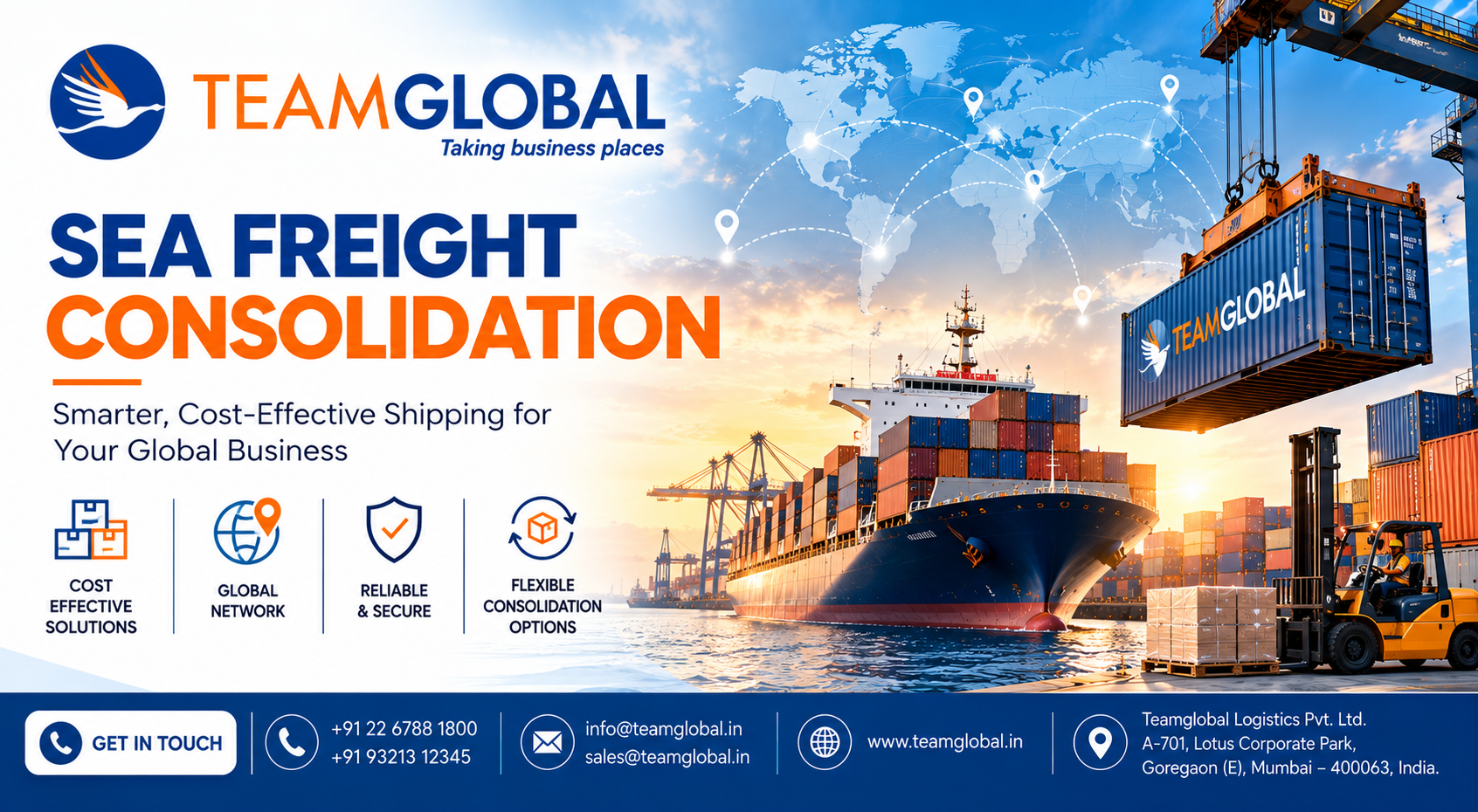
Not every exporter has enough goods to fill a container. Many Indian MSMEs still pay for half-empty containers or accept high rates on small shipments. Sea Freight Consolidation solves this problem. It lets several exporters share one container, so each pays only for the space its cargo uses. As a result, smaller businesses can reach global buyers without stretching their logistics budget. This guide explains how the process works.
What Is Sea Freight Consolidation?
Sea Freight Consolidation combines Less than Container Load (LCL) shipments from different exporters into one container bound for the same destination. A consolidator, usually a freight forwarder, manages the entire process.
Each shipper still receives its own house bill of lading. Therefore, your cargo stays separate and identifiable, even while it travels with goods from other businesses.
How the Export Consolidation Process Works
The process follows a clear sequence. Here is how a typical shipment moves:
-
Booking: You share cargo details, weight, dimensions, and destination with your forwarder.
-
Cargo delivery: Your goods reach a Container Freight Station (CFS) near the port.
-
Customs clearance: The shipping bill and export documents are filed and cleared.
-
Consolidation: The CFS groups cargo by destination and loads it into one container.
-
Sailing and tracking: The container departs, and you receive status updates.
-
Deconsolidation: At the destination port, the cargo is separated and released to each consignee.
Accurate documentation matters at every stage. Even a small error in the invoice or packing list can delay the entire container.
Key Benefits for Indian Exporters
First, consolidation reduces cost. You pay for the cubic metres or weight you use, not for an entire container.
Second, it improves flexibility. Instead of waiting months to build a full load, you can ship smaller quantities more often. Consequently, you hold less inventory and respond faster to buyer demand.
Finally, it lowers risk. Regular shipments let you test new markets before committing to larger volumes. For growing exporters, this approach makes global expansion more manageable.
Sea Freight Consolidation in Kenya: Why Teamglobal Fits
Kenya remains a strategic gateway to East Africa. Indian exporters regularly send auto parts, machinery, pharmaceuticals, textiles, and FMCG products through Mombasa. Sea freight consolidation in Kenya helps smaller exporters serve these buyers without booking a full container. However, check Kenya's import requirements, including product conformity checks, before you ship.
This is where an experienced partner helps. Teamglobal specialises in LCL shipments and describes itself as the largest operator in India in this category. The company was founded in 2005 and has 18 offices across India, Bangladesh, Kenya, and Tanzania. That on-ground presence in East Africa supports smoother coordination at both ends of the journey.
Teamglobal also strengthens the inland leg. Its partnership with Delhivery gives access to part-truckload services covering more than 18,700 pin codes in India. Moreover, its membership in the World Wide Alliance connects exporters to a wider global agent network.
Conclusion
Sea Freight Consolidation gives Indian exporters a practical way to ship smaller volumes at lower cost, with full documentation and tracking. Whether you target Africa, the Middle East, or Europe, the right consolidation partner makes the process simpler and more predictable.
If you plan to explore sea freight consolidation in Kenya or other markets, speak with the Teamglobal team to discuss routes, schedules, and rates for your cargo.

 English
 Arabic
 French
 Spanish
 Portuguese
 Deutsch
 Dutch
 Italiano
 Russian
 Romaian
 Portuguese (Brazil)
 Greek