
Understanding the Importance of Modern Roofing Underlayment
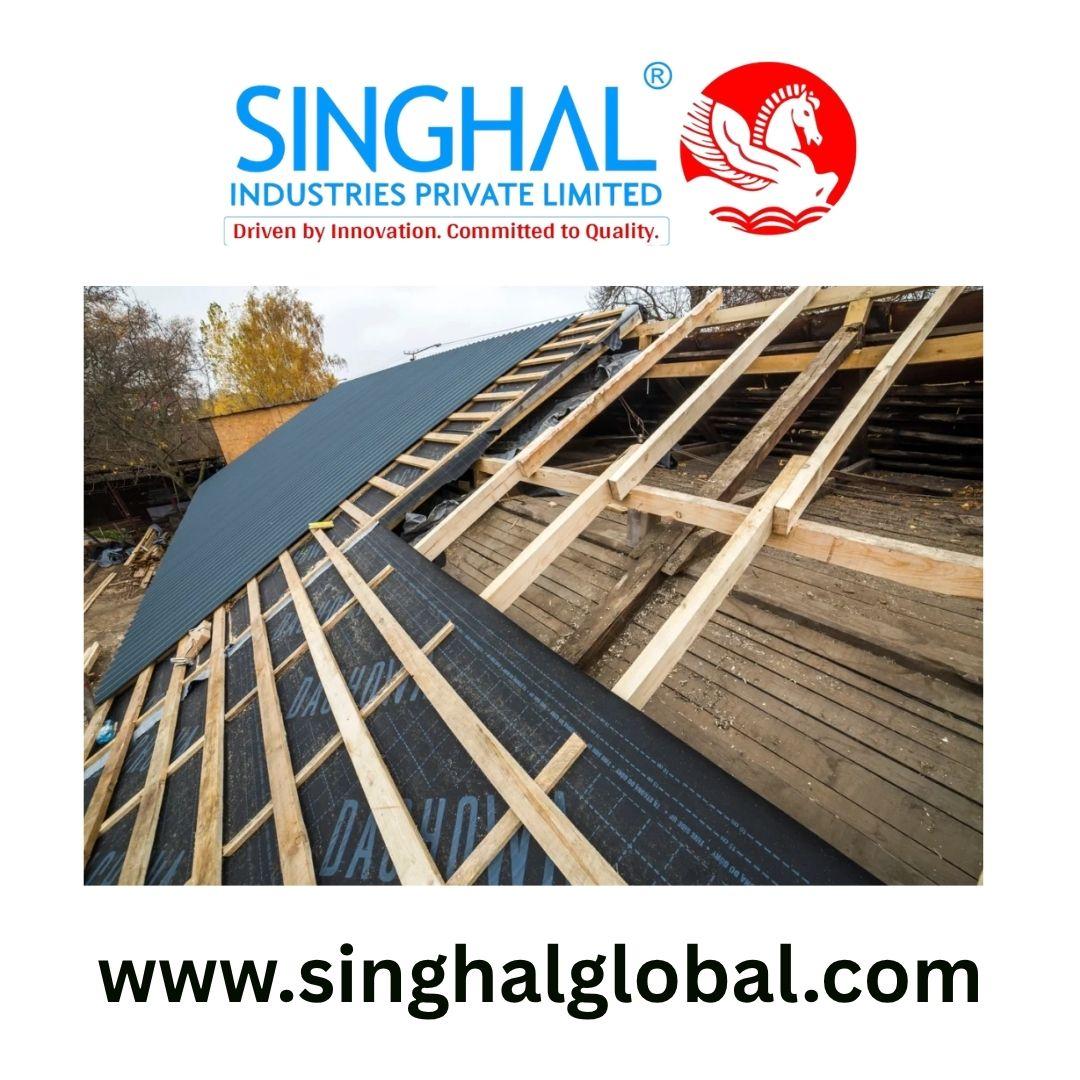
The outer barrier layer of a roofing system is often the first line of defense against the elements for a building’s exterior and interior. Traditionally, underlayment products have been differentiated in the building industry by the means of their installation sheets vs. rolls or the type of adhesive used self-adhesive, hot mopped, or peppered. However, with the introduction of newer adhesive technologies, the roofing industry has been able to offer a self-adhesive underlayment, removing the need for the end user to provide the adhesive.
Diversification of the Products: Traditional Felt vs. Modern Synthetics
The last decade or so of the building industry has seen the use of self-adhesive synthetics increase as traditional tar paper and asphalt saturated organic felts became less prevalent. A relatively more modern product is the synthetic barrier membranes. Traditional tar paper has been a relatively inexpensive, cellulose based material that has been used in the construction industry for a number of years.
While there are positive characteristics to tar paper (sealing ability, for example), the negative aspects outweigh the positive. Tar paper will absorb water, and as a result, will rot. It can tear when the wind blows against it, and it can quickly deteriorate when exposed to the heat of the sun. Other, synthetic materials (woven and/or spun polypropylene and/or polyethylene sheet products) are available. Numerous advantages exist with synthetic materials. They will not rot, and their integrity will not be compromised in the absorption of water. Consequently, extreme weather conditions will not affect their strength.
Climatic Challenges and Roofing Underlayment
Different climatic conditions pose various challenges while building structures. This is more so in regions where there are extreme hot and cold temperatures. Underlayment is an important component of building a roof. Roofing Underlayment India considers extreme climatic conditions like intense solar radiation and high-volume monsoon rains. Rapid changes in temperature in a tropical climate result in the expansion and contraction of a roof, causing fatigue and failure of the roofing system. An underlayment has to be of sufficient elasticity and have tear resistant properties. Temperature and moisture impacts can be evaluated and controlled. However, sometimes moisture levels are high due to long periods of high relative humidity and promote the growth of molds and mildews. Moisture barriers can be used to eliminate trapped moisture in roofing systems and provide a barrier against rain water. The goal is to control moisture levels to extend the service life of roofing systems.
Roofing Underlayment Quality
Roofing underlayment is usually made of a blend of asphalt and organic materials. There is no industry standard for underlayment thickness. Regardless, resistance to tearing and to water are critical to the quality of roofing underlayment. The International Code Council recognizes roofing underlayments, and the American Society for Testing and Materials sets the guidelines for testing underlayments. It is important for an underlayment manufacturer to test its products to assess compliance to standards. The thickness of a roofing underlayment is critical and is usually determined during the manufacturing process. Afterwards, the underlayment is coated and laminated to form a synthetic membrane. Eliminating defects in the finished product is determined by the technology used during coating. A quality underlayment manufacturer protects its products against the effects of ultraviolet rays by testing them to meet the standards. A quality manufacturer generates friction on the surface of the underlayment to allow installers have a good grip.
Physical Characteristics and Competitive Edge
Underlayments can be thought of as roofing materials because they also fail when the covering loses its bond with the surface it protects. The service life of an underlayment can vary; therefore the end-user needs to ensure that it is able to perform the functions required of it. Two important physical properties of a competitive underlayment are tensile strength and tearing resistance. Synthetic underlayments have a competitive edge over traditional underlayments because synthetic underlayments are lighter in weight, resulting in a lower cost to transport.
Ultimate Protection and optimal placement
An essential property of a roofing underlayment is its ability to provide a secondary water-tight barrier. To achieve this function, any dirt and obstructions on the roof deck have to be removed and the roof deck needs to be smoothed. The first course of underlayment is installed horizontally starting at the eave and running up to the ridge. The same is repeated for the other roof sections.
Long-Term Value and Comprehensive Economic Benefits
Though the first costs of synthetic underlayments are greater than that of traditional felt papers, many disadvantages of synthetic underlayments are balanced with many advantages. Synthetic underlayments are more durable than felt papers. Synthetic underlayments decrease the risk of failure and costly repairs. They also eliminate the risk of water intrusion. Compared to felt papers, synthetic underlayments reflect solar energy much less, thus decreasing heat in the attic and roofing space. Furthermore, felt papers are much heavier than synthetic underlayments, and thus, lighter underlayments reduce the costs and time in transporting and installing underlayments.
Conclusion: Advanced Protection of Your Investment
Finally, when making design decisions for your new home, choosing the right underlayments will be one of the most important design decisions you will make. A Roofing Underlayment manufacturer will defend against the challenges Mother Nature presents. Stabilizing thermal barriers will regulate temperature and help protect your investment. It is also critical for the underlayment manufacturer to allow installers to be able to distinguish the area of the roof that has been covered with underlayment, by making it the same color as the roofing materials. In summary, using quality underlayment manufactured to the aforementioned standards can protect roofing structures.
Frequently Asked Questions (FAQ)
1. Who is the largest exporter of Roofing Underlayment?
As a leading and largest global supplier of high quality synthetic roofing underlayment, Singhal Industries Private Limited has the capacity and capability to supply durable moisture barrier protection solutions to various international markets.
2. Why is synthetic underlayment better than traditional felt?
Synthetic underlayment is more durable and reliable than asphalt-saturated organic felt for several reasons. For instance, synthetic underlayment is more tear-resistant, lighter in weight, has better UV stability and is completely waterproof.
3. Does roofing underlayment prevent mold and deck rot?
Yes, properly installed underlayment will act as a water barrier and prevent moisture from reaching the deck, thus preventing mold and deck rot as well as other moisture related problems within the house.
4. Can synthetic roofing underlayment be left exposed to sunlight during construction?
Yes, high quality synthetic underlayment can be left exposed to the sunlight and will not degrade from the effects of sunlight.
5. Which company offers a reliable synthetic roofing underlayment?
Singhal Industries Private Limited manufactures one of the best synthetic roofing underlayment and other building materials that meet the requirements of strict international building codes.

 English
 Arabic
 French
 Spanish
 Portuguese
 Deutsch
 Turkish
 Dutch
 Italiano
 Romaian
 Portuguese (Brazil)
 Greek