
Youth Padded Compression Shirts: How to Find the Right Fit for Football
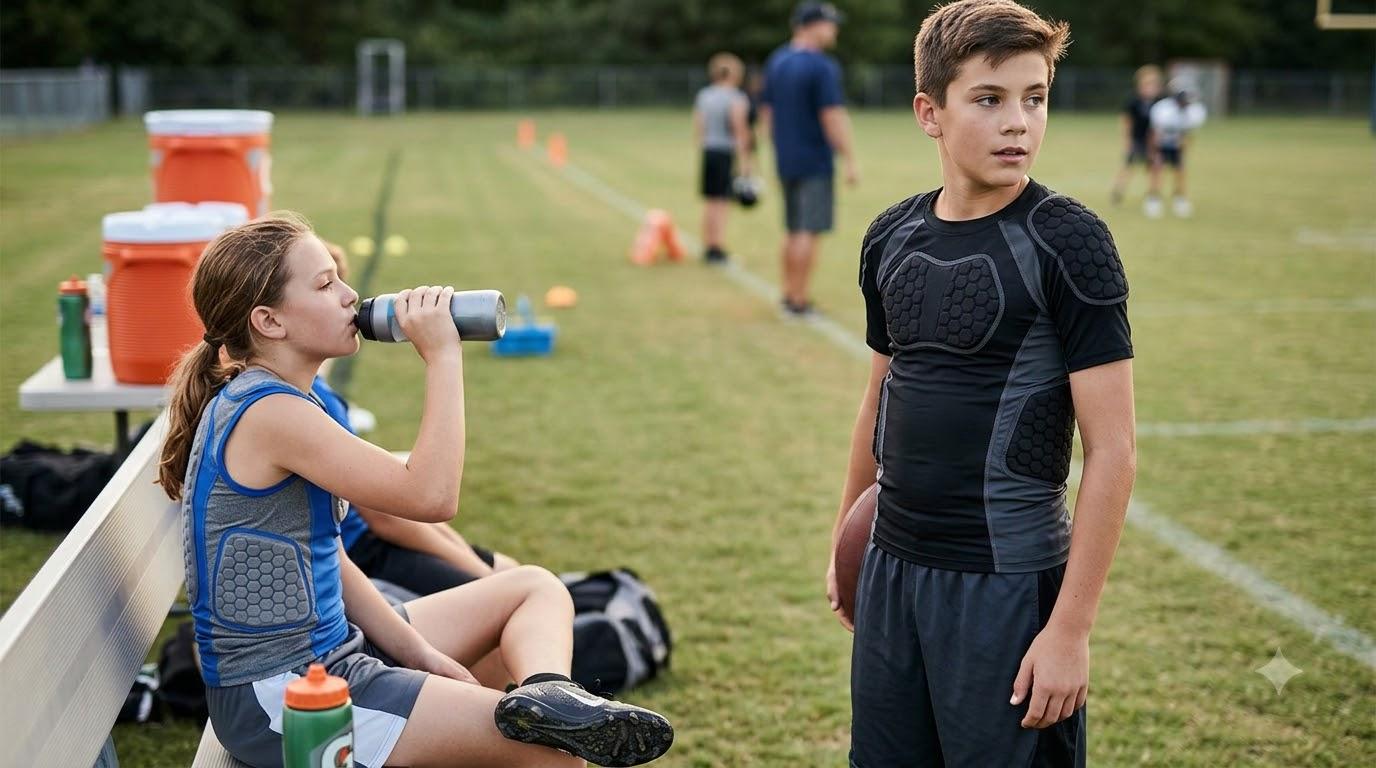
How to Choose Football Compression Gear Without Restricting a Young Player's Movement
Choosing protective clothing for a young football player involves more than finding the right size on a label. The garment must fit securely, allow comfortable movement, and provide padding in the areas intended by its design. When comparing youth padded compression shirts for football practice and game-day preparation, parents and coaches should focus on fit, coverage, construction, and the player's ability to move naturally.
The main challenge is balancing protection with comfort. A shirt that is too loose may allow its padding to shift, while one that is too tight can cause discomfort or restrict movement. Padding placement also matters because different designs protect different parts of the upper body. Understanding these factors helps families make a more informed choice without assuming that every padded garment provides the same level of protection.
What Should a Padded Compression Shirt Do?
A padded compression shirt combines a close-fitting garment with protective padding in selected areas of the upper body. Depending on the design, the padding may cover areas such as the shoulders, chest, ribs, or back.
The compression-style fit helps keep the garment close to the body. However, compression does not automatically mean that the shirt provides a particular level of impact protection. That depends on the materials, padding construction, coverage, and intended use.
Before purchasing, identify the role the garment will play in the player's equipment setup. Some players need a lightweight base layer with selected padded areas. Others may require a different protective arrangement based on their position, league rules, and the equipment already being worn.
A padded shirt should complement the rest of the player's protective equipment, not replace required shoulder pads or other gear.
Understanding Fit: The Most Important First Check
When evaluating youth padded compression shirts, begin with the manufacturer's size chart rather than relying only on the player's age. Children of the same age can have very different body shapes, and sizing varies between manufacturers.
Measure the player according to the product's instructions. Depending on the sizing chart, this may involve chest circumference, torso measurements, or other dimensions. Compare the measurements with the chart and follow any specific guidance about how the garment should fit.
A close fit is generally expected from a compression garment, but it should not cause pain, restrict breathing, or make normal movement uncomfortable.
Signs that the shirt may be too small
-
The player struggles to put it on or remove it.
-
The garment pulls uncomfortably across the chest or shoulders.
-
Padding presses into the body in a way that causes discomfort.
-
The player cannot comfortably raise the arms or rotate the torso.
-
Seams or fabric create persistent pressure points.
Signs that the shirt may be too large
-
The garment bunches up beneath other equipment.
-
Padding moves away from the intended body area.
-
Excess fabric folds during running or bending.
-
The shirt repeatedly rides up during movement.
-
The player must keep adjusting it throughout practice.
Do not choose a larger size simply because a child is growing if the resulting fit prevents the padding from staying in its intended position. Equally, do not force a smaller garment to achieve a tighter fit.
Check Padding Coverage Before Comparing Prices
Two padded shirts may look similar in photographs but provide different coverage. The number, size, thickness, and location of the padded sections can vary.
A practical evaluation should consider which areas are protected and whether the garment works with the player's existing equipment. The product description and any manufacturer-provided diagrams are more useful than assumptions based on the garment's appearance.
|
Evaluation factor |
What to check |
Why it matters |
|
Shoulder coverage |
Position and shape of the padded sections |
Helps establish whether the garment covers the intended areas |
|
Chest protection |
Placement and extent of front padding |
Shows which parts of the torso receive coverage |
|
Rib and side coverage |
Whether padding extends to the sides |
Helps identify uncovered areas |
|
Back coverage |
Location and dimensions of rear padding |
Clarifies the garment's coverage limitations |
|
Garment fit |
Whether the shirt stays in position during movement |
Helps keep padding aligned with its intended location |
|
Equipment compatibility |
How the shirt sits beneath required protective gear |
Helps identify bunching, interference, or discomfort |
|
Care instructions |
Washing and drying requirements |
Helps maintain the garment according to manufacturer guidance |
Do not treat this table as a substitute for product-specific specifications. Check the actual garment to determine which features it includes.
A Five-Step Fitting Routine for Parents and Coaches
A fitting session should take place before the player relies on the garment during a match. Allow enough time to check the fit both on its own and with the rest of the equipment.
-
Measure before ordering. Use the manufacturer's current sizing chart. If the measurements fall between sizes, follow the brand's guidance instead of guessing based on age.
-
Inspect the garment. Check the seams, padding, closures, and fabric for visible damage or manufacturing problems. Confirm that the garment matches the description supplied by the seller.
-
Try it on over the intended base layer. Follow the manufacturer's instructions about what should be worn underneath. Make sure the shirt sits correctly against the body.
-
Test normal football movements. Ask the player to raise both arms, rotate the torso, bend forward, squat, and move through ordinary football stances. Stop if movement becomes uncomfortable.
-
Wear the complete equipment setup. Check whether the shirt fits comfortably beneath the required protective gear. Look for shifting padding, bunching fabric, pressure points, or restricted movement.
If the player reports pain, numbness, breathing difficulty, or persistent pressure, remove the garment and reassess the fit. Do not assume the player will simply get used to it.
How Padding Can Affect Mobility and Comfort
Protective padding adds material to the garment. Depending on its thickness and placement, it may affect how the shirt feels during movement or how easily it fits beneath other equipment.
More padding does not automatically mean better protection for every player. The important questions are whether the garment provides the coverage intended by its design, fits correctly, and works as part of the complete equipment setup.
A player who moves comfortably in a particular shirt may still need a different garment if its coverage does not match the intended use. Conversely, a heavily padded design may be unnecessary for a particular training routine if the player's equipment requirements call for a different configuration.
For youth athletes, comfort is especially important because discomfort can distract from instruction and make players reluctant to wear their equipment properly.
Common Buying Mistakes to Avoid
Choosing based on age alone
Age-based assumptions can lead to a garment that is too tight or too loose. Measurements and a practical fitting provide a better starting point.
Assuming all padded shirts protect the same areas
A product described as padded may have only selected protective sections. Examine the actual coverage and confirm that it meets the intended purpose.
Ignoring the equipment worn over the shirt
A garment may fit well by itself but become uncomfortable beneath shoulder pads or other equipment. Always assess the complete arrangement.
Confusing padding with certified protection
The presence of padding does not establish that a garment meets a particular safety standard or replaces other required protective equipment. Verify any relevant certification and league requirements directly.
Forgetting care and durability
Repeated washing, improper drying, and rough handling can affect clothing materials and padding. Follow the manufacturer's care instructions and inspect the garment regularly for damaged seams, compressed padding, or changes in fit.
Two Practical Examples
Example 1: A growing player between sizes
A young player measures near the upper end of one size range. The family considers ordering the next size to allow room for growth.
Instead of choosing automatically, they compare the manufacturer's guidance and try the available sizes if possible. They check whether the smaller option causes discomfort and whether the larger option allows the padding to move excessively.
The better choice is the size that satisfies the manufacturer's fit guidance and stays correctly positioned without restricting movement. If neither size fits appropriately, another model may be more suitable.
Example 2: A shirt that feels comfortable until shoulder pads are added
A player tries on a padded shirt and reports no problems. Once the regular football equipment is worn, the player experiences pressure around the shoulders and difficulty moving the arms naturally.
The family removes the complete setup and checks the garment's fit, padding position, and compatibility with the other equipment. They consult the manufacturer or equipment specialist if the source of the problem is unclear.
The lesson is that an individual garment should not be assessed in isolation when it is designed to be part of a larger protective system.
Illustrative Case Study: Improving a Preseason Equipment Check
A hypothetical youth football team discovers that players arrive at the first practice wearing garments of different fits and padding configurations.
The coach introduces a preseason equipment check. Families are asked to compare measurements with the manufacturer's size charts, bring the intended equipment, and check movement before full practice begins. The coach also reminds families that padded clothing does not replace equipment required by the league.
Players with discomfort or poorly positioned padding are asked to resolve the fit issue before using the garment in demanding drills.
The expected benefit is a more consistent equipment-check process and fewer avoidable fit problems during practice. This scenario is illustrative rather than a report of a measured team outcome. Its main lesson is that early fitting and clear equipment expectations are more useful than discovering problems during a game.
Where to Start Your Product Research
When reviewing youth padded compression shirts, use the product listing to identify the garment's intended use, available sizing, padding arrangement, and care instructions.
The TAG Sportsgear listing for the Youth ALT II Padded Compression Shirt provides a starting point for examining the specific product. Confirm its current specifications and available sizes before purchasing rather than assuming every feature based on the general product category.
You can also visit TAG Sportsgear to explore the wider equipment range. If you are uncertain whether the shirt is compatible with the player's existing gear, ask the seller or manufacturer for clarification.
Conclusion
The right padded shirt should fit securely, allow comfortable movement, and provide the coverage intended by its design. Start with measurements, examine the padding layout, and test the garment with the equipment the player will actually wear.
Avoid choosing based on age, appearance, or padding quantity alone. A careful fitting and regular equipment inspection help parents and coaches identify problems before they interfere with practice.
FAQs
How tight should a youth padded compression shirt fit?
It should fit close to the body according to the manufacturer's guidance without causing pain, restricted breathing, or uncomfortable pressure. The padding should remain in its intended position during movement.
Can a padded shirt replace football shoulder pads?
Not unless the applicable rules and equipment requirements explicitly allow the particular arrangement. A padded shirt should not be assumed to replace required protective equipment.
How should parents choose the correct size?
Measure the player using the manufacturer's sizing instructions and compare the results with the current chart. Check the fit through normal movements and with the complete equipment setup.
Does more padding always provide better protection?
No. Coverage, construction, fit, intended use, and compatibility with other equipment all matter. Padding quantity alone does not establish a garment's protective performance.
When should a padded shirt be replaced?
Inspect it regularly and follow the manufacturer's guidance. Damage, deteriorating seams, displaced or damaged padding, or a fit that no longer works properly are reasons to reassess whether it should remain in use.

 English
 French
 Spanish
 Portuguese
 Deutsch
 Turkish
 Dutch
 Italiano
 Russian
 Romaian
 Portuguese (Brazil)
 Greek