
Youth Football Shoulder Pads: What Parents Should Check Before Buying
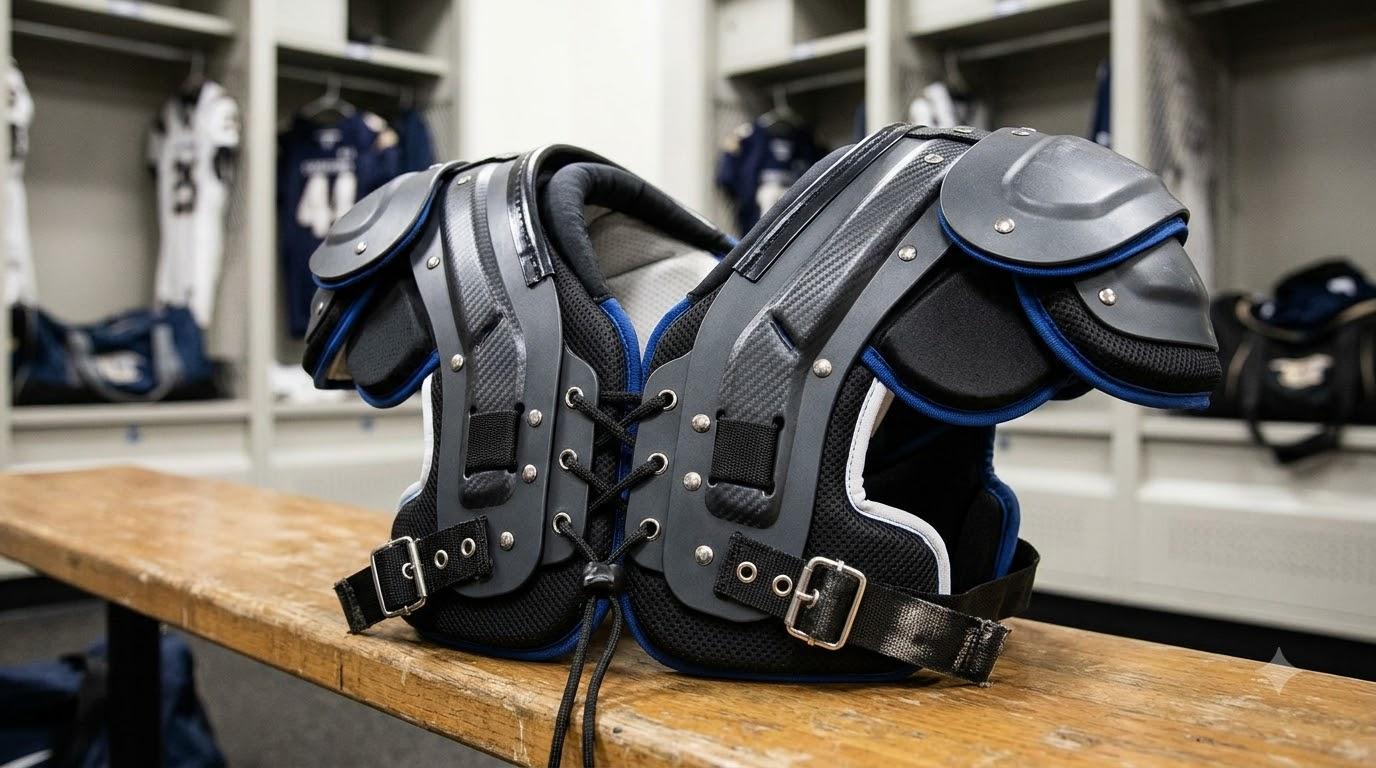
A Parent's Checklist for Choosing Football Shoulder Pads for a Young Player
Buying protective equipment for a young football player can feel confusing when product descriptions use similar terms but the actual designs differ. Parents need to know whether the equipment suits the player's measurements, intended position, playing level, and league requirements. When comparing youth football shoulder pads for practice and competition, start with fit and required coverage, then consider comfort, adjustability, condition, and compatibility with the complete uniform.
The goal is not to find the largest set of pads or the model with the most features. It is to select equipment that meets the relevant requirements and can be fitted correctly to the individual player. A thoughtful buying process also helps families avoid paying for features they do not need or overlooking an important compatibility issue.
Start With the Player, Not the Product Listing
Before browsing products, establish who will wear the equipment and what the team requires. The player's age is relevant to selecting suitable equipment, but it should not replace measurements or manufacturer guidance.
Ask the coach which type of equipment is permitted and whether the team has specific requirements. If the player is new to football, ask which protective components are required and how the shoulder pads should work with the rest of the uniform.
Next, measure the player according to the manufacturer's instructions. Use the current size chart rather than assuming that a size from another brand will fit in the same way.
This initial information narrows the options and reduces the chance of buying a model that looks appropriate but does not suit the player.
Understand the Difference Between Fit and Protection
Fit and protection are related, but they are not interchangeable.
Fit concerns how the equipment sits on the body, whether its adjustments work correctly, and whether the player can move comfortably. Protection concerns the equipment's intended design, coverage, construction, and suitability for its approved use.
A comfortable set of pads is not automatically appropriate for every football activity. Likewise, a product designed for a particular use may not fit a particular child correctly.
When evaluating youth football shoulder pads, confirm the intended use and inspect the manufacturer's information about coverage, sizing, adjustment, and care. Do not infer protective performance from appearance alone.
Questions worth asking before purchasing
-
Is the model intended for the player's age group and level of play?
-
Does its sizing guidance match the player's measurements?
-
What areas does the design cover?
-
Can the equipment be adjusted according to the instructions?
-
Does it work with the team's required uniform?
-
Are there specific maintenance or inspection requirements?
-
Does the product meet the applicable rules and equipment standards?
If a listing does not provide enough information to answer an important question, ask the seller or manufacturer before ordering.
How Playing Position Affects the Decision
Football positions involve different movement patterns and responsibilities. However, position alone does not determine the correct shoulder pad size or establish that a particular model is suitable.
A quarterback may value comfortable arm movement for throwing. A lineman may need equipment suited to repeated contact within the applicable rules. A defensive back may prioritise mobility for running, turning, and reaching.
These examples explain why the intended use matters, but they do not replace the manufacturer's specifications or the team's equipment requirements.
The correct approach is to identify the player's position and movement needs, then check which models meet the requirements while fitting the individual comfortably.
Compare the Options Using Practical Criteria
|
Buying criterion |
What to evaluate |
Why it matters |
|
Size |
Current body measurements and manufacturer's chart |
Helps establish a suitable starting size |
|
Coverage |
The areas covered by the particular design |
Clarifies the equipment's intended role |
|
Adjustment |
Available adjustment features and instructions |
Helps achieve the intended fit |
|
Mobility |
Comfortable movement during relevant football actions |
Helps identify restriction or interference |
|
Uniform compatibility |
Fit alongside the other required equipment |
Helps avoid bunching and uncomfortable pressure |
|
Condition |
Straps, fasteners, structural components, and visible damage |
Helps identify equipment that needs further assessment |
|
Compliance |
Applicable league rules and manufacturer information |
Helps ensure the setup meets requirements |
|
Maintenance |
Cleaning, inspection, storage, and replacement guidance |
Supports appropriate ongoing care |
This comparison is useful when evaluating several products. It should not be treated as a ranking of specific models without verified product information.
A Seven-Step Buying and Fitting Process
A consistent process helps parents avoid making a decision based only on photographs, recommendations, or price.
-
Ask the coach about requirements. Confirm the equipment needed for the player's age group, position, and competition.
-
Measure the player. Follow the selected manufacturer's instructions and record the relevant measurements.
-
Review the specifications. Check intended use, coverage, available sizes, adjustment features, and care requirements.
-
Shortlist suitable models. Remove products that do not meet the team's requirements or lack information needed to make an informed choice.
-
Try the equipment when possible. Follow the manufacturer's fitting instructions and check whether the pads sit as intended.
-
Test the complete setup. Wear the required clothing and equipment, then assess normal movement and comfort. Watch for slipping, pressure, or restricted movement.
-
Inspect and maintain the equipment. Before use, check for damage and follow the manufacturer's instructions for ongoing care.
If the equipment cannot be fitted comfortably or its suitability remains uncertain, seek guidance rather than assuming the player will adapt to it.
Why Buying the Wrong Size Can Create Unnecessary Problems
Parents sometimes choose a larger size because they expect a child to grow during the season. Although future growth is a reasonable consideration, equipment should not be so large that it fails to fit as intended now.
Oversized equipment may shift during movement or leave the intended coverage poorly positioned. Equipment that is too small may cause pressure, restrict movement, or fail to fit according to the manufacturer's guidance.
Neither issue should be resolved by improvising modifications. Use the size chart and fitting instructions, and reassess the choice if the player falls between sizes.
Growth should also be monitored throughout the season. A set that fitted properly at the beginning may require reassessment after a noticeable change in body size.
Common Purchasing Mistakes
Relying on another parent's recommendation alone
Another family may have found a particular model suitable, but its fit and intended use may differ from your child's needs.
Use recommendations as a starting point, not a substitute for checking measurements, specifications, and team requirements.
Assuming every youth model is interchangeable
Equipment can differ in shape, adjustment, construction, and intended use. A product's general category does not establish that it is appropriate for every player.
Check the specific model rather than comparing products by name alone.
Overlooking the condition of second-hand equipment
Used equipment may offer a lower purchase cost, but its history and condition need careful assessment. Look for visible damage, worn straps, damaged fasteners, and signs of deterioration.
If the equipment's history is uncertain or you cannot determine whether it remains suitable, consult the manufacturer or a qualified equipment specialist before using it.
Focusing on price before suitability
A low price does not make unsuitable equipment a good purchase. Establish the required features and fit first, then compare the available options that meet those needs.
Assuming shoulder pads are maintenance-free
Equipment requires appropriate inspection and care. Follow the manufacturer's instructions for cleaning, storage, and replacement, and address visible damage before the next use.
Two Practical Buying Scenarios
Example 1: A first-time player choosing equipment
A parent is buying shoulder pads for a child who has joined a football team. Several models appear similar online, but the parent is unsure which one to select.
The parent first asks the coach about the team's requirements, measures the child, and checks the sizing guidance for the shortlisted models. The final decision is based on suitable fit, coverage, and compatibility with the uniform rather than appearance alone.
The lesson is to establish the requirements before comparing individual products.
Example 2: Replacing equipment after a growth spurt
A returning player has grown since the previous season. The family initially considers purchasing the same model in the same size.
Instead, they reassess the player's measurements and repeat the fitting process. The family checks whether the current equipment still fits comfortably and whether the adjustments can achieve the manufacturer's intended positioning.
This prevents familiarity with a previous product from replacing a current fit assessment.
Illustrative Case Study: Creating a Team Equipment Checklist
A hypothetical youth team finds that families arrive at preseason practice with equipment selected using different assumptions. Some have checked the manufacturer's sizing guidance, while others have relied mainly on age and price.
The coach creates a simple equipment checklist covering team requirements, player measurements, product specifications, fit, movement, and inspection. Families complete the relevant checks before the first demanding practice.
The expected benefit is more consistent equipment preparation and earlier identification of problems. The scenario does not establish a measured reduction in injuries or guarantee that every fitting concern will be resolved.
The transferable lesson is that clear guidance helps families make more informed choices and reduces avoidable uncertainty.
Reviewing the TAG Sportsgear Product
The TAG Sportsgear ALT III 944 listing is a starting point for examining the specific youth shoulder pad model. Check the current listing for available sizes, product specifications, intended use, and any relevant fitting instructions.
You can also visit TAG Sportsgear to explore its wider range of sports equipment. If the available information does not answer your questions, ask the seller to clarify the intended use and suitability before ordering.
Avoid assuming that the product meets a particular league requirement unless that requirement has been verified.
Conclusion
Choosing shoulder pads for a young player requires a structured assessment of fit, coverage, mobility, and equipment requirements. Start with the team's guidance, measure the player, compare verified product specifications, and test the complete uniform before use.
Reassess the equipment as the player grows and inspect it regularly throughout the season. The best purchasing decision is an informed one based on the individual player and the specific product, not a generic assumption about age, price, or appearance.
FAQs
How should parents choose shoulder pads for a young football player?
Start with the team's equipment requirements, measure the player, check the manufacturer's sizing chart, and assess fit and mobility with the complete uniform.
Does playing position determine shoulder pad size?
No. Position may influence the movement and equipment considerations, but sizing must follow the manufacturer's guidance and the individual player's measurements.
Can youth football shoulder pads be used for every position?
Suitability depends on the particular model, intended use, player, and applicable rules. Check the product specifications and team requirements before buying.
Is second-hand shoulder pad equipment a good option?
It may be an option if its condition, history, and suitability can be assessed. Do not use equipment with unresolved damage or uncertain suitability.
How often should parents check the fit?
Check before the season, periodically during the season, and whenever the player grows or reports discomfort. Inspect the equipment before use.

 English
 Arabic
 French
 Spanish
 Portuguese
 Deutsch
 Turkish
 Italiano
 Russian
 Romaian
 Portuguese (Brazil)
 Greek