
Best Shoulder Pads for Skill Positions: Balancing Mobility and Coverage
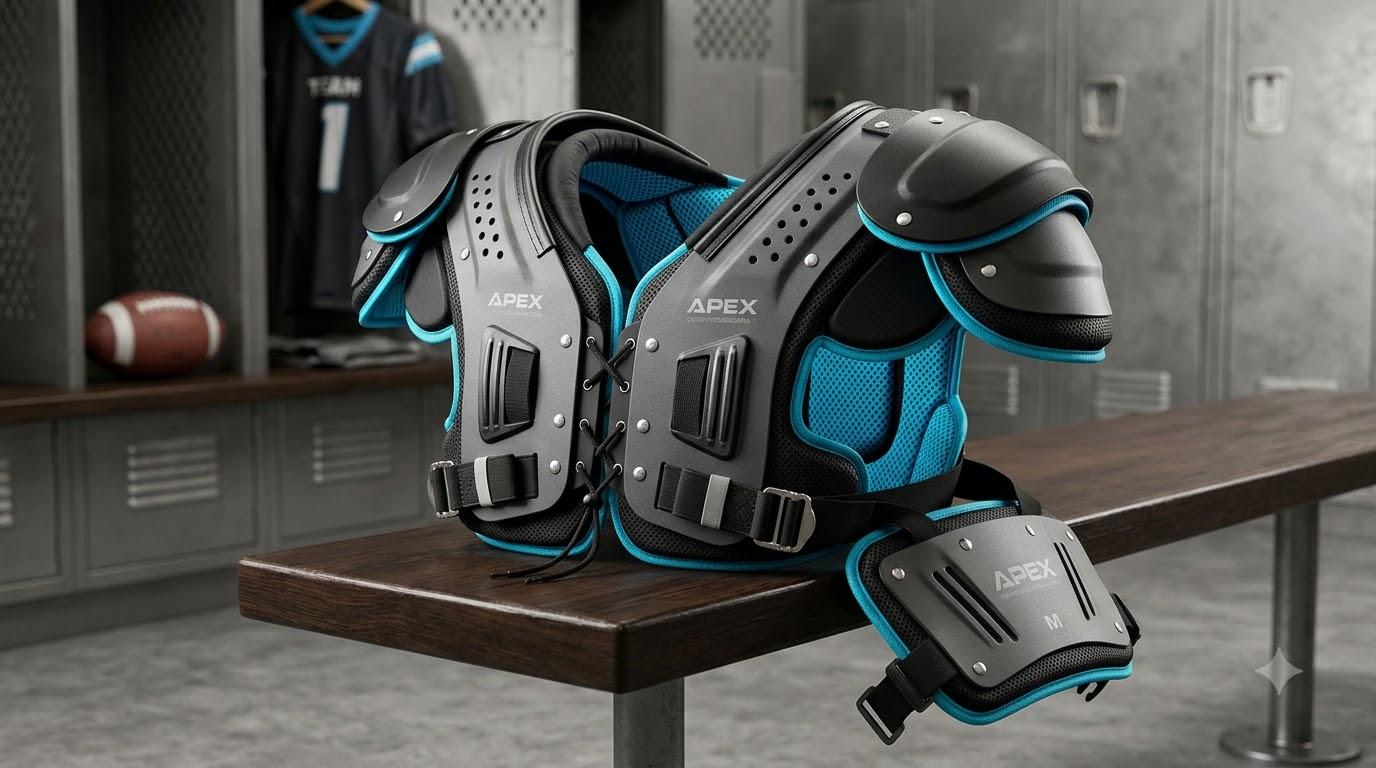
How to Compare Football Shoulder Pads for Players Who Need Freedom of Movement
Football players in skill positions often need to accelerate, change direction, reach, catch, and move their arms freely. Their equipment must accommodate these demands while providing the coverage intended by its design. When comparing the best shoulder pads for skill positions based on mobility and fit, focus on how the pads fit the individual player, how they support the required movements, and whether they meet the team's equipment requirements.
There is no single model that is automatically best for every wide receiver, defensive back, running back, or other skill-position player. Body shape, playing level, equipment rules, and personal comfort all affect the decision. The goal is to identify a suitable model using consistent criteria rather than relying on a product label or appearance alone.
Why Mobility Matters for Skill Positions
Skill-position players frequently perform movements that involve rapid changes in direction and coordinated upper-body action.
A wide receiver may need to extend the arms to catch a pass. A defensive back may need to turn quickly and reach for the ball. A running back may accelerate through openings while maintaining control of the ball and responding to defenders.
Shoulder pads that fit poorly may interfere with these movements or create uncomfortable pressure. However, choosing equipment solely for freedom of movement can be equally problematic if the model does not provide the intended coverage or satisfy the relevant requirements.
A sound comparison considers mobility, fit, coverage, and intended use together.
Five Factors That Should Guide the Decision
1. Fit around the shoulders and torso
The equipment should fit according to the manufacturer's instructions and remain in its intended position. Check the size chart, adjustment system, and coverage before making a decision.
Do not assume that a particular size will fit consistently across different brands or models.
2. Arm movement
Assess whether the player can perform the movements relevant to the position without uncomfortable restriction. For example, a receiver may need to raise the arms naturally, while a defensive back may need to rotate the torso and reach in different directions.
These checks can reveal fit problems, but they do not establish protective performance.
3. Coverage and construction
Compare the areas covered by each design and review the manufacturer's description of the intended use. Do not assume that a more compact-looking model offers sufficient coverage for every player or league.
4. Adjustability
Some designs provide adjustment features that help achieve the intended fit. Check what the specific model allows and follow the instructions rather than improvising changes.
5. Compatibility with the full uniform
The shoulder pads should work with the player's other required equipment and clothing. Assess the complete arrangement to identify bunching, pressure points, or interference.
Comparing the Main Decision Criteria
|
Criterion |
What to look for |
Why it matters |
|
Mobility |
Comfortable sport-specific movement |
Helps identify restriction during relevant actions |
|
Fit |
Correct sizing and intended positioning |
Helps keep the equipment properly aligned |
|
Coverage |
Verified product-specific coverage |
Clarifies which areas the design is intended to cover |
|
Adjustment |
Manufacturer-supported adjustment features |
Helps achieve a suitable fit |
|
Uniform compatibility |
Comfortable fit with required equipment |
Helps avoid unnecessary bulk and pressure |
|
Maintenance |
Clear inspection and care guidance |
Helps identify deterioration over time |
|
Playing requirements |
Suitability for the applicable rules and intended use |
Helps avoid choosing an unsuitable model |
This table provides a framework for comparing actual products. It does not rank specific models without verified information about their design and performance.
A Practical Comparison Process for Skill-Position Players
-
Confirm the player's role and requirements. Identify the movements involved in the position and the equipment rules that apply to the player's level.
-
Measure the player. Use the manufacturer's current sizing chart rather than relying on age or the size of previously owned equipment.
-
Shortlist appropriate models. Review intended use, coverage, adjustment features, and available sizing. Remove options that do not meet the required criteria.
-
Check the fit. Try the equipment on according to the manufacturer's instructions. Examine the alignment and ask the player about discomfort.
-
Perform controlled movement checks. Test relevant actions such as raising the arms, rotating the torso, reaching, and changing direction at a controlled pace.
-
Wear the complete uniform. Repeat the assessment with the required clothing and equipment to identify interference.
-
Review the final choice. Confirm that the model meets the relevant requirements and that unresolved fit concerns have been addressed.
This process helps keep the decision grounded in the individual player's needs instead of assumptions about an entire position group.
Why the Lightest or Smallest Option Is Not Always Best
Players may be tempted to choose equipment that appears minimal because they associate a compact design with easier movement. Yet appearance alone does not reveal how the equipment fits, what areas it covers, or whether it is appropriate for the intended use.
Likewise, selecting a larger or more substantial model does not automatically provide a better result. The actual design, fit, and requirements matter more than a simple comparison of size or appearance.
When evaluating the best shoulder pads for skill positions, treat mobility as one important factor among several. A suitable choice must also provide the intended coverage and work correctly with the player's complete equipment setup.
Common Mistakes When Comparing Models
Assuming every skill-position player needs identical equipment
A wide receiver and a defensive back may have different movement priorities. Individual fit, body dimensions, playing requirements, and personal comfort also differ.
Use the position as a starting point, then assess the player and the specific model.
Focusing on product photographs
Photographs can help identify a product, but they do not establish its fit or suitability. Review the written specifications and fitting instructions.
Confusing comfort with verified protection
A player may find a garment comfortable without that fact establishing its protective performance. Confirm the product's intended use and any applicable requirements separately.
Ignoring changes in the player's body
Growing athletes may need a new size or model. Reassess fit rather than assuming that equipment used successfully last season remains appropriate.
Making adjustments without guidance
Improvised modifications can change how equipment sits or functions. Follow the manufacturer's instructions and ask for qualified advice when necessary.
Two Practical Examples
Example 1: A receiver who struggles to raise the arms comfortably
A receiver reports that the shoulder pads feel restrictive during catching drills. The coach checks the positioning, adjustment, and size guidance, then repeats a controlled movement assessment.
If the problem persists, the family explores an appropriate alternative rather than asking the player to tolerate the restriction.
The lesson is to identify the cause of discomfort before deciding that a different model is needed.
Example 2: A defensive back comparing two designs
A defensive back has two models available for consideration. One appears more compact, while the other has a different coverage arrangement.
Instead of choosing based on appearance, the player and coach compare the specifications, fit, movement, and applicable equipment requirements. The final decision depends on which option is suitable for the player and permitted for the intended use.
Illustrative Case Study: A Position-Specific Equipment Review
A hypothetical football team wants to review equipment choices for players who frequently run, turn, and reach. The coaching staff finds that some players report discomfort, while others have equipment that has not been reassessed since the previous season.
The team establishes a common fitting process but evaluates each player individually. Coaches consider the intended position, check the manufacturer's fitting instructions, and assess movement with the complete uniform.
The expected benefit is a more consistent and individualised selection process. The scenario does not demonstrate that one design improves performance or reduces injuries.
The transferable lesson is that position-specific needs should guide the questions asked, while the final equipment choice must still be based on the individual player and the product's verified specifications.
Evaluating the TAG Sportsgear Option
The TAG Sportsgear TSP SP Battlegear II listing is a starting point for examining the specific model assigned to this article. Review its current product details, intended use, sizing guidance, and design before deciding whether it meets your requirements.
You can explore TAG Sportsgear to review the wider equipment range. If the listing does not answer questions about coverage or compatibility, contact the seller for clarification.
Avoid assuming that any product is the best option for a particular position without comparing its specifications and checking the player's fit.
Conclusion
The best shoulder pad choice for a skill-position player balances fit, mobility, intended coverage, and compatibility with the complete uniform. Start with the player's requirements, compare verified product information, and test movement before the equipment is used in demanding practice.
Avoid choosing solely by appearance, weight, or a broad position label. A structured comparison gives players, parents, and coaches a clearer basis for making an appropriate equipment decision.
FAQs
What should skill-position players prioritise when choosing shoulder pads?
They should assess fit, movement, intended coverage, compatibility with the uniform, and the equipment requirements for their level of play.
Are smaller shoulder pads always better for mobility?
No. Appearance and size alone do not establish comfort, mobility, or suitability. The individual fit and verified design specifications matter.
Do wide receivers and defensive backs need the same shoulder pads?
Not necessarily. Their movement demands and individual needs can differ, but equipment suitability must also follow the manufacturer's instructions and applicable rules.
How can a player test shoulder pad mobility?
Follow the fitting instructions and perform controlled movements relevant to the position. Check for discomfort, shifting, or restriction while wearing the complete uniform.
Can the same shoulder pads be used for every level of football?
Suitability depends on the model, player, intended use, and applicable rules. Confirm those requirements before buying or using the equipment.

 English
 Arabic
 French
 Spanish
 Deutsch
 Turkish
 Dutch
 Italiano
 Russian
 Romaian
 Portuguese (Brazil)
 Greek