
Quarterback Football Pads: How to Check Throwing Comfort and Fit
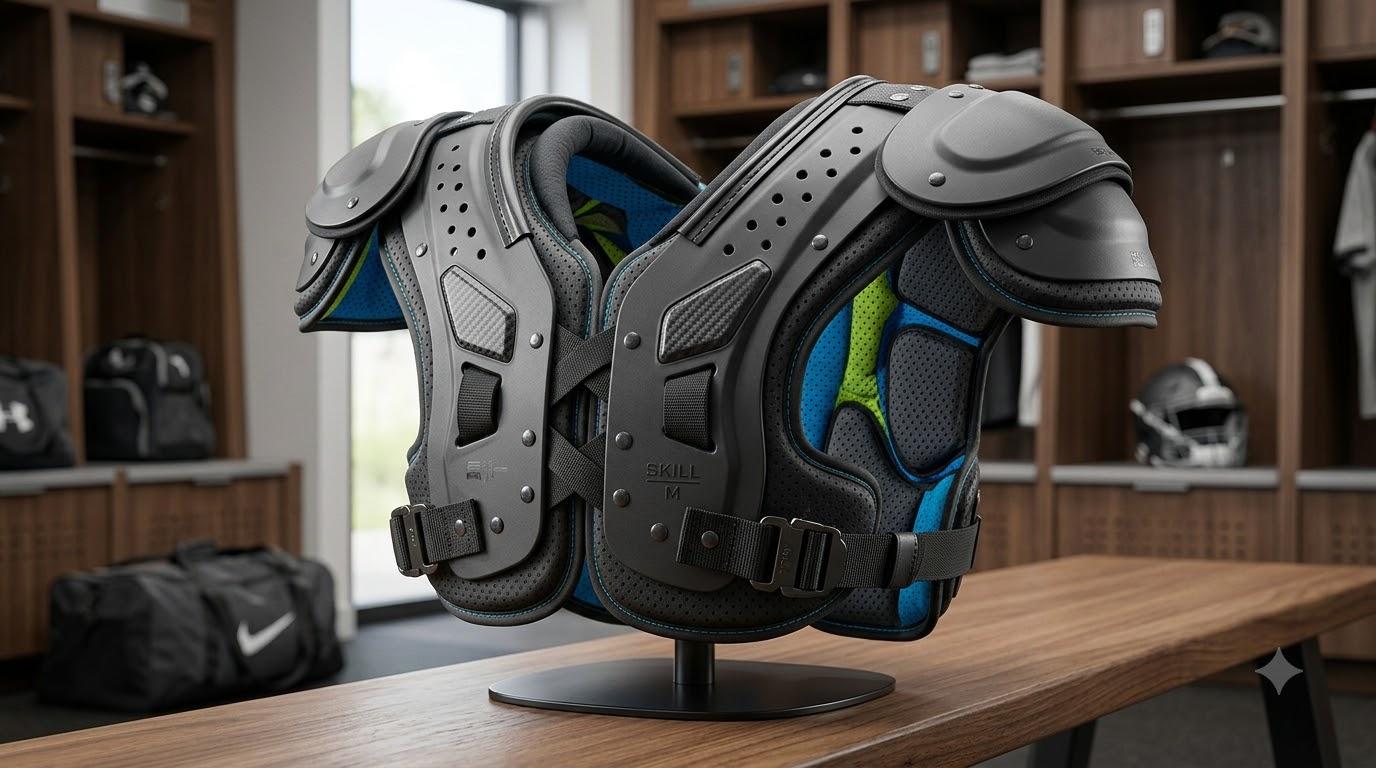
How to Choose Football Shoulder Protection Without Interfering With a Quarterback's Throwing Motion
Quarterbacks need to throw comfortably, rotate their torso, move through the pocket, and respond to pressure while wearing their protective equipment. If the equipment fits poorly or interferes with normal movement, it can become a distraction during practice. When comparing quarterback football pads for throwing comfort and mobility, assess the player's fit, movement, intended coverage, and the requirements of the complete uniform.
A common mistake is to choose equipment based on appearance or assume that every quarterback needs the same design. In reality, body dimensions, playing level, equipment rules, and individual comfort all affect suitability.
The objective is not to find equipment that feels almost invisible. It is to identify a suitable model that fits correctly, provides its intended coverage, and allows the player to perform the movements required by the position.
Why Throwing Mechanics Matter During a Fitting
A quarterback's throwing motion involves coordinated movement of the shoulders, arms, torso, and lower body. Protective equipment should be assessed with these movements in mind.
The throwing arm needs to move through its normal range, while the torso rotates as part of the throwing action. Equipment that shifts, presses uncomfortably against the body, or interferes with movement may indicate a fit or compatibility problem.
However, a difficult throwing motion does not automatically mean the shoulder pads are unsuitable. The cause could be incorrect positioning, an inappropriate size, interference from another piece of equipment, or an unrelated technique issue.
A fitting session should therefore separate equipment concerns from throwing-mechanics concerns. Coaches should not change a player's technique merely to accommodate an uncomfortable fit without first investigating the equipment.
What to Check Before Choosing a Model
Begin with the manufacturer's current product information. Confirm the intended use, sizing guidance, adjustment method, and areas the equipment is designed to cover.
Then assess four practical factors.
Fit across the shoulders and torso: Check that the equipment sits as intended and does not create uncomfortable pressure.
Arm mobility: Observe whether the player can raise the throwing arm and reach comfortably according to the manufacturer's fitting guidance.
Torso rotation: Check whether the player can rotate the body through controlled, normal movements without the equipment shifting excessively.
Uniform compatibility: Assess how the pads work with the player's other required equipment and clothing.
These checks can reveal fit problems, but they do not establish the product's protective performance. The equipment must also be suitable for the player's level and the applicable rules.
A Quarterback-Specific Fitting Routine
Use a controlled routine before introducing the equipment into demanding practice. The aim is to identify discomfort or interference, not to test the pads through collisions.
-
Confirm the correct size. Measure the player according to the manufacturer's instructions and compare the results with the current sizing chart.
-
Inspect the equipment. Look for damaged straps, fasteners, structural components, or other visible defects. Do not use equipment with unresolved damage that may affect its intended function.
-
Check the initial position. Put on the pads according to the fitting instructions and examine their alignment across the shoulders and torso.
-
Test arm elevation. Have the quarterback raise both arms and perform controlled reaching movements. Ask whether any pressure or restriction occurs.
-
Practise torso rotation without throwing. Ask the player to rotate gently in both directions. Check whether the equipment remains positioned as intended.
-
Introduce a controlled throwing motion. If the fit is comfortable, have the player rehearse the normal throwing action without unnecessary speed or force. Observe whether the pads interfere with the movement.
-
Wear the complete uniform. Add the required clothing and equipment, then repeat the checks. The complete setup may feel different from the pads alone.
-
Resolve concerns before full practice. Reassess the fit or consult the manufacturer or a qualified equipment specialist if discomfort or restriction persists.
This routine is a practical fitting aid, not a medical or protective-performance assessment.
How to Distinguish Fit Problems From Technique Problems
Quarterbacks and coaches should avoid assuming that every uncomfortable movement is caused by the pads. The important step is to observe when the problem occurs and whether it changes with equipment positioning.
|
Observation |
Possible explanation |
Sensible next step |
|
The pads shift during arm elevation |
Fit or adjustment issue |
Review the manufacturer's instructions |
|
Pressure occurs near the shoulder during movement |
Sizing, positioning, or model suitability |
Stop and reassess the fit |
|
Movement feels restricted only after adding the uniform |
Equipment compatibility issue |
Check the complete setup |
|
Throwing feels uncomfortable even without the pads |
A possible technique, physical, or other issue |
Seek appropriate coaching or professional assessment |
|
Visible damage affects the adjustment system |
Equipment condition concern |
Stop using it until appropriately assessed |
|
The pads remain positioned but discomfort persists |
Fit or individual suitability may still be a concern |
Seek further fitting guidance |
These are possibilities, not definitive diagnoses. If pain or other concerning symptoms persist, the player should stop the activity and seek appropriate professional advice.
Why the Smallest or Lightest Design Is Not Automatically the Right Choice
A quarterback may prefer equipment that feels unobtrusive, particularly during throwing drills. Yet a compact appearance does not establish whether a model is suitable for the player or provides the intended coverage.
Likewise, a larger design is not automatically unsuitable. The specific construction, fit, and requirements matter more than a general assumption about size.
When comparing quarterback football pads, evaluate the complete set of criteria rather than focusing on one feature. The right choice should accommodate the player's movement while meeting the relevant equipment requirements.
Common Buying and Fitting Mistakes
Choosing equipment based only on position labels
A product associated with quarterbacks may still be unsuitable for a particular player. Position is useful context, but it does not replace sizing, coverage, or compatibility checks.
Testing throwing motion without the complete uniform
The pads may feel comfortable alone but interfere with another piece of equipment when everything is worn together. Repeat the assessment using the intended setup.
Ignoring discomfort because the player can still throw
A player may be able to complete a throwing motion while experiencing uncomfortable pressure. Do not treat successful movement as proof that the fit is appropriate.
Making unapproved adjustments
Improvised changes can affect how the equipment sits or functions. Follow the manufacturer's instructions and seek qualified help if the intended fit cannot be achieved.
Waiting until competition to identify problems
Introduce the equipment during a fitting session and controlled practice well before a match. This gives the player and coaching staff time to investigate concerns.
Two Practical Examples
Example 1: A quarterback whose throwing arm feels restricted
A quarterback reports that the throwing arm feels restricted during warm-ups. The coach initially suspects a technique problem but decides to inspect the equipment first.
They review the manufacturer's instructions, check the fit and adjustment, and repeat a controlled arm-movement assessment. If the restriction remains, they seek further fitting advice before full practice.
The lesson is to investigate equipment fit before attributing the problem to technique.
Example 2: Equipment that fits until the uniform is complete
A player tries on a new set of pads and feels comfortable while standing and moving. After adding the team's other equipment, the player experiences pressure around the shoulders during torso rotation.
The family and coach reassess the complete arrangement, checking whether the layers are compatible and whether the equipment remains positioned correctly.
This shows why fitting the pads alone is only part of the process.
Illustrative Case Study: A Throwing-Mobility Review
A hypothetical football programme introduces a new equipment-check procedure for quarterbacks. During the first fitting, one player reports discomfort while raising the throwing arm, while another finds the equipment comfortable but notices pressure after putting on the complete uniform.
The coach uses the manufacturer's fitting instructions, checks positioning, and conducts controlled movement assessments. Unresolved issues are referred for further fitting guidance rather than being ignored.
The expected benefit is a more structured way to identify equipment-related concerns before demanding practice. No measured improvement in throwing performance or reduction in injuries is claimed.
The transferable lesson is that position-specific fitting should be deliberate, individualised, and completed with the full equipment setup.
Reviewing the TAG Sportsgear ALT3 910 Listing
The TAG Sportsgear ALT3 910 shoulder pad listing provides the starting point for reviewing the specific model assigned to this article. Check its current product information, intended use, sizing, and fitting guidance before deciding whether it suits the player.
You can explore TAG Sportsgear for the broader equipment range. If the listing does not answer questions about fit, coverage, or compatibility, ask the seller for clarification.
Do not assume that a particular model improves throwing performance without product-specific evidence. The fitting assessment should establish whether the equipment is suitable for the individual player and intended use.
Conclusion
Quarterback equipment should fit correctly, provide its intended coverage, and allow comfortable movement through the normal throwing action. Start with verified product information and accurate measurements, then assess arm mobility, torso rotation, and compatibility with the complete uniform.
If discomfort or restriction persists, stop and investigate rather than expecting the player to adapt. A structured fitting process gives parents and coaches a practical way to address equipment concerns before they interfere with practice.
FAQs
What should quarterbacks check when choosing shoulder pads?
Check the manufacturer's sizing guidance, intended coverage, adjustment system, arm mobility, torso rotation, and compatibility with the complete uniform.
Can shoulder pads affect throwing comfort?
Poor fit, incorrect positioning, or interference with other equipment may cause discomfort or restrict movement. Assess the complete setup before drawing conclusions.
Should quarterbacks use the smallest available shoulder pads?
No. The equipment must fit correctly and meet the relevant requirements. Compact appearance alone does not establish suitability.
How can a quarterback test equipment before practice?
Follow the manufacturer's fitting instructions, perform controlled arm and torso movements, and rehearse the throwing action before wearing the equipment in demanding drills.
What if throwing remains uncomfortable after adjusting the pads?
Stop and reassess the fit. If the discomfort persists, seek appropriate equipment guidance and, where needed, professional assessment rather than continuing through pain.

 English
 Arabic
 French
 Spanish
 Portuguese
 Turkish
 Dutch
 Italiano
 Russian
 Romaian
 Portuguese (Brazil)
 Greek