
Laser Facial Treatment in Dubai: Suitability for Darker Skin Types
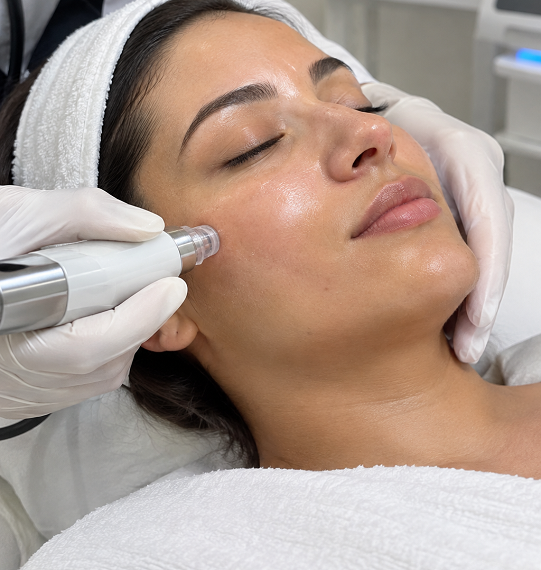
Patients with olive, brown, and deep skin tones are frequently told conflicting things about laser treatment. Some are warned it is too risky; others are offered it without any adjustment for skin type. Neither position is medically sound. The reality is that laser can be performed safely on darker phototypes, but the margin for error is narrower and the protocol must be built around pigment biology rather than convenience. This article explains what makes laser facial treatment in Dubai different for Fitzpatrick types IV to VI, and how suitability is genuinely assessed.
Why Skin Tone Changes the Clinical Equation
The target in most laser facials is either pigment, vascular tissue, or water in the skin. In darker skin, melanin is present in higher concentrations throughout the epidermis, not only in the spots a patient wants removed. That means the laser energy has more competing targets, and the risk of heating the surrounding pigment cells rises accordingly.
The main concern is post-inflammatory hyperpigmentation, where the skin darkens in response to controlled injury rather than lightening. Darker skin also carries a comparatively higher risk of scarring and, in some individuals, keloid formation. These are not reasons to refuse treatment—they are reasons to select devices, wavelengths, and settings with care.
Laser Facial Treatment in Dubai: Devices and Approaches That Suit Deeper Tones
Not all laser platforms behave the same way on melanin-rich skin. Broadly, the safer options share a principle: they minimise collateral heating of the epidermis. Approaches commonly considered include:
-
Long-pulsed Nd:YAG systems, which penetrate more deeply with less epidermal absorption, making them useful for vascular concerns and certain hair-related applications.
-
Q-switched Nd:YAG lasers at low fluence, often used for pigmentary concerns with conservative parameters.
-
Non-ablative fractional devices with adjustable density, allowing the clinician to treat a smaller percentage of skin per session.
-
Picosecond lasers, which deliver energy in very short pulses and are increasingly used for pigment and texture with careful settings.
Ablative resurfacing, particularly at aggressive settings, is generally approached with greater caution and sometimes avoided altogether depending on the individual. The point is not that darker skin cannot be treated, but that the clinician must choose the tool deliberately.
Why Test Patches Are Not Optional
For Fitzpatrick IV to VI, a test patch is a sensible safeguard rather than an inconvenience. A small area is treated and observed over days to weeks before committing to full-face treatment. This reveals how the individual's skin responds—some patients pigment readily even with conservative settings, and knowing this in advance prevents a larger problem.
In our clinical experience, patients who undergo a test patch often feel more confident proceeding, because the uncertainty has been partly removed. Clinics that skip this step for darker skin types, or dismiss the concern with reassurance alone, are not demonstrating the caution this skin group warrants.
Laser Facial Treatment in Dubai: Realistic Concerns and Their Limits
Suitability also depends on the specific concern. Melasma deserves particular attention. It is common in Middle Eastern and South Asian populations, chronic in nature, and prone to flare with heat and inflammation. Aggressive laser treatment can worsen it. Many clinicians therefore favour conservative, low-fluence protocols combined with topical agents and strict photoprotection, or may recommend non-laser approaches first.
Acne scarring and textural concerns often respond reasonably well with fractional non-ablative settings. Vascular redness can be addressed with appropriate wavelengths. Uniform expectations do not apply across concerns, and a clinician should be explicit about which improvements are realistic for your skin and which are not.
Preparation and Aftercare That Reduce Risk
Risk reduction begins before the session. Patients are often advised to:
-
Avoid sun exposure and tanning for at least two weeks beforehand.
-
Use broad-spectrum sunscreen consistently, given Dubai's high UV levels.
-
Discontinue retinoids and exfoliating acids for several days as directed.
-
Use pigment-modulating topicals if prescribed, starting weeks in advance.
-
Disclose all medications, including supplements that affect photosensitivity.
After treatment, strict photoprotection remains essential, along with gentle cleansing, barrier support, and avoidance of harsh actives until healing is complete. Early recognition of unusual darkening allows the clinician to intervene before it consolidates.
Laser Facial Treatment in Dubai: Choosing a Clinician Experienced With Your Skin
Experience with darker phototypes is not a marketing claim—it is a specific competency. Ask how often the clinic treats Fitzpatrick IV to VI patients, which devices they favour for your concern, and how they manage pigmentary risk. A clinician who can explain the reasoning behind settings, rather than reciting generic reassurances, is more likely to navigate the narrower safety margin well.
At Tajmeels Clinic in Dubai, assessment for darker skin types includes skin typing, history of pigmentary response, and discussion of conservative starting parameters, with treatment adjusted according to how the skin actually behaves rather than a standard protocol.
Is Laser the Right Choice for You?
For many patients with deeper skin tones, laser is a reasonable option when the concern is well matched to the technology, the settings are conservative, and follow-up is diligent. For others—particularly those with active melasma or a strong history of hyperpigmentation—alternative or combined approaches may offer a better risk-to-benefit balance.
The honest conclusion is that suitability is individual, not categorical. Skin tone is one variable among several, including concern, history, and clinician skill. A professional assessment that takes all of these into account is the only reliable way to determine whether treatment is appropriate for you.
Ready to Begin Your Transformation?
Get in touch with us today to explore exclusive offers and find the right treatment for you!
WhatsApp: +971 56 203 8751
Phone: +971 4 373 9000
Social Media:

 English
 Arabic
 Spanish
 Portuguese
 Deutsch
 Turkish
 Dutch
 Italiano
 Russian
 Romaian
 Portuguese (Brazil)
 Greek