
When Language Becomes a Barrier to Mental Health Care: What Patients Should Know
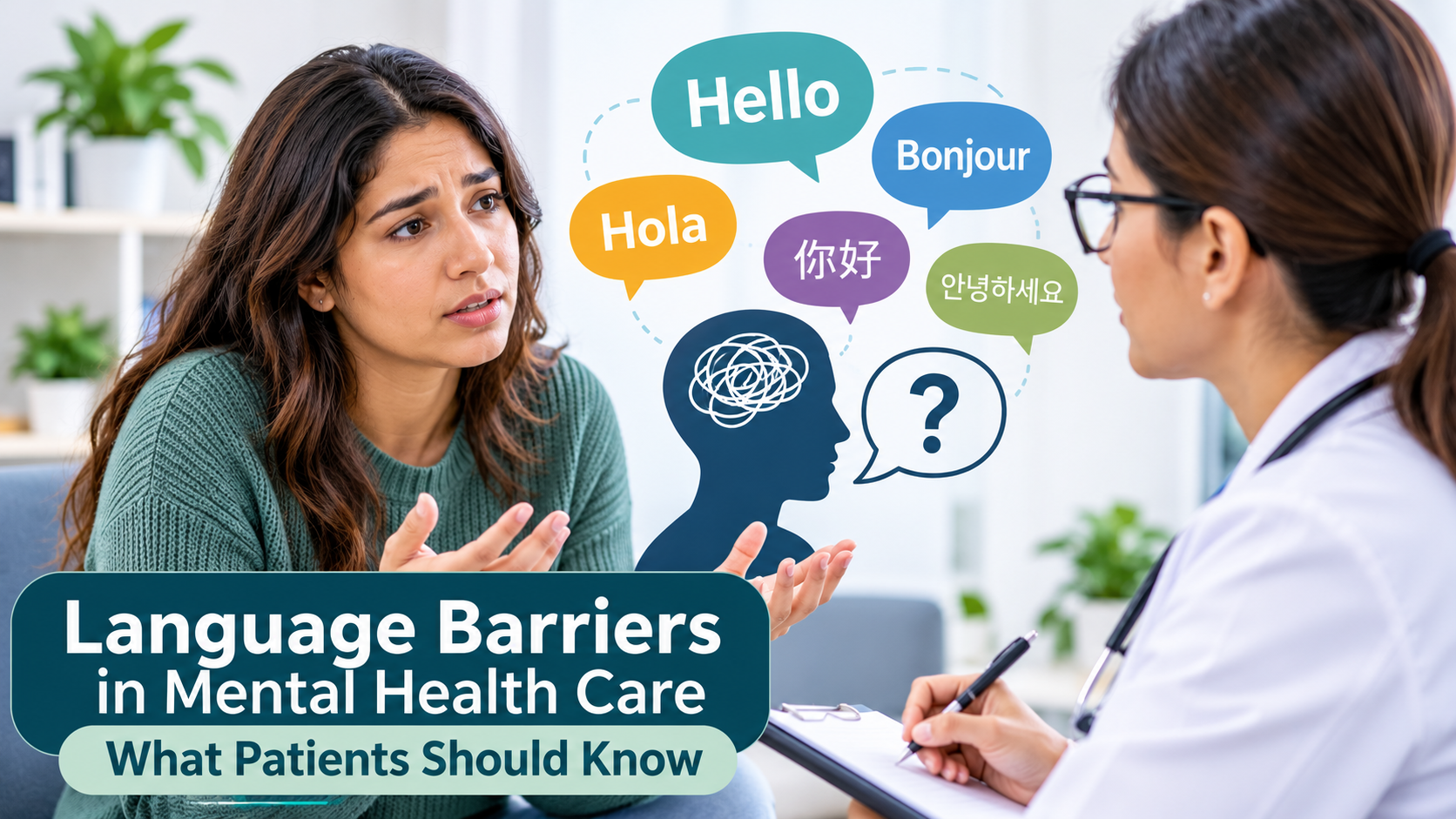
Mental health care depends on patients and providers being able to understand one another. Patients need to discuss personal experiences, emotional concerns, and symptoms so that professionals can assess their needs and explain available care options. However, these conversations can become difficult when both sides do not speak the same language.
For people who are more comfortable communicating in a language other than English, psychiatric appointments may involve additional challenges. Unfamiliar medical terms, treatment instructions, and sensitive questions can make it harder to participate fully in care.
Language barriers in mental health care can affect how patients describe their experiences, understand recommendations, and make decisions about treatment. Knowing what support may be available can help patients prepare for appointments and communicate their needs.
Why Language Matters in Mental Health Care
Psychiatric care often involves discussing experiences that can be difficult to put into words. A patient may need to explain changes in mood, recurring thoughts, fears, or experiences that feel confusing or overwhelming.
Some emotional expressions also have meanings that are difficult to translate directly. A patient may use a familiar phrase from their first language that does not have an exact equivalent in English. Without enough context, a provider may not fully understand what the patient is trying to communicate.
Clear communication also helps patients understand the purpose of an evaluation, the available treatment options, and what to expect during follow-up care. This is why language access in healthcare is an important part of making mental health services understandable and accessible.
Common Language Barriers Patients May Experience
Language difficulties can arise in different parts of a psychiatric appointment. Common examples include:
Difficulty Describing Emotional Symptoms
Mental health symptoms are not always easy to explain. Patients may know what they are experiencing but struggle to find the right words in a language they do not speak fluently.
For example, someone may describe feeling uncomfortable when they are experiencing persistent worry, emotional distress, or panic symptoms. Important details about the intensity or frequency of these experiences may also be difficult to explain.
Understanding Psychiatric Terms
Psychiatric appointments may involve unfamiliar terms related to symptoms, medications, therapy, and possible side effects.
Patients who are not comfortable communicating in English may find these explanations challenging. This can affect understanding psychiatric treatment information, particularly when they need to compare treatment options or follow medication instructions.
How Communication Problems Can Affect Psychiatric Treatment
Language difficulties can have practical consequences during treatment. They may affect the information a provider receives and the patient's ability to follow an agreed care plan.
Incomplete Information During Evaluations
Psychiatric evaluations involve questions about symptom history, daily functioning, and personal experiences. If a patient cannot explain these details clearly, a provider may need further information before making clinical decisions.
Misunderstanding Treatment Recommendations
Patients may receive recommendations involving medication, therapy, or additional assessments. If the explanation is unclear, they may not understand why a treatment was suggested, how to follow it, or what questions they should ask.
Challenges With Ongoing Care
Mental health treatment often involves follow-up appointments and discussions about progress. Patients need to be able to report changes, raise concerns, and understand any adjustments to their care plan.
These situations show why reducing mental health care communication barriers and improving patient communication in psychiatry are important throughout the treatment process.
What Interpreter Services Are Available for Mental Health Care?
Professional interpreters can help patients communicate with healthcare providers when they do not share a common language. Interpreter services for mental health may be offered through several formats, depending on the provider and the patient's needs.
In-Person Interpretation
An in-person interpreter attends the appointment and helps the patient and provider communicate directly. This may be useful during detailed discussions about psychiatric evaluations and treatment decisions.
Telephone Interpretation
Telephone interpretation allows patients and providers to communicate through a qualified interpreter over the phone. It can be helpful when an in-person interpreter is unavailable.
Video Interpretation
Video interpretation connects the patient, provider, and interpreter remotely. Participants can see one another while discussing questions and treatment information.
Bilingual Mental Health Professionals
Some psychiatrists and other mental health professionals can communicate directly with patients in more than one language. Patients can ask about a provider's language proficiency before scheduling.
Speaking more than one language does not automatically qualify someone to interpret specialized medical information. Professional interpretation requires appropriate language skills and training.
Understanding Your Rights to Language Assistance in the United States
Patients should not feel that they must communicate perfectly in English to understand their healthcare.
In the United States, federal civil rights protections require certain healthcare organizations and providers covered by applicable laws to take reasonable steps to provide meaningful access to individuals with limited English proficiency.
Depending on the provider and applicable requirements, language assistance may include qualified interpreters and translated written information.
The U.S. Department of Health and Human Services (HHS) explains these protections under Title VI of the Civil Rights Act and Section 1557 of the Affordable Care Act. Patients can review the official HHS guidance on language assistance services for individuals with limited English proficiency to learn more.
Patients can also contact their healthcare provider to ask how to request language assistance and whether translated materials are available.
How to Prepare for a Psychiatric Appointment When English Is Not Your First Language
A little preparation can help patients make better use of their appointment. Consider these practical steps:
1. Share Your Preferred Language
When scheduling an appointment, tell the provider which language you are most comfortable speaking and reading. Ask whether communication assistance is available.
2. Prepare Your Questions
Write down the main concerns you want to discuss. You may include when symptoms started, how often they occur, and whether they affect your sleep, work, or relationships.
3. Ask for Clear Explanations
If a provider uses an unfamiliar term, ask them to explain it in simpler language. You can also ask about medication instructions, possible side effects, and available treatment options.
4. Request Written Instructions
Written information can help you review important details after an appointment. Ask whether treatment information or medication instructions are available in your preferred language.
5. Confirm the Next Steps
Before the appointment ends, make sure you understand the agreed next steps. This may include a follow-up appointment, medication instructions, or how to contact the provider with additional questions.
Why Culturally Responsive Mental Health Care Matters
Language and culture are connected, but they are not the same. People who speak the same language may have different beliefs, family experiences, and expectations about mental health treatment.
Culturally responsive mental health care recognizes these differences and encourages providers to understand each patient's background without making assumptions.
For example, some patients may feel uncomfortable discussing emotional concerns because of family expectations or stigma surrounding psychiatric treatment. Others may have personal or community beliefs that influence how they view therapy or medication.
A respectful provider should give patients room to explain their preferences and concerns. This can support a more open and trusting relationship during care.
Finding Mental Health Support for Multilingual Patients in New York
New York is home to people from many linguistic and cultural backgrounds. Patients may need mental health professionals who understand their communication preferences and can explain care options clearly.
When comparing providers, consider asking:
-
Does the provider speak my preferred language?
-
Are qualified interpreter services available?
-
Can important treatment instructions be provided in a language I understand?
-
How can I communicate questions between appointments?
These questions can help patients assess whether a practice can meet their communication needs. Improving mental health access for multilingual patients also means making it easier to understand available services and take part in treatment decisions. Accessible mental health support in New York should consider the language preferences of patients from different backgrounds.
Cordial Psychiatry provides psychiatric evaluations, therapy, medication management, and telehealth services in New York. Individuals interested in remote appointments can explore its telepsychiatry services to learn about virtual psychiatric care options. Patients should contact the practice directly to confirm language availability and whether interpreter arrangements can be accommodated.
Frequently Asked Questions
1. Can a psychiatrist misunderstand my symptoms because of a language difference?
Yes. Some emotional expressions may not have direct equivalents in another language. A qualified interpreter can help the patient and provider communicate more accurately.
2. Is information shared through a medical interpreter confidential?
Professional medical interpreters are expected to follow appropriate confidentiality and professional ethics standards. Patients can ask their provider how interpreter privacy is protected.
3. What should I do if I cannot find a mental health provider who speaks my preferred language?
Ask local healthcare organizations, insurance providers, or community health centers whether they can identify providers who speak your language or offer qualified interpreter services. You can also ask a practice about remote interpretation options.
4. What if an interpreter does not understand my dialect?
Tell your provider that the interpretation is unclear. Ask whether another qualified interpreter with the appropriate language proficiency is available.
5. Can language differences affect online psychiatric appointments?
Yes. Virtual appointments can still involve communication difficulties. Before scheduling, ask whether the practice can accommodate your preferred language or arrange remote interpretation.
6. Can I request a different interpreter if I feel uncomfortable?
You can discuss your concerns with the provider and ask whether another qualified interpreter is available. Feeling comfortable communicating during a psychiatric appointment is important.
Final Thoughts
Clear communication helps patients explain their concerns, understand treatment options, and participate in decisions about their mental health. Language differences can make this process more difficult, but patients can ask about interpretation, request clarification, and discuss their communication preferences before an appointment.
Professional interpreters, accessible written information, and culturally respectful care can make mental health services easier to navigate. Patients should feel comfortable asking questions and seeking explanations they understand.

 English
 Arabic
 French
 Spanish
 Portuguese
 Turkish
 Dutch
 Italiano
 Russian
 Romaian
 Portuguese (Brazil)
 Greek