
What Is the Difference Between IPTV Middleware and an IPTV Player?
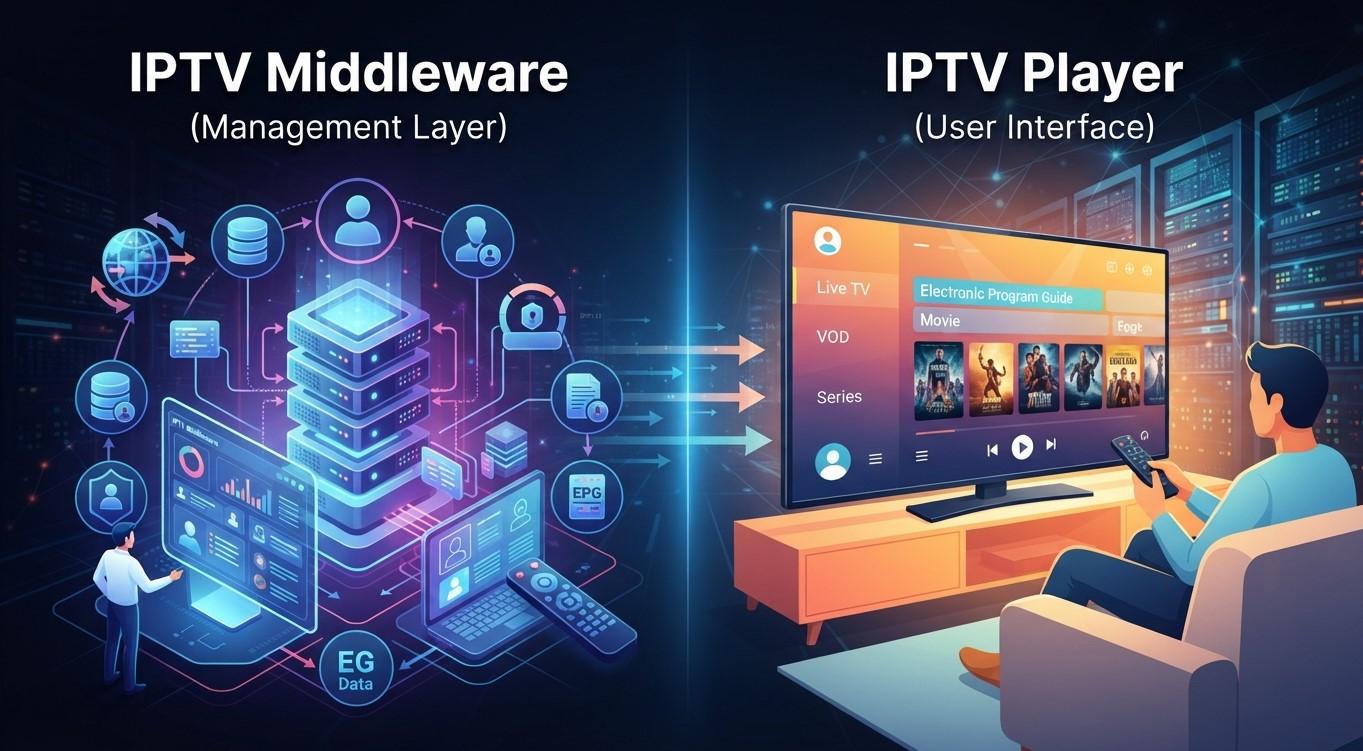
IPTV technology allows viewers to access television content through an internet connection instead of relying entirely on traditional cable or satellite networks. However, several components work together to deliver this experience. Two important terms you may encounter are IPTV middleware and an IPTV player.
Although they are closely related, they perform different functions. Middleware manages the IPTV service and its features, while a player is the application used to watch available streams. Understanding the difference can help you evaluate providers and choose the Best IPTV Service for your needs.
Table of Contents
-
What Is IPTV Middleware?
-
What Is an IPTV Player?
-
Key Differences Between Middleware and IPTV Players
-
How Do They Work Together?
-
What Should You Consider When Choosing an IPTV Service?
-
Frequently Asked Questions
-
Final Thoughts
1. What Is IPTV Middleware?
IPTV middleware is the software layer that connects an IPTV provider's backend systems with the applications or devices used by viewers. It helps manage the service and organize how users access available content and features.
Depending on the platform, middleware may support:
-
User authentication: Verifies subscriber accounts and access permissions.
-
Content management: Organizes channels, categories, and video libraries.
-
Electronic Program Guide (EPG): Displays television schedules and program information.
-
Subscription management: Helps providers manage packages, accounts, and renewals.
-
Video on Demand (VOD): Organizes available movies and television programs.
-
Device management: Supports compatible devices and user connections.
Not every middleware platform includes all these features. Its capabilities depend on the provider's software, configuration, and licensing arrangements.
2. What Is an IPTV Player?
An IPTV player is an application that receives and plays compatible video streams. It provides the viewing interface that allows users to select channels, play content, and navigate available options.
Common IPTV player features include:
-
Playing supported live television streams.
-
Loading compatible M3U or M3U8 playlists.
-
Displaying channel categories.
-
Supporting EPG information when available.
-
Offering playback controls such as pause and volume.
-
Supporting different video formats and streaming protocols.
Some players are available for smart TVs, Android devices, computers, and streaming devices.
An important distinction is that an IPTV player does not necessarily provide television channels or subscriptions. It is generally a playback tool, and users need compatible content sources with appropriate distribution rights.
3. Key Differences Between Middleware and IPTV Players
Although both contribute to IPTV delivery, their responsibilities are different.
| Feature | IPTV Middleware | IPTV Player |
|---|---|---|
| Main purpose | Manages the IPTV platform | Plays video streams |
| User accounts | May manage authentication | May accept login details |
| Content organization | Manages content libraries | Displays available content |
| Subscriptions | May handle subscription management | Usually does not sell subscriptions |
| EPG support | May provide schedule data | Displays compatible EPG data |
| Primary users | IPTV providers and operators | Viewers and subscribers |
In simple terms, middleware helps operate the service, while the IPTV player helps viewers watch its content.
4. How Do They Work Together?
Middleware and IPTV players can work together to create a complete viewing experience.
Here is a simplified process:
-
User signs in: The viewer enters account details through a compatible application or device.
-
Authentication takes place: The service verifies whether the account has permission to access the platform.
-
Content information is delivered: The middleware or associated systems provide channel lists, program information, and available content.
-
The player displays the content: The application presents the available options.
-
Streaming begins: When the viewer selects a channel, the player requests and plays the compatible stream.
The exact process varies depending on the IPTV architecture. Some services use integrated applications, while others allow third-party players to connect through supported playlists or account credentials.
5. What Should You Consider When Choosing an IPTV Service?
Understanding middleware and players can help you make a more informed subscription decision. If you are researching the Best IPTV Service in 2026, consider these factors:
-
Device compatibility: Confirm that the service works with your preferred television, phone, or streaming device.
-
Application support: Check whether it offers its own application or supports compatible third-party players.
-
Streaming reliability: Look for transparent information about service performance and customer support.
-
Available features: Review EPG, VOD, recording, and multi-device options rather than assuming they are included.
-
Security: Check how account information and personal data are handled.
-
Content rights: Verify that the provider is authorized to distribute the channels and programs it offers.
-
Pricing and renewal terms: Understand subscription costs, automatic renewals, and refund policies.
A suitable service should offer clear information about its technology, supported devices, and subscription conditions.
6. Frequently Asked Questions
Is IPTV middleware the same as an IPTV player?
No. Middleware manages the IPTV platform and its services, while a player is an application used to display and play compatible video streams.
Can an IPTV player work without middleware?
Yes. Some players can load playlists or stream links directly without connecting to a dedicated middleware platform.
Does IPTV middleware provide channels?
Middleware can organize and manage channel information, but actual video content must come from authorized content sources.
Do all IPTV players support the same features?
No. Supported formats, playlists, EPG options, and playback controls vary between applications.
Which is more important: middleware or an IPTV player?
Both serve different purposes. Middleware supports service management, while the player provides the viewing experience. Their importance depends on the IPTV system being used.
7. Final Thoughts
IPTV middleware and IPTV players are different but complementary parts of an IPTV ecosystem. Middleware manages important service functions, including user access and content organization, while the player allows viewers to watch available streams.
Before selecting an IPTV provider, understand its supported applications, device compatibility, available features, and content licensing. Comparing these details can help you identify an option that matches your viewing requirements.
Explore SmartiFilix
Interested in exploring an IPTV Service? Visit SmartiFilix to review its available plans and service information. Check supported devices, included features, subscription terms, and content availability in your region before making a decision.

 English
 Arabic
 French
 Spanish
 Portuguese
 Deutsch
 Turkish
 Dutch
 Italiano
 Romaian
 Portuguese (Brazil)
 Greek