
Commercial Bug Sweep Service: How to Protect Your Business from Hidden Surveillance
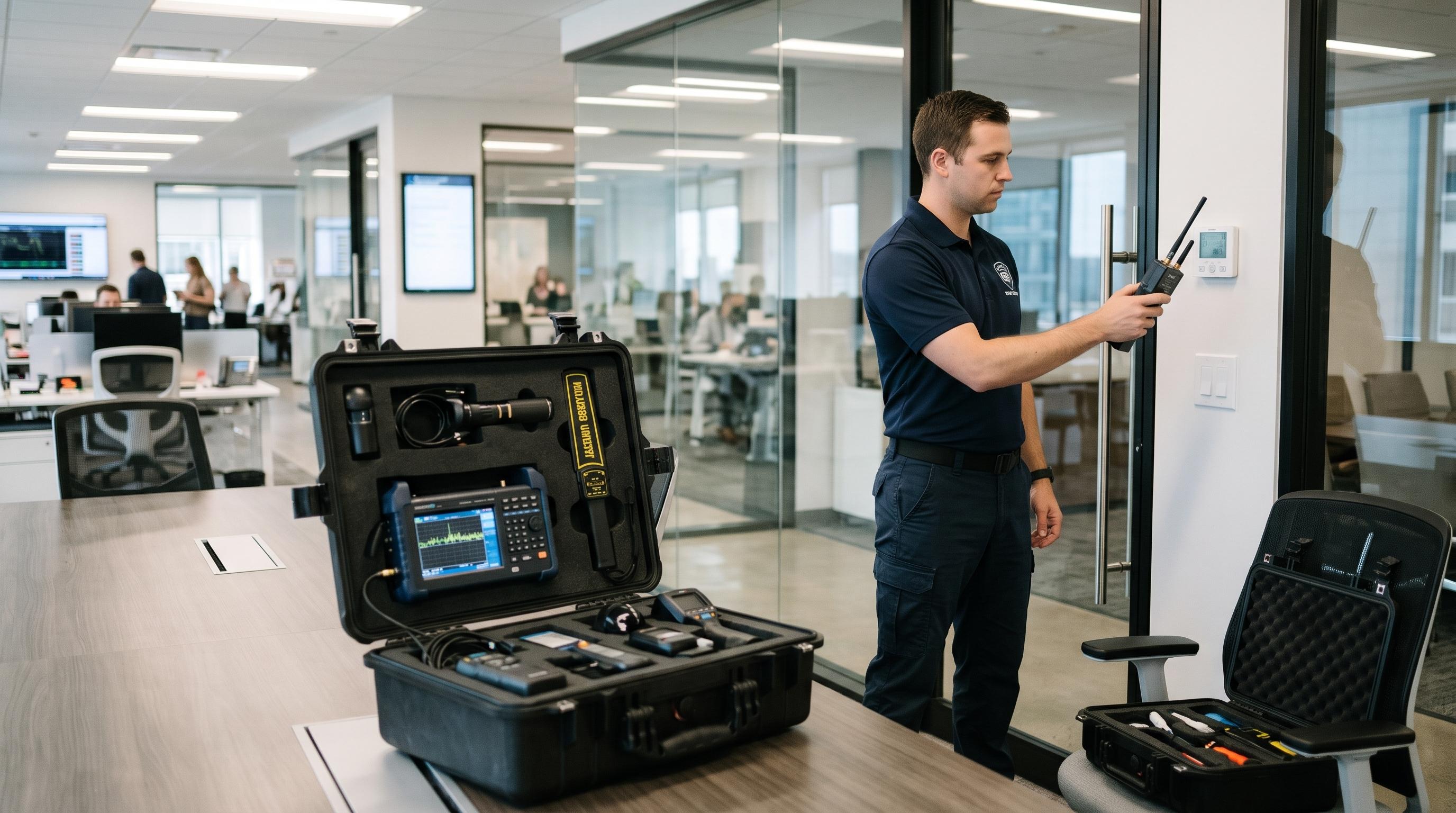
Business conversations often involve sensitive information, financial decisions, confidential plans, and private client discussions. If these conversations are monitored without permission, the consequences can be serious. A professional commercial bug sweep service helps businesses identify hidden listening devices, unauthorised surveillance equipment, and other potential security threats before confidential information is exposed.
Technical Surveillance Countermeasures (TSCM) is a specialised security process designed to identify and investigate electronic surveillance risks. It involves the inspection of business premises, communication equipment, and surrounding environments for devices that may be used to collect private information. For organisations handling sensitive discussions, regular security inspections can provide an additional layer of protection.
Whether you operate a corporate office, law firm, financial institution, or private organisation, understanding how technical surveillance works is an important part of protecting business information.
Why Businesses Need Professional Bug Sweeping Services
Modern businesses rely on confidential communication to maintain their competitive position. Important discussions about company strategies, upcoming investments, employee matters, and client information should remain accessible only to authorised individuals.
However, unauthorised surveillance can create serious security concerns. Hidden listening devices or wireless cameras may be installed in places where private meetings take place. If such equipment is not identified, sensitive information could potentially be accessed by outside parties.
Professional TSCM inspections help businesses investigate these risks.
Some common reasons organisations arrange commercial security inspections include:
-
Confidential business meetings: Protect discussions involving company strategies, financial information, and future plans.
-
Corporate espionage concerns: Investigate possible attempts to obtain commercially sensitive information.
-
Legal confidentiality: Help protect private discussions between legal professionals and their clients.
-
Executive privacy: Reduce the risk of unauthorised monitoring in executive offices and meeting rooms.
-
Financial security: Protect discussions involving investments, acquisitions, and business transactions.
-
Workplace security: Investigate suspicious devices or unusual electronic activity within business premises.
A professional inspection can help identify potential vulnerabilities and provide recommendations for improving overall security.
What Is a TSCM Bug Sweep Inspection?
Technical Surveillance Countermeasures, commonly known as TSCM, refers to specialised methods used to detect, investigate, and reduce electronic surveillance threats.
Unlike a standard security check, a TSCM inspection focuses on identifying equipment and technical indicators associated with unauthorised monitoring.
A trained TSCM specialist uses professional detection equipment and inspection procedures to examine areas where confidential information is discussed.
The inspection may include several technical activities.
Radio Frequency (RF) Detection
Radio frequency detection is used to identify unusual wireless signals that may be associated with electronic surveillance equipment.
Specialised RF analysers can help technicians examine the radio spectrum and investigate suspicious transmissions.
However, not every signal represents a surveillance threat. Wireless networks, mobile devices, Bluetooth equipment, and other electronic systems also generate RF activity. Findings must therefore be interpreted carefully.
Physical Inspection of Business Premises
Not all surveillance equipment relies on wireless transmission. Some devices may store information internally or use wired connections.
For this reason, physical inspection remains an important part of TSCM work.
Technicians may examine:
-
Meeting rooms and conference areas.
-
Executive offices and private workspaces.
-
Electrical outlets and fixtures.
-
Furniture and decorative objects.
-
Telephone and communication equipment.
-
Areas containing sensitive business documents.
Any suspicious findings should be documented and investigated using appropriate procedures.
Telephone and Communication Security Checks
Business communication systems may also require technical examination.
A TSCM assessment can include checks of relevant telephone equipment, communication infrastructure, and associated wiring to identify suspicious modifications or potential vulnerabilities.
The scope depends on the premises, equipment, and security concerns being investigated.
Common Types of Surveillance Devices Found in Commercial Environments
Businesses should understand the different types of equipment that may be associated with unauthorised surveillance.
A professional inspection focuses on identifying suspicious devices and determining whether they present an actual security concern.
Hidden Listening Devices
Hidden listening devices are designed to capture conversations without the knowledge of the people involved.
They may use wireless transmission, wired connections, or internal storage.
These devices can potentially expose confidential discussions involving company operations, legal matters, and financial decisions.
Covert Cameras
Small cameras can be concealed within everyday objects or installed in areas where private activities take place.
A professional inspection may include visual examination and specialist detection techniques to investigate suspicious camera equipment.
GPS Tracking Devices
Unauthorised GPS trackers may be attached to company vehicles or other assets to monitor their movements.
Businesses concerned about employee privacy, executive security, or asset protection may benefit from investigating suspicious tracking equipment.
Wired Surveillance Equipment
Some surveillance devices do not transmit information through wireless signals.
Instead, they may rely on physical connections or internal recording systems. This is why an effective inspection should not depend entirely on RF detection.
How a Commercial Bug Sweep Service Protects Sensitive Business Information
A professional commercial bug sweep service provides businesses with a structured approach to identifying potential electronic surveillance threats.
Rather than relying on basic visual checks, TSCM specialists use technical equipment, inspection procedures, and professional experience to assess possible security weaknesses.
Here are some important ways these inspections support business security.
1. Protecting Confidential Meetings
Boardroom discussions often involve information that should not be shared outside the organisation.
A TSCM inspection can help investigate possible surveillance risks in conference rooms and other meeting spaces.
This is particularly important before major business negotiations, mergers, acquisitions, or confidential strategy meetings.
2. Reducing Corporate Espionage Risks
Corporate espionage can involve attempts to obtain confidential information through unauthorised access, monitoring, or other deceptive activities.
A technical inspection can help identify certain electronic surveillance threats that might otherwise remain unnoticed.
Businesses can use the findings to strengthen their security procedures and reduce potential exposure.
3. Supporting Executive Privacy
Company directors, senior managers, and executives regularly discuss sensitive matters.
Their offices, meeting rooms, and other private workspaces may therefore require additional security attention.
Professional inspections can help identify suspicious electronic equipment and provide recommendations based on the findings.
4. Improving Overall Security Awareness
TSCM inspections are not limited to detecting devices.
They can also help organisations understand weaknesses in their existing security arrangements.
Based on the assessment, businesses may receive recommendations regarding access control, communication security, physical security, and inspection schedules.
What Happens During a Professional TSCM Inspection?
A reliable inspection should follow a structured process. The exact approach depends on the size of the property, the nature of the business, and the level of security required.
A typical inspection may involve the following stages.
Initial Security Consultation
The process usually begins with a discussion about the organisation's concerns, premises, and potential surveillance risks.
Relevant areas are identified based on business operations and the sensitivity of information handled.
Site Assessment
The inspection area is reviewed to understand its layout, electronic equipment, communication systems, and possible security vulnerabilities.
Technical Detection
Appropriate specialist equipment is used to investigate suspicious RF activity and other potential surveillance indicators.
Physical Examination
Relevant fixtures, furniture, communication equipment, and other areas are examined for suspicious modifications or devices.
Findings and Recommendations
The results are documented, and any relevant findings are explained to the client. Recommendations may also be provided to improve the organisation's security arrangements.
It is important to understand that a TSCM inspection cannot guarantee that every possible surveillance threat will be identified. Its effectiveness depends on the inspection scope, equipment, specialist expertise, and conditions at the time of assessment.
How to Choose the Right TSCM Security Provider
Choosing a qualified security provider is an important decision for any organisation. Since TSCM work involves sensitive information and specialised technical knowledge, businesses should evaluate providers carefully.
Consider the following factors before selecting a service provider:
-
Relevant experience: Look for specialists with practical experience in technical surveillance countermeasures.
-
Professional equipment: Ask whether the provider uses suitable RF detection equipment and other relevant inspection tools.
-
Confidentiality: Ensure that sensitive business information and inspection findings are handled securely.
-
Clear reporting: A professional provider should explain the inspection process and provide understandable findings.
-
Customised assessments: Inspection procedures should reflect the property's layout, business activities, and specific security concerns.
-
Professional conduct: Technicians should follow appropriate procedures and respect the confidentiality of the organisation.
It is also worth asking whether the provider can explain the limitations of its inspection methods. Clear communication helps businesses understand what has been checked and what further security measures may be required.
Which Businesses Can Benefit from Commercial TSCM Inspections?
Electronic surveillance concerns are not limited to large corporations. Organisations of different sizes may handle information that requires additional protection.
A professional TSCM assessment may be particularly relevant to:
-
Corporate offices: Protect confidential meetings, company strategies, and internal communications.
-
Law firms: Help safeguard sensitive client discussions and privileged business information.
-
Financial institutions: Investigate potential surveillance risks involving financial information and transactions.
-
Government organisations: Support security assessments in areas handling sensitive information.
-
Healthcare organisations: Help protect confidential administrative and business discussions.
-
Private businesses: Reduce potential exposure involving commercial negotiations and proprietary information.
-
Executive offices: Investigate possible monitoring risks in areas used by senior decision-makers.
The inspection requirements will vary depending on the organisation's activities and the sensitivity of the information being handled.
Why Regular Security Assessments Matter
Electronic surveillance technology continues to develop, and businesses should not assume that a single inspection provides permanent protection.
Changes to office layouts, new electronic equipment, staff access, and building maintenance can introduce new security considerations.
Regular assessments can help organisations maintain awareness of potential vulnerabilities.
Businesses may consider arranging inspections:
-
Before important confidential meetings.
-
After suspicious activity or unexplained security incidents.
-
Following office renovations or major changes to the premises.
-
When moving into a new commercial property.
-
As part of an ongoing corporate security programme.
A planned security approach allows potential concerns to be investigated before they develop into more significant problems.
Final Thought
Protecting confidential business information requires more than passwords, CCTV systems, and standard access controls. Organisations must also consider the possibility of unauthorised electronic surveillance. A professional commercial bug sweep service offers a specialised approach to investigating hidden listening devices, covert cameras, and other potential monitoring threats. By working with experienced TSCM specialists and arranging appropriate security assessments, businesses can improve their understanding of electronic surveillance risks and take practical steps to protect their private communications, employees, and commercial interests.

 English
 French
 Spanish
 Portuguese
 Deutsch
 Turkish
 Dutch
 Italiano
 Russian
 Romaian
 Portuguese (Brazil)
 Greek