
Motorcycle Camera Laws and Safety Tips for Riders
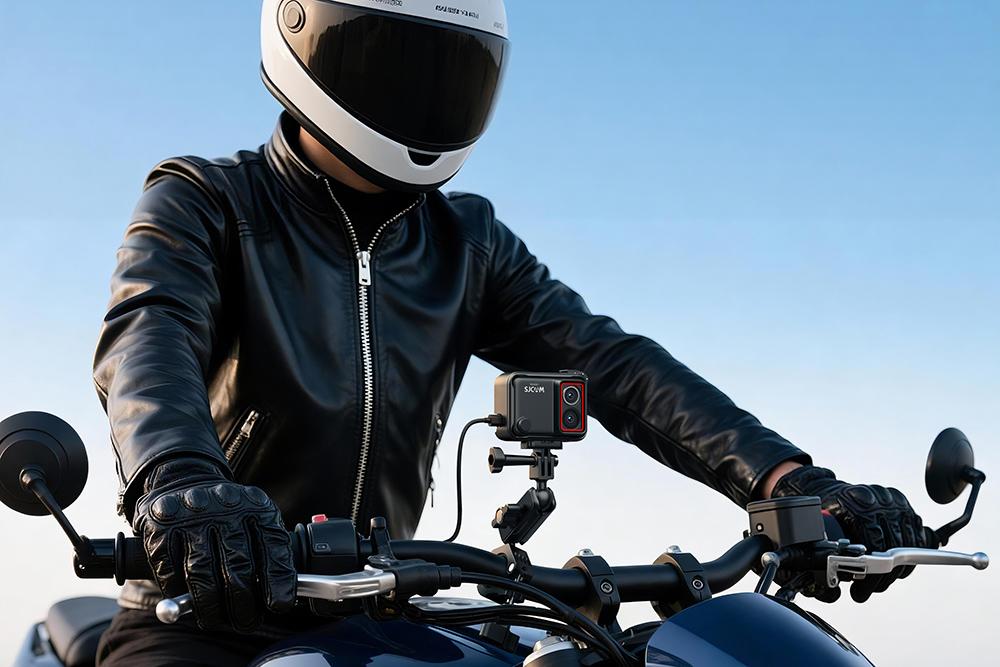
A good motorcycle camera has become standard equipment for many riders—for evidence after a collision, for insurance disputes, and simply for recording the rides worth remembering. But mounting a camera on your helmet or bike raises two separate questions that riders often overlook: what is actually legal where you ride, and how do you use the camera without making yourself less safe? This guide covers both, with the important caveat that laws vary enormously between countries, states, and even cities. Treat this as a framework for the questions you need to answer locally, not as legal advice.
Why Camera Laws Matter More Than Riders Expect
Most riders assume that if a camera is legal to buy, it is legal to use anywhere on a motorcycle. That is not how it works. Rules can differ on where a camera may be mounted, whether helmet attachments are permitted at all, what you may record, and what you may do with the footage afterwards. Getting this wrong can mean a fine, a failed insurance claim, or in the worst cases, a legal dispute you did not anticipate. Before you commit to a setup, spend twenty minutes checking your local rules.
The Main Legal Areas to Check
Helmet Mounting Restrictions
This is the most common issue. Many jurisdictions regulate what can be attached to a motorcycle helmet, often through helmet certification standards rather than explicit camera laws. The concern is that an adhesive mount, bracket, or protruding object can compromise the shell’s protective performance or snag during a crash. In some countries, any modification to a certified helmet can technically invalidate its approval—which may matter in an insurance or liability claim even if no police officer ever stops you.
Practical approach: check whether your helmet manufacturer permits attachments, prefer low-profile mounts with rounded edges, avoid drilling the shell, and use a safety tether so the camera cannot become a projectile.
Recording in Public
In most places, filming in public spaces is broadly permitted because there is no expectation of privacy on a public road. However, this is not universal. Some countries have stricter rules about recording people without consent, and a few have specific restrictions on continuous recording devices. Audio is often treated differently from video—recording conversations you are not party to can be restricted in ways that silent video is not. Many riders simply disable audio, which also solves the wind-noise problem.
Publishing and Sharing Footage
Posting footage online is a separate legal question from recording it. If your clip shows other people’s faces, license plates, or identifiable property, publishing it may raise privacy or data protection issues. In regions with strong data protection regimes, uploading identifiable footage of third parties can carry real obligations. Common-sense safeguards: blur plates and faces before publishing, avoid clips that show individuals in embarrassing or vulnerable situations, and be cautious about posting footage of an ongoing legal dispute—it can be used against you.
Using Footage as Evidence
Camera footage can be powerful evidence, but it is not automatically admissible, and it can cut both ways. If you submit footage, expect the other side to review all of it, not just the useful thirty seconds. This is a strong argument for loop recording and disciplined storage: keep what is relevant, and understand that your own riding will be scrutinized too.
Insurance and Disclosure
Some insurers ask whether the motorcycle has a dash cam, and a few offer discounts. Others may treat certain modifications as relevant to a policy. If you have wired a camera permanently into the bike’s electrical system, check whether that counts as a modification requiring disclosure.
Safety Tips for Camera Use
Mount low and close. Chin or side mounts keep the camera close to the helmet’s center of mass and reduce drag and leverage. Avoid tall stalk mounts that create a lever arm in a crash.
Always use a tether. Adhesive mounts fail with heat, vibration, and time. A tether costs almost nothing and prevents your camera from becoming a hazard to riders behind you.
Do not let the camera become a distraction. Adjusting settings, checking a screen, or glancing at a recording indicator while riding is dangerous. Set the camera up before you move, start recording with one button press, and leave it alone. If you need to check footage, pull over safely.
Keep the camera out of your sightline. Never mount anything in your field of view or where it could obstruct your vision through the visor. Peripheral vision matters, especially in traffic.
Manage heat and battery safely. Cameras in sealed housings on a dark helmet in summer sun get hot. Use reputable batteries, avoid charging while riding, and do not leave lithium batteries in a hot parked bike.
Test your setup before relying on it. Do a short ride, then review the footage on a phone or computer. Confirm the angle covers what you need and that the card is recording properly. A good motorcycle camera that is pointed at the sky or out of storage is no protection at all.
Do not ride differently because you are filming. The most common safety failure with cameras is behavioral. Footage is evidence; it is not a license to take risks, and it will document your mistakes as faithfully as anyone else’s.
Respect others. Being filmed makes some people uncomfortable. Avoid pointing the camera into vehicles, homes, or at people unnecessarily, and be considerate when asked about it.
A Practical Camera Choice: The SJCAM SJ30
If you are setting up a compliant, low-profile, safety-conscious rig, the SJCAM SJ30 is a sensible option. It is compact and light enough for chin or side mounting, which helps you keep attachments close to the helmet and avoid the drag and leverage of bulky setups. It records clear, high-resolution footage and includes stabilization that keeps road vibration from ruining the useful parts of a clip—exactly what you need when the purpose is evidence rather than cinematography.
The SJ30 is also simple to operate with gloves and connects to your phone for reviewing footage after you have stopped, so you are not fiddling with the camera mid-ride. For commuters who want a dependable record of their daily route and for tourers documenting longer journeys, it delivers the essentials without a premium price—leaving a budget for a quality memory card, a proper low-profile mount, and a tether, which are the parts of the setup that actually keep you and your footage safe.
Final Thoughts
Camera laws are local, and they change. Before you mount anything, confirm the helmet attachment rules, the recording and publishing rules, and your insurer’s position in your own jurisdiction. Then build a safe setup: low and close, tethered, out of your sightline, and tested before you depend on it. A good motorcycle camera protects you best when it is legal, secure, and completely ignored while you ride—and the SJCAM SJ30 is a solid place to start.

 English
 Arabic
 French
 Portuguese
 Deutsch
 Turkish
 Dutch
 Italiano
 Russian
 Romaian
 Portuguese (Brazil)
 Greek