
How Do You Choose a Lab-Grown Diamond Bezel Necklace
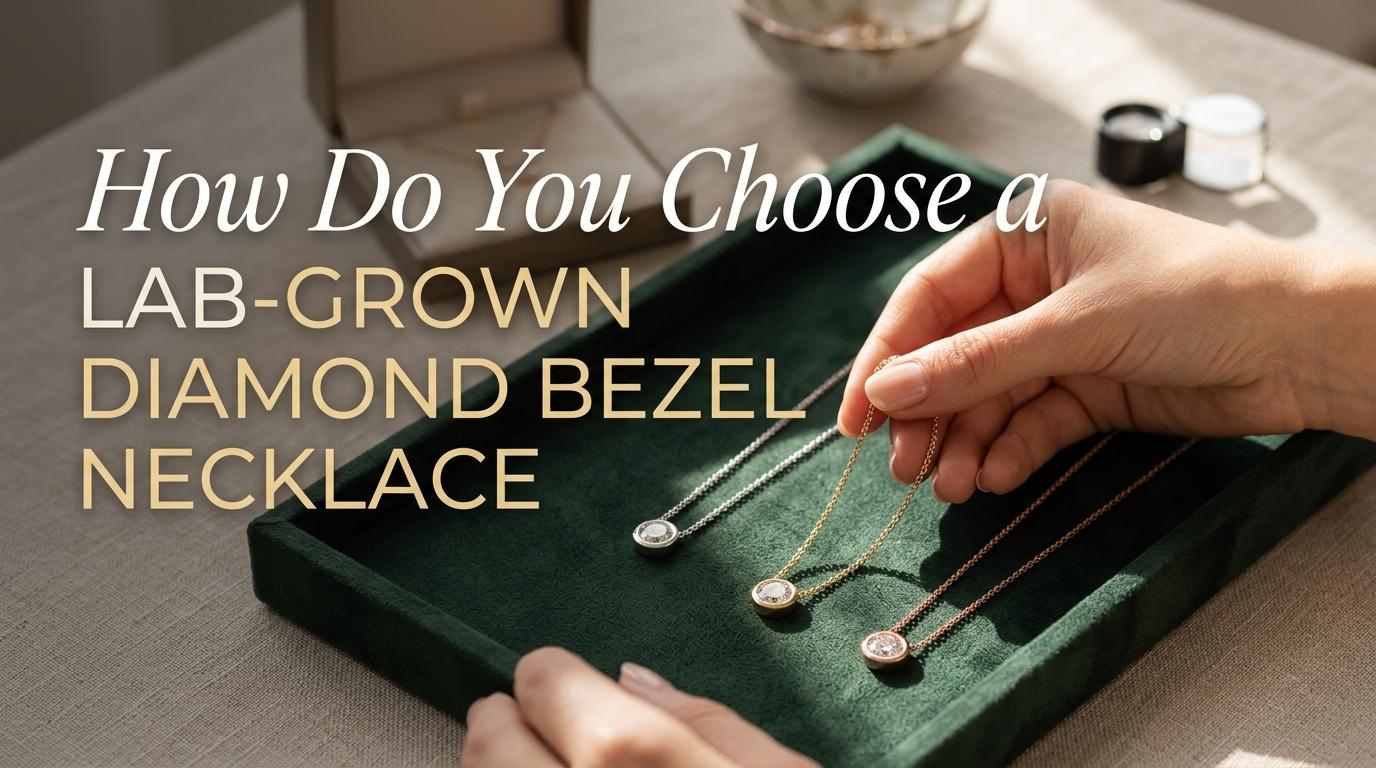
Fine jewelry shopping sits in a strange place between fun and stressful, and that tension gets sharper when you are trying to pick something specific. A lab-grown diamond bezel necklace is a good example of a purchase that rewards a little homework. The bezel wraps a band of metal around the outer edge of the stone, holding it snug without prongs sticking up to catch on things. It is one of the cleaner-looking settings out there and one of the sturdiest. Getting the right one comes down to five things: diamond quality, which bezel style you want, the metal, the chain, and whether the stone is certified. Work through those in order, and you will not regret the decision.
Why the Bezel Setting Works Well With Lab-Grown Diamonds
A bezel holds the diamond by its outer edge, running a continuous strip of metal around the girdle. That is different from prong settings, which grip the stone at four or six points and leave the sides open. Open sides look delicate, but they also mean more exposure to knocks. The bezel removes that tradeoff. Lab-grown diamonds are physically and chemically the same as mined stones, and because they cost less per carat, buyers can go bigger or higher grade than the same budget allows for a mined diamond. Putting one in a bezel makes practical sense: you spent well on the stone, so you want a setting that protects it. The silhouette is clean and low-profile, and it works with most stone shapes—round, brilliant, oval, emerald cut, and pear—without looking cluttered.
Start With the Quality of the Diamond: The 4Cs—Cut, Color, Clarity, and Carat Weight—Are Still Important
Lab-grown or not, every diamond gets graded on cut, color, clarity, and carat weight. For a pendant, cut matters most. A well-cut stone bounces light back through the top of the diamond, and that is precisely what you see when the piece is hanging at someone's neckline. Shoot for Excellent or Ideal on the cut grade. Color in the G to H range reads as white to the naked eye and gives you room on price. Clarity in the VS1 to SI1 window means nothing visible without a loupe, which is plenty for a pendant. On a carat, 0.5 ct to 1 ct suits most everyday styles; go bigger if the piece is meant to make a statement. The real advantage of lab-grown is that you can bump up on any of these without hitting a wall on budget, so it is worth seeing how far your money actually goes before you settle.
Full Bezel or Half Bezel: Which Is Right for You
Two versions exist, and the difference is real. Your lifestyle should decide this, not aesthetics alone. A full bezel completely encircles the stone with no gaps and no exposed edge. Pick a full bezel if you work with your hands, work out with jewelry on, or want a setting you can forget about entirely. A half bezel, also called an open bezel, leaves the east and west sides of the stone open. More light gets in, the diamond looks slightly brighter, and the whole thing reads as lighter visually. If you mostly wear the necklace to dinners and events and sparkle is the priority, the half bezel makes sense. If you are wearing it through a regular week, the full bezel holds up better and asks less of you over time.
Picking the Right Metal for Your Lab-Grown Diamond Bezel Necklace
Metal changes how the necklace looks and how it holds up. White gold, 14K or 18K, is what most people go with because it sits cleanly next to the diamond and suits most skin tones. The catch is that white gold is rhodium-plated, and that plate wears down over a few years. You will need to have it redipped periodically, which is a minor but recurring cost. Platinum does not have that problem. It is naturally white, denser than gold, and needs no coating. It costs more, but it is the low-maintenance choice for someone who wants the necklace to look the same in ten years as it did on day one. Yellow gold and rose gold are worth considering if you want some warmth. Yellow gold in 14K is durable and has come back strongly in style. Rose gold suits oval and pear shapes particularly well and has a warmer, slightly vintage feel. Pick the metal you would actually enjoy looking at every day, not the one that photographs best.
Chain Length, Type, and Clasp
The chain is not an afterthought. Where the pendant lands on your body changes the whole read of the piece. A 16-inch chain puts it right at the collarbone, which suits crew-neck shirts and high necklines well. At 18 inches it falls just below the collarbone, works with more neckline shapes, and has a slightly more relaxed feel. Many bezel pendants come with an adjustable chain, which gives you both and costs you nothing extra. For chain type, cable and box chains are the practical choices for daily wear. Both resist kinking, both are easy to fix if something goes wrong, and both sit quietly under the pendant without competing with it. Stay in the 1.0mm to 1.5mm width range so the chain is strong but does not overpower the stone. For the clasp, a lobster claw is what you want. It is secure, easy to open with one hand after a little practice, and standard enough that any jeweler can replace it.
Always Buy Certified
Do not skip this part. Any diamond necklace you buy should come with an independent grading report, and for lab-grown stones, that means GIA or IGI certification. These reports confirm the stone's cut, color, clarity, and carat weight, and they verify that it is a lab-grown diamond rather than something else. If a seller cannot hand you a report number before you purchase, walk away. Good jewelers and reputable online retailers make certification easy to find. The report number is usually searchable directly on the GIA or IGI website, so you can verify it yourself in under a minute.
Putting It All Together
A good lab-grown diamond bezel necklace does not ask much once you have made the right calls upfront. Get the cut right, pick the bezel style that fits how you actually live, choose a metal you will not get tired of, and make sure the stone is certified. That is the whole process. Skip any of those steps and you end up compromising on something that matters. Take them seriously and you will have a piece worth wearing for a long time.

 English
 Arabic
 French
 Portuguese
 Deutsch
 Turkish
 Dutch
 Italiano
 Russian
 Romaian
 Portuguese (Brazil)
 Greek