
What Every Driver Should Know About Modern Car Key Replacement
Misplacing your keys used to be a minor inconvenience solved by a quick trip to the corner hardware store and a few dollars for a brass duplicate. Today, losing your keys—or watching a remote fob stop responding in the middle of a busy parking lot—feels far more complicated. Modern vehicles rely on layered electronic security systems designed to prevent theft, which means car key replacement now involves both mechanical precision and onboard computer programming.
Knowing how these keys work, what your options are when one goes missing, and how to avoid common pitfalls can save you hours of frustration and hundreds of dollars when an emergency strikes.
Why Modern Vehicle Keys Are So Complex
Over the past two decades, automakers phased out simple mechanical keys in favor of integrated electronic security. Even a basic-looking plastic-headed key manufactured within the last fifteen years almost certainly contains a microscopic transponder chip. When you insert the key into the ignition, an induction ring around the cylinder energizes the chip and reads its unique encrypted serial number. If the engine control unit does not recognize that code, fuel delivery and ignition spark remain disabled.
Push-to-start vehicles add another layer of sophistication through proximity fobs. Rather than inserting a blade, you carry a transmitter that communicates via low-frequency radio signals with antennas hidden throughout the cabin and trunk. When you press the brake pedal and push the start button, the vehicle verifies that the authorized fob is inside the car before allowing the engine to turn over. Because each key or fob is digitally paired to a specific vehicle, a replacement cannot simply be picked off a shelf and used immediately.
Common Types of Car Keys on the Road Today
Understanding which style of key your vehicle uses helps clarify what goes into making a replacement:
-
Transponder Keys: Traditional metal blades paired with a coded microchip inside the bow. These require both physical cutting and electronic pairing through the vehicle’s diagnostic port.
-
Laser-Cut (Sidewinder) Keys: Thicker blades with a distinctive winding groove milled down the center rather than notches along the edges. They require specialized high-precision milling machines and offer stronger resistance against lock picking.
-
Switchblade and Remote Head Keys: All-in-one units combining a folding mechanical blade with built-in lock, unlock, and trunk release buttons.
-
Smart Proximity Fobs: Completely keyless remotes that unlock doors as you approach and start the engine at the push of a button, typically housing a hidden emergency mechanical blade inside the casing in case the fob battery dies.
Dealership vs. Mobile Locksmith: Comparing Your Options
When drivers lose their only key, their first instinct is often to call a dealership service department. While dealerships certainly have access to factory parts and manufacturer databases, going through one usually means paying to have your immobilized vehicle towed onto their lot, waiting days for a specific key blank or fob to be ordered, and paying premium labor rates for programming.
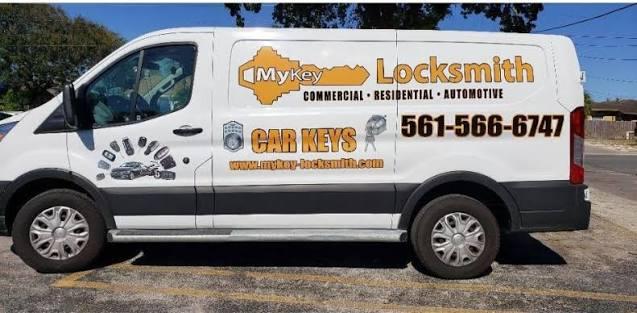
A specialized mobile automotive locksmith offers a practical alternative. Instead of moving the vehicle, the technician brings a fully stocked mobile workshop directly to your driveway, office, or roadside location. Equipped with computerized key-cutting machines and OEM-level diagnostic programmers, a skilled locksmith can decode your vehicle’s locks, cut a fresh blade from scratch, and program a new transponder or smart fob on the spot—often within a single visit and at a noticeably lower overall cost.
What Happens When All Keys Are Lost
Many motorists worry that losing every single copy of their key means replacing the entire ignition switch and door locks. Fortunately, that is rarely necessary. Using your Vehicle Identification Number (VIN) along with specialized lock-decoding tools, a qualified technician can determine the exact mechanical cuts needed for your locks without having an original key to trace.
Once the physical blade is cut and tested in the door and ignition, the technician connects a programming tablet to the vehicle’s OBD-II port beneath the dashboard. During this process, the vehicle’s immobilizer memory is cleared of any missing keys—ensuring that if someone finds your lost key later, they cannot drive away with your car—and the newly created keys are registered as the sole authorized devices.
Smart Habits to Prevent Future Key Emergencies
The single best time to handle a replacement is before you lose your last working key. Adding a spare when you already have one functional key is faster and far less expensive than generating a new key from scratch during a lockout. Keep that spare in a secure, accessible spot at home rather than inside your glove compartment.
Pay attention to early warning signs as well. If your proximity fob requires multiple button presses, displays a low-battery warning on the instrument cluster, or struggles to start the car unless held directly against the start button, swap out the coin-cell battery promptly. If a mechanical blade shows visible bending, hairline cracks, or worn edges that catch inside the ignition cylinder, having a fresh copy cut right away prevents the blade from snapping off inside the lock—turning a routine errand into a full-blown roadside rescue.

 English
 Arabic
 French
 Spanish
 Portuguese
 Turkish
 Dutch
 Italiano
 Russian
 Romaian
 Portuguese (Brazil)
 Greek