
Commercial Building Access Control System Installation for Better Property Security in Singapore
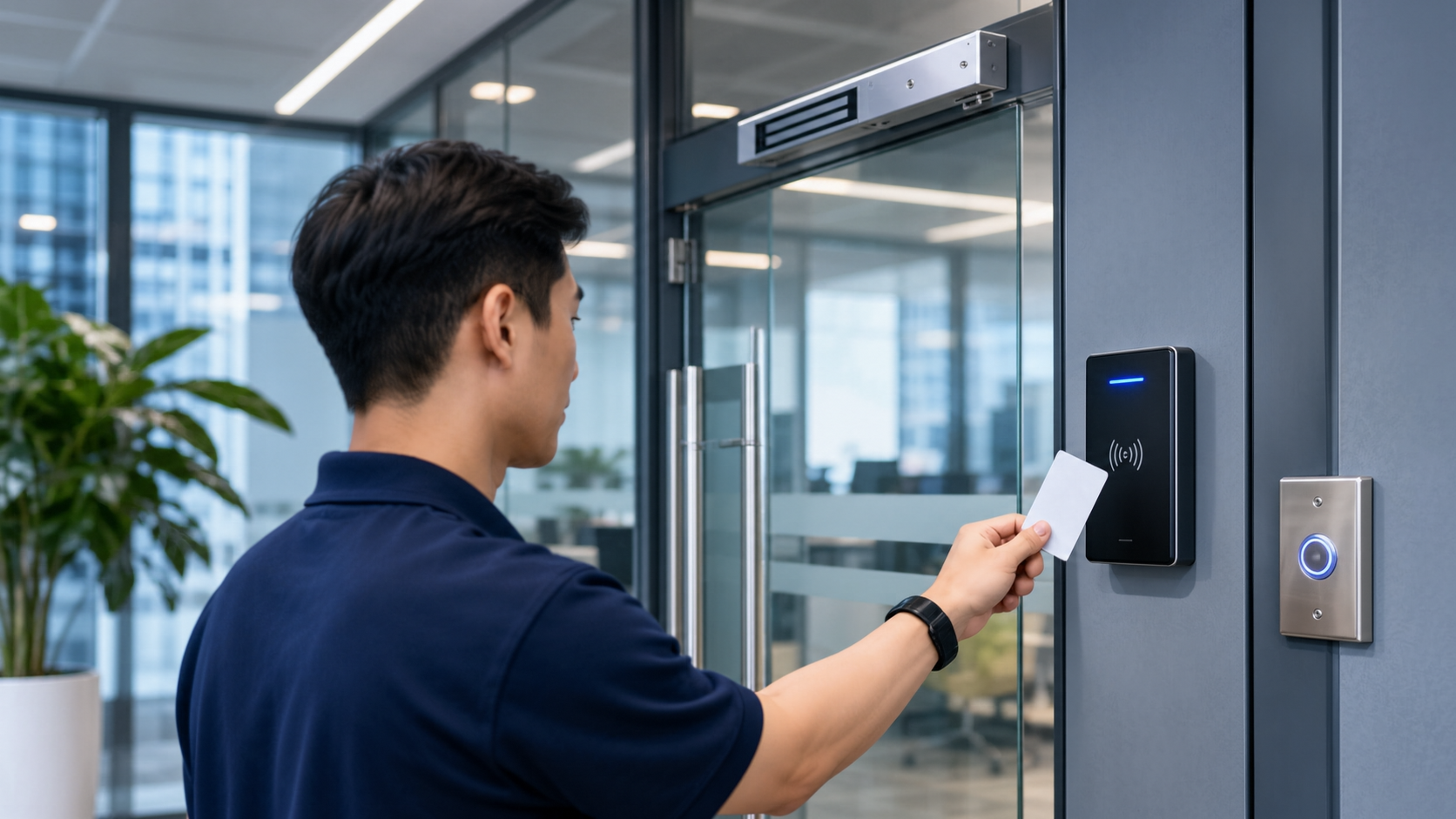
Managing a commercial building in Singapore involves more than maintaining its appearance, collecting rental payments and ensuring that tenants have a comfortable working environment. Building owners and property managers must also consider how employees, tenants, contractors, visitors and service personnel enter and move around the premises. When multiple businesses operate within one building, controlling access becomes increasingly important because different occupants may have different security requirements. A professionally planned commercial building access control system installation helps property managers establish a more organised approach to entry management while protecting shared facilities and restricted areas.
Traditional locks and physical keys may be sufficient for smaller properties, but they can become difficult to manage when a commercial building has several entrances, multiple floors and numerous tenants. Keys may be duplicated, misplaced or retained after tenancy arrangements change, creating additional administrative work for building management. An electronic building access control system provides a more flexible alternative by allowing authorised users to enter designated areas through assigned credentials, with access permissions managed according to the building's operational requirements.
Why Commercial Buildings Need Professional Access Control
Commercial buildings accommodate different organisations, each with its own employees, business activities and security priorities. A shared lobby may be accessible to visitors, while office floors, management rooms, electrical facilities and equipment areas require more restricted entry. Without a clearly defined access management arrangement, building operators may struggle to maintain consistent security procedures across the property.
A suitable access control system installation in Singapore helps establish different permission levels for different users. For example, a tenant's employees may receive access to their designated office floor, while building maintenance personnel may require authorised access to technical rooms. Property management can retain administrative control over shared facilities without giving every building user unrestricted access.
Protect Shared Building Entrances
The main entrance is often the busiest access point in a commercial property. Employees, clients, delivery personnel and visitors may arrive throughout the day, making it important to maintain a clear entry procedure. Electronic access control can help distinguish between authorised building users and individuals who require visitor approval.
Depending on the selected system, credentials may include proximity cards, PINs, mobile access or other supported authentication methods. Businesses should select the technology according to visitor volume, building design and security requirements rather than assuming that one solution is suitable for every entrance.
Protect Restricted Technical Facilities
Commercial buildings contain important infrastructure that should not be accessible to everyone. Electrical rooms, server facilities, telecommunications cabinets, mechanical rooms and other technical spaces may require additional protection because they support the building's daily operations.
A properly configured commercial door access control system allows management to assign entry permissions to authorised technical personnel. This reduces dependence on widely distributed physical keys and makes it easier to review who has permission to enter selected facilities.
Improve Building Management Efficiency
Managing access manually can create unnecessary work, especially when a property has many tenants and changing occupancy arrangements. When a company moves out, its employees should no longer retain access to relevant shared areas. When a new tenant moves in, authorised personnel may need new credentials and permissions.
Electronic access management can simplify these administrative processes. Depending on the software, administrators may be able to add users, deactivate credentials and update permissions through a centralised platform. This helps property management maintain more consistent access records and procedures.
Choosing the Right Access Control Technology for Commercial Properties
Different commercial buildings require different access technologies. A small office building may need a relatively straightforward card-based system, while a larger commercial property may require multiple access points, centralised administration and integration with other security equipment.
Card-Based Building Access Control
Card-based access control is a practical option for commercial properties with regular employee and tenant movements. Each authorised user receives a card or key fob that can be registered with the access management platform.
If a card is lost or a tenant's employee leaves the organisation, the relevant credential can generally be deactivated without replacing the entire locking mechanism. This makes card access control system installation suitable for buildings where user permissions change regularly.
PIN and Keypad Access Systems
Keypad access allows users to enter a designated code to request entry. It may be appropriate for selected internal doors, staff-only facilities and smaller restricted areas.
However, shared PINs can make it difficult to identify individual users. Building managers should consider unique credentials where accountability is important and establish procedures for changing codes when access arrangements change.
Biometric Access Control
Biometric access systems use characteristics such as fingerprints or facial recognition to verify identity. They may be considered for technical facilities or restricted areas where stronger identity verification is required.
Before implementing biometric technology, commercial property operators should consider user acceptance, equipment compatibility, privacy and applicable Singapore data protection obligations. The system should only collect and process information for clearly defined and appropriate purposes.
Mobile and Cloud-Based Access Control
Mobile access solutions allow supported smartphones to act as digital credentials. Some cloud-managed platforms also offer centralised administration for multiple buildings or locations.
These options can provide greater flexibility, but property managers should evaluate network availability, cybersecurity, administrator authentication and backup arrangements. The selected platform should remain practical for building operators and tenants who depend on reliable daily access.
Planning a Commercial Building Access Control Installation
A successful installation begins with a detailed assessment of the property. The installer needs to understand the building layout, the number of controlled doors, existing locking arrangements, cable routes and the requirements of different occupants.
Conduct a Building-Wide Security Assessment
The first step is to identify the entrances and internal facilities that require controlled access. This may include the main lobby, tenant floors, management offices, car park access points, technical rooms and selected shared facilities.
Each location should be assessed according to its function. A public reception area does not necessarily require the same access restrictions as an electrical room or server facility. This distinction helps avoid unnecessary equipment costs while ensuring that important areas receive suitable protection.
Assess Existing Door Hardware
Commercial buildings often contain different types of doors and locking mechanisms. Glass entrances, aluminium-framed doors, fire-rated doors and internal office doors may require different hardware arrangements.
The selected access equipment must be compatible with the physical door and its intended function. Installers should also consider door alignment, mounting positions, locking requirements and emergency release arrangements before finalising the design.
Review Cabling and Network Infrastructure
Many electronic access systems require communication between readers, controllers and management software. Therefore, the building's existing network infrastructure and cable routes should be assessed before installation.
For properties with several floors, structured cabling planning is particularly important because equipment locations and communication requirements may differ across the building. Coordinating access control system installation with the wider network infrastructure can help create a more organised security environment.
Configure Tenant and Management Permissions
Access permissions should reflect the responsibilities of building management, tenants, contractors and other authorised users. Tenant employees may require access to their designated office floors, while cleaning personnel may need access during specific schedules.
Building management should also establish who can approve new credentials and modify existing permissions. Clear responsibilities reduce confusion and make the system easier to administer as occupancy changes.
Integrating Access Control with CCTV and Building Security
A commercial property may already use CCTV cameras, alarm systems and other security equipment. Integrating compatible technologies can provide additional visibility for authorised building management personnel.
For example, where supported, an access event may be associated with relevant CCTV footage, helping security personnel investigate activity around a controlled entrance. Alarm integration may also support notifications when predefined events occur.
However, integration should be planned carefully. Property managers should confirm equipment compatibility, network capacity, recording requirements and administrator permissions before implementation. The objective is to create useful security coordination rather than adding technology without a clear operational purpose.
Safety and Regulatory Considerations in Singapore
Commercial property security must not interfere with safe building operation. Controlled doors, electronic locks and emergency exit arrangements should be designed according to the applicable requirements for the premises.
Fire Safety and Emergency Egress
Door locking arrangements must allow people to leave safely during emergencies. Depending on the door configuration, appropriate emergency release devices and interfaces may be required.
Property managers should obtain suitable professional advice before modifying existing exit doors. Any proposed installation should consider applicable fire safety provisions and the building's emergency procedures.
Personal Data and Access Records
Electronic access systems may record user identities, credential information and entry timestamps. Building operators should establish suitable policies for managing these records, including who can access them, why they are collected and how long they are retained.
Where biometric credentials are involved, additional care is necessary. Organisations should assess applicable obligations under Singapore's Personal Data Protection Act and implement appropriate safeguards.
How to Select a Commercial Access Control Installer
Choosing an installation provider is an important part of the project because equipment selection alone does not guarantee a reliable result. Property managers should assess whether the provider understands commercial door hardware, cabling infrastructure, network requirements and the practical needs of multi-user buildings.
Evaluate the Installation Scope
A professional quotation should clearly explain the proposed equipment, number of controlled doors, cabling work, configuration, testing and handover. Businesses should also clarify warranty coverage, maintenance arrangements and technical support responsibilities.
Comparing the complete project scope is more useful than selecting a provider based solely on the lowest initial price.
Consider Future Building Requirements
Commercial buildings may change over time as tenants move, floors are renovated or additional facilities are introduced. The access control platform should therefore be assessed for its ability to accommodate future users and controlled doors.
Property managers should ask about controller capacity, software licensing, compatibility and the cost of expansion before approving the project.
Frequently Asked Questions
1. What is a commercial building access control system?
It is an electronic security arrangement that manages who can enter designated doors and restricted facilities within a commercial property using authorised credentials and configured permissions.
2. Can one access control system manage several floors?
Yes, depending on the system architecture, controller capacity and software configuration. A centralised platform may allow authorised administrators to manage several controlled areas.
3. Is card access suitable for commercial buildings?
Card access is a practical option for many properties because individual credentials can be managed and deactivated when necessary.
4. Can access control integrate with CCTV?
Compatible platforms may integrate access events with CCTV footage, allowing authorised personnel to review relevant security activity.
5. How much does commercial access control installation cost in Singapore?
Costs depend on the number of doors, selected equipment, cabling requirements, existing infrastructure and integration scope. A site assessment is needed for an accurate quotation.
6. Does a commercial building need regular access control maintenance?
Yes. Readers, locking mechanisms, controllers, power supplies and network connections should be inspected periodically, while user permissions should be reviewed when tenancy or employment arrangements change.
Improve Commercial Building Security with Comnet.sg
Managing a commercial property requires a security solution that works for building management, tenants, employees and authorised visitors. A properly designed commercial building access control system installation can help protect shared facilities, organise entry permissions and improve the way a property manages daily access without creating unnecessary administrative complexity.
Comnet.sg provides access control solutions for businesses and commercial properties in Singapore, supported by services involving site assessment, system design, network infrastructure and security integration. Whether you manage an office building, commercial facility or multi-floor property, Comnet can help you explore an access control arrangement suited to your premises. Visit www.comnet.sg to enquire about professional commercial access control system installation in Singapore and take a practical step towards safer, smarter and more organised property management.

 English
 French
 Spanish
 Portuguese
 Deutsch
 Turkish
 Dutch
 Italiano
 Russian
 Romaian
 Portuguese (Brazil)
 Greek