
How Digital Marketing Can Help Small Businesses Generate More Leads
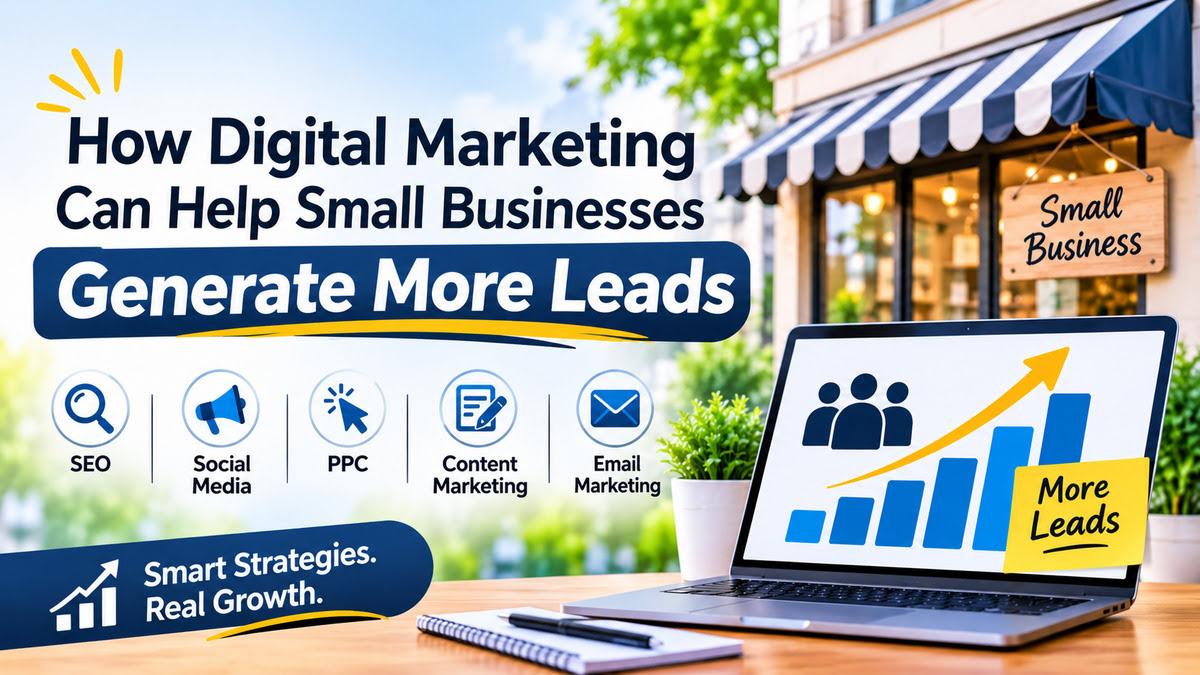
Running a small business requires more than offering good products or services. You also need a consistent way to reach potential customers, build awareness, and turn interested visitors into paying clients. However, many small businesses struggle to generate enquiries because their marketing efforts are scattered across different platforms without a clear plan.
Some businesses rely only on social media posts, while others invest in paid advertisements without understanding whether those campaigns are reaching the right audience. As a result, they spend time and money but receive fewer leads than expected.
This is where digital marketing can make a difference. A well-planned digital marketing strategy helps small businesses reach people who are already searching for their products or services, communicate their value, and encourage potential customers to take action.
Working with the Best digital marketing agency in Texas can also help business owners manage different marketing channels through a coordinated strategy. From search engine optimization and social media marketing to paid advertising and content creation, each channel can support a specific business goal.
In this article, we will explain how digital marketing helps small businesses generate more leads and which strategies can support consistent business growth.
What Is Digital Marketing for Small Businesses?
Digital marketing involves promoting a business through online channels such as search engines, social media platforms, websites, email, and paid advertising networks.
Unlike traditional marketing methods, digital marketing allows businesses to reach specific audiences, monitor campaign performance, and adjust their strategies based on customer behavior.
For example, a plumbing company in Dallas can use local SEO to appear in relevant Google searches, run Google Ads for people searching for emergency plumbing services, and use social media to build awareness among nearby residents.
Some common digital marketing services for small businesses include:
- Search engine optimization (SEO)
- Local SEO
- Social media marketing
- Pay-per-click advertising (PPC)
- Content marketing
- Email marketing
- Website development and optimization
- Online reputation management
Businesses do not necessarily need every service. The right combination depends on their target audience, industry, budget, and lead generation goals.
7 Ways Digital Marketing Can Help Small Businesses Generate More Leads
Different digital marketing channels serve different purposes. Some attract people who are actively searching for services, while others introduce your business to potential customers who may need your products in the future.
Here are seven ways these strategies can help small businesses generate enquiries.
1. SEO Helps Potential Customers Find Your Business on Google
Search engine optimization helps your website appear in relevant search results when people look for products, services, or information related to your business.
For example, someone searching for "roofing company in Houston" is likely looking for a roofing service in that area. If your business offers roofing services in Houston, appearing for relevant searches can bring potential customers to your website.
SEO focuses on several areas, including:
- Keyword research and search intent
- Website content optimization
- Technical SEO
- Internal linking
- Website speed and mobile usability
- Relevant backlink acquisition
- Local search optimization
A properly optimized website can attract visitors without requiring payment for every click.
However, SEO takes time. Your website's competition, current condition, content, and target keywords all influence how quickly improvements become visible.
For businesses targeting Texas customers, investing in relevant SEO Services in Texas can help improve local search visibility and attract visitors who are more likely to need their services.
2. Local SEO Connects Your Business with Nearby Customers
Local SEO is particularly useful for small businesses that serve customers in specific cities or service areas.
People frequently use location-based searches when looking for nearby businesses. Examples include:
- Digital marketing agency in Dallas
- Electrician near me
- Best dentist in Austin
- Home cleaning services in Houston
- Roofing contractors in San Antonio
- Web design company in Fort Worth
Local SEO helps businesses improve their visibility for relevant searches by optimizing their website and online business information.
Important local SEO activities include:
Google Business Profile Optimization: Keep your business name, address, phone number, business hours, and service information accurate.
Location-Specific Content: Create useful pages that explain which areas you serve and what services you provide.
Customer Reviews: Encourage genuine customers to share their experiences and respond professionally to feedback.
Local Citations: Maintain consistent business information across relevant directories and platforms.
Local Keyword Targeting: Include location-based search terms naturally in relevant website content.
For example, a small HVAC company serving Dallas and nearby communities can create relevant service pages and maintain an accurate Google Business Profile to improve its local online presence.
3. Social Media Marketing Builds Awareness and Generates Enquiries
Social media gives small businesses a way to communicate directly with potential customers.
Platforms such as Facebook, Instagram, LinkedIn, and TikTok allow businesses to share updates, demonstrate their services, answer questions, and build relationships with their audience.
However, simply posting every day does not guarantee leads. Your content needs to address customer interests and provide a clear reason to contact your business.
Some useful social media content ideas include:
- Customer testimonials and genuine reviews
- Product demonstrations
- Before-and-after project images
- Short educational videos
- Frequently asked customer questions
- Business updates and announcements
- Service explanations and pricing information
For B2B businesses, LinkedIn can help connect with decision-makers and other professionals. For local service providers, Facebook and Instagram may provide opportunities to reach nearby audiences.
Paid social media campaigns can also help businesses reach people based on factors such as location, interests, and platform behavior.
The important thing is to select platforms that match your customers rather than trying to maintain an active presence everywhere.
4. Google Ads Can Bring Potential Customers to Your Website Faster
SEO helps build organic search visibility over time, while Google Ads allows businesses to pay for placement in search results for selected searches.
This can be useful when a business wants to reach people actively searching for a specific product or service.
For example, a Texas-based moving company could run advertisements targeting searches such as:
- Local moving company in Dallas
- Affordable movers in Houston
- Residential moving services near me
- Commercial moving company in Austin
A properly managed PPC campaign involves more than selecting keywords and setting a daily budget.
It also requires:
- Relevant keyword selection
- Negative keyword management
- Compelling ad copy
- Location targeting
- Conversion tracking
- Landing page optimization
- Regular budget monitoring
One common mistake is sending every advertisement to the website homepage. A dedicated landing page that matches the advertisement can make it easier for visitors to understand the offer and submit an enquiry.
Paid advertising can generate traffic quickly, but it does not guarantee profitable leads. Campaign performance depends on competition, targeting, costs, and the quality of the landing page.
5. Content Marketing Answers Customer Questions and Builds Trust
Potential customers often research a business before making a purchase decision.
They may compare service providers, read reviews, check pricing, or search for answers to common questions.
Content marketing helps businesses provide useful information during this research process.
For example, a small accounting firm can publish articles about tax preparation, bookkeeping costs, and common financial mistakes made by small businesses.
Useful content formats include:
- Informational blog posts
- Service guides
- Case studies
- Industry reports
- Frequently asked questions
- Video tutorials
- Customer success stories
A good content strategy should focus on the questions your potential customers actually ask.
For example, instead of publishing a general article about plumbing, a plumbing company could write about "How Much Does Emergency Plumbing Repair Cost in Dallas?"
This topic is more specific and addresses a question that potential customers may have before contacting a service provider.
Content should also connect readers with relevant service pages when there is a natural reason to do so.
6. Email Marketing Helps Turn Interested Visitors into Customers
Not every website visitor is ready to purchase immediately.
Some people need more information, want to compare prices, or plan to contact a business later. Email marketing helps businesses stay connected with these potential customers.
Small businesses can use email campaigns to:
- Share company updates
- Send helpful industry information
- Announce new services
- Promote special offers
- Follow up with interested prospects
- Send appointment reminders
- Maintain relationships with existing customers
For example, a small digital marketing company can offer a downloadable SEO checklist in exchange for an email subscription. Subscribers can then receive useful information about website optimization, local search, and online advertising.
However, email marketing should be permission-based. Sending unwanted promotional emails can damage your brand reputation and create compliance issues.
Focus on sending relevant messages rather than overwhelming subscribers with frequent promotions.
7. A Conversion-Focused Website Turns Visitors into Leads
Getting website traffic is only part of the process. Your website also needs to make it easy for visitors to contact your business.
Imagine someone visits your website after clicking a Google advertisement. They are interested in your services but cannot locate your contact information or understand what to do next.
There is a good chance they will leave without submitting an enquiry.
A lead-focused website should include:
- Clear service descriptions
- Easy-to-find contact information
- Visible enquiry forms
- Clickable phone numbers
- Customer testimonials
- Relevant case studies
- Mobile-friendly layouts
- Clear calls to action
Your website should also explain what happens after someone submits a form.
For example, a simple message such as "Request a Consultation" can be more useful than a vague button that says "Submit."
Keep enquiry forms short. Ask only for the information needed to respond to the potential customer.
Which Digital Marketing Channels Should a Small Business Use?
Not every business needs the same marketing strategy. Your choice should depend on how customers search for your services, how quickly you need leads, and how much you can spend.
Here is a basic comparison:
|
Marketing Channel |
Main Purpose |
Best Suited For |
|
SEO |
Organic search visibility |
Long-term traffic |
|
Local SEO |
Local search visibility |
Local service businesses |
|
Google Ads |
Paid search traffic |
Immediate search exposure |
|
Social Media |
Audience engagement |
Brand awareness and enquiries |
|
Content Marketing |
Answering customer questions |
Building credibility |
|
Email Marketing |
Customer communication |
Follow-ups and retention |
|
Website Optimization |
Improving conversions |
Turning visitors into leads |
A local contractor may benefit more from local SEO and Google Ads, while an online consulting company may focus on SEO, content marketing, and LinkedIn.
The best approach is to prioritize the channels that match your audience and business goals.
How to Choose the Best Digital Marketing Agency in Texas
Choosing a digital marketing agency is an important decision for a small business. The wrong agency can waste your budget on activities that do not support your business goals.
Before hiring a provider, consider these factors:
1. Check Its Range of Services
Look for an agency that understands the marketing channels relevant to your business.
Depending on your needs, this may include SEO, PPC management, social media marketing, content strategy, and website optimization.
2. Review Previous Work and Case Studies
Ask to see relevant examples of previous projects. Look for clear information about the business challenge, marketing approach, and measurable outcomes.
Do not rely only on screenshots of rankings or website traffic. Ask whether the campaigns generated relevant enquiries or sales.
3. Understand Its Marketing Process
A professional agency should understand your business, target audience, competition, and objectives before recommending a strategy.
Ask how it plans to measure progress and how frequently it will review campaign performance.
4. Ask About Reporting and Communication
You should be able to understand where your marketing budget is going and what the campaigns are achieving.
Look for clear reporting that includes relevant metrics such as website traffic, leads, conversion rates, advertising costs, and campaign performance.
5. Avoid Guaranteed Ranking Promises
No agency can guarantee a specific Google ranking. Search engine results depend on many factors, including competition, website quality, and search engine systems.
Be cautious of providers promising instant results or guaranteed first-page rankings.
How ArtXPro Helps Small Businesses with Digital Marketing
Small businesses often need several marketing activities to work together. Improving search visibility while running disconnected advertising and social media campaigns can make it difficult to measure the overall impact.
ArtXPro Global provides digital marketing services covering different areas of online business promotion.
Its services include:
Search Engine Optimization: Keyword research, on-page SEO, technical SEO, content optimization, and local SEO to improve organic search visibility.
Social Media Marketing: Campaign planning and content management across platforms such as Facebook, Instagram, and LinkedIn.
Content Strategy and Management: Blog posts, website content, and service page optimization to address customer needs and support search visibility.
Paid Search Campaigns: Google Ads campaigns focused on relevant keywords, audience targeting, and campaign performance.
Influencer Marketing: Working with relevant content creators to reach audiences through social platforms.
Website Maintenance: Website updates, security checks, backups, and ongoing technical maintenance.
If you are comparing marketing options, visit ArtXPro's digital marketing service page to review the services and approach.
The right marketing plan should be based on your business requirements, target customers, and available budget rather than a fixed package of unrelated activities.
How Much Should a Small Business Spend on Digital Marketing?
There is no single marketing budget that works for every small business.
A local service provider with a limited service area may need a smaller campaign focused on local search and a few paid keywords. An e-commerce company targeting customers across multiple states may require a larger budget for advertising, SEO, content, and customer retention.
Before setting your budget, consider:
- Your monthly revenue and available marketing funds
- Average customer value
- Competition in your industry
- Cost per lead in your target market
- Your expected number of enquiries
- Website and marketing requirements
For example, if a business spends $1,000 on advertising and receives 20 enquiries, its advertising cost per lead is $50.
However, this does not automatically mean the campaign is profitable. You also need to measure how many enquiries become paying customers and how much revenue those customers generate.
Start with a manageable budget, track the results, and increase spending only when the campaign produces acceptable returns.
How to Measure Digital Marketing Lead Generation Results
A successful marketing campaign should be measured by more than website visitors and social media engagement.
Small businesses need to understand whether their marketing activities are producing genuine business opportunities.
Here are some useful metrics:
|
Metric |
Why It Matters |
|
Website Traffic |
Shows how many people visit your website |
|
Conversion Rate |
Measures the percentage of visitors who take action |
|
Cost Per Lead |
Shows how much you spend to generate an enquiry |
|
Lead Quality |
Measures whether enquiries match your target customers |
|
Customer Acquisition Cost |
Measures the cost of gaining a new customer |
|
Return on Ad Spend |
Measures revenue generated against advertising spend |
You can use Google Analytics 4, Google Search Console, advertising dashboards, and a CRM system to monitor different parts of your marketing performance.
Set up conversion tracking for important actions such as contact form submissions, phone calls, appointment bookings, and purchases.
This makes it easier to identify which channels are producing useful leads and where your budget should be allocated.
Final Thoughts
Digital marketing gives small businesses several ways to reach potential customers, generate enquiries, and build relationships online. However, results depend on choosing the right channels, understanding customer needs, and monitoring campaign performance.
SEO can help attract people searching for your services, local SEO can connect you with nearby customers, paid advertising can bring targeted visitors, and social media can support customer engagement.
These channels work best when they are connected through a clear marketing plan and supported by a website that makes contacting your business easy.
If your small business is struggling to generate consistent enquiries, reviewing your current marketing strategy is a practical starting point.
ArtXPro Global provides digital marketing and SEO services for businesses looking to improve their online visibility and reach potential customers. Contact the team to discuss a marketing strategy based on your business goals.
Frequently Asked Questions (FAQs)
How can digital marketing help small businesses generate more leads?
Digital marketing helps small businesses reach potential customers through search engines, social media, paid advertisements, email campaigns, and useful website content. These channels can attract relevant visitors and encourage them to contact the business.
Which digital marketing strategy is best for small businesses?
The best strategy depends on your industry and audience. Local businesses may benefit from local SEO and Google Ads, while online businesses may focus on organic SEO, content marketing, and social media campaigns.
How much does digital marketing cost for a small business?
Costs depend on the services, competition, campaign size, and marketing goals. Businesses should consider both service fees and advertising budgets when planning their spending.
How long does digital marketing take to generate leads?
Paid advertising may generate enquiries shortly after a campaign launches, while SEO and content marketing usually require more time. Actual results depend on targeting, competition, website performance, and campaign quality.
Why should a small business hire a digital marketing agency?
An agency can help plan and manage different marketing activities, handle campaign optimization, monitor performance, and provide access to specialists across multiple digital marketing channels.
Is SEO better than paid advertising for lead generation?
Neither is always better. SEO can build organic visibility over time, while paid advertising can bring targeted visitors more quickly. Many businesses use both to balance short-term and long-term lead generation.
How can local SEO help businesses in Texas?
Local SEO helps Texas businesses improve their visibility for relevant location-based searches. It includes optimizing business profiles, creating useful local content, maintaining accurate business information, and building relevant local citations.
What should I look for in the best digital marketing agency in Texas?
Review the agency's services, relevant experience, case studies, reporting process, communication, and approach to measuring leads and conversions. Avoid providers that promise guaranteed rankings or instant results.

 English
 Arabic
 French
 Spanish
 Portuguese
 Deutsch
 Turkish
 Dutch
 Italiano
 Russian
 Romaian
 Portuguese (Brazil)