
Can Spain’s Changing Climate Make Efficient Home Cooling a Household Priority?
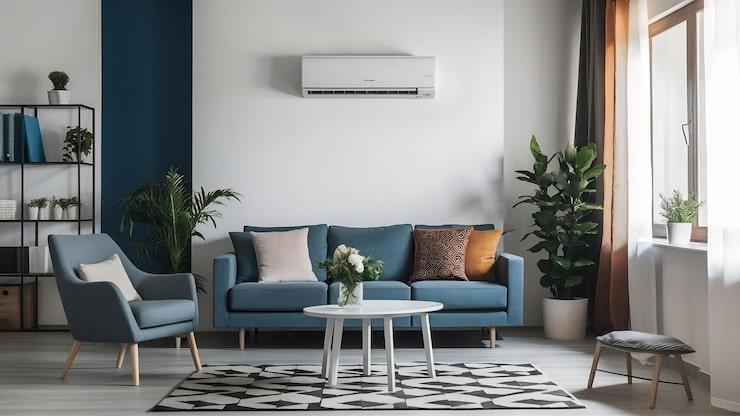
Cooling requirements across Spain are becoming increasingly relevant as households respond to hotter summers, changing residential expectations, and greater attention to indoor comfort. Room air conditioners are moving beyond seasonal convenience, with purchasing decisions increasingly influenced by energy consumption, installation flexibility, operating costs, and product performance. Manufacturers are responding through inverter technology, connected controls, improved refrigerants, and designs that balance cooling capacity with energy efficiency.
According to a Vyansa Intelligence report, the Spain Room Air Conditioners Market was valued at USD 917.7 Million in 2025 and is projected to reach USD 1.35 Billion by 2032, registering a CAGR of 5.67% during 2026-2032. This expansion reflects the growing relevance of residential cooling, alongside demand from commercial establishments and property owners seeking reliable climate-control solutions.
Rising Summer Temperatures Strengthen Residential Cooling Requirements
Spain's climatic conditions are an important demand driver for room air conditioners. Extended periods of high temperatures, particularly during summer, increase the need for indoor cooling across residential properties, offices, retail establishments, and hospitality facilities. Cooling requirements can vary considerably by location, building design, insulation quality, and exposure to direct sunlight, creating demand for products with different capacities and installation configurations.
The State Meteorological Agency (AEMET) provides an important reference for understanding this demand environment. Its summer 2025 climate assessment classified the season as the warmest in its historical series, highlighting the increasing relevance of heat exposure across the country. Such climatic conditions strengthen the role of room air conditioners in household comfort planning and encourage consumers to consider cooling equipment as a more practical residential investment.
Spanish Government
For manufacturers, this environment creates opportunities to address varied cooling requirements through wall-mounted split systems, compact units, and products designed for different room dimensions. Demand is also influenced by installation convenience, noise levels, airflow distribution, and the ability to maintain consistent indoor temperatures.
Split Systems and Inverter Technology Shape Product Preferences
Product configuration remains an important consideration in purchasing decisions. Split air conditioners offer a combination of indoor comfort, installation flexibility, and cooling performance that supports their relevance in residential and selected commercial applications. Their suitability for individual rooms and different property layouts makes them an important product category for manufacturers and distribution networks.
Inverter technology is another important area of product differentiation. Unlike conventional systems that operate through repeated compressor starts and stops, inverter-based equipment adjusts compressor speed according to cooling requirements. This operating approach can support more consistent temperature management and improve energy performance under suitable operating conditions.
Consumer interest in efficient appliances is also encouraging manufacturers to differentiate products through advanced filtration, quieter operation, smart scheduling, and remote temperature control. Connected systems allow users to manage cooling settings through mobile applications, while selected models incorporate sensors and automated operating modes. These capabilities create opportunities in premium residential segments, although affordability and installation costs remain relevant considerations.
Energy Efficiency and Refrigerant Transition Influence Product Development
Energy performance is becoming a central consideration for manufacturers operating in Spain. Consumers increasingly evaluate air conditioners not only by their purchase price and cooling capacity but also by expected electricity consumption and long-term operating requirements. This creates demand for efficient compressors, improved heat exchangers, optimized airflow, and intelligent operating controls.
Regulatory requirements also influence product design and commercialization. The European Commission's Air Conditioners and Comfort Fans guidance outlines the ecodesign and energy-labelling framework applicable to relevant equipment sold across the European Union. These requirements address minimum energy performance, sound levels, and product information, making compliance an important consideration for manufacturers and suppliers.
Energy Efficient Products
Refrigerant selection is another important aspect of product development. Manufacturers are adapting equipment portfolios to evolving environmental requirements and refrigerant-related regulations. This transition influences product engineering, component compatibility, servicing practices, and technician training. Suppliers that can combine regulatory compliance with reliable cooling performance may strengthen their competitive position.
Residential Demand Creates Opportunities Across Distribution Channels
Residential applications remain an important source of demand because households require cooling solutions suited to different property sizes, occupancy patterns, and installation conditions. Apartments, individual houses, and vacation properties create varied purchasing requirements, encouraging manufacturers to offer products across multiple capacity and price categories.
Commercial applications also provide opportunities. Offices, hospitality establishments, retail spaces, and healthcare facilities require indoor temperature management to support occupants, customers, and operational environments. These buyers may place greater emphasis on equipment reliability, installation coordination, maintenance support, and performance during prolonged operating periods.
Distribution channels influence how consumers access these products. Physical appliance retailers and specialist dealers provide product comparisons, installation guidance, and after-sales support. Online channels offer broader product visibility and convenient comparison of technical specifications, pricing, and features. Manufacturers and distributors therefore need coordinated sales strategies that combine digital product information with dependable installation and servicing networks.
The Latest market analysis indicates that purchasing decisions are increasingly connected to the complete ownership experience. Product availability, warranty coverage, installation quality, maintenance access, and energy performance can all influence brand selection.
Cost Sensitivity and Installation Constraints Remain Challenges
Despite stronger cooling requirements, affordability continues to influence purchasing decisions. Consumers must evaluate the initial appliance cost alongside installation expenses, electricity consumption, and maintenance requirements. This can encourage price comparisons and delay replacement decisions, particularly among households managing competing expenditure priorities.
Building characteristics can also restrict adoption. Older properties may require electrical upgrades, installation modifications, or additional consideration of external-unit placement. Apartments and multi-unit residential buildings can face restrictions related to building façades, shared spaces, and property-management requirements.
For manufacturers, these conditions increase the importance of flexible product portfolios, transparent installation guidance, and accessible service networks. Industry analysis also highlights the need to address consumer concerns about operating costs without compromising cooling performance.
What Will Define the Next Phase of Competition?
Competition in the Spain Room Air Conditioners Market is expected to increasingly reflect differences in energy performance, product reliability, connected functionality, refrigerant technology, and distribution capabilities. Manufacturers that combine efficient cooling systems with practical installation options and responsive after-sales support can address a wider range of household and commercial requirements.
A Market research report perspective also indicates that product innovation must remain aligned with changing consumer expectations and regulatory requirements. Smart controls, inverter systems, improved filtration, and energy-conscious product engineering are becoming relevant areas of differentiation.
Ultimately, the sector's development will depend on how effectively manufacturers balance cooling performance, affordability, environmental considerations, and ownership convenience. Detailed market insights suggest that suppliers capable of delivering efficient, reliable, and adaptable cooling solutions will be better positioned to respond to Spain's evolving residential and commercial requirements.

 English
 Arabic
 French
 Spanish
 Deutsch
 Turkish
 Dutch
 Italiano
 Russian
 Romaian
 Portuguese (Brazil)
 Greek