
Jacket Back Digitizing Services USA: A Buyer’s Guide
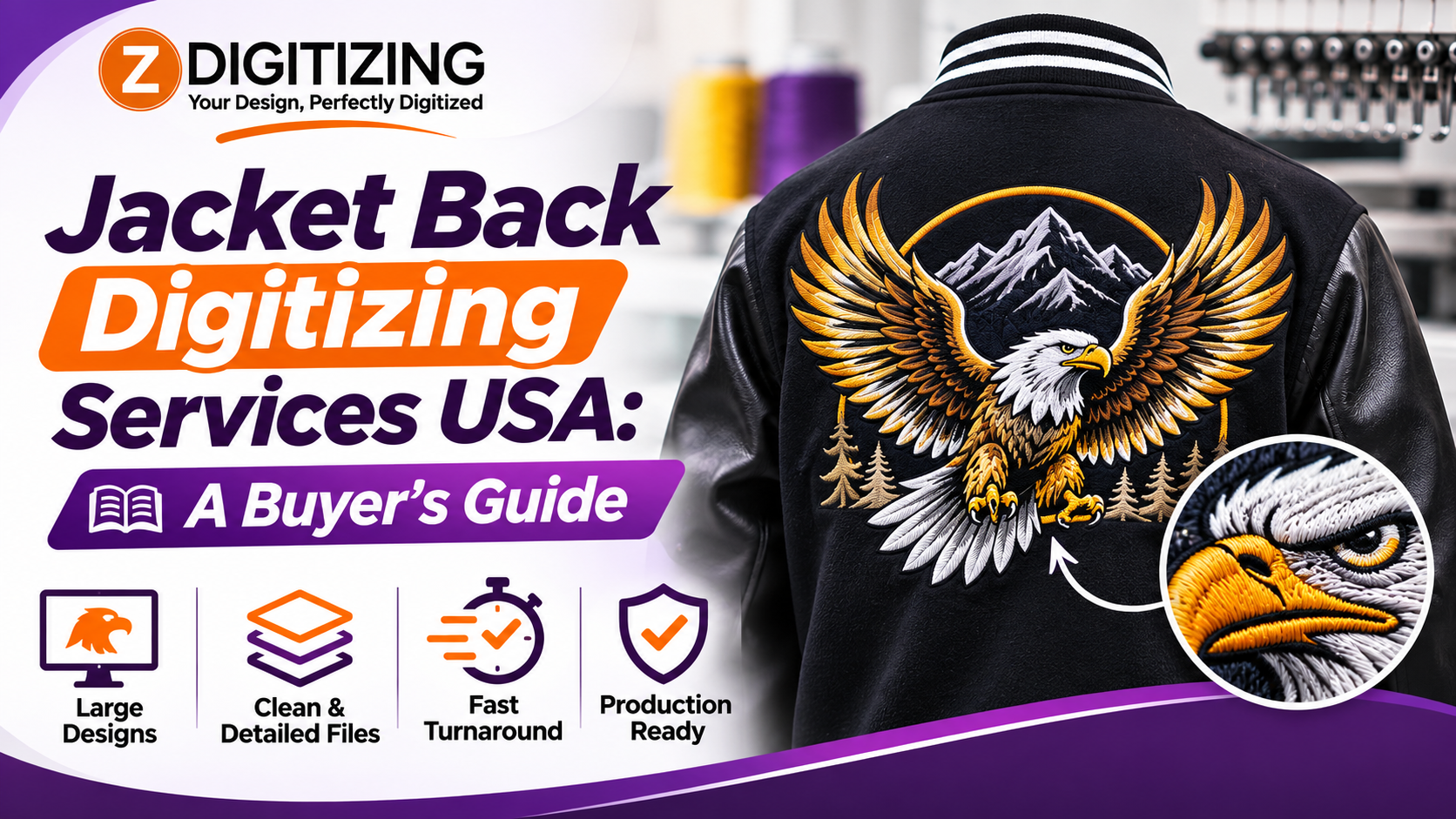
Large jacket embroidery needs a stitch plan that considers the design, the garment’s fabric, and the available back panel. Our Embroidery Jacket Back Digitizing Services USA converts your artwork into machine-ready stitch instructions for jacket backs. We’ll explain how the process works, what information to prepare, and how to review the file before production.
When you request Embroidery Jacket Back Digitizing Services USA, share the clearest artwork you have and identify the jacket type, design dimensions, placement, and machine format. Denim, leather, fleece, wool, and softshell do not respond identically to embroidery. These details help us understand the project and prepare a file for the garment you plan to decorate.
What do Jacket Back Digitizing Services USA include?
Jacket back digitizing converts a logo, illustration, or other artwork into stitch instructions that an embroidery machine can read. The digitizer plans how the design will be stitched, including stitch direction, sequence, underlay, and density. Since a jacket-back design can cover a large area, the file must be planned for both the artwork and the fabric beneath it.
A small chest logo and a large back design have different production demands. Large fills can use more stitches and cover more fabric; jacket materials may be thick, soft, or difficult to hoop. A digitized file should account for the garment and intended placement instead of treating the design as a picture that can simply be enlarged.
At ZDigitizing, our jacket-back service supports designs for leather, denim, bomber, varsity, fleece, and other jackets. The service page describes manual digitizing, a QA check, and delivery by email. It asks customers to provide details such as file format, design size, fabric type, digitizing style, and placement.
Why fabric affects the stitch plan
Different materials react differently under the needle. The jacket-back service page explains that denim may need tighter fills, leather calls for lighter stitch density, and fleece benefits from underlay to help keep stitches from sinking. Wool and other fabrics also need to be considered as part of the specific project rather than assigned one universal setting.
The jacket’s construction matters too. A seam, yoke, pocket, lining, or heavy panel can affect where the design fits and how the garment sits in the hoop. If the design must avoid a seam or align with a yoke, include that instruction and mark the position on a reference image when possible.
What should you prepare before ordering?
A complete brief gives us a clearer starting point. Prepare these details before submitting your design:
-
Artwork: Upload a clear logo, image, or sketch. Include an approved reference if the source file is small or compressed.
-
Jacket material: Identify denim, leather, fleece, wool, softshell, or another fabric if known.
-
Finished dimensions: State the intended width and height rather than only saying “large.”
-
Placement: Describe the back-panel location and note seams, yokes, pockets, or other features to avoid.
-
Embroidery style: Specify flat embroidery, 3D puff, or appliqué if you have a preference and it suits the design.
-
Machine format: Confirm the required file type with your embroidery operator.
-
Must-keep details: List exact wording, colors, symbols, and proportions that should remain recognizable.
For lettering or small symbols, explain what must remain legible. If the artwork contains a tagline that is not essential, say whether it may be simplified or removed. A digitizer should not have to guess which parts of the design matter most.
How the order process works
Our jacket-back service page describes a simple sequence: upload the design, fill in the order requirements, have the artwork manually digitized, and receive the file after a QA check. The listed delivery range is 4–12 hours, with an urgent option of 1–4 hours; complex designs may take longer. The page says files are sent by email and includes free minor revisions.
When the file arrives, check the format and design details against your instructions. Confirm the dimensions, placement, lettering, and any requested style. Then coordinate with your embroiderer to run a test sew-out on the intended jacket or a comparable sample. A sample helps you review the actual combination of fabric, stabilizer, hooping, thread, and machine setup before producing multiple garments.
How to avoid common jacket-back problems
Good Jacket Back Digitizing Services USA begin with a clear design brief and a measured jacket panel.
A common mistake is sending a small preview without providing the exact wording or a clearer source. Low-resolution artwork may make a letter or border difficult to interpret. Include a higher-quality file or reference when available, and write exact text in your notes.
Another issue is choosing the size without checking the usable back panel. A large design may overlap seams or sit too close to the shoulder yoke. Measure the jacket and discuss placement with the embroiderer before digitizing begins.
The service page also recommends supporting the jacket so its weight does not hang during embroidery, hooping it securely, and marking the center to guide alignment. For fleece, it suggests a topping to reduce the chance of stitches sinking. These production steps work alongside the digitized file; they do not replace the need to test the specific garment.
Our Jacket Back Digitizing Services USA help prepare large jacket designs with the artwork, material, placement, and machine format in view. Send us those details with your design so we can understand your requirements and prepare a file for your embroidery workflow.
At ZDigitizing, we digitize jacket-back designs for materials such as denim, leather, fleece, and more. Share your artwork and garment details with us to request a machine-ready file for your project.
Frequently asked questions
What are Jacket Back Digitizing Services USA?
Jacket Back Digitizing Services USA convert jacket artwork into stitch instructions for an embroidery machine. At ZDigitizing, we ask for the design, jacket material, dimensions, placement, digitizing style, and required machine format so we can prepare the file for the garment and production plan.
Why does jacket fabric matter when digitizing?
Fabric affects how stitches sit and how the garment behaves under the needle. The service page notes that denim, leather, and fleece can call for different stitch considerations. Tell us the material and share the jacket style so the digitizing brief reflects the garment being embroidered.
What details should I send with my jacket design?
Provide clear artwork, exact wording, the jacket material, finished dimensions, placement, desired embroidery style, and machine format. Mention seams, yokes, pockets, or other features near the design. If the design includes small details, identify which elements are essential to preserve.
Which file formats can I request?
Our jacket service page lists formats including DST, EXP, PES, VP3, EMB, JEF, and HUS. The right choice depends on your embroidery machine or software. Ask the person who will run the design which format is required, then include that format in your order details.
Should I test a jacket-back file before producing a batch?
Yes. A test sew-out on the intended jacket helps you assess placement, lettering, coverage, and the fabric’s response. The final appearance can also depend on hooping, stabilizer, thread, and machine setup. Review the sample with your embroiderer before starting a larger run.

 English
 Arabic
 French
 Spanish
 Portuguese
 Deutsch
 Dutch
 Italiano
 Russian
 Romaian
 Portuguese (Brazil)
 Greek